
In my extensive experience with precision mechanical transmission systems, I have observed a pivotal shift driven by technological advancements in fields such as humanoid robotics and automotive electrification. The transition from hydraulic to electric actuation has exposed limitations in conventional solutions like ball screws and trapezoidal screws, particularly concerning load capacity, transmission efficiency, precision, and longevity. It is within this context that the planetary roller screw assembly has emerged as a transformative component. By substituting balls with threaded rollers as the load-transmitting elements, this assembly achieves multi-point, multi-body contact. This fundamental design principle grants it exceptional advantages: remarkably high load-bearing capacity, superior axial stiffness, excellent transmission efficiency, extended service life, robust dynamic performance, and strong resistance to impact. Consequently, the planetary roller screw assembly is now indispensable in critical applications including linear actuators for humanoid robots, steering systems in electric vehicles, aerospace actuators, telescopic booms in construction machinery, and automated riveting systems.
The performance of a planetary roller screw assembly is not monolithic; it varies significantly based on its internal configuration and kinematic principles. Through my analysis, I categorize the mainstream structures into five distinct types, each with unique attributes suited for specific operational demands.
| Type | Key Structural Components | Primary Characteristics & Advantages | Typical Application Domains |
|---|---|---|---|
| Standard Type | Screw, Rollers, Nut, Internal Gear Ring | Wide applicability, suitable for various diameters and leads. Ideal for long stroke, heavy load, and high-speed scenarios. The screw is the rotational input. | General heavy-duty machinery, industrial automation, long-stroke actuators. |
| Recirculating Type | Screw, Rollers with annular grooves, Nut, Cam Ring, Retainer | High number of engaged threads, allows for very small leads, enabling high positioning accuracy and resolution. High stiffness and load capacity. | High-precision machine tools, semiconductor manufacturing equipment, precision measurement systems. |
| Bearing Ring Type | Screw, Nut, Rollers, Housing, End Covers, Bearings | Extremely high load-carrying capacity with reduced wear rates under extreme loads. High transmission efficiency. | Oil and gas extraction equipment, heavy engineering machinery, mining equipment. |
| Reverse Type | Screw, Nut, Rollers, Retainer | Nut is the rotational input, allowing for compact integration with motor rotors. Space-saving design for high-speed, short-stroke applications. | Aerospace actuators, humanoid robot joints, compact servo drives. |
| Differential Type | Screw, Nut, Rollers, Retainer | Features annular grooves on rollers and nut for differential motion. Achieves high reduction ratios, allowing a small input lead from a large thread pitch. | Applications requiring high load at medium speeds with very fine effective motion control. |
The engineering of a high-performance planetary roller screw assembly begins with meticulous design analysis. Two core aspects govern this phase: error allocation and performance prediction. The unique dual-engagement mechanism—simultaneous thread pair and gear pair meshing—means the total system error is a composite of individual errors from these elements. My approach involves establishing a mapping between component tolerances and the final assembly error. For a screw with `n` active threads, the cumulative lead error \(\Delta L\) can be modeled as a function of individual pitch errors \(\delta P_i\):
$$\Delta L = \sum_{i=1}^{n} \delta P_i + \Delta_{geo} + \Delta_{therm}$$
where \(\Delta_{geo}\) represents geometric alignment errors and \(\Delta_{therm}\) accounts for thermal deformation errors. Allocating permissible error budgets to the screw, rollers, and nut threads is critical for achieving the target accuracy grade.
Predicting key performance metrics requires analyzing the contact mechanics at the thread engagement points. Using Hertzian elastic contact theory, I model the contact between the roller and the screw/nut threads. For two cylindrical bodies with parallel axes (approximating the thread flank contact), the half-width \(a\) of the contact ellipse and the maximum contact pressure \(p_0\) are given by:
$$a = \sqrt[3]{\frac{3F R_e}{2 E^*}} \quad \text{and} \quad p_0 = \frac{3F}{2 \pi a^2}$$
Here, \(F\) is the normal load per contact point, \(R_e\) is the equivalent radius of curvature \(\left( \frac{1}{R_e} = \frac{1}{R_1} \pm \frac{1}{R_2} \right)\), and \(E^*\) is the equivalent elastic modulus \(\left( \frac{1}{E^*} = \frac{1-\nu_1^2}{E_1} + \frac{1-\nu_2^2}{E_2} \right)\). The sign depends on whether the surfaces are convex or concave. The load distribution among the `N` rollers is not uniform due to manufacturing errors and elastic deflections. An approximate static load distribution factor \(K\) can be introduced:
$$F_{max} = K \cdot \frac{F_{axial}}{N \cdot \cos \alpha \cdot \cos \lambda}$$
where \(\alpha\) is the thread profile angle and \(\lambda\) is the lead angle. The axial stiffness \(K_{ax}\) of the assembly is directly derived from the contact stiffness at these Hertzian zones:
$$K_{ax} \approx N \cdot k_{contact} \cdot \cos^2 \alpha \cdot \cos^2 \lambda$$
where \(k_{contact}\) is the stiffness of a single roller-thread contact pair, which is non-linear and depends on the load \(F\).
Transmission efficiency \(\eta\) is another vital parameter. It is primarily affected by sliding friction in the gear meshing at the roller ends and rolling friction in the thread engagement. An analytical model can be expressed as:
$$\eta = \frac{T_{ideal}}{T_{actual}} \approx \frac{1}{1 + \frac{\mu_{gear} r_{pitch}}{P_d / (2\pi)} + \frac{\mu_{roll} \tan \lambda}{\cos \alpha}}$$
where \(\mu_{gear}\) is the gear friction coefficient, \(r_{pitch}\) is the pitch radius of the roller gear, \(P_d\) is the lead, and \(\mu_{roll}\) is the rolling friction coefficient in the thread contact. These formulas guide the optimization of thread profile parameters (such as pressure angle and root radius) to maximize load capacity, minimize stress concentration, and enhance efficiency.
Manufacturing the precision threads for the screw, rollers, and nut is the cornerstone of producing a reliable planetary roller screw assembly. Several processing routes exist, each with its own trade-offs between accuracy, efficiency, and cost. My comparative evaluation of the primary methods is summarized below.
| Processing Method | Material & Pre-requisites | Attainable Accuracy & Surface Finish | Process Efficiency & Cost Drivers | Dominant Application Scope |
|---|---|---|---|---|
| Hard Turning | Hardened material (HRC 45+), requires high rigidity and precision lathe. | Accuracy: G3-G5 grade. Surface roughness: Ra ≤ 1.6 μm. Thread profile stability is moderate. | Moderate to high efficiency. Cost driven by tooling wear and machine capability. | Automotive components, plastic injection molds, general machinery. |
| Thread Milling | Hardened material, excellent outer cylindrical geometry and surface finish required. | Accuracy: G3-G5 grade. Surface roughness: Ra ~ 0.8 μm. Quality slightly inferior to grinding. | High efficiency for batch production. High initial investment in machine and precision form cutters. | Humanoid robot components, general industrial actuators, serial production parts. |
| Precision Grinding | Requires precise center holes and outer diameter preparation. Controlled heat treatment is critical. | Accuracy: Up to G1 grade. Excellent lead accuracy, profile consistency, roundness. Surface roughness: Ra ≤ 0.4 μm. | Low to moderate efficiency, multi-pass process. High manufacturing cost due to process length and machine precision. | Aerospace, high-end machine tools, medical devices, optical systems, precision planetary roller screw assemblies. |
| Thread Rolling | Ductile, non-hardened material with good surface integrity and consistent microstructure. | Accuracy: Typically G9 grade. Good surface smoothness but poor thread profile accuracy. | Very high efficiency, suitable for mass production. High initial cost for rolling dies and machinery. | High-volume automotive fasteners, general-purpose screws, low-precision drive components. |
Among these, precision grinding remains the preferred method for high-performance planetary roller screw assembly components due to its unparalleled accuracy and surface quality. However, it presents significant technical challenges.
For external thread grinding (screw and rollers), the primary difficulties stem from machine tool errors, wheel wear, and thermal deformation. The lead error \(\Delta P\) is sensitive to the positional accuracy of the machine axes. Furthermore, wheel dressing inaccuracies and wear directly translate into thread profile errors and inconsistencies in pitch diameter across the length and between different starts of a multi-start thread. To mitigate these, I recommend a holistic approach: optimizing heat treatment processes to minimize residual stress and distortion, employing high-stiffness grinding machines with linear motor drives and full closed-loop control, and implementing intelligent, adaptive grinding cycles with real-time wheel wear compensation. The relationship between wheel wear \(\Delta r_w\) and the resulting pitch diameter change \(\Delta d_m\) for a single-point dressing can be approximated by:
$$\Delta d_m \approx 2 \cdot \Delta r_w \cdot \tan(\theta/2)$$
where \(\theta\) is the included angle of the thread profile. Therefore, precise control and compensation of \(\Delta r_w\) are essential.
Internal thread grinding of the nut, especially for reverse-type planetary roller screw assembly nuts with small leads (≤ 0.6 mm) and large length-to-diameter ratios, is even more demanding. The key hurdles are tool (grinding quill) deflection, limited space causing interference, rapid wheel wear in long internal threads, and the extreme difficulty of measuring small internal pitch diameters accurately. My solutions involve using high-rigidity machine tools, employing slender CBN (Cubic Boron Nitride) grinding wheels with fine grit (e.g., >200), and developing specialized interference grinding techniques with bent spindle attachments. For metrology, conventional ball probes are impractical for sub-millimeter leads. I advocate for the use of custom-built in-process gauging systems based on air or laser probes that can provide real-time, non-contact feedback on internal thread geometry, effectively solving the measurement challenge.
The realization of these precision manufacturing processes is impossible without advanced, dedicated machine tools. In my work, I have relied on and helped develop several key pieces of equipment specifically designed for machining planetary roller screw assembly components.
For grinding the external threads of screws and rollers, high-precision CNC thread grinding machines are essential. These machines typically feature linear motor drives on the Z (longitudinal) and X (infeed) axes, direct-drive rotary C-axis for workpiece rotation, and advanced hydrodynamic or静压 spindle systems for the grinding wheel. They incorporate software for automatic multi-start thread grinding, dynamic wheel dressing, and comprehensive error compensation (lead, taper, profile). Such a machine can maintain a single pitch error within ±0.002 mm and a cumulative lead error under 0.005 mm over 750 mm length, which is critical for the consistency of a planetary roller screw assembly.
The internal threads of the nut demand even more specialized equipment. A high-performance internal thread grinder must manage the challenges of a long, small-diameter grinding quill. It requires a high-speed, high-frequency spindle (often an electric high-frequency spindle) capable of speeds up to 80,000 RPM or more to maintain efficient cutting speeds with small-diameter CBN wheels. The machine’s CNC system must precisely synchronize the workpiece rotation (C-axis) with the reciprocating motion of the wheel (Z-axis) and its radial infeeds (X-axis). Automated workpiece clamping and indexing devices are crucial for maintaining angular positioning accuracy between multiple thread starts.
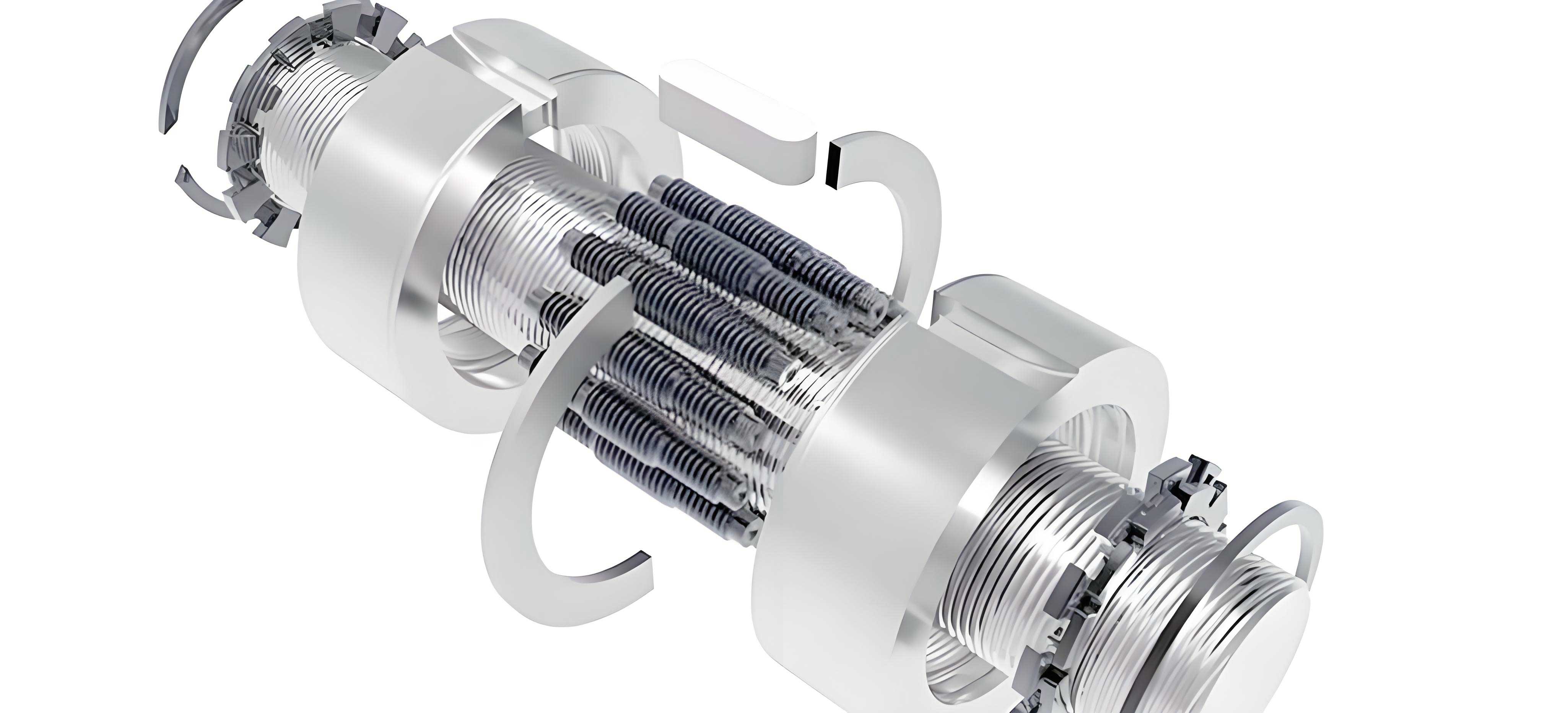
The image above provides a visual reference for the intricate components of a planetary roller screw assembly, highlighting the complexity of the threaded rollers and nut. To meet the growing and diverse market demand, future development of machining equipment will focus on enhancing productivity through faster axes, smarter adaptive control algorithms that optimize grinding parameters in real-time, and integrated in-process measurement systems that close the quality control loop immediately on the machine tool itself.
In conclusion, the planetary roller screw assembly represents a sophisticated leap in linear motion technology. While its design complexity and stringent manufacturing requirements pose significant challenges, its unparalleled combination of strength, stiffness, precision, and longevity ensures its critical role in advancing industries from advanced robotics and electric mobility to aerospace and beyond. My ongoing analysis and development efforts continue to focus on refining design methodologies, overcoming manufacturing bottlenecks, and pushing the boundaries of what is possible with this remarkable precision transmission component. The future will undoubtedly see wider adoption and further innovation in the technology surrounding the planetary roller screw assembly.