
In my extensive work in precision machining and metrology, I have consistently faced the need for efficient and accurate calibration of complex workpiece features such as small bores, internal grooves, and定位孔. Traditional measurement setups often proved too slow or insufficiently precise, especially for high-tolerance applications. This led me to develop and implement a specialized lever-type dial indicator fixture that mounts directly onto the tool post of a lathe. This system, combined with various attachments and innovative drive mechanisms involving screw gears, has revolutionized my approach to in-process calibration, offering remarkable speed and repeatability.
The core fixture, as I designed it, consists of a main fixture body that holds a dial indicator, inserted into a rotatable split sleeve. This assembly is secured to the lathe’s tool post using the existing clamping screw. When tightened, the fixture becomes rigidly fixed, providing a stable reference for measurements. This simple yet effective mounting method allows for quick installation and removal, facilitating flexible use across different machines and setups. The ability to rotate the split sleeve enables the indicator to be positioned optimally for accessing various workpiece geometries.
For different measurement tasks, I employ a range of attachments. When calibrating the bottom and sidewalls of internal grooves, or checking the positional and form tolerances of external diameters and end faces, I use a standard lever attachment. For exceptionally small internal diameters or workpieces with pre-drilled定位孔 mounted on faceplates, a specialized attachment with a small, offset lever and a球形测头 is utilized. By inserting this probe into the small hole and making contact with the bore wall, I can rotate the workpiece and observe any radial runout directly on the dial indicator. Furthermore, the fixture body itself can be removed from the split sleeve and directly clamped in the lathe chuck for calibrating external diameters, thread major and minor diameters, and assessing roundness or straightness deviations.
The reading on the dial indicator does not directly correspond to the actual displacement at the measurement point due to the lever amplification. Therefore, a precise mathematical relationship is essential. The value displayed on the dial, which I denote as $R$, is derived from the geometry of the lever system. Let $L_1$ be the distance from the probe tip (the contact point on the workpiece) to the pivot axis of the small lever. Let $L_2$ be the distance from that same pivot axis to the point where the lever actuates the dial indicator’s plunger. Finally, let $S$ represent the actual displacement sensitivity or reading of the dial indicator itself per its graduation (e.g., 0.01 mm per division). The calibrated reading is given by the following fundamental formula, which I constantly reference and verify:
$$ R = \left( \frac{L_1}{L_2} \right) \times S $$
This equation highlights the lever ratio’s critical role. For instance, if $L_1$ is 20 mm and $L_2$ is 40 mm, the ratio $L_1/L_2$ is 0.5. This means a 0.01 mm movement at the probe tip ($S$) will result in only a 0.005 mm movement registered by the indicator’s internal mechanism, yielding a reading $R$ of 0.005 mm on the dial. This effectively increases the measurement resolution. Conversely, a ratio greater than 1 would amplify the reading. Therefore, by carefully designing attachments with specific $L_1$ lengths and marking them with their calibrated ratios, I can tailor the fixture for different sensitivity requirements. To achieve even higher effective precision than the indicator’s native resolution, I configure the system such that $L_1 < L_2$, making the ratio less than 1. This “de-magnification” allows me to detect smaller actual deviations than the dial’s smallest graduation would normally permit.
| Attachment Identifier | Primary Application | Lever Arm Length $L_1$ (mm) | Fixed Pivot-to-Indicator Distance $L_2$ (mm) | Calibration Factor $k = L_1 / L_2$ | Effective Resolution (if $S = 0.01$ mm) |
|---|---|---|---|---|---|
| A-1 | General internal bores & grooves | 50.0 | 50.0 | 1.000 | 0.010 mm |
| A-2 (High-Res) | Precision small bore calibration | 25.0 | 100.0 | 0.250 | 0.0025 mm |
| A-3 (Extended) | Deep internal features | 80.0 | 50.0 | 1.600 | 0.016 mm |
| B-1 (Offset Probe) | Micro-bores and定位孔 | 10.0 | 50.0 | 0.200 | 0.0020 mm |
| C-1 (External) | External diameter & thread runout | 40.0 | 40.0 | 1.000 | 0.010 mm |
The practical application involves solving for the actual workpiece deviation $D$ based on the dial reading $R$. From the formula $R = k \times S$, and knowing $S$ represents the actual physical displacement at the probe, we have $D = S = R / k$. Therefore, if the dial shows a reading $R = 0.005$ mm using attachment A-2 ($k=0.25$), the actual radial deviation of the bore is:
$$ D = \frac{R}{k} = \frac{0.005 \text{ mm}}{0.25} = 0.020 \text{ mm} $$
This reverse calculation is crucial for interpreting measurements correctly. I often create quick-reference charts for my technicians based on these formulas to prevent errors during high-speed production checks.
While the lever fixture excels at static or rotational measurement, I encountered a related challenge in dynamic processes like sintering, where thermal expansion and contraction cause workpiece length to change continuously. Maintaining consistent tension or alignment requires the clamping mechanism to move in perfect sync with the workpiece. A simple counterweight system, as I initially tried, is inadequate because the compensating force is constant and cannot track the non-linear, time-variant shrinkage. This often led to workpiece bending or detachment from the clamps, compromising quality.
To solve this, I engineered an automatic tracking system centered around a precision differential mechanism. The heart of this system is a worm gear differential speed reducer—a brilliant application of screw gears. In this design, screw gears provide the necessary high reduction ratio, self-locking capability, and smooth motion transfer essential for precise positional control. The lower clamp is connected to the output of this differential. A pressure sensor is integrated into the clamp assembly to monitor the force on the workpiece in real-time.
The differential has two input shafts. One is driven by a standard AC motor providing a base speed, and the other by a controllable DC motor. The output shaft’s rotational speed—and thus the linear translation speed of the lower clamp—is determined by the difference in speeds between these two inputs. The control logic is straightforward: the pressure sensor’s signal is fed into a controller that adjusts the DC motor’s speed. If the workpiece shrinks (increasing tension), the controller commands the DC motor to change speed such that the differential output makes the clamp rise, relieving tension. If the workpiece expands, the opposite occurs. This creates a closed-loop system where the clamp automatically follows the workpiece’s length changes with high fidelity.
The kinematics of this screw gear differential are fascinating. If $\omega_{ac}$ is the angular speed of the AC motor input, $\omega_{dc}$ is the angular speed of the DC motor input, and $\omega_{out}$ is the output speed, the relationship for a simple differential can be expressed as:
$$ \omega_{out} = \frac{1}{2} (\omega_{ac} \pm \omega_{dc}) $$
The actual gearing ratio of the screw gears modifies this. For a worm gear set with a ratio $N_w:1$, and considering the differential assembly, the final output speed governing the linear feed $v$ of the clamp (with lead screw pitch $p$) becomes:
$$ v = \frac{p}{2 \pi} \cdot \frac{1}{N_w} \cdot (\omega_{ac} – \omega_{dc}) $$
By only varying $\omega_{dc}$, which is easily done with a DC motor controller, I can precisely and smoothly control $v$, enabling perfect tracking. The self-locking nature of the screw gears prevents back-driving from the clamp load, ensuring stability when the motors are stopped.
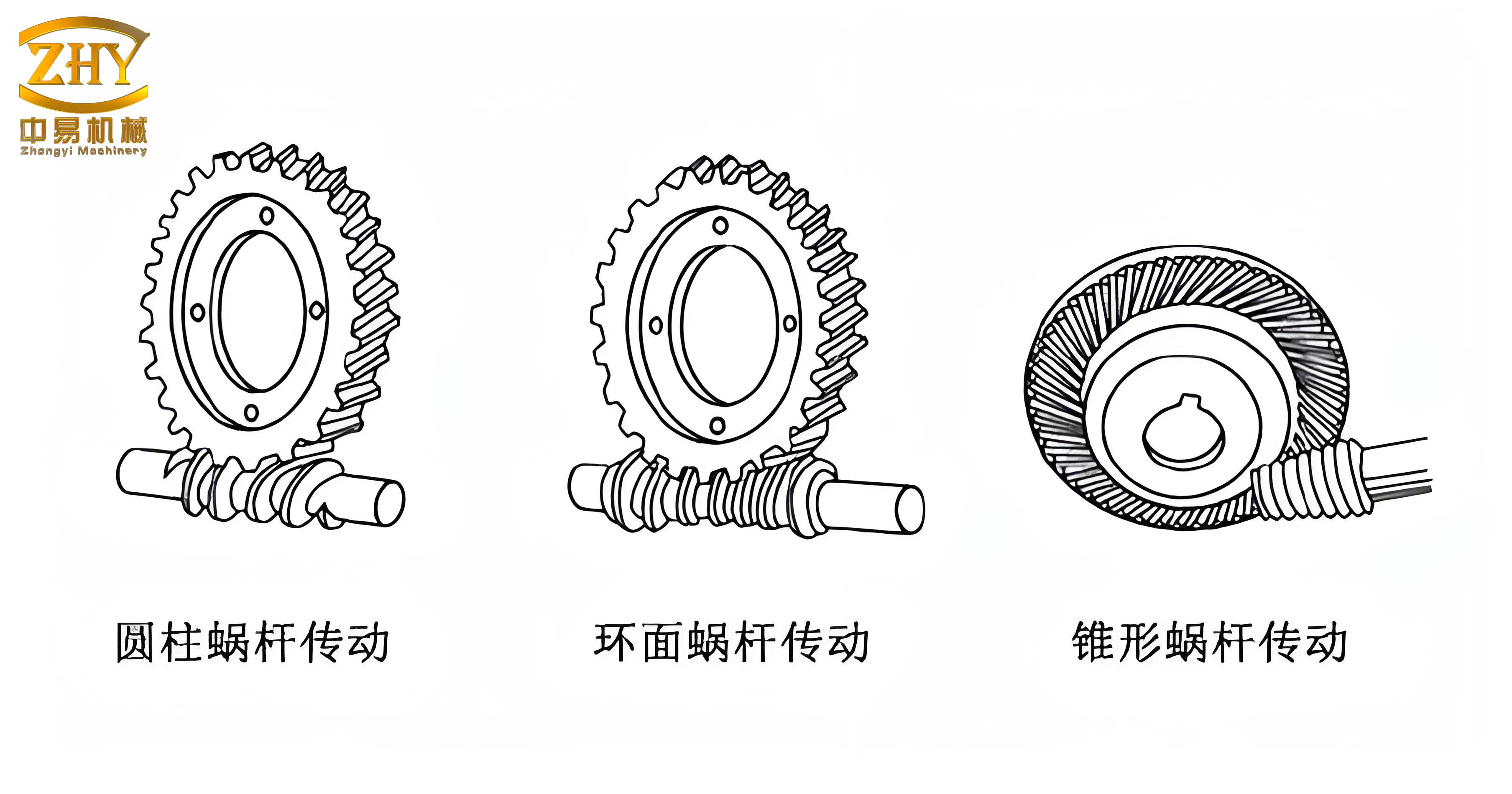
The implementation of screw gears in this context underscores their versatility beyond simple power transmission. Their ability to provide high torque multiplication in a compact space, combined with precise angular positioning, makes them ideal for metrology and control applications. In my calibration fixture’s evolution, I even explored using miniature screw gears for fine-adjustment mechanisms on the indicator attachments themselves, allowing for micro-positioning of the probe tip to achieve the exact $L_1$ distance required for a specific calibration factor.
Returning to the dial indicator fixture, the process for calibrating a workpiece mounted on a lathe is methodical. First, I select the appropriate attachment based on the feature to be measured and the desired effective resolution. I insert it into the fixture body and secure the dial indicator. After mounting the assembly on the tool post, I bring the probe into gentle contact with a master ring or a known-good reference surface on the workpiece. I then zero the dial indicator. As the workpiece is rotated, any deviation from perfect concentricity or roundness causes the probe to move, actuating the lever and displaying a magnified or demagnified reading on the dial according to the pre-calculated factor. For internal features, I often use a sweeping motion, carefully interpreting the readings to map the bore’s geometry.
The advantages of this integrated system are manifold. Speed is significantly increased because the fixture is always mounted and ready, eliminating the need for repeated setup of standalone measuring instruments. Accuracy is enhanced not only by the mechanical leverage but also by the rigidity of the mounting, which minimizes vibration and deflection. The system’s flexibility, through interchangeable attachments, makes it a universal tool for many measurement scenarios on the shop floor.
To further elaborate on the mathematical foundation, let’s consider the error analysis. The overall measurement uncertainty $U_R$ of the reading $R$ depends on uncertainties in $L_1$, $L_2$, and $S$. Applying error propagation to the formula $R = (L_1/L_2) S$:
$$ \left( \frac{U_R}{R} \right)^2 = \left( \frac{U_{L_1}}{L_1} \right)^2 + \left( \frac{U_{L_2}}{L_2} \right)^2 + \left( \frac{U_S}{S} \right)^2 $$
Where $U_{L_1}$, $U_{L_2}$, and $U_S$ are the absolute uncertainties in each parameter. This shows that to maintain high precision, the machining and assembly tolerances for the lever arms ($L_1$ and $L_2$) must be very tight. I typically machine these components to a tolerance of ±0.01 mm or better. The dial indicator’s own uncertainty $U_S$ is usually specified by the manufacturer. For a high-resolution indicator with $S=0.001$ mm per division, $U_S$ might be ±0.0005 mm. This rigorous approach to error budgeting ensures the reliability of my calibration results.
In parallel, the automatic tracking system using screw gears also requires careful design calculation. The torque required at the differential output to move the clamp under load determines the sizing of the screw gears. The torque $T_{out}$ needed to overcome a force $F$ (from the pressure sensor) via a lead screw with pitch $p$ and efficiency $\eta$ is approximately:
$$ T_{out} = \frac{F \cdot p}{2 \pi \eta} $$
This output torque is then related back to the input torques from the motors through the screw gear ratios. Ensuring that the screw gears are not overloaded is critical for long-term reliability and precision. I often select worm gears with bronze wheels to ensure smooth operation and good wear characteristics in this continuous duty application.
| Aspect | Traditional Calibration & Clamping | Lever Fixture with Automatic Screw Gear Tracking |
|---|---|---|
| Setup Time | High (10-15 minutes per workpiece) | Low (2-3 minutes, fixture remains mounted) |
| Measurement Resolution | Limited by indicator (e.g., 0.01 mm) | Enhanced by lever ratio (e.g., down to 0.0025 mm) |
| Dynamic Process Tracking | Manual adjustment or fixed counterweight | Fully automatic, closed-loop via screw gear differential |
| Consistency in Production | Variable, operator-dependent | High, repeatable, formula-driven |
| Application Range | Often limited to external features | Comprehensive (internal/external, static/dynamic) |
| Key Mechanical Element | Simple clamps and stands | Precision levers and screw gears |
The synergy between the precision measurement principle of the lever fixture and the motion control capability provided by screw gears represents a powerful combination in advanced manufacturing. In my practice, I have extended these concepts to other areas. For example, I have designed custom jigs for grinding machines that use similar lever amplification for in-situ wheel profiling, again relying on robust screw gears for the fine adjustment feeds. Another application is in coordinate measuring machine (CMM) accessory design, where probe extensions with known lever ratios can be used to reach difficult features, though the mathematical compensation is handled by software rather than mechanical scaling.
Looking at the broader picture, the principles embedded in this work—mechanical advantage, kinematic design, closed-loop control, and the strategic use of components like screw gears—are fundamental to mechatronics. The formula $R = (L_1/L_2) S$ is more than a calculation tool; it is a design philosophy that encourages thinking about how to tailor instrument response to the task at hand. Similarly, the implementation of the screw gear differential is a lesson in transforming a rotational power transmission element into a precise linear motion controller through clever system integration.
In conclusion, the lever-type dial indicator fixture, governed by its foundational formula, and its companion automatic tracking system, empowered by reliable screw gears, have become cornerstone technologies in my quest for manufacturing excellence. They exemplify how understanding basic mechanics and applying robust components like screw gears can solve complex practical problems, leading to faster setups, higher accuracy, and more consistent production outcomes. The continuous refinement of these systems, including exploring new materials for lever arms or more efficient designs for screw gears, remains an ongoing and rewarding pursuit in my engineering endeavors.