
In the manufacturing of power transmission components, the machining of housings for worm gears represents a significant technical challenge. The term “worm gears” refers to a compact and highly efficient gear arrangement where a threaded screw (the worm) meshes with a toothed wheel (the worm gear). Achieving the required precision for these assemblies is paramount, as even minor deviations can lead to excessive backlash, reduced efficiency, increased noise, and premature failure. The primary machining operations for a worm gearbox housing typically involve boring several key bearing bores with strict tolerances for diameter, location, and, most critically, their geometric relationships such as coaxiality and perpendicularity. This article details the design rationale, application, and benefits of a dedicated rotary fixture developed to enhance the precision and efficiency of machining worm gearboxes on a standard horizontal boring mill.
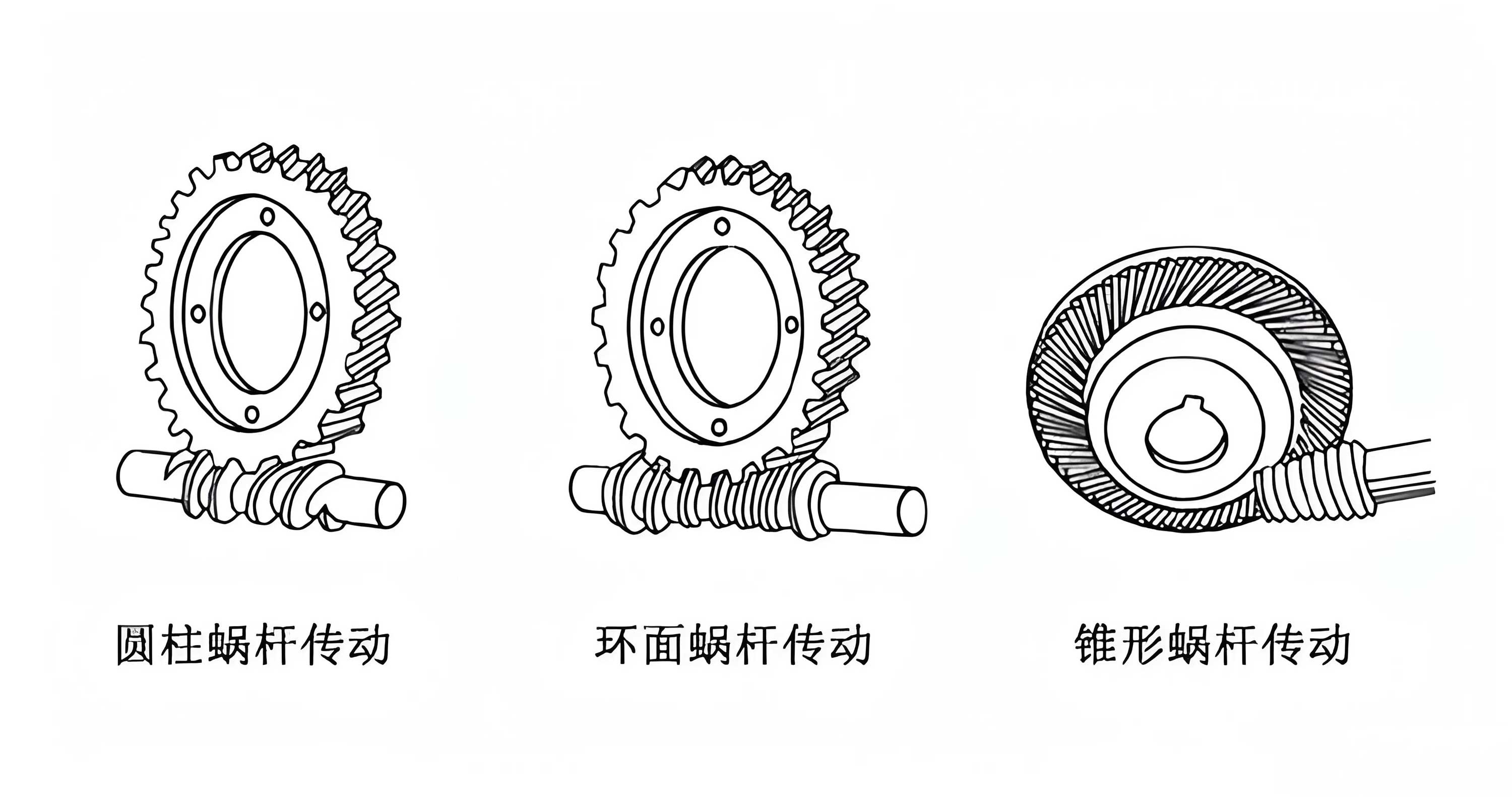
The core problem in machining a square or rectangular worm gearbox housing on a boring mill lies in accessing all four critical faces that require machining. A standard horizontal boring mill, such as the TPX6111B/2 model with a large worktable, is inherently designed for large components. When presented with a relatively small worm gearbox, the operator is forced into a suboptimal choice: either performing multiple setups or excessively extending the spindle. Multiple setups inevitably introduce setup errors, as the workpiece must be unclamped, re-positioned, and re-indicated for each new face. This process is not only time-consuming but also compounds errors, making it difficult to hold the tight positional tolerances required for smooth worm gears operation. Extending the spindle far beyond its normal working range severely compromises rigidity, leading to chatter, poor surface finish, and dimensional inaccuracy. The fundamental need, therefore, is for a method that allows all critical bore and face operations on the worm gearbox to be completed in a single setup, thereby eliminating setup error and maintaining optimal spindle rigidity.
The designed solution is a modular rotary fixture. Its primary function is to act as a precision indexing platform mounted permanently to the boring mill’s table. The worm gearbox is clamped to this platform once. The platform itself can then be rotated accurately by 90-degree increments to present each of the four sides to the machine spindle, all without disturbing the workpiece’s primary datum location. This principle transforms the effective working envelope of the machine for that specific part, allowing a “small part” to be treated as if it were integrated into a larger, indexable entity.
Geometric Requirements and Challenges for Worm Gears Housings
A typical worm gearbox housing requires machining on four perpendicular faces. The precision requirements for these faces are directly linked to the performance of the final worm gears assembly. The key features often include:
- Face A: Bores for the worm gear shaft bearings. These are typically two coaxial bores (e.g., ϕ40H7) with a strict coaxiality tolerance (e.g., 0.05 mm). The face itself must be square to the axis, and surrounding tapped holes for the bearing caps have positional tolerances.
- Face B: Bore for the worm shaft bearing (e.g., ϕ34H8). This bore’s axis must be precisely perpendicular to the axis of the bores on Face A, with a tight perpendicularity callout (e.g., 0.05 mm). This 90-degree relationship is critical for the correct meshing of the worm and the worm gear.
- Face C & D: Often include auxiliary bores, ports, or mounting features. Face C might contain another set of coaxial bores (e.g., ϕ42H8) for an output or intermediate shaft, also with coaxiality requirements.
The critical dimensions ensuring the correct center distance between the worm and worm gear shafts are also held on these faces. For instance, the distance from a reference face to the worm bore centerline might be specified as $191.5^{+0.3}_{+0.2}$ mm, and the location of the worm gear bore as $146.0^{0}_{-0.1}$ mm. The relationship between these dimensions defines the operational center distance of the worm gears, affecting gear mesh and backlash.
The primary challenge is maintaining the 0.05 mm coaxiality across two separated bores and, even more critically, ensuring the 0.05 mm perpendicularity between the worm axis and the worm gear axis. In a multiple-setup scenario, each new setup has its own alignment error ($\epsilon_{setup}$). The final perpendicularity error ($\Delta_{\perp}$) can be approximated as the root sum square of the individual alignment errors on Face A and Face B:
$$\Delta_{\perp} \approx \sqrt{\epsilon_{setup, A}^2 + \epsilon_{setup, B}^2}$$
With a fixture that eliminates re-setup, $\epsilon_{setup}$ is effectively reduced to the inherent indexing accuracy of the fixture itself, which can be designed and manufactured to be far superior to manual realignment.
Detailed Fixture Design and Analysis
The fixture is constructed from three major sub-assemblies: the Base, the Rotary Table, and the Clamping/Locating system for the worm gearbox.
1. Base Plate: This is a rigid, stress-relieved steel plate that is permanently bolted to the boring mill’s worktable. Its bottom surface is machined to ensure flatness and parallelism with the machine’s axes when installed. It features a precision center hub to accept the rotary table’s bearing system.
2. Rotary Table: This is the heart of the fixture. It mounts onto the base via a large-diameter precision tapered roller bearing (or a combination of axial and radial bearings) to ensure smooth rotation with minimal runout. The table features a precisely machined grid of locating holes. A 90-degree indexing system is implemented using hardened and ground dowel pin holes. The table has four sets of such holes, each set corresponding to one of the four machining positions. After rotating the table manually to the next position, a manual or hydraulic clamping mechanism secures it firmly to the base, and a diamond-pin or spring-loaded plunger engages the locating hole to provide positive, repeatable angular positioning. The indexing accuracy ($\theta_{acc}$) of this system is a key performance parameter and is typically held to within ±15 arc-seconds or better for such applications. The worm gearbox mounting face on the rotary table is machined in-situ (after the fixture is assembled) to guarantee its perpendicularity to the rotation axis.
3. Workpiece Locating and Clamping: The worm gearbox is located on the rotary table using a 3-2-1 locating principle. Two precision pads or rails establish primary location on the bottom surface, two side stops establish secondary location, and a single stop establishes tertiary location. Clamping is achieved using low-profile swing clamps or hydraulic clamps acting on robust sections of the casting, ensuring the delicate bore features are not distorted. The clamping force ($F_c$) must be sufficient to counteract the machining forces ($F_m$) without causing deformation. A simple static model can be used:
$$F_c \cdot \mu \geq k \cdot F_m$$
where $\mu$ is the coefficient of friction between clamp and workpiece, and $k$ is a safety factor (typically 2-3). Excessive force must be avoided to prevent distorting the worm gearbox casting.
The stiffness of the entire system is critical. The composite static stiffness ($K_{total}$) from the tool tip to the fixture base affects machining stability and accuracy. It can be modeled as a series of springs:
$$\frac{1}{K_{total}} = \frac{1}{K_{tool}} + \frac{1}{K_{spindle}} + \frac{1}{K_{fixture}} + \frac{1}{K_{workpiece}}$$
Where $K_{fixture}$ is the stiffness of the rotary fixture. By designing the fixture with generous cross-sections, pre-loaded bearings, and secure connections, $K_{fixture}$ is maximized, helping to maintain a high $K_{total}$ and thus improve process capability for machining the demanding features of the worm gears housing.
| Factor | Traditional Multiple Setups | Spindle Extension | Rotary Fixture Method |
|---|---|---|---|
| Setup Time | High (4x setup/indication) | Low | Low (1x setup) |
| Cumulative Setup Error | High (Additive) | N/A (Single setup) | Very Low (Governed by fixture index accuracy) |
| Spindle Rigidity | Optimal | Severely Compromised | Optimal |
| Geometric Accuracy (Coax/Perp) | Difficult to achieve <0.05mm | Poor due to chatter/deflection | Easily achieves <0.05mm |
| Process Repeatability | Low | Low | High |
| Suitability for Batch Production | Poor | Poor | Excellent |
Machining Process and Achieved Results
With the worm gearbox securely located and clamped on the rotary fixture, the machining sequence proceeds efficiently. The general workflow is:
- Initial Setup: The fixture base is permanently aligned and bolted to the machine table. The rotary table is indicated to ensure its face is parallel to the X-Z plane of the machine. The worm gearbox blank is loaded onto the rotary table, located against the pads and stops, and clamped.
- Face A Machining: The table is locked in Position 1. The machine spindle, operating at full rigidity, is used to face mill the surface, then bore and finish the two ϕ40H7 bores to size and coaxiality. The tapping cycle for the M6 holes is also performed.
- Indexing: Clamps securing the rotary table to the base are released. The table is rotated precisely 90 degrees until the positive index pin engages the next set of holes. The table clamps are re-engaged. Crucially, the worm gearbox itself is never moved or disturbed.
- Face B Machining: With the table in Position 2, the ϕ34H8 bore for the worm shaft is machined. Because the spatial relationship between Face A and Face B is now defined solely by the fixture’s 90-degree index accuracy and not by manual realignment, the perpendicularity of this bore to the previously machined axis is inherently guaranteed within the capability of the fixture.
- Completion: Steps 3 and 4 are repeated for Positions 3 and 4 to machine the remaining features on Faces C and D.
The effectiveness of this method is clearly demonstrated in the quality of the produced worm gears housings. The following table shows measurement data from a sample batch, confirming that the critical tolerances are consistently met.
| Housing Serial | ϕ40H7 Coaxiality (mm) | ϕ42H8 Coaxiality (mm) | ϕ34H8 Perpendicularity (mm) | Center Distance 191.5 mm (Actual) | Center Distance 146.0 mm (Actual) | Face Location 38.5 mm (Actual) |
|---|---|---|---|---|---|---|
| WG-01 | 0.05 | 0.04 | 0.04 | 191.72 | 145.95 | 38.52 |
| WG-02 | 0.03 | 0.03 | 0.04 | 191.70 | 145.94 | 38.55 |
| WG-03 | 0.04 | 0.04 | 0.03 | 191.75 | 145.97 | 38.49 |
| WG-04 | 0.03 | 0.02 | 0.03 | 191.73 | 145.96 | 38.50 |
| WG-05 | 0.04 | 0.03 | 0.04 | 191.71 | 145.93 | 38.53 |
The data shows that the geometric tolerances for coaxiality and perpendicularity are not only met but often significantly better than the 0.05 mm specification. This consistency is the direct result of eliminating setup variation. The dimensional results for the critical center distances all fall well within the specified tolerance bands, ensuring the correct operational geometry for the worm gears.
Economic and Production Impact
The implementation of this dedicated fixture has a transformative effect on the production of worm gearboxes. The most significant gain is in productivity. By eliminating three out of four setups, the non-cutting time is drastically reduced. A quantitative analysis of cycle times often reveals an improvement exceeding 20-30%. The equation for total part cycle time ($T_{total}$) illustrates this:
$$T_{total} = T_{setup} + T_{machine}$$
With the traditional method: $T_{total, trad} = 4 \cdot T_{setup} + T_{machine}$
With the fixture method: $T_{total, fixture} = 1 \cdot T_{setup} + T_{machine} + n \cdot T_{index}$
Where $T_{index}$ is the time to index the fixture (typically less than 1 minute). Since $T_{setup}$ (involving cleaning, indicating, and trial cuts) can be 15-30 minutes per face, the savings are substantial.
Furthermore, the high and consistent quality reduces scrap and rework. The fixture also de-skills the operation to a degree; once the initial fixture alignment is mastered by a skilled machinist, subsequent parts can be loaded and run by less experienced operators with a high degree of confidence in the outcome. This makes the method exceptionally suitable for small to medium batch production of worm gears assemblies, where consistent quality and efficient throughput are key competitive factors.
Design Extensibility and Future Applications
The core principle of this fixture—using a precision-indexing sub-table to present multiple faces of a workpiece to a tool in a single setup—is highly versatile. While this instance was designed specifically for a square worm gearbox, the concept can be adapted for a wide variety of prismatic parts. The design of the rotary table’s top plate is the variable element. For a different family of parts, such as a hexagonal valve block or a custom bracket, a new top plate with appropriate locating and clamping features for that part would be designed. This new plate would then interface with the same standard base and indexing mechanism. This modularity makes the initial investment in the high-precision base and indexer cost-effective over many projects.
Future enhancements could include integrating a rotary encoder or a precision angular measuring system for direct feedback on table position, further reducing the potential for human error during indexing. Automation could also be introduced, with pneumatic or hydraulic actuators for clamping and indexing, moving towards a semi-automated machining cell for families of worm gears and other complex housings.
In conclusion, the challenge of machining precise worm gears housings on standard boring equipment is effectively solved through the application of a well-designed rotary fixture. This fixture addresses the fundamental limitations of multiple setups and spindle overhang by providing a rigid, precise, and repeatable method to index the workpiece. The result is a dramatic improvement in the achievable geometric accuracy for features like bore coaxiality and perpendicularity—features that are absolutely critical for the efficient and quiet operation of the final worm gears drive. The gains in productivity, consistency, and quality directly contribute to the reliable and cost-effective manufacture of these essential power transmission components. The design philosophy underscores a key tenet of precision machining: often, the most significant gains in capability come not from the machine tool itself, but from the innovative workholding that connects the part to it.