
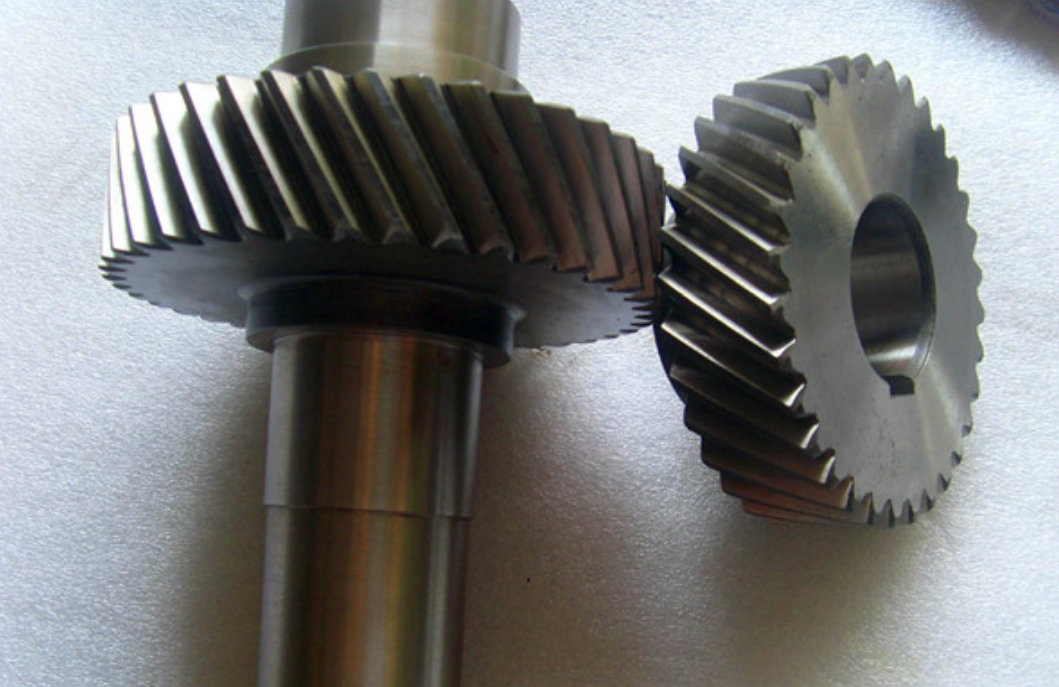
The relentless pursuit of higher performance in advanced mechanical systems has placed unprecedented demands on the precision and acoustic behavior of power transmission components. Among these, helical gears are pivotal due to their smooth engagement and high load-carrying capacity. To further enhance their performance, particularly in reducing noise and vibration under load, deliberate modifications to the ideal involute tooth profile are often employed. Form grinding stands out as a highly effective and efficient method for manufacturing such precision-modified helical gears, as it can directly replicate a complex wheel profile onto the gear tooth. However, the fidelity of this replication—the accuracy of the final tooth profile—hinges on two critical factors: the precise geometry of the grinding wheel itself and the positional accuracy of the grinding machine axes. Any deviation in the wheel profile or in the machine’s setup parameters will be directly imparted onto the gear tooth, leading to profile errors that can compromise the intended modification and the gear’s functional performance. This article delves into the comprehensive methodology for achieving high-precision form grinding of modified helical gears, encompassing the mathematical foundation for wheel profiling, the analysis of error sources, and the development of practical compensation strategies.
Mathematical Modeling for Modified Helical Gears and Wheel Profiling
The journey to precision begins with a rigorous mathematical definition of the target tooth surface. For a modified helical gear, this surface is no longer a standard involute helicoid but a derived geometry that incorporates intentional deviations.
Tooth Profile Modification Curve
Modification is typically applied in the profile direction (over the tooth height). A common and effective approach is the 2nd-order parabolic modification, which allows for controlled crowning (barreling) or tip/root relief. Consider an end-section view of a gear tooth. In a coordinate system \( S_1 \) where the X-axis coincides with the tooth space centerline, the position vector of a point on a standard involute is defined by the base circle radius \( r_b \) and the involute roll angle \( u \). The modification amount \( \Delta E \) is superposed onto this involute. For a parabolic crowning centered within the active profile, the modification can be defined piecewise:
$$
\Delta E(u) =
\begin{cases}
A (u – u_c)^2, & u_d \leq u < u_c \\
0, & u_c \leq u \leq u_b \\
A (u – u_b)^2, & u_b < u \leq u_a
\end{cases}
$$
where \( A \) is the modification amplitude coefficient, and \( u_a, u_b, u_c, u_d \) define the start and end roll angles for the modification zones (tip, unmodified middle, and root). Consequently, the vector equation for the modified end-section profile in coordinate system \( S_2 \) becomes:
$$
\mathbf{r_2}(u) =
\begin{bmatrix}
r_b \cos(\sigma_0 + u) + (r_b u – \Delta E(u)) \sin(\sigma_0 + u) \\
r_b \sin(\sigma_0 + u) – (r_b u – \Delta E(u)) \cos(\sigma_0 + u) \\
0 \\
1
\end{bmatrix}
$$
where \( \sigma_0 \) is the base circle half-space angle. The corresponding unit normal vector is:
$$
\mathbf{n_2} =
\begin{bmatrix}
\sin(\sigma_0 + u) \\
-\cos(\sigma_0 + u) \\
0
\end{bmatrix}
$$
Surface Equation of the Modified Helical Gear
The three-dimensional tooth surface of the helical gear is generated by performing a screw motion on the modified end-section profile. This motion combines a rotation \( \psi \) around the gear axis with a proportional translation \( h \) along the same axis. Their relationship is governed by the helix parameter:
$$
\psi = \frac{2 h \sin \beta}{m_n z}
$$
where \( \beta \) is the helix angle, \( m_n \) is the normal module, and \( z \) is the number of teeth. Applying this screw transformation matrix \( \mathbf{M}_{32} \) to \( \mathbf{r_2}(u) \) yields the tooth surface equation in coordinate system \( S_3 \), fixed to the gear:
$$
\mathbf{r_3}(u, h) = \mathbf{M}_{32} \cdot \mathbf{r_2}(u) =
\begin{bmatrix}
r_b \cos(\sigma_0 + u \mp \psi) + (r_b u – \Delta E) \sin(\sigma_0 + u \mp \psi) \\
r_b \sin(\sigma_0 + u \mp \psi) – (r_b u – \Delta E) \cos(\sigma_0 + u \mp \psi) \\
h \\
1
\end{bmatrix}
$$
The upper sign refers to a right-hand helical gear and the lower to a left-hand one. The surface normal is transformed accordingly.
Determination of the Grinding Wheel Profile
In form grinding, the wheel’s axial section profile must be the exact conjugate shape to the gear tooth space. The coordinate system for the grinding process involves the gear system \( S_3 \) and the wheel system \( S_G \). The fundamental principle is that during the grinding moment, a spatial contact line exists between the wheel surface and the gear tooth surface. By finding this line of contact and then transforming it into the axial plane of the grinding wheel (coordinate system \( S_4 \)), we obtain the required wheel profile coordinates.
The key is the meshing condition, which states that the relative velocity between the wheel and the gear at the contact point must be perpendicular to the common surface normal. This condition can be expressed as:
$$
\mathbf{n} \cdot \mathbf{v}^{(34)} = 0
$$
Where \( \mathbf{n} \) is the common normal vector and \( \mathbf{v}^{(34)} \) is the relative velocity. For the setup where the wheel axis is crossed relative to the gear axis by the helix angle \( \beta \), solving this equation along with the surface equation \( \mathbf{r_3}(u, h) \) determines the relationship \( h = h(u) \) for points on the contact line. Substituting this into \( \mathbf{r_3} \) gives the contact line coordinates. Finally, transforming these coordinates through matrices \( \mathbf{M}_{G3} \) (accounting for center distance \( a \)) and \( \mathbf{M}_{4G} \) (accounting for the wheel swivel angle \( \Sigma \)) maps them into the wheel’s axial plane \( S_4 \):
$$
\mathbf{r_4}(u) = \mathbf{M}_{4G} \cdot \mathbf{M}_{G3} \cdot \mathbf{r_3}(u, h(u))
$$
The resulting set of points \( \mathbf{r_4}(u) \) defines the precise axial profile of the form grinding wheel required to generate the modified helical gear tooth. Accurate calculation of these points is the first critical step for precision manufacturing of helical gears.
Tooth Profile Error Analysis and Machine Compensation Strategy
Even with a perfectly dressed wheel, errors in the positioning of the grinding machine axes will manifest as deviations in the ground tooth profile. Therefore, understanding and compensating for these errors is paramount.
Quantifying Profile Deviation
The actual ground profile, affected by machine errors, can be modeled as the theoretical modified profile with small shifts. In the end-section view, this can be approximated as:
$$
\mathbf{r_{act}}(u) =
\begin{bmatrix}
r_b \cos(\sigma_0 + u) + (r_b u – \Delta E) \sin(\sigma_0 + u) + \delta_x \\
r_b \sin(\sigma_0 + u) – (r_b u – \Delta E) \cos(\sigma_0 + u) + \delta_y \\
0
\end{bmatrix}
$$
where \( \delta_x \) and \( \delta_y \) represent small translational errors in the radial (towards gear center) and tangential directions, respectively, during the grinding process. To evaluate the profile deviation, the actual profile is rotated by a small angle \( \sigma_e \) so that it best aligns with the theoretical profile at the evaluation reference point (usually the pitch circle). The normal distance between corresponding points on the two profiles is the profile error \( e(i) \). The profile slope deviation \( f_{H\alpha} \) is then calculated as the difference in error between the end points of the evaluation range:
$$
f_{H\alpha} = e(n) – e(1)
$$
Error Source Analysis and Coupling Effect
The primary machine axes influencing the profile of a single flank in form grinding are the radial (X) and tangential (Y) axes. A numerical simulation reveals their distinct coupling effects:
- Radial Error (\( \delta_x \)): A positive \( \delta_x \) (wheel farther from gear center) primarily shifts the entire profile curve outwards. The effect is more pronounced at the tooth tip than the root, resulting in a significant profile slope deviation. It affects left and right flanks symmetrically but in opposite directions relative to the tooth space centerline.
- Tangential Error (\( \delta_y \)): A positive \( \delta_y \) shifts the profile along the tooth trace. Its key effect is to create a nearly parallel shift of the profile error curve for a single flank. Crucially, it affects left and right flanks of the same tooth in the same direction.
The following table summarizes the influence of machine axis errors on the measured profile slope deviation for the two flanks (A and B) of a single helical gear tooth.
| Machine Axis Error | Effect on Flank A Slope \( f_{H\alpha}^A \) | Effect on Flank B Slope \( f_{H\alpha}^B \) | Combined Effect Pattern |
|---|---|---|---|
| Radial Error \( +\delta_x \) | Increases (or decreases) significantly | Decreases (or increases) significantly | Opposite signs for A and B |
| Tangential Error \( +\delta_y \) | Increases slightly | Increases slightly | Same sign for A and B |
Integrated Compensation Methodology
Since form grinding simultaneously grinds both flanks of a tooth space, compensating an error on one flank inherently alters the other. Therefore, a holistic compensation strategy is needed. Based on the coupling analysis, the measured profile slope deviations \( f_{H\alpha}^A \) and \( f_{H\alpha}^B \) on the two flanks can be decoupled into contributions from radial and tangential errors:
$$
\begin{aligned}
f_{H\alpha}^{(\text{radial})} &\approx \frac{f_{H\alpha}^A – f_{H\alpha}^B}{2} \\
f_{H\alpha}^{(\text{tangential})} &\approx \frac{f_{H\alpha}^A + f_{H\alpha}^B}{2}
\end{aligned}
$$
The sign of these calculated values indicates the direction of the required machine adjustment. By establishing the sensitivity coefficients (μm of slope deviation per μm of machine error) through simulation or calibration, the necessary compensation values \( \Delta X_{comp} \) and \( \Delta Y_{comp} \) for the machine’s radial and tangential axes can be precisely determined. This approach optimally balances the profile accuracy of both flanks of the helical gear.
Software Development and Experimental Verification
To implement the described methodology efficiently in an industrial setting, dedicated software is essential. This software integrates the functions of wheel profile calculation and machine error compensation.
Software Architecture and Functionality
The developed software is a Windows-based application. Its core functionalities are built upon the mathematical models described earlier. The workflow is as follows:
- Input Module: The user inputs all relevant parameters:
- Gear basic data (module, teeth, helix angle, pressure angle, hand).
- Modification parameters (crowning amplitude, tip/root relief, evaluation ranges).
- Grinding machine setup parameters (nominal center distance, wheel angle).
- Calculation Engine:
- Computes the coordinates of the theoretical modified tooth surface.
- Solves the meshing condition to generate the precise grinding wheel axial profile coordinates \( \mathbf{r_4}(u) \), which can be output as a CNC dressing program.
- Compensation Module:
- Accepts measured profile slope deviation data (\( f_{H\alpha}^A \), \( f_{H\alpha}^B \)) from a gear measuring center.
- Applies the decoupling algorithm to compute \( f_{H\alpha}^{(\text{radial})} \) and \( f_{H\alpha}^{(\text{tangential})} \).
- Using pre-determined sensitivity coefficients, calculates the recommended machine axis compensation values \( \Delta X_{comp} \) and \( \Delta Y_{comp} \).
Case Study: Grinding of a Modified Helical Gear
The effectiveness of the complete method is validated through a practical grinding trial. The subject is a left-hand helical gear with the parameters listed below.
| Parameter | Value |
|---|---|
| Normal Module, \( m_n \) | 2.35 mm |
| Number of Teeth, \( z \) | 27 |
| Normal Pressure Angle, \( \alpha_n \) | 22.5° |
| Helix Angle, \( \beta \) | 11° (LH) |
| Profile Modification | Parabolic Crowning (5 μm on Flank A, 4 μm on Flank B) + Tip Relief |
Step 1: Initial Grinding. The wheel was dressed using the profile coordinates generated by the software. An initial gear was ground without any machine error compensation. Measurement on a gear measuring center showed the crowning form was achieved but accompanied by large profile slope deviations (> 49 μm), indicating significant machine positioning errors.
Step 2: Measurement & Compensation. The measured slope deviations \( f_{H\alpha}^A = 66.4 \mu m \) and \( f_{H\alpha}^B = 49.0 \mu m \) were input into the software’s compensation module. The software calculated the required axis compensations.
Step 3: Corrective Grinding. The machine’s X and Y axis positions were adjusted according to the software’s output. A subsequent gear was ground with the same wheel profile but the compensated machine settings.
Step 4: Final Verification. The final gear was measured. The results confirmed a dramatic improvement. Profile slope deviations were reduced to 3.4 μm and 0.4 μm for Flanks A and B, respectively, and the total profile deviations were within 5.1 μm. Both the crowning and tip relief modifications were accurately achieved according to specification.
| Measurement Item | Flank A (Initial) | Flank B (Initial) | Flank A (Compensated) | Flank B (Compensated) | Target Specification |
|---|---|---|---|---|---|
| Total Profile Deviation \( F_\alpha \) | 66.9 μm | 55.8 μm | 5.1 μm | 2.8 μm | ≤ 11 μm |
| Profile Slope Deviation \( f_{H\alpha} \) | 66.4 μm | 49.0 μm | 3.4 μm | 0.4 μm | — |
| Profile Form Deviation (Crowning) | 4.4 μm | 7.6 μm | 2.8 μm | 3.4 μm | 5±3 μm / 4±3 μm |
This experimental validation clearly demonstrates two key outcomes: Firstly, the algorithm for generating the grinding wheel profile from the modified helical gear design is correct, as it successfully produced the intended tooth form. Secondly, the proposed methodology for analyzing measured profile errors and deriving machine axis compensations is highly effective, enabling the achievement of high-precision gear quality from a process state initially afflicted by significant errors. The integration of accurate modeling, systematic error analysis, and practical software tools provides a robust solution for the precision manufacturing of advanced modified helical gears via form grinding.