
The advancement of industrial machinery and power transmission systems places ever-increasing demands on the precision and reliability of their core components. Among these, the cylindrical helical gear stands as a critical and widely deployed element. Its characteristic helical teeth, which are set at an angle to the gear axis, provide smoother and quieter engagement, higher load capacity, and the ability to transmit motion between non-parallel shafts compared to its spur counterpart. These advantages make it indispensable in high-performance applications across automotive, aerospace, marine, and heavy machinery industries. Consequently, the accuracy of its machining parameters—such as tooth profile, pitch, helix angle, and runout—directly governs the operational efficiency, noise generation, vibration levels, and ultimate service life of the entire mechanical system. Therefore, the development of advanced, high-fidelity measurement systems for these parameters is not merely beneficial but essential for modern manufacturing quality control.
Traditional Computer Numerical Control (CNC) gear measurement systems, while highly accurate in principle, often operate under an idealized assumption of geometric perfection. They are designed to measure against a theoretically perfect digital or physical master. However, the reality of manufacturing introduces inherent, permissible micro-scale deviations or “manufacturing errors.” These errors arise from a multitude of factors including tool wear, machine tool inaccuracies, thermal effects, material inconsistencies, and clamping deflections. When a traditional system measures a real-world cylindrical gear, it may interpret these inherent, allowable manufacturing deviations as pure measurement errors or inaccuracies in the part itself. This can lead to a significant divergence between the reported measurement results and the gear’s true functional geometry, potentially causing the unnecessary rejection of acceptable parts or the acceptance of parts with undesirable functional characteristics. A more sophisticated approach is required—one that can distinguish between acceptable manufacturing variations and true functional errors.
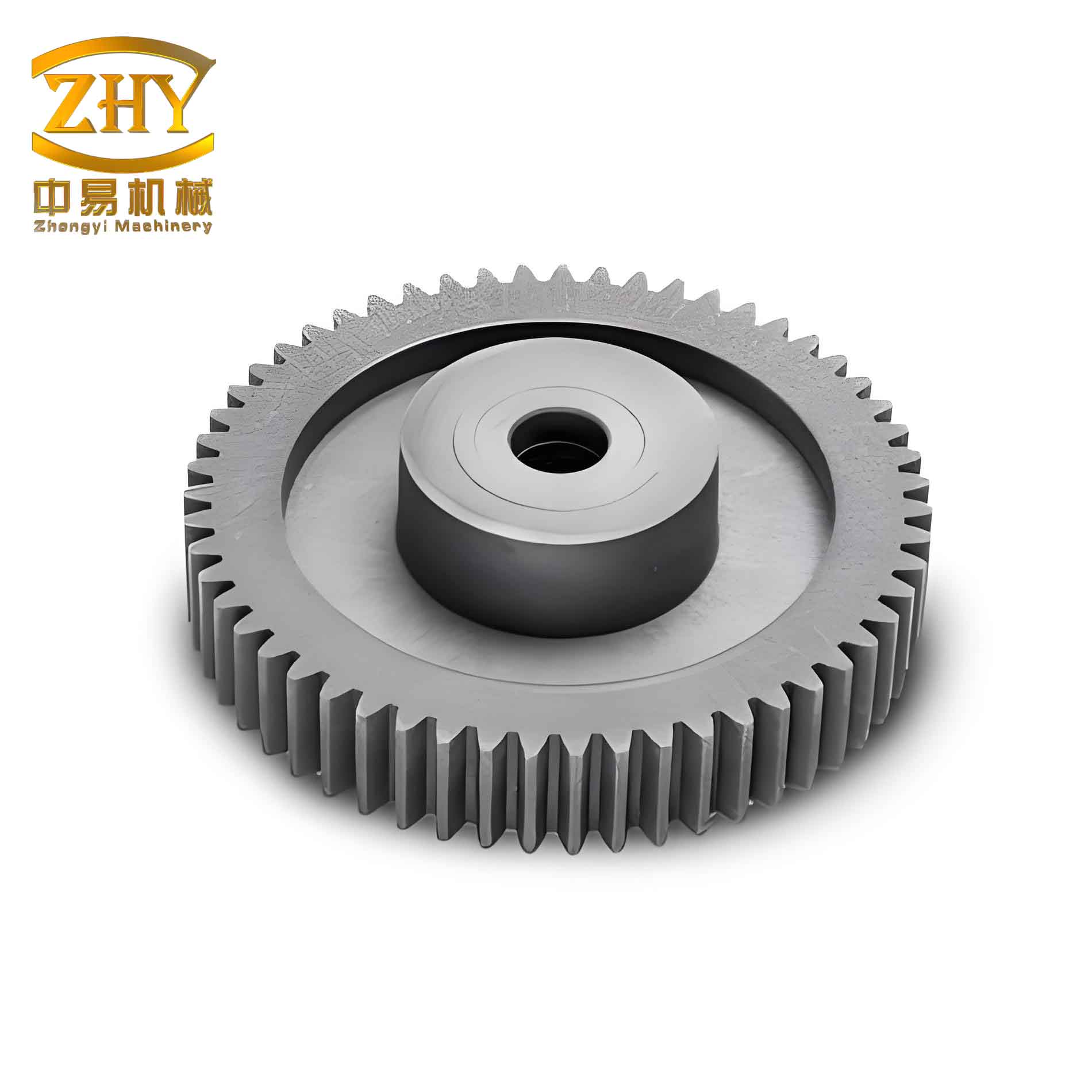
This paper details the design and implementation of a novel measurement system specifically engineered for the precise evaluation of cylindrical helical gear machining parameters, with a core philosophy of inherently accounting for and compensating typical manufacturing errors. The system synergizes high-precision mechanical staging with advanced machine vision and robust image processing algorithms to achieve a comprehensive and forgiving measurement paradigm. By doing so, it aims to provide measurement results that more accurately reflect the functional quality of the cylindrical gear within the context of permissible manufacturing tolerances.
System Architecture and Hardware Design
The proposed measurement system is built upon a modular hardware architecture centered on machine vision technology. Unlike contact-based probes that may be influenced by probe tip radius compensation and surface finish, a vision-based approach allows for non-contact, holistic assessment of the gear’s form. The primary hardware components include the imaging subsystem (camera and optics), the motion control subsystem (multi-axis stage), the illumination subsystem, and the computational core (PC). A schematic representation of the hardware integration is shown below, illustrating the data and control flow.
Imaging Subsystem: Optical Lens and Camera
The quality of image acquisition is paramount. For metrological applications, lens selection must minimize optical distortions that could be misinterpreted as gear errors. A telecentric lens is often preferred for its orthographic projection property, where magnification remains constant within its depth of field, eliminating perspective error. For this system, designed to accommodate cylindrical gear diameters in the range of 150-200 mm, a dual-telecentric lens (model analogous to WP-10M0.8X178/T) was selected. Its key parameters are summarized in Table 1.
| Component | Parameter | Value / Model |
|---|---|---|
| Optical Lens | Type | Dual Telecentric (Coaxial/Non-coaxial) |
| Magnification | 0.0415 | |
| Working Distance | 700 mm | |
| Depth of Field | 410.0 mm | |
| Resolution | 8 µm | |
| Field of View (FOV) with 1″ sensor | 308.4 mm × 231.2 mm | |
| Camera Sensor | Size | 1 inch (12.8 mm × 9.6 mm) |
| Illumination | Type | Adjustable Backlight |
The adjustable backlight illumination is critical for creating high-contrast images. It ensures the silhouette of the cylindrical gear is sharply defined against the background, facilitating accurate edge detection. The camera, paired with this lens, captures images where each pixel represents a known physical dimension, known as the pixel calibration factor (e.g., 18.021 µm/pixel as used in testing).
Motion Control Subsystem: Three-Axis Precision Stage
A single image captures only a 2D projection. To reconstruct the 3D geometry of the helical tooth flanks and enable full rotation scanning, precise relative movement between the camera and the gear is required. A high-precision three-axis (X, Y, Z) electric stage provides this capability. The stage must have sufficient travel to cover the entire gear diameter and face width, and its positioning accuracy must be an order of magnitude better than the smallest error to be measured. The selected platform (model analogous to YH2341532RQ03) meets these demands. Its specifications ensure minimal introduction of mechanical error during the measurement process, as detailed in Table 2.
| Parameter | Specification |
|---|---|
| Travel Range (per axis) | > 200 mm |
| Maximum Load Capacity | 11.5 kg |
| Absolute Positioning Accuracy | ≤ 3 µm |
| Repeatability | ≤ 1 µm |
| Backlash | ≤ 2 µm |
| Straightness | ≤ 5 µm |
| Motion Control | Stepper motor with ball screw, closed-loop feedback |
The integration of these hardware components creates a flexible and accurate measurement environment. The computer orchestrates the entire process: commanding the stage to position the gear, triggering the camera to capture images at prescribed locations, and finally processing the acquired image data to extract geometric parameters.
Software Design and Error-Inclusive Algorithm
The software is the intelligence of the system, responsible for transforming raw pixel data into meaningful geometric evaluations. Its core challenge is to extract the intended gear geometry from images that inherently contain noise, slight blur, and most importantly, the subtle manufacturing errors present on the actual part.
Image Processing Foundation and Hough Transform
Standard edge detection algorithms (e.g., Canny, Sobel) are first applied to identify potential boundary pixels. However, these algorithms typically produce discontinuous, pixelated, and noisy edge maps. For a cylindrical gear, especially its involute tooth profile, we expect smooth, continuous curves. The direct, inflexible fitting of a perfect geometric model to this noisy data would be highly sensitive to outliers caused by manufacturing imperfections like minor nicks, burrs, or localized wear from machining.
To introduce robustness and “error-inclusiveness,” the Hough Transform is employed. The Hough Transform is a powerful technique for detecting parametric shapes (like lines, circles, ellipses) by performing a mapping from the image space to a parameter space. Its key strength is its tolerance to gaps in feature boundaries and its relative immunity to small amounts of noise and irrelevant detail—precisely the characteristics of permissible manufacturing errors.
Consider the detection of a straight line (which is fundamental, as local tooth profiles can be approximated by line segments, and the transform can be extended for curves). In the standard image (x, y) plane, a line can be expressed in the slope-intercept form:
$$y = mx + c$$
However, this representation is problematic for vertical lines (infinite slope). A more robust parameterization uses the normal form:
$$\rho = x \cos\theta + y \sin\theta$$
Here, $\rho$ is the perpendicular distance from the origin to the line, and $\theta$ is the angle this normal makes with the x-axis.
The principle of the Hough Transform is as follows: Every point $(x_i, y_i)$ on an edge in the image plane corresponds to a sinusoidal curve in the $(\rho, \theta)$ parameter space, defined by the equation above for all possible $\rho$ and $\theta$. If multiple edge points lie on the same straight line in the image, their corresponding sinusoidal curves in the parameter space will intersect at a single point $(\rho_0, \theta_0)$. This intersection point uniquely defines the parameters of the line in the original image.
This point-to-curve transformation provides the mechanism for error tolerance. A manufacturing defect causing a small gap or a slight deviation in a few pixels will simply mean that fewer sinusoidal curves converge at the main intersection point, but a distinct peak will still be formed from the majority of the “good” points. The algorithm finds peaks in the discretized parameter space (an accumulator array), and these peaks correspond to the most dominant geometric features, effectively averaging out small, random imperfections.
For a cylindrical helical gear tooth profile, which is an involute curve, a generalized Hough Transform or a piecewise linear approximation using the standard line Hough Transform can be applied. The system can be trained on the known nominal involute equation. The algorithm then searches the parameter space (which could involve base circle radius and roll angle parameters) for the strongest consensus among edge pixels, effectively fitting the best-fit involute that accommodates small, distributed deviations.
Measurement Workflow for Key Parameters
The measurement software integrates the Hough-based image processing into structured workflows for specific gear parameters. Two critical parameters are detailed: tooth pitch and tooth profile.
1. Tooth Pitch Measurement Workflow
Pitch deviation, both single pitch and cumulative pitch, is crucial for ensuring smooth rotation and load distribution. The vision-based workflow proceeds as follows:
- Setup and Calibration: The gear is fixtured on the rotary axis of the stage. The camera is positioned perpendicular to the gear face. System calibration determines the precise pixel-to-world scale factor and the center of rotation.
- Image Acquisition Sequence: The software commands the rotary stage to index the gear to a start position (tooth #1). A high-contrast image of the tooth gap or tooth flank is captured.
- Feature Detection: For pitch measurement, the left and right flank lines of a tooth in the 2D projection are detected using the Hough Transform. The algorithm identifies the strongest line peaks corresponding to these flanks.
- Angle Calculation: The angular position $\theta_n$ of tooth #n is calculated from the orientation (angle $\theta$ from Hough) of its detected flank lines relative to the gear’s center. The indexing is done automatically by rotating the gear and repeating steps 2-3 for all teeth (e.g., Z=95 teeth).
- Deviation Computation:
- Single Pitch Deviation, $f_{pt}$: The difference between the measured angular spacing of two adjacent teeth and the theoretical angular pitch $(360°/Z)$.
$$f_{pt}(n) = \theta_{n+1} – \theta_{n} – \frac{360°}{Z}$$ - Cumulative Pitch Deviation, $F_p$: The maximum algebraic difference between the measured and theoretical cumulative angular positions over a sector or full revolution.
$$F_p = \max\left[\left(\theta_n^{measured} – \theta_n^{theoretical}\right)\right] – \min\left[\left(\theta_n^{measured} – \theta_n^{theoretical}\right)\right]$$
The Hough Transform’s robustness ensures that the flank angle detection is not skewed by localized scratches or minor imperfections on individual teeth, leading to a more stable and representative pitch calculation.
- Single Pitch Deviation, $f_{pt}$: The difference between the measured angular spacing of two adjacent teeth and the theoretical angular pitch $(360°/Z)$.
2. Tooth Profile (Involute) Measurement Workflow
Profile deviation governs the correctness of the tooth mating action. The system measures it through a simulated generation process using linear stage movement.
- Initialization: Similar pitch setup. The gear is positioned so that a tooth is centered in the FOV. The nominal base circle radius $r_b$ is input.
- Scanning and Image Stack Acquisition: Instead of a physical probe rolling along the involute, the camera’s line of sight simulates the generating action. The transverse stage (X-axis) moves incrementally, simulating the roll length $s = r_b \cdot \phi$, where $\phi$ is the roll angle. At each increment $k$, an image is captured. This creates a stack of images, each capturing a “slice” of the tooth profile at a different roll position.
- Profile Point Extraction: In each image $k$, the edge of the tooth profile is detected. Using sub-pixel edge detection techniques refined by Hough line fitting near the expected contact point, a precise $(x_{img}^k, y_{img}^k)$ coordinate for the profile point is found.
- 3D Reconstruction and Comparison: The 2D image coordinates from all stacks, combined with the known stage position $X_k$, are transformed into 3D coordinates relative to the gear center. This constructs the measured profile curve. It is then compared to the theoretical involute path defined by:
$$x_{theo} = r_b (\cos\phi + \phi \sin\phi)$$
$$y_{theo} = r_b (\sin\phi – \phi \cos\phi)$$
The profile form deviation $f_{f\alpha}$ and total profile deviation $F_{\alpha}$ are calculated as per ISO standards. The Hough-based line fitting at each stage is crucial for rejecting image noise and compensating for small errors in individual edge points, ensuring the overall profile shape is evaluated correctly.
System Performance Evaluation and Results
To validate the effectiveness of the proposed system, a comparative performance test was conducted against a conventional CNC gear measuring machine. The test specimen was a standard involute cylindrical helical gear with the parameters listed in Table 3.
| Category | Parameter | Value |
|---|---|---|
| Test Gear Specs | Number of Teeth (Z) | 95 |
| Module (mn) | 2 mm | |
| Pressure Angle (αn) | 25° | |
| System Settings | Image Pixel Calibration Factor | 18.021 µm/pixel |
| Gear Center (Image Coord.) | (1324.12, 1324.12) px | |
| Profile Evaluation Range | From tip to root (Full active profile) | |
| Sampling Interval | 0.1 mm (equivalent roll length) |
The gear was measured successively on both systems. The same evaluation standards (e.g., ISO 1328) were applied for calculating deviations. A key parameter, the total profile deviation (Fα), was chosen for detailed comparison, as it is a comprehensive indicator of profile accuracy.
Results and Analysis
The measured total profile deviation for two sample teeth (Tooth #3 and Tooth #49), on both left and right flanks, is presented in Table 4. The allowable tolerance band for this gear grade was ±5 µm.
| Tooth Number & Flank | Proposed System (Fα) | Conventional CNC System (Fα) | Difference (∆Fα) | Tolerance Band |
|---|---|---|---|---|
| Tooth #3 (Left) | 2.3 | 2.7 | -0.4 | ±5.0 µm |
| Tooth #3 (Right) | 2.6 | 3.2 | -0.6 | |
| Tooth #49 (Left) | 7.5 | 7.7 | -0.2 | |
| Tooth #49 (Right) | 5.8 | 6.5 | -0.7 | |
| Average (Left) | 4.9 | 5.2 | -0.3 | ±5.0 µm |
| Average (Right) | 4.2 | 4.85 | -0.65 |
The results consistently show that the proposed system reports a slightly smaller total profile deviation (Fα) than the conventional CNC system. The differences (∆Fα) range from -0.2 µm to -0.7 µm. This systematic, though small, reduction is attributed to the core principle of the Hough Transform-based analysis. The algorithm’s inherent ability to find a consensus or “best-fit” geometry from the cloud of edge pixels makes it less sensitive to isolated, sub-micron level imperfections that are part of normal manufacturing variation. The conventional contact probe system, with its point-by-point scanning, may be influenced by these micro-irregularities, registering them as part of the form error. Therefore, the proposed system’s output can be interpreted as a measurement of the functional profile, filtering out inconsequential noise, and thus providing a value closer to the gear’s true manufacturing intent. Both systems confirmed the gear was within specification, but the new system’s results demonstrate the intended error-inclusive characteristic.
Conclusion and Future Work
This work successfully presented the design and validation of an advanced measurement system for cylindrical helical gear machining parameters. By integrating a precision machine vision setup with sophisticated image processing algorithms centered on the Hough Transform, the system introduces a paradigm that inherently accounts for and compensates typical, permissible manufacturing errors. The hardware design, featuring telecentric optics and a high-accuracy motion platform, ensures high-fidelity data acquisition. The software design, through the robust fitting capability of the Hough Transform, allows the system to discern the underlying functional geometry of the cylindrical gear amidst minor surface imperfections.
Experimental results confirmed the system’s efficacy, showing its ability to provide precise measurements that are marginally less sensitive to micro-scale manufacturing noise compared to a conventional contact-based CNC gear measuring system. This characteristic makes it particularly valuable for quality control in high-volume production, where distinguishing between functional errors and acceptable variation is critical for consistent and reliable performance of power transmission systems.
Future work will focus on expanding the system’s capabilities. This includes the development and integration of algorithms for the direct and precise measurement of other critical parameters such as helix angle deviation, tooth flank topography (lead), and root fillet geometry. Furthermore, research into applying deep learning models for the automated classification of error types (e.g., distinguishing between profile form error, slope error, and manufacturing defects) based on the extracted point cloud could significantly enhance the diagnostic power of the system. Finally, increasing the measurement speed through optimized scanning paths and parallel image processing will be pursued to make the system viable for in-line inspection scenarios.