
In the field of mechanical transmission, spline connections are widely adopted due to their advantages such as automatic centering, high installation accuracy, and strong load-bearing capacity. These connections consist of internal and external splines, with tooth flank centering being a common method where the tooth surfaces serve both as driving and centering elements. The involute spline profile allows for radial forces that promote self-alignment, ensuring uniform load distribution across the teeth. However, manufacturing deep blind hole internal splines, especially with small modules, presents significant challenges in terms of machining quality and efficiency. Traditional methods like electrical discharge machining often lead to unstable dimensions and low efficiency, making gear shaping a preferred alternative. In this study, we focus on optimizing the gear shaping process for deep blind hole internal splines, addressing issues such as tool deflection, taper, interference, and thermal deformation to enhance both precision and productivity.
The gear shaping process simulates the meshing of two gears, where one is the workpiece and the other is a cutter with specific geometries. For deep blind holes, the tool must be long and slender, leading to rigidity problems that affect machining outcomes. Our investigation delves into tool design, material selection, and cutting parameters to overcome these hurdles. By employing advanced tool materials and refined cutting strategies, we aim to reduce cutting forces, minimize heat generation, and improve surface finish. This research not only provides practical solutions for specific applications but also contributes to the broader knowledge base of gear shaping technology.
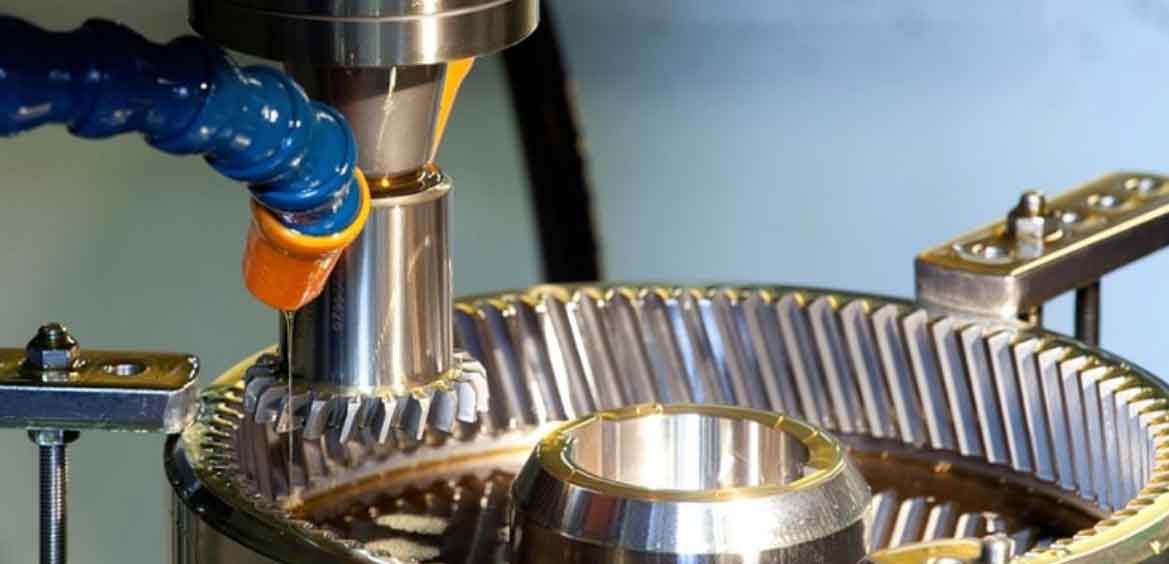
To understand the complexities, consider a typical deep blind hole internal spline component. The part features a small module of 1, 12 teeth, a pressure angle of 30°, and a depth of 64 mm. The material is 40CrNiMoA alloy steel, heat-treated to a hardness of HRC 38–45. Such high hardness complicates the gear shaping process, as it increases tool wear and cutting forces. The narrow diameter of the hole restricts tool size, exacerbating rigidity issues. In gear shaping, the cutter undergoes reciprocating motions while engaging with the workpiece through a generating motion, which requires precise control to avoid errors. The primary challenges include tool deflection (often referred to as “letting the tool”), excessive radial runout, and rapid tool degradation. These factors collectively lead to dimensional inaccuracies, such as taper formation and poor surface roughness, ultimately reducing efficiency and increasing costs.
Selecting appropriate equipment is crucial for successful gear shaping. We utilized a Gleason GP200S CNC precision gear shaping machine, capable of handling internal and external spur gears and involute splines with high accuracy. This machine offers a tool spindle diameter of 85 mm, a stroke range of 3–55 mm, and supports HSK and SK taper standards, making it suitable for our deep hole application. The CNC capabilities allow for precise control over cutting parameters, which is essential for optimizing the gear shaping process. However, even with advanced machinery, the inherent limitations of deep hole machining necessitate tailored solutions in tooling and operation.
One of the core aspects of our research is tool selection. The gear shaping cutter’s geometry and material significantly influence performance. For deep blind hole internal splines, the cutter must have a small diameter and long reach, which compromises stiffness. We analyzed various tool materials and found that conventional high-speed steels, such as W2Mo9Cr4VCo8, perform inadequately at hardness levels above HRC 40 due to excessive wear. Instead, we adopted ASP60, a cobalt-rich powder metallurgy high-speed steel with a hardness of HRC 65–70 after heat treatment. This material exhibits superior wear resistance, thermal stability, and uniform microstructure, which are critical for maintaining cutting edge integrity during gear shaping. The enhanced properties of ASP60 reduce tool wear and mitigate taper formation, thereby improving part accuracy.
The cutter’s geometric parameters also play a vital role in gear shaping efficiency. Each tooth of a gear shaping cutter has three cutting edges: one top edge and two side edges. The top edge is an arc formed by the intersection of the tip cylinder and the rake face, while the side edges are involute curves. Wear on these edges increases cutting forces and heat, degrading workpiece quality. We focused on the rake angle, which typically standardizes at 5° for gear shaping cutters. Through experimental trials, we determined that increasing the rake angle can reduce cutting forces and temperatures, thereby extending tool life. However, larger rake angles introduce greater profile errors, necessitating compensation in the cutter’s design. Our tests showed that an 8° rake angle offers an optimal balance, enhancing durability while keeping profile errors within acceptable limits. The relationship between rake angle and performance can be summarized as follows:
| Rake Angle (°) | Tool Life (Number of Parts) | Profile Error (mm) | Surface Roughness (Ra, μm) |
|---|---|---|---|
| 5 | 5 | 0.03 | 3.2 |
| 6 | 10 | 0.035 | 3.2 |
| 7 | 20 | 0.035 | 1.6 |
| 8 | 25 | 0.04 | 1.6 |
| 9 | 15 | 0.06 | 1.6 |
In gear shaping, the cutting parameters govern the interaction between the tool and workpiece. We evaluated two distinct cutting strategies to optimize the process for deep blind hole internal splines. The first method involved moderate feed rates and stroke speeds, but it resulted in frequent tool compensation and poor surface finish. The second method employed high-speed cutting with small radial feeds and large circular feeds, which significantly improved outcomes. This approach reduces cutting forces per stroke, minimizes heat accumulation, and decreases vibrational disturbances, leading to better dimensional stability and surface quality. The specific parameters for each strategy are detailed below:
| Cycle | Stroke Speed (strokes/min) | Radial Feed (mm/stroke) | Circular Feed (mm/stroke) | Infeed Amount (mm) | Table Rotation Angle (°) |
|---|---|---|---|---|---|
| First Infeed | 140 | 0.02 | 0.05 | 0.6 | 360 |
| Second Infeed | 160 | 0.01 | 0.03 | 0.5 | 360 |
| Third Infeed | 180 | 0.005 | 0.02 | 0.2 | 720 |
This strategy required tool compensation after every five parts and yielded a surface roughness of Ra 1.6–3.2 μm, with a single part machining time of 40 minutes. In contrast, the optimized strategy demonstrated superior performance:
| Cycle | Stroke Speed (strokes/min) | Radial Feed (mm/stroke) | Circular Feed (mm/stroke) | Infeed Amount (mm) | Table Rotation Angle (°) |
|---|---|---|---|---|---|
| First Infeed | 140 | 0.004 | 0.12 | 0.6 | 360 |
| Second Infeed | 160 | 0.003 | 0.08 | 0.5 | 360 |
| Third Infeed | 180 | 0.001 | 0.05 | 0.2 | 720 |
With this approach, we successfully produced 25 parts without tool compensation, achieving a consistent surface roughness of Ra 1.6 μm and reducing machining time to 25 minutes per part. The high circular feed ensures uniform chip removal, lowering cutting forces and thermal loads. The reduction in heat input minimizes workpiece thermal deformation, which is critical for maintaining tight tolerances in deep blind hole gear shaping. Furthermore, the decreased intermittent cutting forces alleviate low-frequency vibrations, enhancing surface integrity.
To quantify the benefits, we can model the cutting forces in gear shaping. The main cutting force \( F_c \) can be expressed as: $$ F_c = K_c \cdot a_p \cdot f $$ where \( K_c \) is the specific cutting force coefficient (dependent on material and tool geometry), \( a_p \) is the depth of cut, and \( f \) is the feed per stroke. In deep hole gear shaping, the effective depth of cut varies due to tool deflection, which can be approximated by: $$ \delta = \frac{F_c \cdot L^3}{3EI} $$ Here, \( \delta \) is the deflection, \( L \) is the tool overhang, \( E \) is the modulus of elasticity, and \( I \) is the moment of inertia. By reducing \( F_c \) through optimized parameters, we minimize \( \delta \), thereby controlling taper and runout errors. Additionally, the heat generation during gear shaping can be estimated using: $$ Q = F_c \cdot v_c $$ where \( Q \) is the heat flux and \( v_c \) is the cutting velocity. Lower cutting forces and higher speeds, as in Strategy 2, reduce \( Q \), leading to less thermal distortion.
The gear shaping process also involves precise kinematic relationships. The generating motion between the cutter and workpiece follows the fundamental law of gear engagement: $$ \frac{v_c}{v_w} = \frac{d_w}{d_c} $$ where \( v_c \) and \( v_w \) are the velocities of the cutter and workpiece, respectively, and \( d_c \) and \( d_w \) are their pitch diameters. For internal splines, the cutter must have a smaller diameter than the workpiece hole, which constraints tool design. The module \( m \) and number of teeth \( z \) relate to the pitch diameter via: $$ m = \frac{d}{z} $$ In our case, with \( m = 1 \) and \( z = 12 \), the pitch diameter is 12 mm. The cutter dimensions must accommodate this while maintaining strength. We increased the shank diameter from 7.5 mm to 9.5 mm over a 36 mm length to improve rigidity, which proved effective in reducing deflection during gear shaping.
Another critical factor is tool wear, which impacts the accuracy of gear shaping over time. Wear mechanisms include abrasion, adhesion, and diffusion, exacerbated by high hardness materials. The Taylor tool life equation can be adapted for gear shaping: $$ VT^n = C $$ where \( V \) is the cutting speed, \( T \) is tool life, and \( n \) and \( C \) are constants. Our experiments with ASP60 material showed that increasing the rake angle from 5° to 8° effectively increased \( C \), extending tool life. Moreover, the use of high-speed cutting parameters reduces the contact time per tooth, distributing wear more evenly and further enhancing durability.
We also analyzed the effects of different cooling strategies during gear shaping. Although not the focus of this study, proper coolant application can reduce thermal loads and flush chips from deep holes, preventing recutting and improving surface finish. In future work, integrating advanced cooling techniques with optimized gear shaping parameters could yield additional improvements.
In summary, our research on deep blind hole internal spline gear shaping technology demonstrates that strategic tool design and parameter selection are paramount. The adoption of ASP60 tool material with an 8° rake angle significantly improves wear resistance and reduces taper errors. Coupled with high-speed cutting parameters—characterized by small radial feeds and large circular feeds—we achieve lower cutting forces, reduced heat generation, and minimal vibration. This approach not only enhances part quality but also boosts efficiency by extending tool life and shortening machining times. The insights gained from this study provide a valuable framework for similar applications, underscoring the importance of holistic optimization in gear shaping processes.
Furthermore, the principles outlined here can be extrapolated to other challenging gear shaping scenarios, such as those involving hardened materials or complex geometries. By continuing to refine tool materials, geometries, and cutting dynamics, we can push the boundaries of precision manufacturing. The integration of real-time monitoring and adaptive control systems in gear shaping machines may further automate optimization, making deep hole machining more reliable and cost-effective. As industries demand higher performance from mechanical components, advancements in gear shaping technology will remain crucial for meeting these challenges.
To conclude, our investigation highlights the interplay between tooling, parameters, and machine capabilities in gear shaping. Through systematic experimentation and analysis, we have developed a robust methodology for producing high-quality deep blind hole internal splines. The success of this approach reaffirms the viability of gear shaping as a superior alternative to other methods, offering a blend of precision, efficiency, and economy. We hope that this contribution will inspire further innovation in the field, driving progress toward ever-more sophisticated manufacturing solutions.