
In the field of precision mechanical transmission, harmonic drive gear systems have emerged as a pivotal technology due to their unique advantages, such as high positional accuracy, minimal backlash, compact design, and substantial load-carrying capacity. As a researcher deeply involved in advancing this technology, I have focused on a critical aspect that underpins the performance of harmonic drive gear systems: the deformation behavior of the flexible gear and the associated deformation forces. This study stems from the recent conceptualization of elastic wave generators, which promise to enable zero-backlash meshing by dynamically adjusting the radial deformation of the flexible gear. However, to realize this potential, a comprehensive understanding of the relationship between deformation and force in the flexible gear is essential. Prior to this work, detailed investigations into this specific relationship were notably absent in the literature. Therefore, I embarked on this research to establish a robust theoretical model and validate it through rigorous experimentation, ultimately aiming to provide a foundational theory for designing next-generation elastic wave generators in harmonic drive gear transmissions.
The core principle of a harmonic drive gear transmission revolves around three primary components: the wave generator, the flexible gear (often called the flexspline or柔轮), and the circular spline (or刚轮). The flexible gear, typically a thin-walled cylindrical shell with external teeth, is elastically deformed by the wave generator, usually an elliptical or cam-like element. This controlled deformation causes the teeth of the flexible gear to engage with those of the circular spline at two diametrically opposite regions, enabling speed reduction and torque transmission. In conventional systems, the wave generator is rigid, maintaining a fixed major axis during operation. The novel concept of an elastic wave generator introduces a compliant element whose effective diameter can be adjusted, thereby modulating the radial deformation of the flexible gear. This modulation is key to achieving and maintaining zero-backlash conditions. Consequently, the fundamental mechanics governing how much force is required to produce a specific deformation in the flexible gear becomes the cornerstone for designing such adaptive systems. This article details my journey in modeling, testing, and refining the understanding of flexible gear deformation within the context of harmonic drive gear technology.
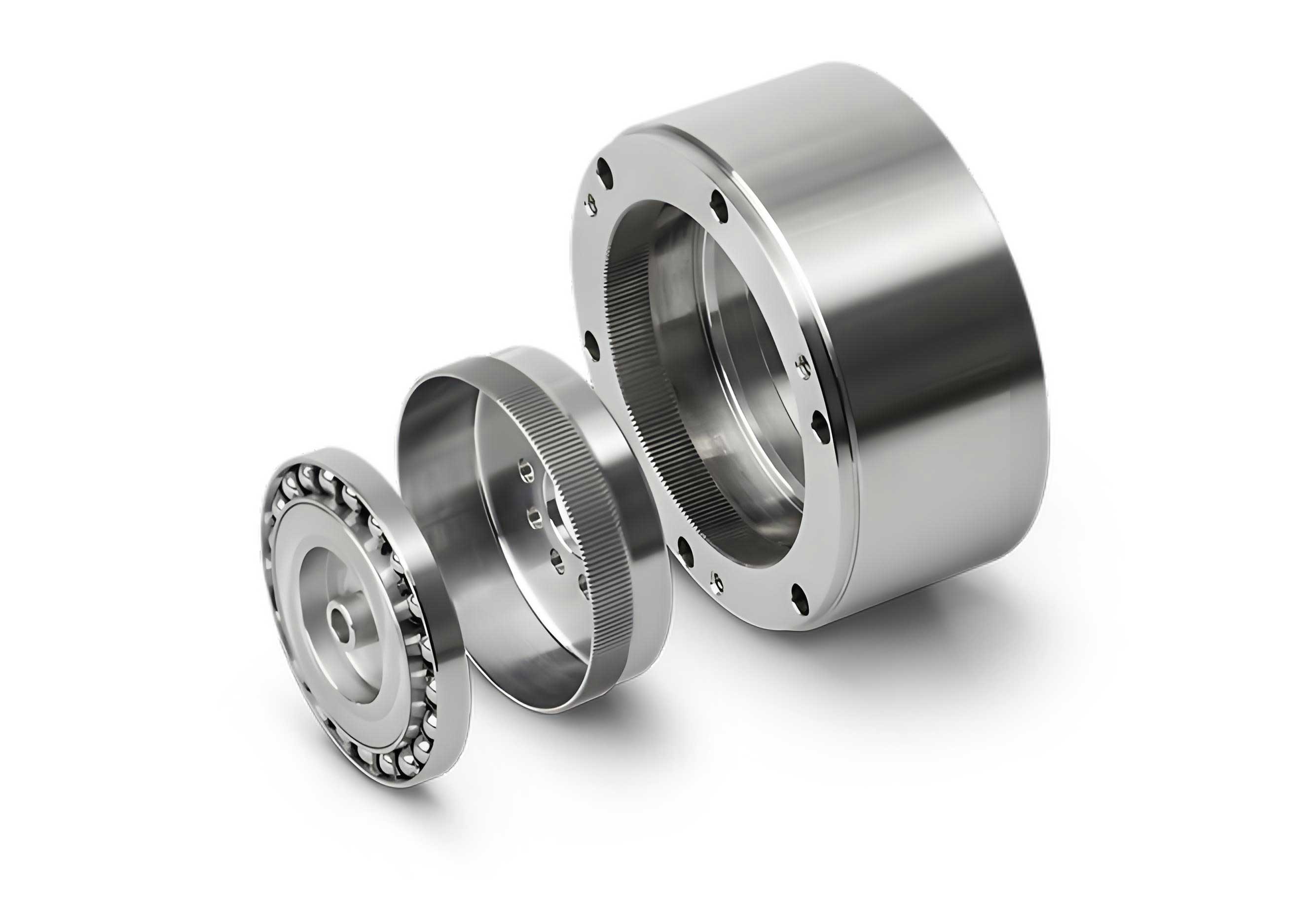
The initial deformation force in a harmonic drive gear assembly arises during the assembly process. Before the wave generator is inserted, the flexible gear is circular. The wave generator, whose maximum diameter is slightly larger than the inner diameter of the flexible gear, is pressed into the gear, forcing it to assume an elliptical shape. This process generates internal stresses and a corresponding reaction force—the initial deformation force. Accurately predicting this force for a given target radial deformation is crucial for ensuring proper preload, avoiding overstressing the component, and enabling precise control in elastic wave generator designs. To tackle this, I developed a mathematical model by treating the complex geometry of the toothed flexible gear as an equivalent smooth cylindrical shell. This simplification is common in analytical studies of harmonic drive gear components and is justified for deriving fundamental relationships, though it necessitates later empirical correction to account for the influence of the gear teeth.
My modeling approach is based on the moment theory of thin cylindrical shells. The analysis rests on several key assumptions to make the problem tractable: firstly, the elastic deformation state of the flexible gear’s midline under the deformation force and meshing forces is stable and constant; secondly, the deformations are small relative to the gear’s dimensions; and thirdly, the midline of the flexible gear shell neither extends nor contracts during the deformation process (the neutral surface assumption). Consider the model of a cylindrical shell representing the flexible gear’s body. Let \( u \), \( v \), and \( w \) denote the displacements in the axial (\( z \)), circumferential (\( \varphi \)), and radial directions, respectively. The condition of zero mid-surface strain leads to the following geometric equations:
$$
\varepsilon_z = \frac{\partial u}{\partial z} = 0
$$
$$
\varepsilon_\varphi = \frac{1}{R} \left( \frac{\partial v}{\partial \varphi} + w \right) = 0
$$
$$
\gamma = \frac{\partial v}{\partial z} + \frac{1}{R} \frac{\partial u}{\partial \varphi} = 0
$$
where \( \varepsilon_z \) and \( \varepsilon_\varphi \) are the axial and circumferential strains, \( \gamma \) is the shear strain, and \( R \) is the mean radius of the flexible gear. The bending behavior is governed by a differential equation derived from energy principles. Introducing the cylindrical stiffness \( D \), defined as \( D = \frac{E \delta^3}{12(1-\nu^2)} \), where \( E \) is the Young’s modulus, \( \delta \) is the wall thickness, and \( \nu \) is Poisson’s ratio, the bending equation related to the radial displacement \( w \) and the bending moment \( M_\varphi \) is:
$$
\frac{d^2 w}{d\varphi^2} + w = -\frac{M_\varphi R^2}{D(1-\nu^2)}
$$
The strain energy \( V \) stored in the deformed shell is given by:
$$
V = \int_0^{2\pi} \frac{M_\varphi^2 R}{2D(1-\nu^2)} d\varphi
$$
To solve for the deformation shape, I expressed the radial displacement \( w(\varphi) \) as a Fourier series, capturing the elliptical and higher-order harmonic components induced by the wave generator in a harmonic drive gear:
$$
w(\varphi) = \sum_{n=1}^{\infty} \left( a_n \sin(n\varphi) + b_n \cos(n\varphi) \right)
$$
For the primary deformation mode relevant to a standard double-wave harmonic drive gear, the \( n=2 \) component dominates. However, the series includes all even terms. Substituting this series into the strain energy expression and applying the principle of virtual work to determine the coefficients \( a_n \) and \( b_n \) for a concentrated radial force \( P \) applied at \( \varphi = 0 \) and \( \varphi = \pi \) (simulating the action of a wave generator), yields the solution. The coefficients for the symmetric deformation are found to be:
$$
a_n = 0, \quad b_n = \frac{2 P R^3}{\pi D (1-\nu^2) (n^2 – 1)^2} \quad \text{for } n = 2, 4, 6, \ldots
$$
Substituting these back into the series gives the explicit form for radial displacement:
$$
w(\varphi) = \frac{2 P R^3}{\pi D (1-\nu^2)} \sum_{n=2,4,6,\ldots} \frac{\cos(n\varphi)}{(n^2 – 1)^2}
$$
The maximum radial deformation \( w_0 \), which is the difference between the major and minor radii, occurs at \( \varphi = 0 \). Therefore, setting \( \varphi = 0 \) and \( w(0) = w_0 \), we can invert the relationship to solve for the deformation force \( P \) as a function of \( w_0 \):
$$
P = \frac{\pi w_0 D (1-\nu^2)}{2 R^3 \sum_{n=2,4,6,\ldots} \frac{1}{(n^2 – 1)^2}}
$$
Finally, substituting the expression for \( D \) leads to the core theoretical model for the deformation force in a harmonic drive gear’s flexible gear:
$$
P = \frac{\pi E w_0 \delta^3}{24 R^3 \sum_{n=2,4,6,\ldots} \frac{1}{(n^2 – 1)^2}}
$$
This elegant formula reveals several important design insights for harmonic drive gear systems. The deformation force \( P \) is directly proportional to the Young’s modulus \( E \) of the flexible gear material, the cube of its wall thickness \( \delta \), and the desired radial deformation \( w_0 \). It is inversely proportional to the cube of the mean radius \( R \). The summation term \( S = \sum_{n=2,4,6,\ldots} \frac{1}{(n^2 – 1)^2} \) is a constant series. Its value converges rapidly; for practical engineering calculations in harmonic drive gear design, considering only the first few terms is sufficient. The value of this series is approximately 0.0908 when summed to infinity (or considering n=2,4,6). This theoretical model predicts a perfectly linear relationship between force and deformation, which serves as the starting point for my investigation.
| Parameter | Symbol | Influence on Force \( P \) | Typical Design Consideration in Harmonic Drive Gear |
|---|---|---|---|
| Young’s Modulus | \( E \) | Directly Proportional | Material selection (e.g., alloy steel, maraging steel) balances strength and flexibility. |
| Wall Thickness | \( \delta \) | Proportional to \( \delta^3 \) | A critical design variable; thicker walls increase force and stiffness but may reduce fatigue life. |
| Radial Deformation | \( w_0 \) | Directly Proportional | Determined by gear module and desired tooth engagement depth; typically a small fraction of the diameter. |
| Mean Radius | \( R \) | Inversely Proportional to \( R^3 \) | Larger harmonic drive gear units require significantly less force per unit deformation for the same wall thickness ratio. |
| Poisson’s Ratio | \( \nu \) | Embedded in stiffness \( D \) | Effect is relatively minor for most metals; included for theoretical completeness. |
The theoretical derivation, while insightful, is based on a smooth shell approximation. In a real harmonic drive gear, the flexible gear has external teeth, which significantly alter its bending stiffness and strain distribution. To bridge this gap between theory and practice, I designed and conducted an experimental study aimed at measuring the actual relationship between deformation and force for a specific flexible gear. The test specimen was a cup-type flexible gear from a standard XB1-100-80 model harmonic drive gear. Its key parameters are summarized below:
| Parameter | Value | Unit |
|---|---|---|
| Number of Teeth (\( z_1 \)) | 200 | – |
| Module (\( m \)) | 0.4 | mm |
| Target Radial Deformation (\( w_0 \)) | 0.4 | mm |
| Wall Thickness (\( \delta \)) | 0.68 | mm |
| Cylinder Length (\( L \)) | 70 | mm |
| Material (Assumed Steel) | Elastic Modulus \( E \approx 2.1 \times 10^{11} \) | Pa |
| Mean Radius (\( R \)) (Estimated from geometry) | Approx. 40.1 | mm |
The experimental setup was meticulously designed to apply a controlled radial deformation and simultaneously measure the resulting force. The core apparatus consisted of a motor-driven precision linear stage, a fixed platform, and high-accuracy sensors. The flexible gear was mounted with one side constrained by a fixed block and the opposite side engaged by the moving platform. A stepper motor, coupled with a ball screw mechanism on the linear stage, provided the displacement input. Two key sensors were integrated: a non-contact CWY-DO-501 eddy current displacement sensor was positioned to measure the radial displacement of the flexible gear’s outer surface at the point of force application, and a CL-YD-301A piezoelectric force sensor was installed on the moving platform to measure the reaction force. Since the setup deforms the gear from one side, the measured displacement is essentially twice the nominal radial deformation \( w_0 \) (the change in radius). Data from both sensors were acquired synchronously via a data acquisition card for subsequent analysis.
The test procedure involved incrementally advancing the linear stage to deform the flexible gear, recording the force and displacement at each step until the deformation approached the design value. Multiple runs were conducted to ensure repeatability. The raw data pairs of force (N) and deformation (mm) were then processed. To analyze the results, I employed MATLAB software for data fitting and comparison with the theoretical model. The primary goal was to see if the experimental data conformed to the predicted linear relationship and to quantify any deviation.
The experimental results presented a clear trend. A plot of deformation force versus radial deformation showed a predominantly linear relationship, but the slope of this line was markedly different from that predicted by the theoretical smooth-shell model. I performed a third-degree polynomial fit on the experimental data, which yielded an excellent correlation, confirming that the relationship was essentially linear within the tested range. The key finding was the discrepancy in the proportionality constant. Let \( k_{exp} \) be the slope of the experimental force-deformation line (obtained via linear regression on the fitted data), and \( k_{theo} \) be the slope from the theoretical model calculated using the gear’s parameters and the series sum \( S \). For the tested harmonic drive gear flexible gear, the values were:
$$
k_{theo} = \frac{\pi E \delta^3}{24 R^3 S} \approx 1625.19 \, \text{N/mm}
$$
$$
k_{exp} \approx 210.41 \, \text{N/mm}
$$
The ratio of these slopes defines a comprehensive influence coefficient \( K \), which encapsulates all the effects neglected by the smooth-shell model, primarily the presence of teeth, the exact boundary conditions, and material nonlinearities:
$$
K = \frac{k_{exp}}{k_{theo}} \approx \frac{210.41}{1625.19} \approx 0.13
$$
This significant reduction in effective stiffness (by a factor of roughly 1/7.7) highlights the profound impact of the tooth structure. The teeth act as stiffening ribs in the circumferential direction but also create stress concentrators and alter the shell’s bending mechanics in a complex way that the simple model does not capture. Therefore, the theoretically derived formula for the harmonic drive gear flexible gear must be corrected for practical design use. The empirically corrected model becomes:
$$
P = K \cdot \frac{\pi E w_0 \delta^3}{24 R^3 S}
$$
Or, more specifically for this class of harmonic drive gear components:
$$
P = 0.13 \times \frac{\pi E w_0 \delta^3}{24 R^3 \sum_{n=2,4,6,\ldots} \frac{1}{(n^2 – 1)^2}}
$$
This corrected model was put to the test. I utilized it to calculate the required force to achieve the design deformation \( w_0 = 0.4 \) mm for the XB1-100-80 flexible gear. This force value was then used as a key input parameter in the design of a prototype elastic wave generator intended for this specific harmonic drive gear. Subsequent assembly and testing confirmed that the elastic wave generator, designed based on the corrected force-deformation relationship, successfully produced the desired radial deformation in the flexible gear, allowing it to mesh with the circular spline with minimal backlash. This successful application validated the practical utility of the research findings.
| Model Type | Force at \( w_0 = 0.4 \) mm (N) | Slope \( k \) (N/mm) | Key Assumptions/Limitations |
|---|---|---|---|
| Theoretical (Smooth Shell) | \( P_{theo} = k_{theo} \times 0.4 \approx 650.1 \) | ~1625.19 | Ignores gear teeth, assumes perfect cylindrical shell, linear elastic material. |
| Experimental (Measured) | \( P_{exp} \approx 84.2 \) (from fit) | ~210.41 | Real-world measurement on a toothed flexible gear, includes all system complexities. |
| Corrected Model (\( K=0.13 \)) | \( P_{corr} = 0.13 \times P_{theo} \approx 84.5 \) | ~211.3 | Empirically scales theoretical model to match experimental data for this harmonic drive gear design. |
The implications of this coefficient \( K \) are substantial for harmonic drive gear design. It is not a universal constant but is likely a function of gear geometry parameters such as the module, number of teeth, tooth profile, and the ratio of tooth height to wall thickness. Further research is needed to develop generalized empirical or analytical expressions for \( K \) across different harmonic drive gear sizes and types. However, the methodology established here—deriving a base theory from mechanics and then applying an experimental correction factor—provides a reliable framework for engineers.
Beyond the immediate application to elastic wave generator design, this study sheds light on several other aspects of harmonic drive gear performance. The deformation force is directly related to the preload and the resulting contact stresses between the wave generator and the flexible gear’s inner surface. Understanding this force helps in selecting bearings for the wave generator and in analyzing the fatigue life of the flexible gear, which is critical for the reliability of harmonic drive gear systems in demanding applications like robotics and aerospace. Furthermore, the linearity of the relationship simplifies control algorithms for active elastic wave generators, where force or position feedback could be used to maintain optimal meshing conditions dynamically.
In conclusion, this research has systematically addressed the relationship between deformation and deformation force in the flexible gear of a harmonic drive gear transmission. I began by developing a fundamental theoretical model based on cylindrical shell theory, which provided valuable insights into the parametric dependencies. Recognizing the limitations of this idealized model for a real, toothed harmonic drive gear component, I conducted precise experiments on a standard flexible gear. The data analysis revealed a linear force-deformation relationship but with a stiffness roughly one order of magnitude lower than predicted. By introducing a comprehensive influence coefficient \( K \), I successfully bridged the gap between theory and experiment, resulting in a corrected, practical model. This model has already proven its worth by informing the successful design of a novel elastic wave generator prototype. The work underscores the importance of combining theoretical mechanics with empirical validation in the design of advanced harmonic drive gear systems. It establishes a foundation for future research into more generalized correction models and opens the door for optimized, adaptive harmonic drive gear transmissions with enhanced performance characteristics such as zero backlash and variable stiffness.
The journey through this investigation highlights the intricate beauty of harmonic drive gear mechanics. From the elegance of the shell theory equations to the concrete data points from the test bench, every step reinforces the principle that advanced mechanical design rests on a solid understanding of underlying physics, tempered and refined by empirical reality. As harmonic drive gear technology continues to evolve towards more intelligent and adaptive systems, the insights gained from studying the basic deformation behavior of its core flexible element will remain indispensable.