
In modern mechanical transmission systems, helical gears are widely employed due to their high load-carrying capacity, smooth operation, and reduced noise compared to spur gears. However, these gears often operate under harsh conditions such as high speeds, elevated temperatures, and heavy loads, leading to potential failures like tooth breakage. Tooth breakage is a critical fault that can severely compromise the reliability and safety of gear systems, causing reduced fatigue life, performance degradation, and even catastrophic accidents. Therefore, investigating the dynamic characteristics of helical gear pairs under tooth breakage faults is essential for predictive maintenance and ensuring operational integrity. This study focuses on analyzing the time-varying meshing stiffness and dynamic responses of helical gears with tooth breakage, using analytical methods and numerical simulations to understand the impact of fault parameters on system behavior.
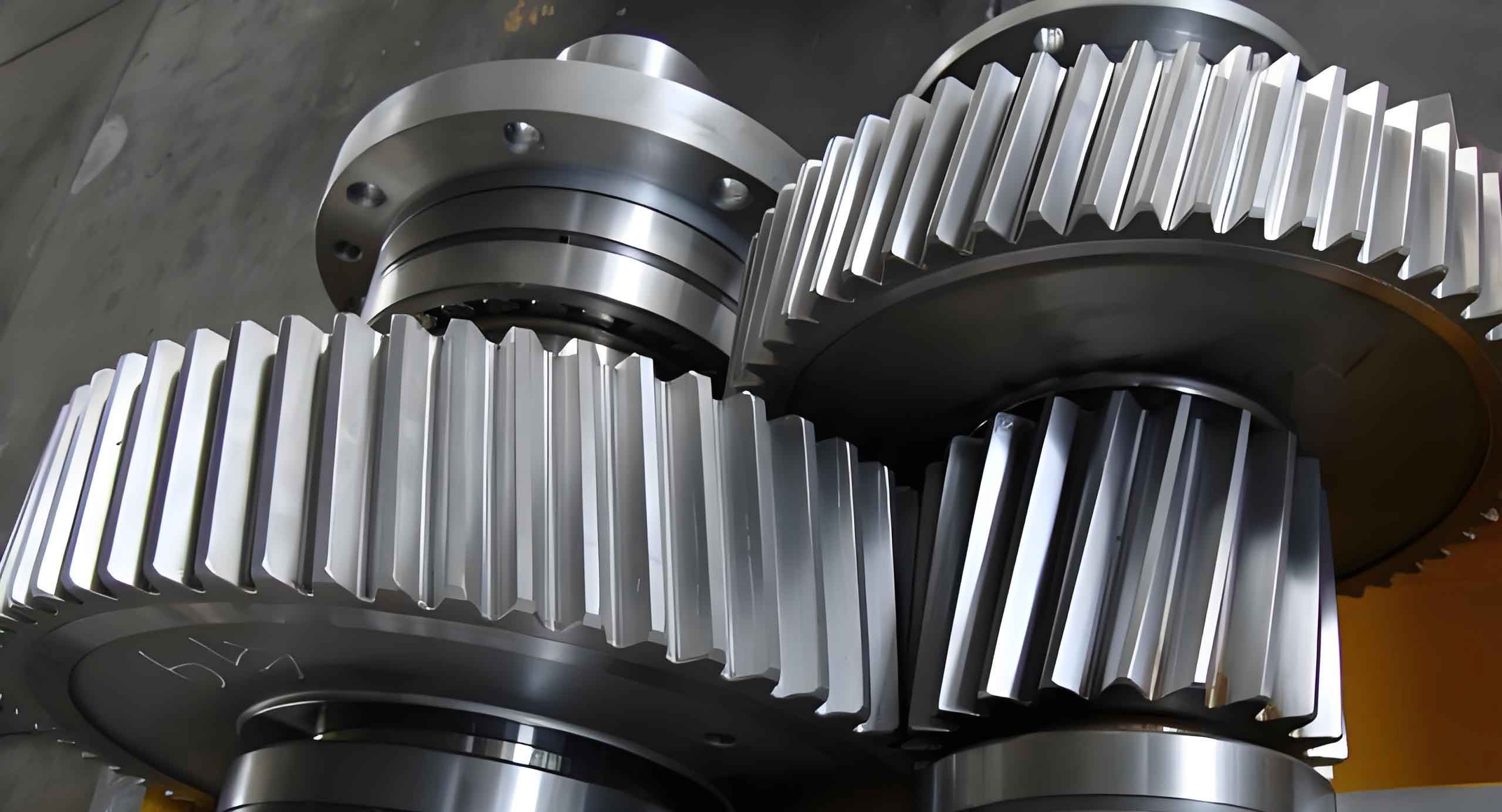
The time-varying meshing stiffness is a key parameter in gear dynamics, as it directly influences vibration characteristics and fault detection. For helical gears, the calculation of meshing stiffness must account for factors such as Hertzian contact, bending, shear, and axial compression deformations. In this study, we employ the potential energy method combined with the slicing technique to derive the effective meshing stiffness for a helical gear pair with a broken tooth. The helical gear model is developed considering a single tooth breakage on the pinion, and the stiffness variations are analyzed to assess their effects on dynamic performance. Furthermore, a dynamic model incorporating time-varying meshing stiffness, damping, static transmission error, and friction excitation is established. The Runge-Kutta method is used to solve the governing equations, enabling the analysis of dynamic responses under different operational conditions such as varying speeds and torques. The results demonstrate that tooth breakage significantly reduces the comprehensive meshing stiffness, leading to periodic冲击 phenomena in dynamic transmission error, vibration velocity, and acceleration. Frequency domain responses show sideband signals centered around the meshing frequency, which can be utilized for fault identification in helical gear systems.
To model the helical gear with tooth breakage, a three-dimensional parametric model is created using CAD software, assuming one tooth on the pinion is broken. This fault alters the gear’s contact pattern, particularly in the double-tooth engagement region where the broken tooth fails to participate, resulting in single-tooth contact. The meshing stiffness is calculated by considering the gear tooth as a variable cross-section beam and applying the potential energy method. The total potential energy stored during meshing includes contributions from Hertzian contact energy, bending potential energy, shear energy, and axial compression energy. The stiffness components are derived as follows:
The Hertzian contact stiffness for a helical gear pair is given by:
$$k_h = \frac{\pi E L}{4(1-\nu^2)}$$
where \(E\) is Young’s modulus, \(L\) is the contact line length, and \(\nu\) is Poisson’s ratio. For bending stiffness, considering the gear tooth geometry where the base circle radius \(r_b\) is greater than the root circle radius \(r_f\), the expression is:
$$k_b = \left[ \int_{0}^{x_D} \frac{\left[ (d – x) \cos(\alpha_2) – h \sin(\alpha_2) \right]^2}{E I_{xc}} dx + \int_{0}^{\theta_1} \frac{3 \left\{ 1 + \cos(\alpha_2) \left[ (\theta – \alpha_0) \sin(\alpha_2) – \cos(\alpha_2) \right] \right\}^2}{2 E L \left[ \sin(\alpha_2) + (\theta – \alpha_0) \cos(\alpha_2) \right]^3} r_0 \, d\theta \right]^{-1}$$
Here, \(x_D\) is the distance between the root circle and base circle along the tooth height, \(d\) is the distance from the meshing point to the base circle, \(h\) is the distance from the meshing point to the gear centerline, \(\alpha_2\) is the pressure angle, \(\alpha_0\) is the angle between the root circle and base circle on the tooth profile, \(\theta\) is the angular parameter along the tooth curve, \(r_0\) is the radius of the circular arc at the tooth root, and \(I_{xc}\) is the effective area moment of inertia. The shear stiffness is calculated as:
$$k_s = \left[ \int_{0}^{x_D} \frac{1.2 (1+\nu) \cos^2(\alpha_2)}{E A_{xc}} dx + \int_{0}^{\theta_1} \frac{1.2 (1+\nu) \cos(\alpha_2) \left[ \cos(\alpha_2) – (\theta – \alpha_0) \sin(\alpha_2) \right]^2}{E L \left[ \sin(\alpha_2) + (\theta – \alpha_0) \cos(\alpha_2) \right]} r_0 \, d\theta \right]^{-1}$$
where \(A_{xc}\) is the effective cross-sectional area. The axial compression stiffness is:
$$k_a = \left[ \int_{0}^{x_D} \frac{\sin^2(\alpha_2)}{E A_{xc}} dx + \int_{0}^{\theta_1} \frac{\left[ \sin(\alpha_2) – (\theta – \alpha_0) \cos(\alpha_2) \right]^2}{2 E L \left[ \sin(\alpha_2) + (\theta – \alpha_0) \cos(\alpha_2) \right]} r_0 \, d\theta \right]^{-1}$$
The comprehensive meshing stiffness for a healthy gear pair is the sum of these components in series for both pinion and gear. For a helical gear with a broken tooth, when the faulty tooth enters the meshing zone, the stiffness reduces significantly because the broken tooth does not contribute to load sharing. The effective meshing stiffness \(K_t\) for the faulty condition is expressed as:
$$K_t = \left( \frac{1}{k_{h1}} + \frac{1}{k_{b1}} + \frac{1}{k_{s1}} + \frac{1}{k_{a1}} + \frac{1}{k_{b2}} + \frac{1}{k_{s2}} + \frac{1}{k_{a2}} \right)^{-1}$$
where subscripts 1 and 2 denote the pinion and gear, respectively. For the broken tooth case, the stiffness components of the pinion’s faulty tooth are omitted or reduced, leading to a lower overall stiffness. Table 1 summarizes the geometric and material parameters used in this study for the helical gear pair.
| Parameter | Value |
|---|---|
| Number of teeth, \(z_1 / z_2\) | 19 / 48 |
| Young’s modulus, \(E\) (Pa) | \(2.06 \times 10^{11}\) |
| Poisson’s ratio, \(\nu\) | 0.3 |
| Normal module, \(m_n\) (mm) | 3.175 |
| Normal pressure angle, \(\alpha_n\) (degrees) | 20 |
| Center distance, \(a\) (mm) | 106.3625 |
| Face width, \(B\) (mm) | 16 |
| Pinion root circle radius, \(r_{f1}\) (mm) | 27.12 |
| Pinion base circle radius, \(r_{b1}\) (mm) | 29.11 |
| Mass moment of inertia, \(I_p / I_g\) (kg·mm²) | 184 / 7500 |
| Helix angle, \(\beta\) (rad) | 0.2443 |
| Equivalent mass, \(M_e\) (kg) | 0.188 |
| Meshing damping coefficient, \(\zeta_m\) | 0.10 |
| Bearing damping coefficient, \(\zeta_b\) | 0.05 |
| Profile shift coefficient, \(C_x\) | 0.25 |
The influence of tooth breakage on the time-varying meshing stiffness of the helical gear pair is evaluated through numerical computations. Using the slicing method, the stiffness is calculated over one meshing cycle. Figure 3 compares the comprehensive meshing stiffness for a healthy pinion and a pinion with a broken tooth. The results show that the stiffness drops markedly when the broken tooth is in the meshing region, but due to the helical gear’s overlapping engagement, the stiffness does not reach zero. This reduction in stiffness affects the dynamic behavior of the gear system, as discussed in later sections. For periodic analysis, the time-varying meshing stiffness under fault conditions exhibits lower values compared to the healthy gear, particularly in the double-tooth engagement zones where the fault causes single-tooth contact. This stiffness variation is a primary source of vibration excitation in helical gear systems with tooth breakage.
To analyze the dynamic performance, a torsional vibration model of the helical gear pair is established. The model considers a single degree of freedom, incorporating time-varying meshing stiffness \(k(t)\), time-varying meshing damping \(c_m\), static transmission error \(e(t)\), and friction excitation. The equations of motion are derived using Newton’s second law:
$$I_p \ddot{\theta}_p + c_m (r_{b1} \dot{\theta}_p \cos \beta – r_{b2} \dot{\theta}_g \cos \beta – \dot{e}(t)) + k(t) (r_{b1} \theta_p \cos \beta – r_{b2} \theta_g \cos \beta – e(t)) = T_p – M_1$$
$$I_g \ddot{\theta}_g – c_m (r_{b1} \dot{\theta}_p \cos \beta – r_{b2} \dot{\theta}_g \cos \beta – \dot{e}(t)) – k(t) (r_{b1} \theta_p \cos \beta – r_{b2} \theta_g \cos \beta – e(t)) = -T_g + M_2$$
where \(I_p\) and \(I_g\) are the mass moments of inertia of the pinion and gear, respectively; \(\theta_p\) and \(\theta_g\) are the angular displacements; \(r_{b1}\) and \(r_{b2}\) are the base circle radii; \(\beta\) is the helix angle; \(T_p\) and \(T_g\) are the applied torques; \(M_1\) and \(M_2\) are the time-varying friction moments; and \(e(t)\) is the static transmission error. The dynamic transmission error \(\delta\) is defined as:
$$\delta = r_{b1} \theta_p \cos \beta – r_{b2} \theta_g \cos \beta – e(t)$$
By substituting \(\delta\) into the equations, a single equation for the dynamic transmission error can be obtained:
$$M_e \ddot{\delta} + c_m \dot{\delta} + k(t) \delta = F(t)$$
where \(M_e = \frac{I_p I_g}{I_p r_{b2}^2 \cos^2 \beta + I_g r_{b1}^2 \cos^2 \beta}\) is the equivalent mass, and \(F(t)\) represents the excitation forces including torque variations and friction. This equation is solved numerically using the Runge-Kutta method to study the dynamic responses under different operating conditions.
The dynamic characteristics of the helical gear system with tooth breakage are analyzed by varying parameters such as rotational speed and torque. First, the effect of speed is investigated. Table 2 summarizes the dynamic responses at two different speeds: 3785 r/min and 5785 r/min, with a constant torque of 50000 N·m.
| Parameter | Speed = 3785 r/min | Speed = 5785 r/min |
|---|---|---|
| Dynamic transmission error amplitude (mm) | 0.010 | 0.008 |
| Vibration velocity peak (mm/s) | 0.194 | 0.260 |
| Vibration acceleration peak (mm/s²) | 4009 | 5017 |
| Periodic冲击 interval (s) | 0.016 | 0.010 |
The results indicate that at higher speeds, the dynamic transmission error shows faster冲击 intervals, while vibration velocity and acceleration increase, indicating more intense vibrations. The periodic冲击 phenomena are due to the broken tooth entering and exiting the meshing zone, causing stiffness variations. Next, the effect of torque is analyzed at a constant speed of 3785 r/min. Table 3 compares responses for torques of 500 N·m and 50000 N·m.
| Parameter | Torque = 500 N·m | Torque = 50000 N·m |
|---|---|---|
| Dynamic transmission error amplitude (mm) | 0.005 | 0.012 |
| Vibration velocity peak (mm/s) | 1.406 | 2.735 |
| Vibration acceleration peak (mm/s²) | 6716 | 56500 |
Higher torque leads to larger dynamic transmission error and vibration responses, as the increased load exacerbates the effects of stiffness reduction from the broken tooth. The vibration acceleration, in particular, shows a significant rise, highlighting the severity of fault conditions under heavy loads.
To further understand the fault impact, the dynamic responses of a healthy helical gear pair are compared with those of a pair with tooth breakage. At a speed of 3785 r/min and torque of 500 N·m, the time-domain signals for dynamic transmission error, vibration velocity, and vibration acceleration exhibit periodic冲击 in the faulty case, whereas the healthy gear shows smoother responses. The frequency domain analysis reveals sideband signals around the meshing frequency for the faulty helical gear. The meshing frequency \(f_m\) is calculated as:
$$f_m = \frac{z_1 n}{60}$$
where \(n\) is the rotational speed in r/min. For \(n = 3785\) r/min and \(z_1 = 19\), \(f_m \approx 1198\) Hz. The sidebands appear at intervals equal to the rotational frequency \(f_r = n/60 \approx 63\) Hz, indicating modulation due to the periodic fault. The amplitude spectra show increased magnitudes at these sidebands for the broken tooth case, providing a diagnostic feature for fault detection in helical gear systems.
The comprehensive meshing stiffness variations due to tooth breakage in helical gears can be summarized using a formula for the effective stiffness over one meshing cycle. Considering the slicing method, the stiffness at any meshing position \(\phi\) is given by:
$$K_t(\phi) = \sum_{i=1}^{N} k_i(\phi)$$
where \(N\) is the number of slices along the tooth width, and \(k_i(\phi)\) is the stiffness of the \(i\)-th slice calculated using the potential energy method. For a broken tooth, the stiffness contribution from slices corresponding to the faulty region is zero or reduced, leading to:
$$K_t^{\text{faulty}}(\phi) = \sum_{i=1}^{N} \gamma_i k_i(\phi)$$
with \(\gamma_i = 0\) for slices in the broken zone and \(\gamma_i = 1\) otherwise. This formulation helps in quantifying the stiffness reduction and its impact on dynamics.
In conclusion, this study investigates the dynamic performance of helical gear pairs under tooth breakage faults. The time-varying meshing stiffness is calculated using the potential energy method and slicing technique, showing significant reduction in the faulty region. A dynamic model incorporating stiffness, damping, and excitation factors is solved numerically to analyze responses. The results demonstrate that tooth breakage causes periodic冲击 in dynamic transmission error, vibration velocity, and acceleration, with frequency domain responses exhibiting sidebands around the meshing frequency. These characteristics can be leveraged for fault diagnosis in helical gear systems. Future work may explore the effects of multiple broken teeth or combined faults, as well as experimental validation of the proposed models. The insights gained contribute to improving the reliability and maintenance strategies for helical gear transmissions in industrial applications.