
In my extensive experience working in factory workshops, I have encountered numerous challenges related to gear manufacturing, particularly when dealing with carburized and quenched hardened gears. Carburizing is a critical heat treatment process that involves diffusing active carbon atoms into the surface of metal workpieces by heating them in a chemical medium rich in carbon. This process alters the chemical composition and microstructure of the gear surface, resulting in enhanced properties such as high hardness, wear resistance, and fatigue strength, while the core remains ductile and tough. Unlike surface hardening, carburizing leads to both compositional and microstructural changes, making it a vital technique for improving gear performance. However, a significant issue arises post-carburizing: the increase in gear tooth dimensions, specifically the common normal length (Wk), which directly impacts the gear grinding process. This expansion necessitates excessive gear grinding, leading to higher costs and potential issues like grinding cracks if not managed properly. In this article, I will delve into the theoretical analysis and practical solutions for optimizing gear grinding allowances, with a focus on minimizing grinding cracks and enhancing the efficiency of gear profile grinding.
The carburizing process consists of three stages: decomposition, adsorption, and diffusion. During decomposition, carbon monoxide (CO) and methane (CH4) in the carburizing medium break down to release active carbon atoms [C], as described by the reactions: $$2CO = CO_2 + [C]$$ $$CH_4 = 2H_2 + [C]$$ $$CO + H_2 = H_2O + [C]$$ These active carbon atoms are then adsorbed onto the steel surface, dissolving into the austenite lattice as interstitial atoms. Subsequently, diffusion occurs due to the concentration gradient between the surface and the core, resulting in a carbon-rich layer. For gears made of low-carbon steels, this process is typically carried out at temperatures between 900°C and 950°C, followed by quenching and low-temperature tempering. While this enhances surface properties, it causes volumetric expansion of the gear teeth, increasing the common normal length Wk. This expansion effectively increases the grinding allowance required during gear grinding, which can lead to excessive material removal, higher costs, and risks such as grinding cracks if the allowance is not accurately controlled. Gear profile grinding, a precision process, is particularly sensitive to these variations, as it aims to achieve the exact tooth geometry without inducing defects.
In theory, to mitigate the increased grinding allowance, one could reduce the pre-grinding common normal length during preliminary gear cutting (e.g., hobbing or shaping). The ideal reduction should equal the post-carburizing increase in Wk. However, accurately determining this increase is complex due to factors like gear material, carburizing depth, module, and structural geometry. Early attempts involved using similarity principles, assuming that the gear shape remains similar before and after carburizing, leading to formulas like: $$\frac{W_{k1}}{W_k} = \frac{D_{d1}}{D_d}$$ where \(W_k\) is the pre-carburizing common normal length, \(W_{k1}\) is the post-carburizing length, \(D_d\) is the pre-carburizing tip diameter, and \(D_{d1}\) is the post-carburizing tip diameter. From this, the increase \(\Delta W\) could be derived as: $$\Delta W = W_{k1} – W_k = \left( \frac{D_{d1}}{D_d} – 1 \right) W_k$$ But in practice, I found that this approach is flawed because the ratio \(D_{d1}/D_d\) typically ranges from 1.0006 to 1.0014, whereas \(W_{k1}/W_k\) does not consistently fall within this range due to variables like the number of teeth spanned by the common normal and the module. Moreover, the relationship between \(\Delta W\) and the tip diameter increase \(\Delta D_d = D_{d1} – D_d\) is not straightforward, as it involves discontinuous expansion across tooth spaces and complex gear structures, including non-carburized areas protected by coatings.
Through years of observation and experimentation in industrial settings, I discovered that the increase in common normal length \(\Delta W\) is substantially smaller than the tip diameter increase \(\Delta D_d\), typically ranging from one-third to one-fifth of \(\Delta D_d\). This insight formed the basis for developing a practical solution to optimize gear grinding allowances and prevent issues like grinding cracks. The following sections outline a comprehensive methodology derived from factory practices, applicable to cylindrical external gears with modules from 1.5 mm to 36 mm, pitch diameters from 30 mm to 4000 mm, and materials such as 20CrMnMo, 20CrMnTi, 17CrNiMo6, 20CrNiMo, and 20Cr2Ni4. The key symbols used in this analysis are summarized in the table below.
| Symbol | Description |
|---|---|
| B | Single tooth width |
| d | Inner hole diameter of the gear or shaft |
| W_o | Theoretical common normal length, calculated as \(W_o = m \cos \alpha [(K – 0.5)\pi + Z \text{inv} \alpha] + 2x m \sin \alpha\) |
| K | Number of teeth spanned by the common normal |
| X | Profile shift coefficient |
| D_f | Pitch diameter |
| D_d | Tip diameter |
| ΔD_d | Increase in tip diameter after carburizing and quenching |
| K_1 | Correction factor for common normal length allowance |
| W_1 | Basic allowance value for common normal length (grinding allowance) |
| δ | Tolerance for common normal length allowance |
| ΔW | Pre-reduction in common normal length to offset post-carburizing expansion |
| α | Standard pressure angle (α = 20°) |
| z | Number of teeth |
The final process dimension for the common normal length after pre-grinding gear cutting is determined by the formula: $$W = W_o + W_1 \cdot K_1 – \Delta W \pm \delta$$ Here, \(W_o\) is the theoretical value based on the mid-tolerance of the finished gear, and the gear cutting must achieve an accuracy of 8-9-8 according to GB10095, with a surface roughness not exceeding Ra 6.3. This approach ensures that the grinding allowance is optimized, reducing the risk of excessive gear grinding and associated defects like grinding cracks. The correction factor \(K_1\) depends on the gear geometry, which I classify into four types: gear disc, gear ring, hollow gear shaft, and solid gear shaft. The values of \(K_1\) are derived from empirical data and vary with tooth width B and the ratio \(d/D_f\), as detailed in the table below.
| Gear Type | Condition | K_1 Calculation |
|---|---|---|
| Gear Disc (d/D_f < 0.5) | B ≤ 225 | K_1 = 1 |
| 225 < B ≤ 400 | K_1 = 0.35(B/225) + 0.65 | |
| B > 400 | K_1 = 0.27(B/225) + 0.73 | |
| Gear Ring (d/D_f ≥ 0.6) | B ≤ 225 | K_1 = 1 |
| 225 < B ≤ 400 | K_1 = 0.3(B/225) + 0.65 | |
| B > 400 | K_1 = 0.3(B/225) + 0.7 | |
| Hollow Gear Shaft (d/D_f ≥ 0.3) | B ≤ 225 | K_1 = 1 |
| 225 < B ≤ 400 | K_1 = 0.3(B/225) + 0.7 | |
| B > 400 | K_1 = 0.27(B/225) + 0.73 | |
| Solid Gear Shaft (d/D_f < 0.3) | B ≤ 225 | K_1 = 1 |
| 225 < B ≤ 400 | K_1 = 0.3(B/225) + 0.7 | |
| B > 400 | K_1 = 0.27(B/225) + 0.73 |
For helical or herringbone gears, the effective tooth width B1 is calculated as B1 = B (single-side width) × 1.3, and K1 is determined using the same formulas. This classification accounts for structural influences on expansion, ensuring that the grinding allowance is tailored to prevent insufficient or excessive material removal during gear profile grinding. The basic allowance W1 varies with pitch diameter, module, and material, as summarized in the following tables. These values are based on extensive factory data and are essential for avoiding grinding cracks by providing an optimal balance between material removal and gear integrity.
The increase in tip diameter after carburizing and quenching, ΔD_d, is estimated as follows: for gear discs, ΔD_d = D_d × 0.001; for gear rings, ΔD_d = D_d × 0.0014; and for hollow and solid gear shafts, ΔD_d = D_d × 0.0006. The pre-reduction in common normal length, ΔW, is then calculated based on gear type and dimensions. For gear discs, if d/D_f < 0.37, ΔW = 0.15ΔD_d, and if 0.37 ≤ d/D_f < 0.5, ΔW = 0.20ΔD_d. For gear rings, if D_f ≤ 1000 mm, ΔW = 0.26ΔD_d, and if D_f ≥ 1000 mm, ΔW = 0.31ΔD_d. For hollow and solid gear shafts, ΔW = 0.14ΔD_d. These relationships ensure that the common normal length is adjusted precisely to compensate for post-carburizing expansion, thereby optimizing the gear grinding process and minimizing the risk of grinding cracks.
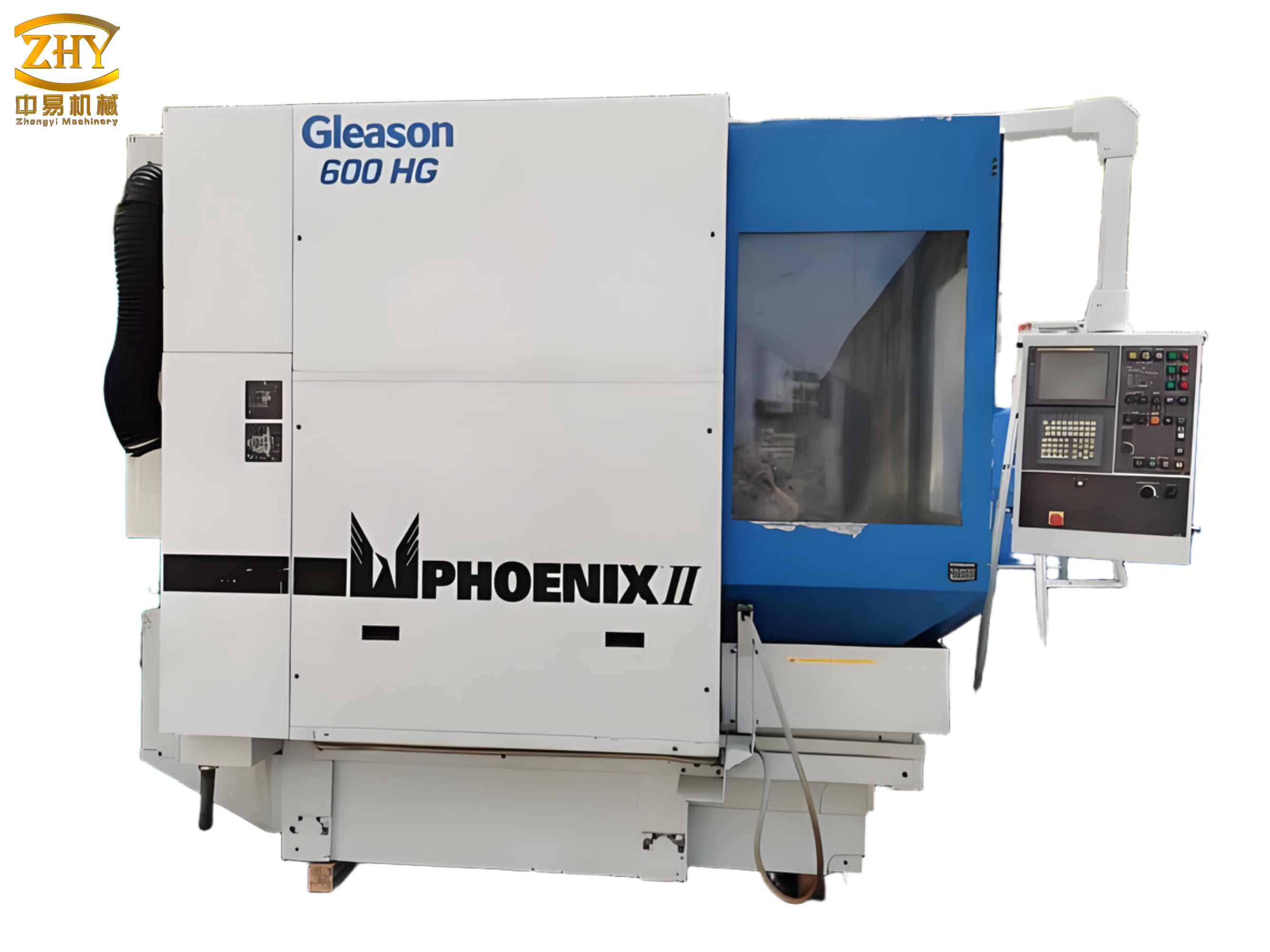
In practice, the application of these methods has proven highly effective in reducing gear grinding costs and improving efficiency. For instance, in gear profile grinding operations, where precision is paramount, controlling the grinding allowance helps prevent thermal damage and grinding cracks that can compromise gear life. The tables below provide detailed values of W1 for different gear types, materials, and sizes, based on my collation of factory data. These values are applicable to the lower end of each diameter range; for larger diameters, an additional value equal to the positive tolerance should be added.
| Pitch Diameter (mm) | Module (mm) | 20CrMnMo / 20CrMnTi | 20Cr2Ni4 | 17CrNiMo6 / 20CrNiMo | Tolerance δ |
|---|---|---|---|---|---|
| 30-150 | 1.5-3 | 0.30 | 0.31 | 0.32 | ±0.025 |
| >3-4.5 | 0.32 | 0.33 | 0.34 | ±0.025 | |
| >4.5-6 | 0.34 | 0.35 | 0.36 | ±0.025 | |
| >6-7.5 | 0.36 | 0.37 | 0.38 | ±0.025 | |
| >7.5-9 | 0.38 | 0.39 | 0.40 | ±0.025 | |
| >9-11 | 0.40 | 0.41 | 0.42 | ±0.025 | |
| >11-14 | 0.42 | 0.43 | 0.44 | ±0.025 | |
| 150-300 | 1.5-3 | 0.31 | 0.33 | 0.35 | ±0.03 |
| >3-4.5 | 0.33 | 0.35 | 0.37 | ±0.03 | |
| >4.5-6 | 0.35 | 0.37 | 0.39 | ±0.03 | |
| >6-7.5 | 0.37 | 0.39 | 0.41 | ±0.03 | |
| >7.5-9 | 0.39 | 0.41 | 0.43 | ±0.03 | |
| >9-11 | 0.41 | 0.43 | 0.45 | ±0.03 | |
| >11-14 | 0.43 | 0.45 | 0.47 | ±0.03 | |
| >14-16 | 0.45 | 0.47 | 0.49 | ±0.03 | |
| >16-18 | 0.47 | 0.49 | 0.51 | ±0.03 | |
| >18-20 | 0.49 | 0.51 | 0.53 | ±0.03 |
This table is an excerpt; similar detailed tables exist for other diameter ranges and gear types, such as gear rings, hollow gear shafts, and solid gear shafts, with W1 values increasing gradually with diameter and module. For example, for gear rings in the pitch diameter range of 300-500 mm, W1 ranges from 0.42 mm to 0.68 mm depending on the module and material, with a tolerance of ±0.035 mm. These values ensure that the grinding allowance is sufficient to accommodate post-carburizing expansion without leading to excessive gear grinding, which could induce grinding cracks or reduce gear life. In gear profile grinding, where the focus is on achieving precise tooth profiles, such controlled allowances are crucial for maintaining quality and efficiency.
Moreover, the prevention of grinding cracks is a critical aspect of this methodology. Grinding cracks often occur due to excessive heat generation during gear grinding, especially if the allowance is too large, leading to thermal stresses. By optimizing the allowance through the formulas and tables provided, the amount of material removed during gear grinding is minimized, reducing heat input and the likelihood of cracks. This is particularly important in high-precision applications like gear profile grinding, where surface integrity is paramount. The empirical relationships derived from factory data, such as ΔW being a fraction of ΔD_d, have been validated through years of application, resulting in significant cost savings and improved product reliability.
In conclusion, the research and practical insights presented here offer a robust framework for managing gear grinding allowances in carburized and quenched hardened gears. By integrating theoretical principles with empirical data, this approach addresses the challenges of dimensional changes post-carburizing, optimizing the gear grinding process to prevent defects like grinding cracks. The use of correction factors, basic allowances, and pre-reduction calculations ensures that gear profile grinding can be performed efficiently, with minimal material waste and enhanced gear performance. As someone who has worked extensively in manufacturing environments, I can attest to the value of these methods in reducing costs and improving quality, making them indispensable for modern gear production. Future work could focus on extending these principles to other materials and gear types, further advancing the field of gear manufacturing.