
In industrial mineral processing plants, overflow ball mills are critical equipment for grinding operations, and their reliable performance is essential for continuous production. As a key component, the pinion bearing housing plays a vital role in transmitting power from the motor to the mill via the gear shaft. This article details a first-person investigation into chronic oil leakage issues in the pinion bearing housings of two MQY55×85 overflow ball mills used in copper slag processing. The study focuses on identifying root causes, implementing密封 modifications, and evaluating outcomes, with an emphasis on the gear shaft’s role in the system. Through theoretical analysis and practical adjustments, we aimed to enhance lubrication efficiency and eliminate leakage, thereby improving operational stability and reducing maintenance costs.
Overflow ball mills consist of several integral parts, including the feeding section, main bearings, rotary section, transmission system (comprising large and small gear devices), air clutch, discharge section, main motor, slow drive unit, lifting device, and electrical controls. During operation, the rotating drum drives media (steel balls) in a controlled circular motion, generating significant centrifugal force. Ore material enters the mill and is lifted to a specific height by conveyors before being thrown and falling freely. During descent, the material is impacted by balls and ground between balls and between balls and liner plates, exposing fresh surfaces and ensuring thorough mixing. Finally, the ground product is discharged through screen openings, completing the comminution process. The gear shaft is central to this power transmission, as it connects the motor to the pinion, facilitating smooth rotation.
The two ball mills in the flotation workshop have been in operation for many years since the plant’s establishment. Production schedules are monthly planned based on upstream slag generation, with maintenance conducted during scheduled monthly shutdowns after production targets are met. As both mills operate without backup and must run simultaneously during production, their stable operation is crucial. The primary transmission method is gear-based, and the efficiency of the large and small gear transmission significantly influences mill performance. These gears, made of high-quality and alloy steels, employ helical teeth for easy adjustment, long life, smooth operation, low noise, and high load capacity. The main motor operates at 200 rpm, and the pinion bearings are 23288CA/W33C3 spherical roller bearings, positioned on both sides of the pinion. The gear shaft is symmetrically designed, allowing reversible use to extend its service life. Power from the main motor is transmitted via the shaft to the pinion, which meshes with the large gear ring to drive the mill, completing the material grinding process. Ensuring the pinion’s proper function is a priority, with bearing lubrication being particularly critical. Experts often analogize that industry “rides on a 10-micron lubricating film,” highlighting how lubricants reduce friction, mitigate stress, prevent corrosion, and remove contaminants, thereby extending bearing life. Theoretically, if lubricating oil were free of impurities, bearings could achieve infinite life; thus, adequate lubrication and minimal contaminants reduce mechanical failures and downtime. Given the large bearing diameter, conventional lubrication methods are insufficient, so oil stations supply cooled lubricant to the bearing housings. The oil viscosity is ≤320 cSt, currently using industrial gear oil (600XP150). Each mill has a dedicated oil station located beneath the mill foundation, employing two pumps in a duty-standby configuration. Lubricant is pumped through inlet pipes into the bearing housing via reserved oil holes, immersing the bearings as the rotating gear shaft agitates the oil. Excess oil returns through discharge pipes to a cooler before recirculating, maintaining low temperatures and preventing shaft-bearing friction.
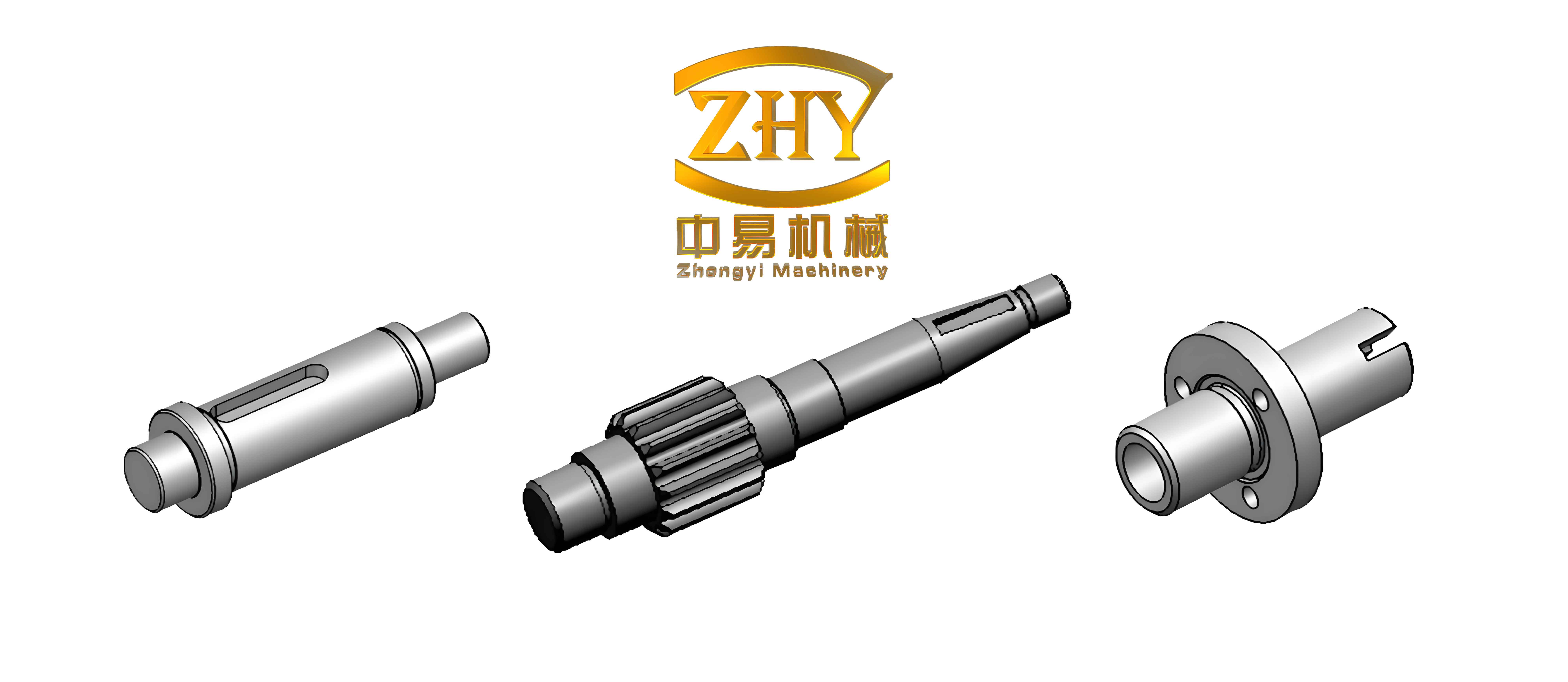
While oil lubrication offers convenience and efficiency, sealing is paramount to prevent external contaminants like dust and moisture from entering and to retain lubricant. Since commissioning, various sealing methods have been applied to the pinion bearing housings, but their short service life and poor performance led to continuous oil leakage from the shaft neck. This resulted in oil wastage, increased consumption, environmental contamination, and frequent cleaning, undermining the company’s 5S lean management efforts. The initial sealing arrangement involved a complex combination seal, comprising components such as an adapter plate, conical seal cover with dynamic compensation seal, labyrinth oil ring, compensation seal ring, oil collection pool, and return pipes. Installed on both sides of the bearing housing, this design aimed to collect oil seepage from the rotating gear shaft in the pool and return it to the oil station via pipes. However, the small internal cavity of the housing impeded oil return, relying primarily on two sets of skeleton oil seals (400×440×20, imported fluoro rubber) to retain oil. When these seals failed, oil could not return quickly through the oil ring’s return ports, leading to leakage. The gear shaft’s rotation exacerbated this by generating heat and friction, further degrading seal integrity.
During routine inspections, elevated temperatures up to 80°C were detected on one side of the 2# ball mill’s pinion, nearing the shutdown threshold, accompanied by oil leakage at the shaft neck. This posed a significant risk of production stoppage. During a monthly shutdown, the combination seal was disassembled, revealing carbonized and ineffective skeleton oil seals, along with seal deformation causing friction with the gear shaft. Emergency measures included straightening the seal, grinding the inner ring to maintain a 2 mm clearance with the shaft, replacing oil seals, and compressing wool felt. These steps temporarily controlled leakage, but the issue recurred after approximately three months. Subsequent adjustments during multiple shutdowns proved ineffective, with prolonged disassembly times due to limited space and shortened procurement cycles for spare parts, creating supply risks. Alternative causes, such as obstructed oil return paths, were investigated. Cleaning the return pipes revealed wool felt debris clogging the lines, and modifications included connecting two return pipes with a high-temperature hose to improve flow. Although leakage slightly improved, it persisted, indicating that pipe diameter was not the primary issue and that cleaning alone was insufficient.
To address the root cause, a comprehensive redesign of the bearing housing was undertaken during a major overhaul. The main issue was identified as the small internal cavity hindering oil return. A new bearing housing was designed with an enlarged oil return chamber, providing ample space for lubricant to flow back to the oil station via bottom return channels, preventing accumulation around the gear shaft. The sealing approach was shifted to non-contact methods to avoid friction-related wear. The redesigned seal assembly includes an oil slinger, oil guide ring, round rubber tube (oil-resistant high-elastic rubber B8×5×1997), double round rubber tube (B8×5×1550), and a pressure plate, distributed on both housing sides. During operation, as the gear shaft rotates, the oil slinger performs irregular idling motions, radially dispersing oil to coat housing walls and bearings, while agitating oil for uniform temperature distribution. The oil guide ring redirects escaping oil back into the cavity, with round rubber tubes in contact grooves enhancing retention. The pressure plate, bolted to the housing, uses double round rubber tubes to block external contaminants, ensuring clean lubrication. This design promotes unobstructed oil flow, internal leakage prevention, and external contamination exclusion, with the gear shaft central to efficient power transmission and lubrication.
Theoretical analysis supports these modifications, particularly in lubrication dynamics. The minimum oil film thickness $ h_{\text{min}} $ in bearing interfaces can be estimated using the Reynolds equation for hydrodynamic lubrication: $$ h_{\text{min}} = \frac{\eta U}{P} \cdot f(\lambda) $$ where $ \eta $ is the dynamic viscosity, $ U $ is the surface velocity, $ P $ is the load per unit area, and $ f(\lambda) $ is a function of the bearing geometry. For the gear shaft application, ensuring $ h_{\text{min}} $ exceeds surface roughness prevents metal-to-metal contact. Additionally, the lubrication efficiency $ \epsilon $ can be expressed as: $$ \epsilon = \frac{Q_{\text{effective}}}{Q_{\text{total}}} $$ where $ Q_{\text{effective}} $ is the oil flow actually lubricating the bearings and $ Q_{\text{total}} $ is the total supplied flow. In the original design, poor return flow reduced $ \epsilon $, but the enlarged cavity improves this ratio. The bearing life $ L $ relates to lubrication quality via: $$ L = \left( \frac{C}{P} \right)^p \cdot \frac{1}{f_{\text{lube}}} $$ where $ C $ is the dynamic load rating, $ P $ is the equivalent load, $ p $ is an exponent (e.g., 10/3 for roller bearings), and $ f_{\text{lube}} $ is a lubrication factor. Enhanced sealing and flow increase $ f_{\text{lube}} $, extending $ L $.
| Parameter | Original Design | Modified Design |
|---|---|---|
| Internal Cavity Volume (L) | ~5 | ~15 |
| Sealing Type | Contact (Combination Seal) | Non-Contact (Slinger/Guide Ring) |
| Oil Return Efficiency (%) | ~60 | ~95 |
| Gear Shaft Clearance (mm) | Variable (often 0 due to friction) | Consistent 2-3 |
| Maintenance Frequency (months) | 3-4 | >12 |
| Lubricant Consumption Reduction (%) | Baseline | ~40 |
Post-modification, the redesigned bearing housing achieved leak-free operation, demonstrating several advantages. First, the enlarged return chamber eliminated oil blockage and leakage, reducing unnecessary oil waste and contamination, thereby lowering the frequency of oil changes and清洗. Second, the housing no longer deforms or frictionally engages with the gear shaft, preventing high temperatures and shutdowns, and protecting both the shaft and seals from damage. Third, given the large尺寸 and high cost of the gear shaft and bearings, the reduced maintenance frequency saved labor and spare parts expenses. Fourth, the simplified structure, without external complex components, minimized disassembly time and effort. Overall, this modification ensured stable mill operation, improved environmental conditions, and set a benchmark for addressing oil leakage issues in similar industrial applications. The gear shaft’s integrity and performance were preserved, underscoring its critical role in the transmission system and the importance of tailored密封 solutions for long-term reliability.
In conclusion, the successful resolution of pinion bearing housing oil leakage through structural redesign and non-contact sealing highlights the importance of addressing root causes rather than symptomatic fixes. The gear shaft’s interaction with lubrication and sealing components is pivotal, and future designs should prioritize adequate cavity sizes and advanced密封 technologies to enhance efficiency and sustainability in mineral processing operations.