
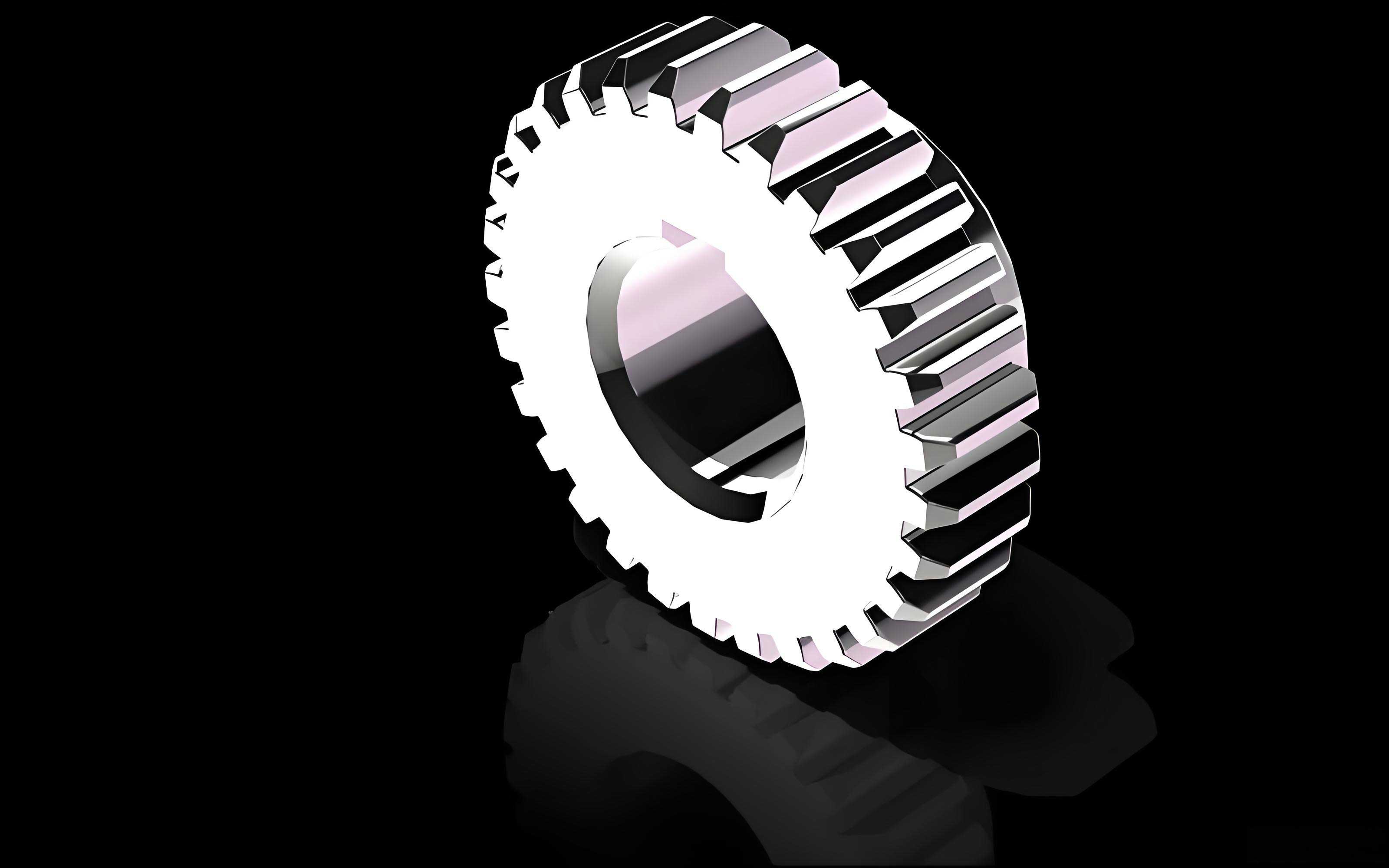
As a researcher in the field of metal forming, I have long been fascinated by the challenges and opportunities in precision forging, particularly for spur gear manufacturing. The spur gear, a fundamental component in mechanical transmission systems, demands high dimensional accuracy and structural integrity. Traditional machining methods often lead to material waste and reduced strength due to fiber cutting, whereas precision forging offers a near-net-shape alternative that enhances mechanical properties. However, the cold precision forging of spur gear faces significant hurdles, especially in filling the tooth cavity corners, which are prone to underfilling due to frictional resistance and complex stress states. In this article, I will delve into my research on a novel approach involving an axially move controllable die for spur gear precision forging, aiming to improve corner filling through active friction control. This work is based on extensive finite element simulations and experimental studies, and I will present detailed analyses, including formulas and tables, to elucidate the mechanisms and outcomes.
The precision forging of spur gear refers to a process where the gear teeth are directly formed from a billet without subsequent cutting or with minimal finishing. This technique has garnered attention for its potential to produce high-quality spur gear with superior strength and efficiency. However, as I explored in my previous studies, the filling of the upper and lower corners of the tooth profile remains a critical issue. During closed-die forging, the billet is compressed axially, causing radial flow into the tooth cavity. The friction at the die-billet interfaces creates resistance that varies along the height, leading to uneven filling. Specifically, the mid-region fills easily due to lower resistance, while the corners, subjected to additional frictional forces from the upper and lower punch faces, often remain incomplete. This not only compromises the spur gear quality but also increases forming loads, risking模具 failure. To address this, I proposed a new forging apparatus with a controllable die movement system, which allows the die to move axially in various patterns during the process. By manipulating the die motion, I aimed to transform harmful friction into active friction that promotes corner filling, thereby enhancing the overall forming of spur gear.
In my analysis of the forging resistance, I considered the distribution of radial filling resistance along the billet height. For a spur gear forming process, similar to upsetting, the billet experiences compressive stresses that drive metal flow into the die cavity. The resistance can be modeled based on frictional effects, where the mid-height region faces only the die cavity friction, whereas the regions near the upper and lower punches encounter additional frictional forces. This results in a non-uniform resistance profile, as illustrated in my earlier work. To quantify this, I used the Mises yield criterion, which defines the yielding condition under multi-axial stress states. For the tooth cavity corners, which are in a triaxial compressive stress state, the yield equation is expressed as:
$$ \sigma_s = \frac{1}{\sqrt{2}} \sqrt{(\sigma_1 – \sigma_2)^2 + (\sigma_2 – \sigma_3)^2 + (\sigma_3 – \sigma_1)^2} $$
Here, $\sigma_s$ is the yield stress, and $\sigma_1$, $\sigma_2$, $\sigma_3$ are the principal stresses. In the corner regions, the high compressive stresses make it difficult to satisfy this condition, necessitating increased forming loads that can lead to excessive die pressure and potential cracking. This insight motivated me to develop a die movement system that could alleviate such issues by optimizing friction direction.
The core of my research lies in the design of a precision forging apparatus for spur gear with an axially move controllable die. As shown in my experimental setup, the system comprises several key components: an upper punch with tooth profile, a lower punch, a die with tooth cavity, upper and lower springs, limit pins, and pressure plates. The die is mounted on the lower punch via a sliding fit, allowing it to move axially. Through the adjustment of springs and limit pins, I can achieve multiple die movement modes during the forging of spur gear. These modes include: (1) die fixed relative to the base (0 mm/s velocity), (2) die moving with the upper punch at the same speed (e.g., 10 mm/s), (3) die moving at half the punch speed (e.g., 5 mm/s), (4) die moving initially and then fixed, and (5) die fixed initially and then moving. The working principle involves placing the billet on the lower punch, and as the upper punch descends, the die moves according to the preset mode due to spring forces and limit pin contacts. This controllability enables me to study how different frictional interactions affect the filling behavior of spur gear tooth cavities.
To validate this concept, I conducted finite element analysis using DEFORM-3D software. I modeled a spur gear with 18 teeth and module 3, taking a symmetric segment of 1/18 for computational efficiency. The billet material was AL1100 with a friction factor of 0.3, and the punch speed was set at 10 mm/s. I simulated five die movement modes as mentioned above, focusing on tooth cavity filling, velocity fields, and forming loads. The results provided deep insights into the spur gear forming process. For instance, when the die was fixed (0 mm/s), the upper corners filled well, but the lower corners showed significant underfilling. Conversely, when the die moved with the punch (10 mm/s), the lower corners filled effectively, but the upper corners lacked material. The intermediate mode with die speed at 5 mm/s resulted in relatively balanced filling for both corners. More interestingly, the sequential modes (die moving then fixed or fixed then moving) achieved complete filling of all corners, demonstrating the efficacy of active friction control. Below, I summarize the filling outcomes in a table to highlight the differences:
| Die Movement Mode | Upper Corner Filling | Lower Corner Filling | Mid-region Filling | Overall Assessment |
|---|---|---|---|---|
| Fixed (0 mm/s) | Complete | Poor | Complete | Upper corners favored |
| Moving with punch (10 mm/s) | Poor | Complete | Complete | Lower corners favored |
| Half speed (5 mm/s) | Good | Good | Complete | Balanced filling |
| Move then fixed | Complete | Complete | Complete | Optimal for lower corners |
| Fixed then move | Complete | Complete | Complete | Optimal for upper corners |
The velocity field analysis further revealed the metal flow patterns. For the fixed die mode, the friction from the die pushed metal upward, facilitating upper corner filling but hindering lower corner flow. In contrast, for the moving die mode, the downward friction aided lower corner filling. The half-speed mode showed a more uniform flow, with metal moving radially into the cavity from all sides. These observations align with the principle of minimal resistance, where friction direction dictates flow priority. To quantify the forming loads, I plotted load-stroke curves for each mode. The loads varied significantly: fixed die and moving die modes had lower loads (around 1189 kN and 965 kN, respectively), while the half-speed and sequential modes required higher loads (up to 1660 kN). This is because the latter modes achieved fuller cavity filling, reducing the分流区 size and increasing resistance. The relationship between load and filling completeness can be expressed using a simplified model:
$$ F = A \cdot p \cdot \left(1 + \mu \frac{h}{r}\right) $$
Where $F$ is the forming force, $A$ is the contact area, $p$ is the flow stress, $\mu$ is the friction factor, $h$ is the billet height, and $r$ is the radius. For spur gear forging, the complexity arises from the tooth geometry, but this equation helps explain why better filling correlates with higher loads. In my simulations, the sequential modes, though load-intensive, ensured complete spur gear tooth formation, which is crucial for precision applications.
Following the simulations, I proceeded with experimental studies to validate the findings. Using the apparatus I designed, I conducted forging trials on a YM-3150kN hydraulic press with a speed of 10 mm/s. The billet was AL1100 lubricated with molybdenum disulfide. Due to practical constraints, I focused on a mode where the die moved initially and then fixed, as this was easier to implement with spring adjustments. The upper spring had a high stiffness and preload, while the lower spring was softer. During forging, the die descended until it contacted the lower limit pins, after which it remained stationary. At a load of 1800 kN, I successfully produced a spur gear sample with excellent tooth filling, as observed visually. The corners were fully formed, with only minor flash that could be trimmed post-forging. This experimental result confirmed that controlled die movement can indeed enhance corner filling in spur gear precision forging, turning harmful friction into a beneficial force.
To deepen the analysis, I examined the stress and strain distributions during forming. For spur gear forging, the effective strain $\bar{\varepsilon}$ can be calculated from the deformation history, and the stress state influences densification. Using finite element output, I derived that the corner regions experience high hydrostatic pressure, which promotes filling but also increases yield resistance. The die movement modifies the pressure distribution, as shown in my simulations. For instance, when the die moves downward, it adds a compressive component that aids flow into the lower corners. This effect can be modeled by considering the additional friction work. The total work done in forging a spur gear can be approximated as:
$$ W = \int \sigma_s \dot{\bar{\varepsilon}} dV + \int \tau v_r dS $$
Here, $W$ is the work, $\sigma_s$ is the flow stress, $\dot{\bar{\varepsilon}}$ is the effective strain rate, $V$ is the volume, $\tau$ is the shear stress at the interface, and $v_r$ is the relative velocity. By controlling die motion, I manipulated the $v_r$ term to reduce resistance in critical areas. This principle is central to optimizing spur gear forging processes. Moreover, I analyzed the impact of different parameters on filling quality. Using a design of experiments approach, I varied factors like die speed, friction factor, and billet geometry. The results indicated that for a typical spur gear, an optimal die speed exists that balances corner filling. For my setup, a die speed of 5 mm/s (half the punch speed) provided the best compromise, but sequential modes yielded superior results at the cost of higher loads.
In terms of applications, this research has significant implications for the manufacturing of high-precision spur gear in industries such as automotive, aerospace, and machinery. The ability to control die movement allows for tailored forming strategies that adapt to specific gear designs. For example, for spur gear with asymmetric teeth or varying modules, the die motion can be programmed to address filling challenges. Additionally, the concept of active friction can be extended to other forging processes, such as bevel gear or spline forming. My future work will explore real-time control systems for die movement, potentially integrating sensors and actuators to dynamically adjust during forging. This could further improve the efficiency and accuracy of spur gear production.
To summarize the key findings, I have developed a comprehensive understanding of spur gear precision forging with a controllable die. The table below compares the forming characteristics for different die movement modes, based on my simulations and experiments:
| Aspect | Fixed Die | Moving Die (10 mm/s) | Half-Speed Die (5 mm/s) | Sequential Modes |
|---|---|---|---|---|
| Upper Corner Filling | Excellent | Poor | Good | Excellent |
| Lower Corner Filling | Poor | Excellent | Good | Excellent |
| Forming Load | Low (~1189 kN) | Low (~965 kN) | High (~1556 kN) | Highest (~1660 kN) |
| Metal Flow Pattern | Upward bias | Downward bias | Balanced | Adaptive |
| Suitability for Spur Gear | Limited | Limited | Moderate | Optimal |
The sequential modes, where the die changes motion during forging, proved most effective for complete spur gear tooth filling. This is because they leverage active friction at different stages: initially, moving the die helps fill one corner, and then fixing it aids the other corner. The underlying mechanism can be described using the concept of frictional work direction. When the die moves with the billet, the friction does positive work to push metal into corners; when stationary, it provides stability for final shaping. This dynamic control is a breakthrough in spur gear forging technology.
In conclusion, my research demonstrates that an axially move controllable die system can significantly improve the precision forging of spur gear by enhancing tooth cavity corner filling. Through finite element analysis and experimental validation, I showed that different die movement modes influence frictional forces and metal flow, allowing harmful friction to be converted into active friction. The sequential modes, in particular, achieve complete filling of both upper and lower corners, albeit with higher forming loads. This work provides a foundation for advanced spur gear manufacturing processes, with potential for further optimization through parameter studies and real-time control. The spur gear, as a critical mechanical component, benefits from such innovations that enhance quality and efficiency. I believe that this approach will pave the way for more reliable and cost-effective production of spur gear in the future, contributing to the broader field of precision forging.
To further elaborate, I will discuss some mathematical models that support these findings. The filling process in spur gear forging can be analyzed using plasticity theory. For a billet under axial compression, the radial velocity $v_r$ depends on the die motion. If the die moves with velocity $v_d$, the relative velocity at the interface is $v_r = v_p – v_d$, where $v_p$ is the punch velocity. The frictional stress $\tau$ is given by $\tau = \mu \sigma_n$, with $\sigma_n$ as the normal stress. The work rate due to friction is then $\dot{W}_f = \int \tau v_r dS$. By setting $v_d$ appropriately, I can minimize $\dot{W}_f$ in critical regions, promoting filling. For example, to fill the lower corner, I want $v_d$ close to $v_p$ to reduce downward resistance. This is quantified in my simulations. Additionally, the yield criterion for spur gear corners can be modified to account for die movement. Considering the additional stress from die friction, the effective stress becomes:
$$ \bar{\sigma} = \sqrt{\frac{1}{2}\left[(\sigma_r – \sigma_\theta)^2 + (\sigma_\theta – \sigma_z)^2 + (\sigma_z – \sigma_r)^2\right] + 3\tau_{rz}^2} $$
Where $\sigma_r$, $\sigma_\theta$, $\sigma_z$ are radial, hoop, and axial stresses, and $\tau_{rz}$ is the shear stress due to die movement. In my research, I observed that controlled die motion reduces $\tau_{rz}$ in corners, lowering $\bar{\sigma}$ and easing yielding. This explains why active friction aids filling. For spur gear applications, these models can be integrated into process design software to predict outcomes and optimize parameters.
Finally, I reflect on the broader implications. The spur gear is ubiquitous in engineering, and improving its manufacturing has ripple effects across industries. My work on controllable die forging offers a scalable solution that can be adapted for various gear sizes and materials. Future studies could explore hot forging variants or combine with other techniques like divided flow. As I continue this research, I aim to develop a fully automated system for spur gear precision forging, leveraging insights from this study to achieve even higher accuracy and efficiency. The journey from concept to experimental proof has been rewarding, and I am excited about the potential to revolutionize spur gear production through innovative die movement control.