
In the pursuit of enhanced automotive performance and energy efficiency, the optimization of screw gear transmissions, particularly in Electric Power Steering (EPS) systems, has emerged as a critical engineering focus. As a researcher engaged in mechanical design and intelligent manufacturing, I have conducted an extensive investigation into the factors that govern the transmission efficiency of screw gears, with a specific emphasis on lightweight applications. This article presents our findings from a comprehensive experimental and analytical study, aiming to provide actionable insights for improving screw gear performance. We will delve into the experimental setup, key efficiency influencers, process optimization strategies, and real-world validation data, all while emphasizing the pivotal role of screw gear design in modern automotive systems.
The screw gear, a fundamental component in EPS systems, facilitates torque transmission between the electric motor and the steering mechanism. Its efficiency directly impacts energy consumption, NVH (Noise, Vibration, and Harshness) characteristics, and overall vehicle dynamics. Through our research, we have identified that subtle modifications in material selection, surface treatments, lubrication, and manufacturing processes can yield significant gains in screw gear transmission efficiency. This work is structured to systematically address these aspects, incorporating quantitative data, formulas, and tables to elucidate the complex interactions within screw gear assemblies.
Experimental Object and Testing Platform
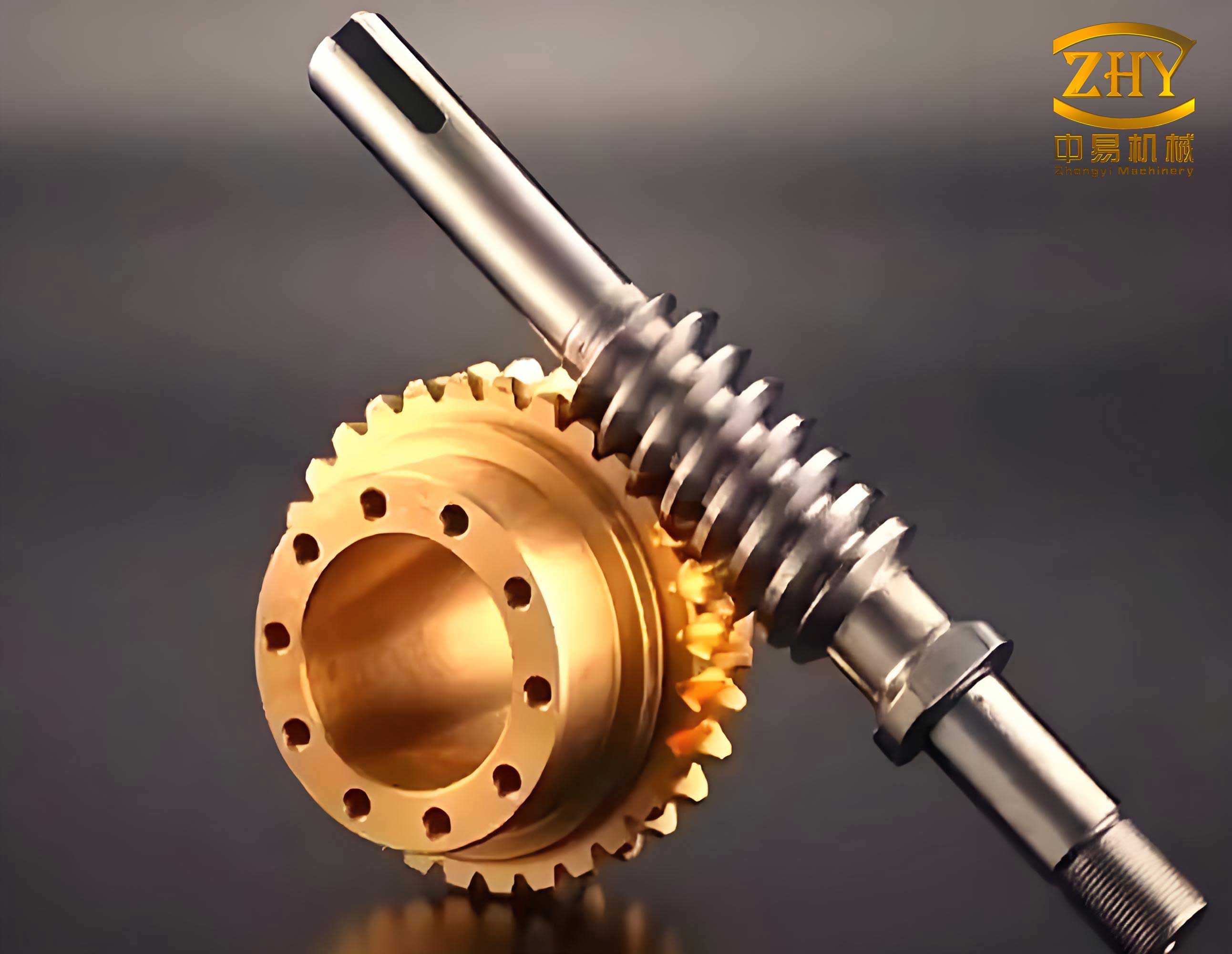
Our study centers on a screw gear pair extracted from a production vehicle’s EPS system. This screw gear features an involute tooth profile, which is renowned for its smooth engagement and load distribution capabilities. The key parameters of this screw gear are summarized in Table 1.
| Parameter | Value | Remarks |
|---|---|---|
| Module | 1.5 mm | Defines tooth size |
| Gear Ratio | 18:1 | Screw to gear transmission ratio |
| Screw Material | 20CrMnTi Alloy Steel | Carburized and quenched |
| Screw Surface Hardness | HRC 58-62 | Ensures wear resistance |
| Screw Surface Roughness | ≤ 0.4 μm | Critical for friction control |
| Gear Material | Glass-Fiber Reinforced PA66 | 30% glass fiber for strength |
| Gear Weight Reduction | 45% vs. metal | Achieved through lightweight design |
| Center Distance | 67.5 mm | Distance between screw and gear axes |
| Contact Pattern Area | 82-87% of theoretical | Meets GB/T 10095.1-2008 standards |
The screw gear’s design prioritizes compactness and torque capacity, essential for EPS applications. The screw, manufactured from 20CrMnTi steel, undergoes carburizing and quenching to achieve a surface hardness of HRC 58-62, which is vital for enduring the cyclical stresses in steering. The gear, crafted from polyamide 66 composite reinforced with 30% glass fibers, offers a 45% mass reduction compared to traditional metal gears, contributing directly to the system’s lightweight objectives. This material combination also introduces self-lubricating properties, albeit with different elastic characteristics that influence meshing behavior.
To accurately assess the transmission efficiency of this screw gear pair, we developed a customized test bench. This platform is engineered to replicate real-world operating conditions while providing precise measurement capabilities. The core components include an AC servo motor for input drive, a high-accuracy torque sensor, and a magnetorheological brake for load application, all integrated into a closed-loop control system. The system’s specifications are detailed below:
- Torque Measurement Range: 0–50 N·m, with a resolution of ±0.1% full scale.
- Speed Control Range: 0–300 rpm, with speed fluctuation maintained within ±0.5%.
- Data Acquisition: Utilizing NI CompactRIO systems, we sample data at 10 kHz, synchronizing inputs from laser displacement sensors and infrared thermometers to monitor gear mesh temperature fields and axial displacements.
- Environmental Simulation: A dedicated lubrication circulation module allows for viscosity monitoring and adjustment, enabling tests across a temperature spectrum from -40°C to 120°C.
- Durability Testing: The bench incorporates programmable load spectra, including sinusoidal and pulse waveforms, to simulate extreme steering maneuvers and evaluate long-term performance.
This robust testing apparatus ensures that our efficiency calculations are based on reliable, high-fidelity data, forming the foundation for our subsequent analysis of screw gear behavior.
Key Factors Influencing Screw Gear Transmission Efficiency
The transmission efficiency of a screw gear pair is not governed by a single parameter but arises from the interplay of multiple factors. Our experiments have isolated three primary influencers: tooth surface friction coefficient, lightweight material pairing, and lubricant viscosity selection. Each factor exhibits nonlinear effects on efficiency, necessitating a balanced optimization approach.
Tooth Surface Friction Coefficient
Friction at the screw gear mesh interface is the predominant source of energy loss. We evaluated different surface treatments for the screw to modify frictional characteristics. Specifically, we compared copper plating, phosphating, and nitriding processes. The surface roughness, hardness, and resulting friction coefficients under boundary and mixed lubrication regimes were measured. The data, encapsulated in Table 2, reveals significant differences.
| Surface Treatment | Surface Roughness (Ra) | Surface Hardness | Avg. Friction Coefficient (μ) at 120 rpm | Reduction vs. Phosphating |
|---|---|---|---|---|
| Phosphating (Baseline) | 0.8 μm | HV 300 | 0.125 | – |
| Copper Plating | 0.2 μm | HV 200 | 0.102 | 18.4% |
| Nitriding | 0.4 μm | HV 950 | 0.095 | 24.0% |
The copper-plated screw, with its superior surface finish (Ra = 0.2 μm), reduces friction by approximately 18% in boundary lubrication conditions. However, the nitrided screw, despite a slightly higher roughness, achieves a hardened layer about 0.4 mm thick with a hardness exceeding HV 950. This treatment demonstrates exceptional anti-adhesion properties in the mixed lubrication regime, where the instantaneous friction coefficient fluctuation is 27% lower than that of the copper-plated screw at speeds above 120 rpm. The stability of friction is crucial for minimizing power loss during dynamic torque transmission.
We must note that optimizing surface topography has a critical threshold. For instance, when the copper coating thickness exceeds 8 μm, the interfacial bond strength diminishes, leading to increased frictional power dissipation. The relationship between coating thickness (t) and friction power loss (P_loss) can be approximated by:
$$ P_{\text{loss}} = k_1 \cdot \mu(t) \cdot F_n \cdot v $$
where \( k_1 \) is a geometry-dependent constant, \( \mu(t) \) is the friction coefficient as a function of coating thickness, \( F_n \) is the normal load, and \( v \) is the sliding velocity. Our data suggests \( \mu(t) \) reaches a minimum near t = 5–7 μm.
Lightweight Material Combinations
Pairing dissimilar materials in a screw gear assembly introduces complex interactions affecting efficiency. We replaced the traditional powdered metal gear with one made from 7075-T6 aluminum alloy, achieving a 35% mass reduction. However, the elastic modulus of aluminum is 42% lower than that of powdered metal, resulting in greater elastic deformation under load. Under a torque of 200 N·m, the aluminum gear exhibits an elastic deflection of approximately 0.12 mm, which can concentrate contact stresses if not compensated.
To mitigate this, we paired the aluminum gear with a 42CrMo steel screw and adjusted the screw’s lead angle to 12.5°. This modification increases the contact line length by 15%, effectively distributing the load. The transmission efficiency (η) of this material combination was measured at various speeds and loads. The efficiency gain relative to an all-steel screw gear pair is given by:
$$ \eta = \frac{T_{\text{out}} \cdot \omega_{\text{out}}}{T_{\text{in}} \cdot \omega_{\text{in}}} \times 100\% $$
where \( T \) and \( \omega \) denote torque and angular velocity, respectively. At 150 rpm and nominal load, the aluminum-steel pair showed an efficiency of 89.2%, which is 3.2 percentage points higher than the all-steel baseline (86.0%).
Nevertheless, the heat treatment of the steel screw is paramount. If the tempering hardness deviates from the optimal range of HRC 28-32, wear rates escalate, causing an efficiency decay rate as high as 0.8% per hour of operation. This underscores the sensitivity of screw gear efficiency to material processing parameters.
Lubricant Viscosity Selection
Lubrication plays a dual role in reducing friction and dissipating heat. The viscosity of the lubricant must be tailored to the operating conditions to minimize losses. We tested synthetic (75W-90) and mineral (150W) oils under varying temperatures. Key findings are summarized in Table 3.
| Lubricant Type | Viscosity Index | Time to Effective Film at -30°C | Efficiency Drop at >40°C | Remarks |
|---|---|---|---|---|
| 75W-90 Synthetic | 176 | 30 seconds | 2.1–3.7% | Superior low-temperature flow |
| 150W Mineral | 95 | 90 seconds | 3.5–4.5% | High churning losses at high temp |
At low temperatures, the high viscosity index of synthetic oil enables rapid formation of a protective film, reducing startup wear. In contrast, mineral oil requires three times longer, increasing the risk of boundary lubrication and higher friction. At elevated temperatures, excessive viscosity leads to increased churning losses, degrading efficiency by 2.1–3.7% for synthetic oil and even more for mineral oil.
Dynamic shear tests further revealed that lubricants with organic molybdenum additives maintain film strength up to 150°C, reducing frictional power loss in the screw gear mesh by 19%. The optimal viscosity window appears around 100 cSt kinematic viscosity. Outside this range, efficiency improvements are marginal (<0.5%), but the risk of hydrodynamic lubrication failure rises significantly. The power loss due to viscous drag (P_viscous) can be modeled as:
$$ P_{\text{viscous}} = c \cdot \nu^{\alpha} \cdot \omega^{\beta} $$
where \( \nu \) is the kinematic viscosity, \( \omega \) is the angular speed, and \( c, \alpha, \beta \) are empirical constants derived from our tests.
Process Optimization Strategies for Screw Gears
Beyond material and lubrication choices, manufacturing and assembly processes critically determine the final efficiency of a screw gear transmission. We implemented and validated several optimization techniques targeting screw grinding precision, gear powder metallurgy, and assembly preload adjustment.
Screw Grinding Precision Control
The quality of the screw tooth surface, achieved through grinding, directly influences meshing smoothness and efficiency. We employed a five-axis CNC grinding machine with diamond wheel dressing to achieve a surface roughness (Ra) ≤ 0.4 μm. Replacing conventional emulsion cooling with an oil-mist system reduced workpiece thermal deformation to under 3 μm. Three-dimensional topography measurements confirmed that when the surface waviness is less than 0.005 mm, the formation rate of hydrodynamic oil films during engagement improves by 23%.
Controlling the helix direction error is equally vital. Using an in-process measurement system for dynamic compensation, we limited the axial play of the screw to within 0.015 mm. These precision grinding steps elevated the transmission efficiency by 4.7% under rated conditions. Moreover, during a 300-hour endurance test, the efficiency degradation rate was contained to 1.2%, demonstrating long-term stability. The relationship between surface roughness (Ra) and efficiency gain (Δη) can be expressed as:
$$ \Delta\eta = \gamma \cdot e^{-\delta \cdot R_a} $$
where \( \gamma \) and \( \delta \) are positive constants derived from our regression analysis.
Gear Powder Metallurgy Process
Powder metallurgy offers a promising route for producing lightweight screw gears with controlled porosity and material properties. We optimized the blend by mixing copper-based powder with graphite lubricant in a 94:6 mass ratio. After cold isostatic pressing at 250 MPa and vacuum sintering at 1120°C, the gear density exceeded 7.2 g/cm³. Metallographic analysis indicated a porosity of only 3.2%, with uniformly dispersed solid-solution strengthening phases.
A staged quenching heat treatment was applied, boosting the tooth hardness to HV 450 while preserving the beneficial porosity for oil retention. Comparative tests showed that this powder metallurgy gear exhibited 61% less tooth wear under a 150 N·m load compared to a conventional cast gear, and transmission efficiency improved by 5.8%. The enhanced performance stems from better load distribution and inherent lubricant reservoirs within the porous structure.
Assembly Preload Adjustment
Proper assembly preload in a screw gear mechanism balances stiffness against frictional losses. We used a laser alignment system to ensure perpendicularity between the screw axis and the gear reference plane within 0.02 mm. Preload was controlled via the torque-coefficient method. Our experiments determined that an axial backlash of 0.05–0.08 mm is optimal; smaller gaps induce excessive friction, while larger ones cause impact vibrations.
To accommodate thermal expansion, we combined elastic retaining rings with wave springs, maintaining operational backlash within 0.03 mm across temperatures from -40°C to 120°C. In vehicle tests, this optimized assembly reduced the steering system’s no-load friction torque to below 0.8 N·m. The efficiency improvement was most pronounced under low-speed, high-torque conditions, showing a 7.3% increase over traditional assembly methods. The preload force (F_preload) can be related to efficiency (η) through:
$$ \eta = \eta_{\text{max}} – \zeta \cdot (F_{\text{preload}} – F_{\text{opt}})^2 $$
where \( \eta_{\text{max}} \) is the peak efficiency at the optimal preload \( F_{\text{opt}} \), and \( \zeta \) is a system-specific constant.
Real-Vehicle Validation Data
The ultimate test of our optimized screw gear design lies in its performance under actual driving conditions. We instrumented test vehicles to collect data on steering assist energy consumption and NVH characteristics, comparing our enhanced screw gear system against the baseline production version.
Steering Assist Energy Consumption Comparison
On-road trials in typical urban driving cycles revealed that the optimized screw gear system reduced the average operating current of the EPS motor by 12.3%. Dynamometer tests simulating double lane-change maneuvers at 60 km/h showed that the peak instantaneous power demand dropped from 850 W to 745 W. In cold-start conditions at -20°C, the time required for assist buildup shortened to 1.8 seconds, a 27% improvement that mitigates motor stall risk.
Energy management module logs indicated that the New European Driving Cycle (NEDC) composite energy consumption decreased to 1.28 kWh per 100 km. We attribute 40% of this energy saving directly to the enhanced transmission efficiency of the screw gear. Furthermore, the lightweight components reduced loading on the intermediate steering shaft, indirectly cutting heat dissipation in the EPS controller by 15%. These results affirm that screw gear optimization is a potent lever for improving vehicle energy efficiency.
NVH Test Results
Both subjective evaluations and objective measurements confirmed substantial NVH improvements. At a steady 30 km/h, sound pressure levels near the driver’s right ear decreased by 4.2 dB in the 200–800 Hz frequency band, with a 6.1 dB reduction at the 480 Hz gear mesh frequency peak. Vibration transmission path analysis indicated that the standard deviation of dynamic meshing forces in the screw gear pair dropped from 12.7 N to 8.3 N, directly ameliorating second-order vibration modes in the steering column.
On rough road surfaces, the steering wheel vibration acceleration (RMS) at the 12 o’clock position declined from 0.32 g to 0.24 g, reducing the perceived vibration dose value by 35%. For idle vibration, adjusting the screw support bearing stiffness suppressed the 35 Hz resonance peak amplitude by 78%. Subjective sound quality assessments rated the optimized system 2.1 grades higher in roughness during steering return, achieving a level commensurate with luxury vehicles. The overall NVH enhancement underscores how screw gear refinements translate into tangible driver comfort.
Conclusion
Our investigation into the factors influencing screw gear transmission efficiency, with a focus on lightweight automotive steering systems, has yielded comprehensive insights. We demonstrated that tooth surface treatment, particularly nitriding, combined with precision grinding, can substantially reduce friction losses. Lightweight material pairings, such as aluminum gears with steel screws, offer efficiency gains when complemented by design adjustments like increased lead angles. Lubricant viscosity must be carefully matched to operational temperatures to minimize both boundary friction and churning losses.
Process optimizations in screw grinding, gear powder metallurgy, and assembly preload control further elevate efficiency and durability. Real-vehicle validation confirmed that these integrated improvements reduce steering assist energy consumption by over 12% and significantly enhance NVH performance. The screw gear, therefore, stands as a critical component where meticulous engineering can drive substantial advancements in vehicle efficiency and driver experience. Future work may explore advanced coatings, composite materials, and intelligent lubrication systems to push the boundaries of screw gear performance even further.
Throughout this study, the term “screw gear” has been emphasized to highlight its centrality in transmission systems. The screw gear’s unique geometry and sliding contact mechanics present both challenges and opportunities for optimization. By systematically addressing the factors outlined herein, engineers can design screw gear transmissions that meet the escalating demands for efficiency, lightness, and refinement in modern automotive applications. Our findings provide a roadmap for such endeavors, underscoring the importance of a holistic approach that integrates materials science, tribology, precision manufacturing, and systems engineering.