
The reliable and efficient operation of screw gears, specifically worm gear drives, is a critical concern in numerous industrial applications, with the elevator traction system being a prime and demanding example. As the global leader in both the manufacturing and deployment of elevators, the performance demands on these systems are exceptionally high. The worm gear reduction gearbox is the heart of the traction mechanism, where a hardened steel worm meshes with a bronze worm wheel. This configuration generates high sliding velocities and significant frictional heat at the contact interfaces. Under such severe conditions, common failure modes include scoring, scuffing, excessive wear, and under heavy loads, the catastrophic failure known as gear tooth welding or adhesive wear.
The ongoing industrial trend towards more compact, higher power density, and more efficient gearboxes places extraordinary demands on the lubricant. For screw gears, the lubricant must excel in several key areas: load-carrying capacity (extreme pressure), wear protection, friction modification, oxidation stability, and corrosion inhibition, particularly towards non-ferrous metals like bronze. Traditional mineral oil-based lubricants for screw gears exhibit significant limitations. They are often inadequate for applications subject to heavy loads, shock, or vibration, and their performance degrades rapidly at sustained bulk oil temperatures exceeding 100°C, potentially leading to localized overheating and failure at the gear contact.
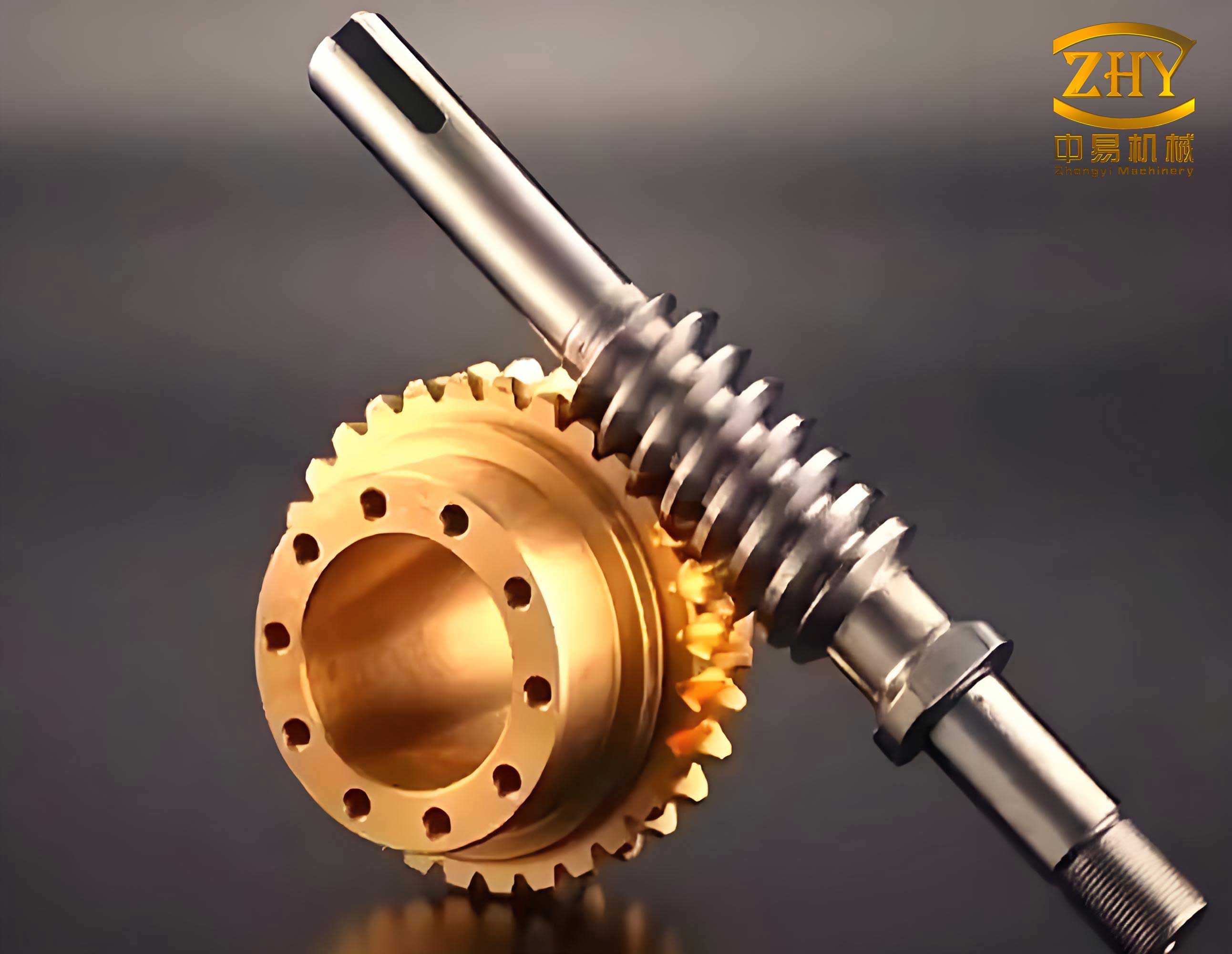
In contrast to mineral oils, polyalphaolefins (PAOs), and esters, water-soluble polyalkylene glycols (PAGs) or polyethers demonstrate superior viscosity-temperature characteristics and enhanced tribological performance. Their polar nature promotes strong adsorption onto metal surfaces, forming effective lubricating films. This research and development effort was undertaken to formulate a high-performance polyether-based lubricant specifically engineered for the demanding environment of elevator traction system reduction gearboxes, thereby expanding the available product portfolio for industrial screw gears.
1. Performance Targets for the Polyether Screw Gear Lubricant
Based on the unique operating principles and failure modes of screw gears, and benchmarking against a certified, commercially available imported polyether worm gear oil, a comprehensive set of technical specifications was established for the target formulation. These targets define the necessary balance of physical, chemical, and tribological properties.
| Property | Target Specification | Test Method |
|---|---|---|
| Kinematic Viscosity @ 40°C (mm²/s) | 288 – 352 | ASTM D445 |
| Kinematic Viscosity @ 100°C (mm²/s) | Report | ASTM D445 |
| Viscosity Index | >= 220 | ASTM D2270 |
| Pour Point (°C) | <= -25 | ASTM D97 |
| Flash Point (Open Cup, °C) | >= 230 | ASTM D92 |
| Copper Corrosion (T2, 100°C, 3h) | <= 1b | ASTM D130 |
| Rust Prevention (Distilled Water) | No Rust | ASTM D665 A |
| Oxidation-Corrosion Test (150°C, 50h, 50 mL/min air) | Modified ASTM D943 | |
| – Corrosion on Steel 45 (mg/cm²) | ±0.20 | – |
| – Corrosion on Copper T3 (mg/cm²) | ±0.40 | – |
| – Corrosion on Aluminum LY11 (mg/cm²) | ±0.20 | – |
| – % Kin. Viscosity Change @ 40°C | ±15.0 | – |
| – Acid Number Increase (mg KOH/g) | Report | – |
| Maximum Load (Weld Point, N) | >= 1236 | ASTM D2783 (Four-Ball) |
| Wear Scar Diameter* (mm) | <= 0.40 | ASTM D4172 (Four-Ball) |
* Test Conditions: 196 N, 60 min, 55°C, 1800 rpm.
The targets emphasize excellent viscosity-temperature behavior (high Viscosity Index), low-temperature fluidity (low pour point), safety (high flash point), and robust protection against copper corrosion and rust—a critical requirement for bronze worm wheels in screw gears. The oxidation stability and anti-wear/ extreme pressure (EP) targets are set to ensure longevity and component protection under high-stress conditions.
2. Theoretical Foundation: Polyethers and Screw Gear Tribology
The effectiveness of a lubricant for screw gears is governed by its ability to maintain a separating film under conditions of high sliding and mixed/boundary lubrication. The film thickness (h) in an elastohydrodynamic (EHD) contact can be estimated using the Dowson-Hamrock equation for line contacts, relevant for gear teeth:
$$ h_{min} = 2.65 \frac{(G^{*})^{0.54} (U^{*})^{0.7}}{(W^{*})^{0.13}} R’ $$
Where:
$G^{*}$ is the dimensionless materials parameter,
$U^{*}$ is the dimensionless speed parameter,
$W^{*}$ is the dimensionless load parameter, and
$R’$ is the effective radius of curvature.
The dimensionless speed parameter $U^{*}$ is directly proportional to the lubricant’s dynamic viscosity at the operating temperature and pressure ($\eta_0$):
$$ U^{*} = \frac{\eta_0 u}{E’ R’} $$
Here, $u$ is the entrainment speed, and $E’$ is the effective elastic modulus. For screw gears with high sliding, the entrainment speed is complex, but the lubricant’s pressure-viscosity coefficient ($\alpha$) and its ability to maintain adequate viscosity at high shear and temperature are paramount. Polyethers typically have a lower pressure-viscosity coefficient than mineral oils but exhibit superior thermal stability and viscosity index. This means their viscosity changes less with temperature, helping to maintain a more stable film thickness ($h$) across the operating range of screw gears. The specific film thickness or Lambda ratio ($\Lambda$) is a key indicator:
$$ \Lambda = \frac{h_{min}}{\sqrt{Rq_a^2 + Rq_b^2}} $$
Where $Rq_a$ and $Rq_b$ are the root-mean-square surface roughness of the two contacting surfaces (worm and wheel). When $\Lambda < 1-3$, the system operates in the boundary lubrication regime, where the chemical tribofilms formed by anti-wear (AW) and extreme pressure (EP) additives become the primary defense against wear and scuffing in screw gears.
3. Formulation Development of the Polyether Screw Gear Lubricant
3.1 Base Oil Selection and Characterization
The cornerstone of the formulation is a water-soluble polyether copolymer, synthesized via the anionic ring-opening polymerization of epoxyethane (EO) and epoxypropane (PO) monomers. The ratio of EO to PO is critical in tailoring properties: EO units contribute to water solubility and polarity, while PO units provide hydrocarbon compatibility and lower pour point. The selected base oil, designated JM-A, was characterized to ensure it met the foundational requirements for screw gear lubrication.
| Property | Typical Data | Test Method |
|---|---|---|
| Appearance | Clear Liquid | Visual |
| Density @ 20°C (g/cm³) | 1.084 | ASTM D4052 |
| Kinematic Viscosity @ 40°C (mm²/s) | 325.0 | ASTM D445 |
| Viscosity Index | 240 | ASTM D2270 |
| Flash Point (COC, °C) | 250 | ASTM D92 |
| Pour Point (°C) | -42 | ASTM D97 |
| Acid Number (mg KOH/g) | 0.01 | ASTM D974 |
The high Viscosity Index (240) confirms exceptional viscosity-temperature performance, crucial for screw gears operating across a wide temperature range. The very low pour point (-42°C) ensures pumpability and film formation during cold starts.
3.2 Additive System Selection and Synergy
The harsh operating environment of elevator screw gears—elevated temperature, potential moisture ingress, and high Hertzian contact stresses—necessitates a carefully balanced additive package.
3.2.1 Antioxidant System
Thermo-oxidative stability is non-negotiable for lubricants in enclosed screw gear boxes experiencing temperatures above 100°C. Oxidation leads to sludge, varnish, and increased acidity, which can corrode the bronze worm wheel. Different antioxidant systems were evaluated in the JM-A base oil using a severe oxidation-corrosion test.
| Oxidation-Corrosion Test Result | 0.5% Hindered Phenol | 0.5% Alkylated Diphenylamine | 0.5% Phenol + 0.5% Amine |
|---|---|---|---|
| % Kin. Viscosity Change @ 40°C | +7.18 | +3.34 | +1.02 |
| Acid Number Increase (mg KOH/g) | 0.34 | 0.22 | 0.16 |
| Corrosion (Steel, Copper, Aluminum) | None | None | None |
*Test Conditions: 150°C, 50h, 50 mL/min air flow.
The data clearly shows a synergistic effect between the radical-scavenging hindered phenol and the peroxide-decomposing alkylated diphenylamine. The combination yielded the smallest viscosity increase and the lowest acid number rise, indicating superior control of oxidation chain reactions. This 1.0% combination was selected for the final screw gear lubricant formulation.
3.2.2 Rust and Corrosion Inhibitor
Protecting the bronze worm wheel from chemical corrosion is paramount. The performance of different corrosion inhibitor chemistries was assessed using standard copper strip and rust tests.
| Property | 0.3% Sulfonate | 0.3% Sulfur-Nitrogen Heterocycle | 0.3% Amine |
|---|---|---|---|
| Copper Corrosion (T2, 120°C, 3h) | 1b | 1b | 1b |
| Rust Prevention (ASTM D665 A) | Moderate Rust | No Rust | Moderate Rust |
While all additives passed the copper corrosion test, only the sulfur-nitrogen heterocyclic compound provided complete protection against rust in the distilled water test. Its molecular structure likely allows for strong adsorption on both ferrous and non-ferrous metals, forming a protective barrier. It was selected at 0.3% concentration.
3.2.3 Anti-Wear and Extreme Pressure (AW/EP) Agent
This is the most critical additive for preventing scuffing and wear in heavily loaded screw gears. The agent must react with the metal surface under high pressure and temperature to form a sacrificial tribofilm, but its reactivity must be controlled to prevent chemical corrosion during normal operation.
| Property | 0.6% Phosphorus-type | 0.6% Sulfur-type | 0.6% Metal Salt |
|---|---|---|---|
| Maximum Non-Seizure Load (PB, N) | 1236 | 618 | 785 |
| Weld Load (PD, N) | 1962 | 1236 | 1570 |
| Wear Scar Diameter* (mm) | 0.30 | 0.45 | 0.36 |
*Four-Ball Test: 196 N, 60 min, 55°C, 1800 rpm.
The phosphorus-type additive demonstrated the best overall performance, offering the highest weld load (superior extreme pressure protection) and the smallest wear scar diameter (superior anti-wear performance). Phosphorus-based compounds typically form iron phosphates and polyphosphates on the surface, which are effective solid lubricants under high pressure. At 0.6%, it was deemed optimal for protecting screw gears against adhesive wear and micropitting.
3.3 Final Formulation Composition
Based on the systematic additive screening, the final optimized formulation for the polyether screw gear lubricant was established as follows:
- Base Oil: 98.1% Water-soluble EO/PO Copolyether (JM-A)
- Antioxidant System: 1.0% (0.5% Hindered Phenol + 0.5% Alkylated Diphenylamine)
- Corrosion Inhibitor: 0.3% Sulfur-Nitrogen Heterocyclic Compound
- AW/EP Agent: 0.6% Phosphorus-type Additive
The efficacy of this formulation can be conceptualized by considering the combined effect on the coefficient of friction ($\mu$) in a boundary lubrication regime. A simplified model might express the effective friction as a function of the base oil’s inherent friction ($\mu_{base}$) and the friction-modifying contribution of the tribofilm ($\mu_{tribofilm}$), which is itself dependent on the AW/EP additive concentration [C] and the contact pressure (p):
$$ \mu_{effective} \approx \mu_{base} + f(\mu_{tribofilm}([C], p)) $$
The selected additives aim to minimize $ \mu_{tribofilm} $ and enhance its load-carrying capacity $ p_{critical} $.
4. Comprehensive Performance Evaluation
The fully formulated polyether screw gear lubricant was subjected to a full battery of tests, and its performance was directly compared to a leading imported polyether worm gear oil used in the industry.
| Property | Developed Lubricant | Imported Lubricant | Test Method / Notes |
|---|---|---|---|
| Physical Properties | |||
| Kin. Viscosity @ 40°C (mm²/s) | 325.2 | 322.6 | ASTM D445 |
| Kin. Viscosity @ 100°C (mm²/s) | 56.32 | 55.69 | ASTM D445 |
| Viscosity Index | 241 | 240 | ASTM D2270 |
| Pour Point (°C) | -41 | -37 | ASTM D97 |
| Flash Point (COC, °C) | 250 | 250 | ASTM D92 |
| Protection Properties | |||
| Copper Corrosion (T2, 100°C, 3h) | 1b | 1b | ASTM D130 |
| Rust Prevention (D665 A) | No Rust | No Rust | ASTM D665 |
| Oxidation Stability | |||
| % Visc. Change @ 40°C | +2.05 | +4.74 | After 150°C, 50h, air |
| Acid Number Increase | 0.18 | 0.17 | mg KOH/g |
| Tribological Properties | |||
| Weld Load (PD, N) | 1962 | 1962 | ASTM D2783 |
| Wear Scar Diameter (mm)* | 0.30 | 0.32 | ASTM D4172 |
* Four-Ball Wear Test: 196 N, 60 min, 55°C, 1800 rpm.
The data confirms that the developed lubricant successfully meets all predetermined target specifications. Its performance is equivalent to, and in several key areas (pour point, oxidation stability, wear scar diameter), slightly superior to the benchmark imported product. This demonstrates the successful formulation of a high-performance lubricant tailored for screw gears.
4.1 In-Depth Friction Behavior Analysis
Beyond standard pass/fail tests, the friction modification characteristic is vital for energy efficiency and smooth operation of screw gears. Oscillating friction tests (e.g., SRV) provide dynamic friction traces. Let $\mu(t)$ represent the instantaneous coefficient of friction. A key performance indicator is the average friction coefficient $\bar{\mu}$ over the test duration $T$, and its stability, often represented by the standard deviation $\sigma_\mu$:
$$ \bar{\mu} = \frac{1}{T}\int_{0}^{T} \mu(t) \, dt $$
$$ \sigma_\mu = \sqrt{\frac{1}{T}\int_{0}^{T} (\mu(t) – \bar{\mu})^2 \, dt } $$
In comparative testing, the developed polyether formulation exhibited a lower and more stable $\mu(t)$ profile than the imported oil. This translates to a lower $\bar{\mu}$ and a smaller $\sigma_\mu$, indicating not only potentially lower energy losses but also more consistent and predictable gear mesh behavior, which is crucial for the precise positioning and smooth operation of elevator screw gears. The enhanced friction performance can be attributed to the optimal synergy between the polar polyether base oil and the selected phosphorus-based AW/EP additive, forming a more effective and resilient boundary film on the gear tooth flanks.
5. Conclusion and Implications for Screw Gear Applications
This development project successfully formulated a high-performance polyether-based lubricant specifically engineered for the demanding requirements of industrial screw gears, with a focus on elevator traction systems. The formulation leverages a high-VI water-soluble polyether base oil fortified with a synergistic additive system: a phenolic/amine antioxidant blend, a sulfur-nitrogen corrosion inhibitor, and a phosphorus-based AW/EP agent.
- Performance Achievement: The finished product meets or exceeds all critical performance targets derived from industry benchmarks. It demonstrates excellent viscosity-temperature characteristics (VI=241), superior low-temperature fluidity (Pour Point = -41°C), outstanding oxidation stability (2.05% viscosity increase), and robust tribological performance (1962 N weld load, 0.30 mm wear scar).
- Competitive Parity and Advantage: The lubricant’s overall performance is fully equivalent to a leading imported polyether screw gear oil. Notably, it shows slight advantages in key areas such as lower temperature performance, better oxidation control, and marginally improved anti-wear performance, as evidenced by a smaller friction coefficient and wear scar diameter.
- Product Portfolio Enhancement: This development successfully fills a technology gap, providing a viable, high-quality synthetic alternative for lubricating screw gears operating under severe conditions of load, temperature, and sliding speed. It contributes to the diversification and strengthening of the industrial gear oil portfolio.
The successful formulation underscores the importance of a systems approach to lubricant design: selecting a base fluid with inherently good properties for the application (like the high VI and polarity of polyethers for screw gears) and then optimizing an additive package that works synergistically with it to address the specific failure modes (scuffing, wear, corrosion, oxidation) of the target mechanical system.