
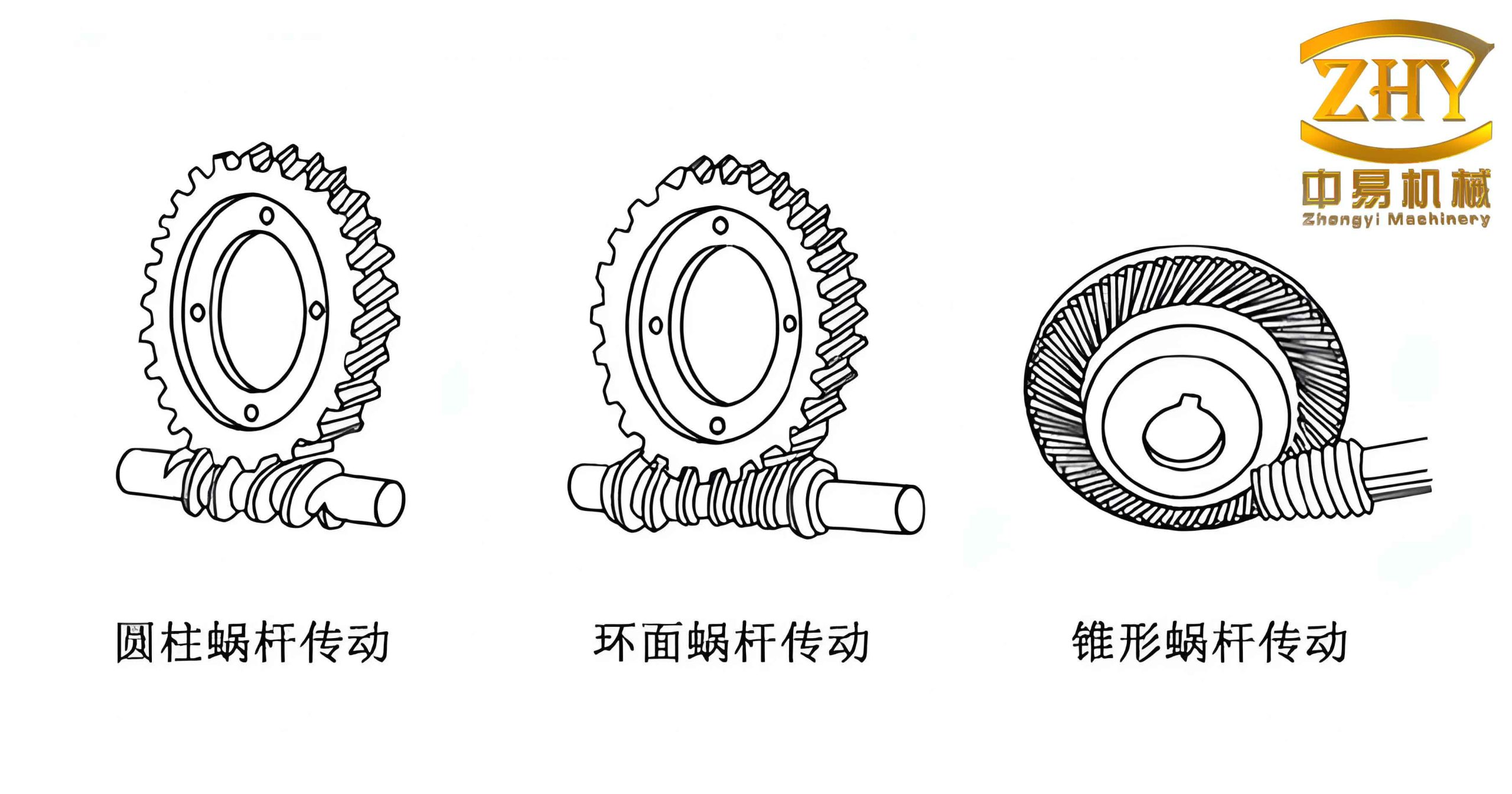
In my years of service as a technical support engineer, I have frequently encountered challenges related to the proper selection and application of lubricants for worm gear drives. Worm gears are unique in their sliding motion, which demands special attention to oil viscosity, additive chemistry, and lubrication method. In this article, I will share my practical experience and the guidelines I have developed for choosing and using worm gear oil effectively.
1. Selection of Worm Gear Oil
1.1 Lubrication Method Selection
The first step in selecting worm gear oil is to determine the appropriate lubrication method based on the relative sliding velocity between the worm and gear. Generally, if the sliding speed exceeds 10 m/s, circulating oil spray lubrication is recommended. For sliding speeds below 10 m/s, oil bath lubrication is sufficient. An equivalent rule uses worm rotational speed: when the worm speed is above 3000 rpm, use circulating spray; when below 3000 rpm, use oil bath.
The relative sliding velocity in a worm gear pair exists both along the tooth height direction and the tooth width direction, but the dominant component is along the tooth width. To estimate this velocity, I recommend using the following formula:
$$ V_s = \frac{\pi \cdot m \cdot n_1}{19100} \cdot \sqrt{q^2 + z_1^2} \quad \text{(m/s)} $$
where:
- \( m \) = axial module of the worm (mm)
- \( n_1 \) = rotational speed of the worm (rpm)
- \( q \) = characteristic coefficient of the worm (ratio of pitch diameter to module)
- \( z_1 \) = number of starts of the worm
The sliding velocity is the key parameter for selecting the correct oil viscosity and lubrication method.
1.2 Viscosity Selection Based on Sliding Velocity
Table 1 below provides recommended kinematic viscosity ranges for worm gear oil at 40°C, corresponding to various sliding velocity intervals. These values are applicable for oil bath lubrication; if the worm is mounted above the gear, choose the higher end of the viscosity range.
| Relative Sliding Velocity \( V_s \) (m/s) | Kinematic Viscosity at 40°C (mm²/s) |
|---|---|
| Less than 1.0 | 680 – 1000 |
| 1.0 – 2.5 | 460 – 680 |
| 2.5 – 5.0 | 320 – 460 |
| 5.0 – 10.0 | 220 – 320 |
| Greater than 10.0 | 150 – 220 |
For sliding velocities exceeding 10 m/s, pressure spray lubrication is generally required, and the viscosity may be chosen from the lower end of the range.
1.3 Typical Commercial Worm Gear Oil Data
As a reference, Table 2 shows typical analysis data for a commercially available worm gear oil (often branded as “Feitian” or similar). These values illustrate the physical and chemical properties that one should expect from a high-quality product.
| Property | ISO VG 680 | ISO VG 320 | ISO VG 220 |
|---|---|---|---|
| Kinematic Viscosity at 40°C, mm²/s | 680 | 320 | 220 |
| Kinematic Viscosity at 100°C, mm²/s | 32.5 | 21.0 | 16.5 |
| Viscosity Index | 95 | 95 | 95 |
| Flash Point (Open Cup), °C | 260 | 250 | 240 |
| Pour Point, °C | -10 | -10 | -12 |
| Rust Prevention (Distilled Water) | Pass | Pass | Pass |
| Copper Corrosion (100°C, 3 hr), 1b | 1b | 1b | 1b |
| Friction Coefficient (typical) | 0.04 – 0.06 | 0.04 – 0.06 | 0.04 – 0.06 |
The friction coefficient values are indicative and depend on operating conditions. High-quality worm gear oils are formulated to maintain low friction while protecting the bronze gear against wear and corrosion.
1.4 Load Classification
To judge the load severity on a worm gear pair, I use the load parameter \( K \) defined as:
$$ K = \frac{F_t}{b \cdot d_2} \quad \text{(kgf/cm²)} $$
where \( F_t \) is the tangential force on the gear, \( b \) is the face width, and \( d_2 \) is the pitch diameter of the gear. Based on experience:
- \( K < 5 \) kgf/cm² → light load
- \( 5 \leq K \leq 10 \) kgf/cm² → medium load
- \( K > 10 \) kgf/cm² → heavy load
For light to medium loads, a straight mineral oil can be used. However, for medium loads with shock and especially for heavy loads, an additive-treated worm gear oil is essential. The additives help prevent scoring, pitting, and excessive wear under high sliding conditions.
1.5 Oil Quality Grade
I must stress that not all extreme-pressure (EP) gear oils are suitable for worm gears. Worm gear pairs typically consist of a steel worm and a phosphor bronze (or other copper alloy) gear. Certain sulfur-based or chlorine-based EP additives can chemically attack the bronze, leading to accelerated corrosion and pitting. Some sulfur-phosphorus additives, while generally effective for steel-steel gears, may promote wear on the bronze wheel. Therefore, I recommend:
- For general-purpose and medium-duty worm gears: use a high-quality, additive-free, highly refined mineral oil (e.g., ISO VG 320 or 460).
- For shock-loaded or heavy-duty worm gears: use a specially formulated worm gear oil containing mild EP additives that are compatible with copper alloys (e.g., sulfur-phosphorus types with copper corrosion inhibitors).
Always verify the oil’s compatibility with the gear materials by checking copper strip corrosion test results (Class 1b or better).
2. Use of Worm Gear Oil
2.1 Oil Bath Lubrication
When employing oil bath lubrication, proper oil level is critical. If the worm is located below the gear (most common in gearboxes), the oil level should be maintained between one tooth height of the gear and the centerline of the gear. At higher speeds, the oil level should be shallower to reduce churning losses. At lower speeds, a deeper level is acceptable to ensure adequate oil supply to the meshing zone.
If the worm is located above the gear, the oil level should be kept below the centerline of the worm. In such arrangements, oil splashed by the gear can be collected by scrapers and directed to the worm and bearings.
2.2 Pressure Spray Lubrication
For high-speed or heavily loaded worm gear drives, pressure spray lubrication is often necessary to remove heat and ensure an adequate oil film. The spray flow rate and pressure depend on the center distance and the peripheral speed of the worm. Based on my field experience, the following empirical formulas provide a reasonable starting point:
Spray flow rate \( Q \) (m³/s) can be approximated by:
$$ Q = 0.001 \times C_d \quad \text{(m³/s)} $$
where \( C_d \) is the center distance (mm) of the worm gear pair. A more accurate formula, considering the worm’s peripheral speed \( v_t \) (m/s), is:
$$ Q = 0.0005 \times C_d \times \sqrt{v_t} \quad \text{(m³/s)} $$
The recommended spray pressure \( p \) (kgf/cm²) as a function of peripheral speed is given in Table 3.
| Peripheral Speed of Worm \( v_t \) (m/s) | Spray Pressure (kgf/cm²) |
|---|---|
| Less than 10 | 0.5 – 1.0 |
| 10 – 20 | 1.0 – 1.5 |
| 20 – 30 | 1.5 – 2.5 |
| Greater than 30 | 2.5 – 4.0 |
These values should be adjusted based on actual gearbox temperature rise and oil flow visibility.
2.3 Heat Balance and Temperature Rise Estimation
Heat generation in a worm gear drive is a major concern. The heat produced by tooth friction, bearing friction, and oil churning must be dissipated through the gearbox housing to maintain thermal equilibrium. The temperature rise \( \Delta T \) (in °C) of the oil sump above ambient can be estimated using the following formula:
$$ \Delta T = \frac{P \cdot (1 – \eta)}{K \cdot A} $$
where:
- \( P \) = input power to the worm (kW)
- \( \eta \) = overall efficiency of the worm gear drive
- \( K \) = heat transfer coefficient (typically 0.01 – 0.03 kW/(m²·°C), depending on air circulation and housing material)
- \( A \) = surface area of the gearbox (m²)
The overall efficiency \( \eta \) depends primarily on the number of starts of the worm. Table 4 provides typical values I have observed in practice.
| Number of Starts \( z_1 \) | Overall Efficiency \( \eta \) |
|---|---|
| 1 | 0.70 – 0.75 |
| 2 | 0.75 – 0.82 |
| 3 | 0.82 – 0.87 |
| 4 | 0.87 – 0.92 |
If the calculated temperature rise exceeds 80°C (common limit for mineral oils), additional cooling measures are required. I recommend using a ventilation fan on the gearbox or installing a cooling coil in the oil sump. Simply selecting an oil with higher viscosity or different additives is rarely sufficient to solve overheating problems.
2.4 Prevention of Gear Failure through Proper Oil Selection
In my troubleshooting work, I have seen many worm gear failures that could have been avoided by proper lubricant choice. One common failure mode is scuffing or smearing of the bronze gear teeth, often caused by insufficient oil film thickness or incorrect additive chemistry. Another failure is pitting of the bronze due to corrosive attack from certain EP additives.
I strongly advise against using general-purpose automotive gear oils (GL-5 or similar) in worm gear drives. These oils contain high levels of sulfur-phosphorus EP additives that, while excellent for hypoid gears, can severely corrode phosphor bronze. For worm gears, always use oils that have passed the ASTM D130 copper strip corrosion test (maximum 1b) and preferably those labeled specifically for worm or worm gear applications.
Furthermore, regular oil analysis (viscosity, acid number, water content, and wear particle analysis) is essential to monitor oil condition and detect early signs of failure. Change the oil at intervals recommended by the gearbox manufacturer, or more frequently if operating under harsh conditions.
3. Additional Considerations for Worm Gear Lubrication
3.1 Bearing Lubrication
Bearings in worm gearboxes are often lubricated by the same oil used for the gear mesh. However, attention must be paid to the bearing location. If the bearings are far from the sump, ensure that oil channels or splash guards direct oil to the bearings. In pressure spray systems, bearings should receive a portion of the spray flow. Use the same oil for bearings unless the manufacturer specifies otherwise.
3.2 Oil Change Intervals
Typical oil change intervals for worm gear drives range from 2000 to 5000 operating hours, depending on operating temperature, load, and oil quality. I recommend adopting a condition-based approach: take oil samples every 1000 hours initially, then extend intervals if results are stable. Keep a log of viscosity, TAN (total acid number), and wear metals (especially copper and tin from the bronze gear).
3.3 Initial Fill and Break-In
During the initial operation of a new worm gearbox, a break-in period of about 50–100 hours is recommended. During this period, I suggest using an oil of slightly lower viscosity (one grade lower than the final) to allow the surfaces to mate more gently. After break-in, drain the oil, flush the gearbox, and fill with the final oil grade. This practice helps prolong gear life.
3.4 Oil Filtration
Always maintain oil cleanliness. Use a filter with a micron rating of 10–25 µm (or finer) in the oil circulation system. For oil bath lubrication, install a magnetic drain plug to capture ferrous wear particles. Contaminants such as water or dirt can drastically reduce the oil’s load-carrying capacity and promote corrosive wear.
3.5 Temperature Monitoring
Install a temperature sensor or thermometer in the oil sump. If the oil temperature exceeds 80°C, consider forced cooling. For every 10°C increase above 80°C, the oil oxidation rate doubles, leading to rapid degradation. In extreme cases, synthetic worm gear oils (e.g., PAO or PAG-based) can tolerate higher temperatures (up to 120°C) but require careful compatibility checks with seals and paints.
4. Conclusion
Choosing and using the correct worm gear oil is not a trivial task. It requires a thorough understanding of the sliding velocity, load, operating temperature, and material compatibility. I hope that the guidelines, formulas, and tables presented in this article provide a practical framework for engineers and maintenance personnel. Remember: when in doubt, consult the gearbox manufacturer and always follow the oil supplier’s recommendations. A well-lubricated worm gear drive will deliver long, reliable service with minimal downtime.
In summary, the key steps for worm gear oil selection are:
- Calculate the relative sliding velocity \( V_s \) using the given formula.
- Select the appropriate viscosity from Table 1.
- Determine the load severity using the \( K \) parameter.
- Choose between a straight mineral oil and a specially formulated worm gear oil based on load and shock conditions.
- For oil bath lubrication, set the correct oil level.
- For spray lubrication, calculate flow rate and pressure (Table 3).
- Monitor temperature and arrange additional cooling if needed.
- Use oil analysis to track condition and change oil at proper intervals.
By following these steps, you can avoid common failures such as scuffing, pitting, and overheating, and ensure the worm gear system operates at peak efficiency.