
In modern mechanical engineering, the vibration and noise of gear transmission systems remain critical concerns, particularly in applications such as automotive and marine propulsion where operational conditions vary widely. Helical gears are widely used due to their smooth engagement and high load-carrying capacity, but they are prone to dynamic excitations that lead to unwanted vibrations. Tooth surface modification, including profile modification, lead modification, and diagonal modification, has emerged as a key technique to mitigate these issues by optimizing the contact pattern and reducing transmission error fluctuations. However, the effectiveness of such modifications is highly dependent on operational factors like applied torque and gear misalignment, which can deviate from ideal design conditions. This study aims to comprehensively analyze the sensitivity of modified helical gears to these factors, providing insights for robust design practices. We develop numerical models based on loaded tooth contact analysis (LTCA) and dynamic system simulations to evaluate how different modification methods influence time-varying mesh stiffness, static transmission error, and vibration excitation forces under varying loads and misalignments. By examining a wide range of scenarios, we seek to establish guidelines for selecting modification parameters that maintain performance across diverse operating environments. Throughout this work, the focus remains on helical gears as the primary subject, emphasizing their unique characteristics and challenges in transmission systems.
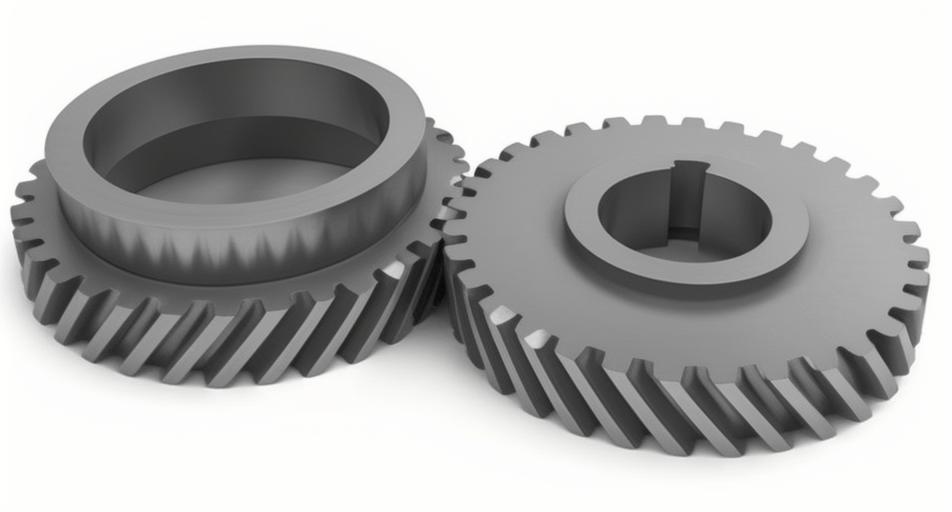
Helical gears are integral components in many power transmission systems, offering advantages over spur gears such as reduced noise and higher torque capacity due to their gradual engagement. However, the helical orientation introduces complex three-dimensional contact mechanics that can exacerbate vibration if not properly managed. Tooth surface modification techniques are designed to compensate for deformations under load and manufacturing inaccuracies, thereby minimizing dynamic excitations. Common approaches include profile modification, which alters the tooth shape along the profile direction; lead modification, which adjusts the tooth along the face width; and diagonal modification, which combines elements of both in a skewed pattern. Each method has distinct effects on the gear mesh behavior, and their optimization requires careful consideration of the operating conditions. In this analysis, we explore these modification methods for helical gears, assessing their sensitivity to applied torque and gear misalignment—two factors that frequently vary in real-world applications and can significantly impact system performance. By leveraging advanced simulation models, we aim to quantify these effects and provide practical recommendations for engineers working with helical gear systems.
The foundation of our analysis lies in the mathematical modeling of helical gears under load. We begin by defining the modification curves for tooth surfaces. For all modification types—profile, lead, and diagonal—we use a parabolic curve described by the equation:
$$ e_i = e_{\text{max}} \left( \frac{x_i}{l} \right)^n $$
where \( e_i \) is the modification amount at point \( i \), \( e_{\text{max}} \) is the maximum modification depth, \( x_i \) is the distance from the start of the modification, \( l \) is the modification length, and \( n = 2 \) for a parabolic shape. This formulation allows for smooth transitions that minimize stress concentrations. For helical gears, the application of these modifications must account for the helix angle, which influences the contact lines and load distribution. We consider a standard helical gear pair with parameters as summarized in Table 1, which serves as the basis for our case study. The gears are designed for a nominal torque, but we will vary this to examine sensitivity.
| Parameter | Pinion | Gear |
|---|---|---|
| Number of Teeth | 29 | 58 |
| Module (mm) | 5 | 5 |
| Pressure Angle (°) | 20 | 20 |
| Helix Angle (°) | 25 | 25 |
| Addendum Coefficient | 1 | 1 |
| Dedendum Coefficient | 0.25 | 0.25 |
| Face Width (mm) | 50 | 50 |
| Speed (rpm) | 2000 | 1000 |
| Nominal Torque (N·m) | 750 | 1500 |
Gear misalignment is another critical factor that affects the performance of helical gears. Misalignment can arise from installation errors, shaft deflections, bearing clearances, or thermal expansions, leading to deviations from ideal meshing conditions. We focus on angular misalignment parallel to the line of action, which has the most significant impact on contact patterns because it directly alters the normal clearance between teeth. This type of misalignment is modeled as an angular offset that shifts the contact path across the tooth surface, potentially causing edge loading and increased vibration. In our sensitivity analysis, we vary the misalignment amount from 0 to 60 micrometers to simulate realistic operational scenarios. Understanding how modification techniques respond to such misalignments is essential for designing robust helical gear systems that maintain low vibration levels under imperfect conditions.
To analyze the static and dynamic behavior of helical gears, we employ a loaded tooth contact analysis (LTCA) model. This approach discretizes the gear mesh into multiple contact points along the potential contact lines, accounting for both global deformations (e.g., bending and shear) and local contact deformations (Hertzian contact). The governing equation for the LTCA is derived from compatibility conditions and equilibrium:
$$ \lambda_{\text{global}} \mathbf{F} + \mathbf{u}_{\text{local}} – x_s + \boldsymbol{\varepsilon} – \mathbf{d} = 0 $$
subject to:
$$ \sum_{i=1}^{n} F_i = \mathbf{I}^T \mathbf{F} = P $$
and:
$$ \text{If } F_i > 0, \text{ then } d_i = 0; \quad \text{If } F_i = 0, \text{ then } d_i > 0 $$
Here, \( \lambda_{\text{global}} \) is the flexibility matrix for global deformations, \( \mathbf{F} \) is the vector of contact forces, \( \mathbf{u}_{\text{local}} \) is the vector of local contact deformations, \( x_s \) is the static transmission error, \( \boldsymbol{\varepsilon} \) is the vector of initial separations (including modifications and errors), and \( \mathbf{d} \) is the vector of residual separations after loading. Solving this nonlinear system iteratively yields the load distribution and static transmission error for each mesh position. From these results, we compute the time-varying mesh stiffness \( k_m(t) \) and the composite mesh error \( e_c(t) \), which are crucial for dynamic analysis. For helical gears, the mesh stiffness varies cyclically due to the changing number of contact teeth and the helical overlap, and modifications can alter this variation significantly.
The dynamic response of the helical gear system is modeled using a finite element approach that incorporates the gear-rotor-bearing assembly. We discretize the shafts into Timoshenko beam elements with 12 degrees of freedom per node, and represent bearings as spring-damper elements connecting the shafts to the ground. The system equations of motion are formulated as:
$$ \mathbf{M}_G \ddot{\mathbf{X}}(t) + \mathbf{C}_G \dot{\mathbf{X}}(t) + \mathbf{K}_G(t) [\mathbf{X}(t) – \mathbf{E}_G(t)] = \mathbf{F}_G $$
where \( \mathbf{X} \) is the displacement vector, \( \mathbf{M}_G \) is the mass matrix, \( \mathbf{C}_G \) is the damping matrix, \( \mathbf{K}_G(t) \) is the time-varying stiffness matrix from the gear mesh, \( \mathbf{E}_G(t) \) is the composite mesh error vector, and \( \mathbf{F}_G \) is the external force vector. To simplify the solution, we apply an approximate transformation that separates the mean and fluctuating components, leading to:
$$ \mathbf{M}_G \ddot{\mathbf{X}}(t) + \mathbf{C}_G \dot{\mathbf{X}}(t) + \mathbf{K}_{G0} \mathbf{X}(t) = \mathbf{K}_{G0} \mathbf{X}_{s0} + \mathbf{K}_{G0} \Delta \mathbf{X}_s(t) $$
The term \( \mathbf{K}_{G0} \Delta \mathbf{X}_s(t) \) is defined as the vibration excitation force, whose fluctuation magnitude directly influences the system’s vibration levels. By minimizing this fluctuation, we can optimize modification parameters for reduced noise and wear. In this study, we use Fourier series methods to solve for the steady-state dynamic response, focusing on the dynamic transmission error as a key performance metric for helical gears.
Before proceeding to sensitivity analysis, we validate our LTCA model by comparing results with published data for both unmodified and modified helical gears. As shown in Figure 4 of the reference content, our calculations of static transmission error fluctuations under varying torques align closely with established results, confirming the accuracy of our approach for analyzing helical gears with and without modifications. This validation ensures that our subsequent sensitivity studies are reliable and relevant for practical applications involving helical gear systems.
For the case study, we consider a helical gear-rotor-bearing system as depicted in Figure 5, with detailed shaft parameters provided in Table 2. The system consists of two shafts, a helical gear pair, and four bearings, transmitting power from an input on shaft 1 to an output on shaft 2. We discretize the shafts into 26 beam elements with 28 nodes and 168 degrees of freedom, incorporating the gear mesh at specified nodes. This setup allows us to simulate the dynamic behavior under different operating conditions, focusing on how modifications affect the helical gears’ performance.
| Shaft Segment | Shaft 1 (Outer Diameter / Inner Diameter / Length) | Shaft 2 (Outer Diameter / Inner Diameter / Length) |
|---|---|---|
| 1 | 70 / 0 / 100 | 90 / 0 / 80 |
| 2 | 90 / 0 / 110 | 110 / 0 / 110 |
| 3 | 100 / 0 / 260 | 120 / 0 / 55 |
| 4 | 90 / 0 / 110 | 160 / 0 / 150 |
| 5 | 70 / 0 / 60 | 120 / 0 / 55 |
| 6 | – | 110 / 0 / 110 |
| 7 | – | 90 / 0 / 120 |
To determine optimal modification parameters, we aim to minimize the fluctuation of the vibration excitation force under the nominal torque of 1500 N·m and ideal meshing conditions. We perform a sweep over modification depth and length for each modification type—profile, lead, and diagonal—using the parabolic curve formula. The results are visualized in contour plots, such as Figure 6 for profile modification, where a narrow band of parameters yields excitation force fluctuations below 200 N. From these analyses, we identify the best parameters: for profile modification, a depth of 15 μm and length of 11.97 mm; for lead modification, 13 μm and 21 mm; and for diagonal modification, 10 μm and 17.09 mm. These values serve as the baseline for subsequent sensitivity studies on helical gears.
The impact of these modifications on the contact characteristics of helical gears is significant. We compute the time-varying mesh stiffness, static transmission error, and composite mesh error for each modification method under nominal conditions. As illustrated in Figure 7, profile and lead modifications reduce the mesh stiffness of helical gears noticeably because they remove material from critical contact areas, whereas diagonal modification maintains stiffness closer to the unmodified case. This difference arises from the distribution of modification: profile and lead modifications target the tooth tips and ends, respectively, reducing contact participation, while diagonal modification spreads the effect along the diagonal path, preserving full-face contact. For static transmission error (Figure 8), all modifications reduce the fluctuation amplitude, but profile modification introduces the largest mean shift, lead modification a moderate one, and diagonal modification the smallest, nearly matching the ideal gear in some mesh positions. The composite mesh error (Figure 9), which represents the effective error in multi-tooth engagement, follows patterns similar to the mesh stiffness, with all modifications keeping errors below the maximum modification depth. These findings highlight how different modification strategies alter the fundamental behavior of helical gears, influencing both static and dynamic responses.
We now examine the sensitivity of modified helical gears to applied torque. Using the optimal parameters, we simulate the system under seven torque levels: 250, 500, 1000, 1500, 2000, 2500, and 3000 N·m. The vibration excitation force fluctuation is plotted in Figure 10. For unmodified helical gears, the fluctuation increases linearly with torque. At the nominal torque of 1500 N·m, all modification methods achieve minimal fluctuations, with values close to each other. However, as torque decreases below 500 N·m, the fluctuations for modified helical gears exceed those of unmodified ones, indicating that modifications can introduce excessive active error excitation under light loads. Conversely, for torques above 1500 N·m, modifications continue to reduce fluctuations linearly, offering substantial benefits. At 2500 N·m, profile, lead, and diagonal modifications reduce fluctuations by 61.6%, 65.3%, and 61.5%, respectively, compared to unmodified helical gears. This demonstrates that modifications optimized for a design torque can remain effective under higher loads but may degrade under very light loads for helical gears.
The dynamic response further illustrates this sensitivity. We calculate the root mean square (RMS) of dynamic transmission error across speeds for torques of 500, 1500, and 2500 N·m, as shown in Figures 11-13. At 500 N·m (Figure 11), modified helical gears often exhibit higher vibration than unmodified ones, especially near resonance, due to over-modification. Profile and lead modifications lower the resonance speed because they reduce mean mesh stiffness. At 1500 N·m (Figure 12), all modifications significantly reduce vibration across speeds, with RMS reductions of 94.8%, 96.5%, and 97.4% at the rated speed for profile, lead, and diagonal modifications, respectively. At 2500 N·m (Figure 13), modifications still provide good vibration reduction, with RMS decreases of 60.1%, 61.7%, and 61.0%. These results underscore that helical gears with modifications are sensitive to torque variations, performing best near the design torque and under heavy loads, but potentially worsening under light loads.
Next, we analyze sensitivity to gear misalignment. We vary misalignment from 0 to 60 μm while keeping torque at 1500 N·m. The vibration excitation force fluctuation is plotted in Figure 14. For unmodified helical gears, fluctuations remain relatively stable up to 30 μm misalignment, then increase linearly. For modified helical gears, fluctuations rise approximately linearly with misalignment. At 30 μm misalignment, modifications reduce fluctuations by only 28.9%, 33.3%, and 29.4% for profile, lead, and diagonal methods, respectively—a stark contrast to the ideal case. This indicates that misalignment diminishes the effectiveness of modifications for helical gears.
The dynamic response under misalignment is evaluated at 10, 30, and 50 μm, as shown in Figures 15-17. At 10 μm (Figure 15), modifications still offer substantial vibration reduction, with RMS decreases of 88.7%, 80.6%, and 83.9% at rated speed. At 30 μm (Figure 16), resonance speeds drop slightly, and vibration reduction becomes marginal, with RMS reductions of only 26.1%, 31.6%, and 23.4%. At 50 μm (Figure 17), resonance speeds fall further, and profile and diagonal modifications almost lose their benefits, with vibration levels comparable to unmodified helical gears. This trend highlights that helical gears with modifications are highly sensitive to misalignment; as misalignment grows, the vibration-reduction effects degrade, eventually vanishing. Therefore, in applications where misalignment is inevitable, such as in poorly aligned marine drives or automotive transmissions, modifications must be designed with robustness in mind, possibly by incorporating tolerance analysis or adaptive schemes.
To summarize the findings, we present key comparisons in Table 3, which outlines the performance of different modification methods for helical gears under varying conditions. This table synthesizes data on excitation force fluctuations and dynamic transmission error reductions, emphasizing the trade-offs involved in selecting modification parameters for helical gear systems.
| Condition | Profile Modification | Lead Modification | Diagonal Modification | Notes |
|---|---|---|---|---|
| Nominal Torque (1500 N·m), No Misalignment | Excitation force fluctuation minimized; RMS reduction ~95% | Excitation force fluctuation minimized; RMS reduction ~96% | Excitation force fluctuation minimized; RMS reduction ~97% | All methods effective; diagonal slightly best |
| Light Torque (500 N·m) | Fluctuation higher than unmodified; resonance speed reduced | Fluctuation higher than unmodified; resonance speed reduced | Fluctuation higher than unmodified; resonance speed similar | Modifications can worsen vibration |
| Heavy Torque (2500 N·m) | Fluctuation reduced by 61.6%; RMS reduction ~60% | Fluctuation reduced by 65.3%; RMS reduction ~62% | Fluctuation reduced by 61.5%; RMS reduction ~61% | Modifications remain beneficial |
| Misalignment 30 μm | Fluctuation reduction ~29%; RMS reduction ~26% | Fluctuation reduction ~33%; RMS reduction ~32% | Fluctuation reduction ~29%; RMS reduction ~23% | Effectiveness declines significantly |
| Misalignment 50 μm | Little to no benefit; vibration near unmodified levels | Some benefit retained but reduced | Little to no benefit; vibration near unmodified levels | Modifications largely ineffective |
In conclusion, this study provides a comprehensive sensitivity analysis of helical gears with tooth surface modification to applied torque and gear misalignment. We have developed and validated models based on LTCA and dynamic simulations to evaluate three modification methods: profile, lead, and diagonal. Our results show that while all modifications can significantly reduce vibration under design conditions for helical gears, their performance is highly sensitive to operational variations. Under high torque, modifications remain effective, but under light torque, they may increase vibration due to over-compensation. Misalignment progressively degrades the benefits, with modifications becoming ineffective at large misalignments. These insights emphasize the need for robust design approaches that account for a range of operating scenarios when applying modifications to helical gears. Future work could explore adaptive modification schemes or multi-objective optimization to enhance robustness. Ultimately, understanding these sensitivities is crucial for advancing the reliability and efficiency of helical gear systems in demanding applications.
From a broader perspective, the findings underscore the complexity of designing helical gears for real-world conditions. Engineers must balance modification parameters against expected torque ranges and alignment tolerances. For instance, in variable-torque applications like wind turbines or hybrid vehicles, modifications might be optimized for a median load to avoid light-load penalties. In systems prone to misalignment, such as those with flexible mountings, more conservative modification depths or combined error-compensation techniques could be employed. Additionally, the use of advanced materials or lubrication might interact with modification effects, warranting further study. This analysis contributes to the growing body of knowledge on helical gears, aiming to foster quieter, more durable transmission systems across industries.
To further illustrate the mathematical underpinnings, we can express key relationships using equations. For example, the time-varying mesh stiffness \( k_m(t) \) for helical gears can be approximated from LTCA results as:
$$ k_m(t) = \frac{P}{\delta(t)} $$
where \( P \) is the total load and \( \delta(t) \) is the total deformation at time \( t \). The composite mesh error \( e_c(t) \) is derived from the static transmission error and modification profiles, often represented as:
$$ e_c(t) = \sum_{i=1}^{N} e_i \cdot \phi_i(t) $$
with \( \phi_i(t) \) as shape functions for engagement. These equations highlight the dynamic interplay in helical gears. Overall, this study reinforces that helical gears, with their inherent advantages, require careful modification strategies to mitigate sensitivity to operational variances, ensuring optimal performance in diverse mechanical systems.