
In mechanical transmission systems, screw gears, particularly worm gear sets, play a critical role in applications requiring high reduction ratios and compact design, such as in screw jack mechanisms. As a fundamental lifting component, screw jacks are widely used in industries like construction, automotive, and metallurgy due to their reliability and efficiency. The screw gears within these mechanisms are subjected to dynamic meshing forces during operation, which can lead to vibration, noise, and fatigue failure if not properly analyzed. Traditional design approaches often treat the meshing force as a constant value, neglecting the periodic variations caused by changes in mesh stiffness and engagement conditions. This oversight can compromise the longevity and precision of the system. Therefore, in this study, I aim to conduct a comprehensive simulation analysis of the meshing force in screw gears to understand its dynamic behavior and identify key influencing factors. Using advanced modeling and simulation tools, I will explore how parameters like stiffness and input speed affect the meshing force, with the goal of providing insights for optimizing screw gear performance in screw jack mechanisms.
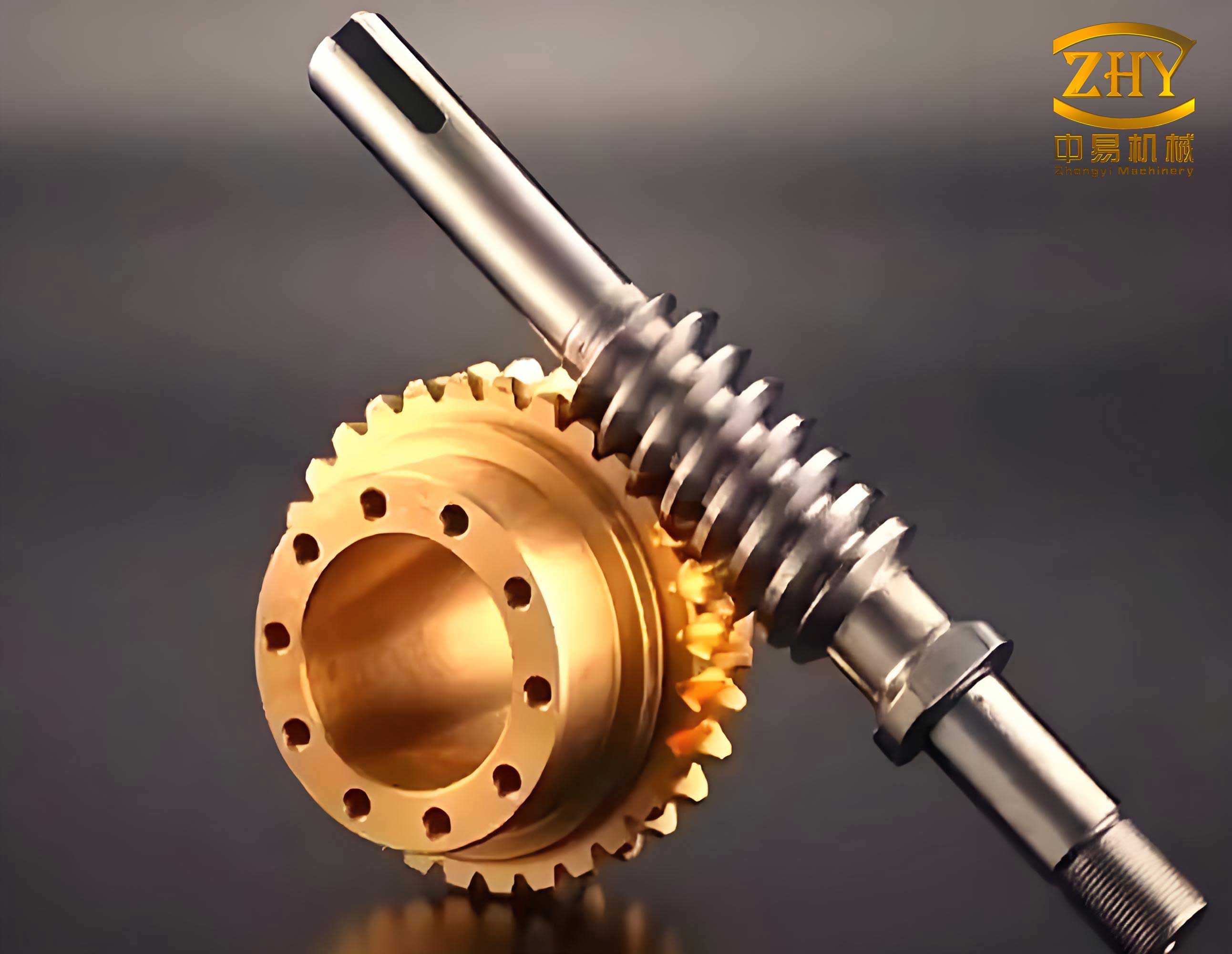
The core of this research focuses on the screw gears—specifically, a worm and worm wheel pair—that form the reduction unit in a typical screw jack. These screw gears are essential for transmitting motion and torque between non-intersecting shafts at a 90-degree angle. However, the meshing process in screw gears is inherently dynamic, with forces fluctuating due to elastic deformations and impact events. To accurately capture these phenomena, I employed a virtual prototyping approach. First, I created a detailed three-dimensional solid model of the screw gear assembly using SolidWorks, a popular CAD software. The model included precise geometries for the worm and worm wheel, based on standard design parameters. This assembly was then exported in Parasolid format and imported into ADAMS (Automatic Dynamic Analysis of Mechanical Systems), a multi-body dynamics simulation environment. In ADAMS, I defined material properties for the components: the worm was assigned properties similar to 45 steel, and the worm wheel to HT150 cast iron, with densities and masses set accordingly to reflect real-world conditions.
To simulate the meshing interaction between the screw gears, I applied constraints and forces in ADAMS. I fixed the ground and added revolute joints to both the worm and worm wheel, allowing rotation about their respective axes. The critical step was defining a contact force between the worm and worm wheel to emulate the meshing process. Based on Hertzian elastic impact theory, I used the Impact function in ADAMS to model this contact force. The general form of the Impact function is given by:
$$ F_{\text{Impact}} = \max\left(0, K(q_0 – q)^e – C \cdot \left(\frac{dq}{dt}\right) \cdot \text{STEP}(q, q_0 – d, 1, q_0, 0)\right) $$
where \( K \) is the stiffness coefficient, \( q_0 \) is the initial distance between the contacting bodies, \( q \) is the actual distance during collision, \( e \) is the force exponent, \( C \) is the damping coefficient, and \( d \) is the penetration depth at which damping is fully applied. The stiffness coefficient \( K \) for the screw gears was derived from Hertz contact mechanics. For two curved surfaces in contact, the equivalent radius \( R \) and equivalent modulus \( E \) are calculated as:
$$ \frac{1}{R} = \frac{1}{R_1} + \frac{1}{R_2} $$
$$ \frac{1}{E} = \frac{1 – \mu_1^2}{E_1} + \frac{1 – \mu_2^2}{E_2} $$
where \( R_1 \) and \( R_2 \) are the contact radii of the worm and worm wheel, \( E_1 \) and \( E_2 \) are their elastic moduli, and \( \mu_1 \) and \( \mu_2 \) are their Poisson’s ratios. For the screw gears in this study, using typical material values: \( E_1 = 210 \, \text{GPa} \) for the worm (steel), \( E_2 = 130 \, \text{GPa} \) for the worm wheel (cast iron), \( \mu_1 = 0.269 \), and \( \mu_2 = 0.25 \). The contact radii were based on the gear geometry. Substituting these into the formula for stiffness:
$$ K = \frac{4}{3} \sqrt{R} E $$
yielded a stiffness coefficient of approximately \( K = 439 \, \text{N/mm} \). The damping coefficient \( C \) was set to \( 4.39 \, \text{N} \cdot \text{s} / \text{mm} \), following empirical guidelines that damping is about 1% of stiffness. The force exponent \( e \) was chosen as 2.2, typical for metallic contacts, and the penetration depth \( d \) was 0.1 mm. Friction coefficients were included with a static value of 0.1 and dynamic value of 0.05. This virtual prototype of the screw gears allowed for realistic simulation of the meshing dynamics without accounting for assembly gaps or manufacturing errors initially.
With the virtual model of the screw gears established, I proceeded to perform dynamic simulations to analyze the meshing force. I applied a rotational drive to the worm at an initial speed of 1330 rpm, which is a common operating condition for screw jacks. The simulation output included the angular velocity of the worm wheel and the contact force between the screw gears—the meshing force. The worm wheel speed, as shown in the results, averaged around 3287.6 deg/s with periodic fluctuations. Given the theoretical speed based on the gear ratio (i = 24), the expected value was 3325 deg/s, resulting in a relative error of only 1.13%. This close agreement validated the accuracy of the virtual prototype and confirmed that the screw gears were correctly modeled for dynamic analysis.
The meshing force of the screw gears exhibited significant dynamic behavior. At the start of motion, when the worm wheel accelerated from rest, the force spiked to a peak of 24023.4 N due to inertial effects and initial impact. As the screw gears settled into steady-state meshing, the force stabilized but continued to oscillate around a mean value of 413.6 N. This periodic fluctuation is a key characteristic of screw gears during operation, arising from variations in mesh stiffness as teeth engage and disengage. The force profile can be described by a periodic function with amplitude modulation, reflecting the cyclic nature of gear meshing. For instance, the meshing force \( F_m(t) \) over time \( t \) can be approximated as:
$$ F_m(t) = F_0 + A \sin(2\pi f t + \phi) $$
where \( F_0 \) is the mean force, \( A \) is the amplitude of fluctuation, \( f \) is the meshing frequency, and \( \phi \) is the phase shift. In this simulation, the fluctuations were substantial, indicating that screw gears are prone to dynamic excitations that can lead to vibration and noise. These forces are critical because they directly influence the fatigue life of the components; repeated stress cycles from fluctuating meshing forces can cause cracks and eventual failure in screw gears. Therefore, understanding and mitigating these fluctuations is essential for enhancing the durability and performance of screw jack mechanisms.
To delve deeper into the factors affecting the meshing force in screw gears, I conducted parametric studies by varying the stiffness coefficient and the input speed of the worm. These parameters were chosen because they directly influence the contact dynamics and inertial forces in the system. For each parameter set, I ran simulations and recorded the meshing force characteristics, including mean force, peak force, and fluctuation amplitude. The results are summarized in tables below to provide a clear comparison.
First, I examined the effect of stiffness coefficient \( K \) on the meshing force. The stiffness was varied at three levels: 200 N/mm, 400 N/mm, and 600 N/mm, while keeping the input speed constant at 1330 rpm. The simulation results showed distinct trends in force behavior, as detailed in Table 1.
| Stiffness Coefficient \( K \) (N/mm) | Mean Meshing Force \( F_0 \) (N) | Peak Force \( F_{\text{max}} \) (N) | Minimum Force \( F_{\text{min}} \) (N) | Fluctuation Amplitude \( A \) (N) |
|---|---|---|---|---|
| 200 | 220.8 | 10944.6 | 3.74 | Approx. 5470 |
| 400 | 407.0 | 21889.2 | 0.27 | Approx. 10944 |
| 600 | 549.6 | 32833.7 | 0.69 | Approx. 16416 |
From Table 1, it is evident that as the stiffness coefficient increases, the mean meshing force and peak force rise significantly. For example, doubling the stiffness from 200 N/mm to 400 N/mm nearly doubled the mean force from 220.8 N to 407.0 N. This relationship can be explained by the Hertz contact theory, where force is proportional to stiffness and deformation. The fluctuation amplitude also increased dramatically, indicating that stiffer screw gears experience more severe dynamic impacts. This is because higher stiffness reduces the compliance in the system, leading to sharper force transitions during meshing. The periodic nature of the force remained consistent across all cases, with fluctuations occurring at the meshing frequency of the screw gears. To quantify this, the meshing frequency \( f_m \) can be calculated from the worm speed \( n \) (in rpm) and the number of teeth on the worm wheel \( Z \):
$$ f_m = \frac{n \times Z}{60} $$
For the screw gears here, with \( n = 1330 \) rpm and \( Z = 24 \), \( f_m \approx 532 \) Hz. This frequency correlates with the observed force oscillations, reinforcing that the dynamics are tied to the gear geometry and operating conditions.
Next, I investigated the influence of the worm’s input speed on the meshing force of the screw gears. The stiffness coefficient was fixed at 439 N/mm, and the speed was varied at 1000 rpm, 1500 rpm, and 2000 rpm. The results, compiled in Table 2, highlight how speed impacts the force dynamics.
| Input Speed \( n \) (rpm) | Mean Meshing Force \( F_0 \) (N) | Peak Force \( F_{\text{max}} \) (N) | Minimum Force \( F_{\text{min}} \) (N) | Fluctuation Amplitude \( A \) (N) |
|---|---|---|---|---|
| 1000 | 324.0 | 18070.6 | 2.3 | Approx. 9034 |
| 1500 | 498.0 | 27089.9 | 2.4 | Approx. 13544 |
| 2000 | 685.2 | 36109.2 | 3.9 | Approx. 18053 |
Table 2 demonstrates that increasing the input speed leads to higher meshing forces and greater fluctuation amplitudes in the screw gears. For instance, as the speed rose from 1000 rpm to 2000 rpm, the mean force increased from 324.0 N to 685.2 N, and the peak force surged from 18070.6 N to 36109.2 N. This trend is attributable to inertial effects: at higher speeds, the kinetic energy of the components increases, resulting in more intense collisions during meshing. The fluctuation amplitude grew proportionally, suggesting that faster-operating screw gears are subject to more pronounced dynamic stresses. The relationship between force and speed can be modeled using a dynamic equation that incorporates mass and acceleration terms. For a simple representation, the meshing force might include a speed-dependent component:
$$ F_m \propto m a + K \delta $$
where \( m \) is the effective mass of the screw gears, \( a \) is the acceleration related to speed changes, and \( \delta \) is the deformation. Since acceleration increases with speed squared in rotational systems, the force escalation aligns with the simulation data. These findings underscore that both stiffness and speed are critical design parameters for screw gears, as they directly affect the magnitude and variability of meshing forces.
Beyond the parametric studies, I also analyzed the meshing force waveform in detail to understand its periodic characteristics. The force signal exhibited harmonics superimposed on the fundamental meshing frequency, indicative of nonlinearities in the screw gear interaction. These harmonics can be expressed using a Fourier series:
$$ F_m(t) = \sum_{k=1}^{n} [a_k \cos(2\pi k f_m t) + b_k \sin(2\pi k f_m t)] $$
where \( a_k \) and \( b_k \) are Fourier coefficients dependent on the gear geometry and material properties. For the screw gears simulated, the dominant harmonic was at the tooth engagement frequency, but higher harmonics were present due to impacts and friction. This complexity highlights the need for advanced simulation tools like ADAMS to capture the full dynamic behavior of screw gears, as simplified analytical models may overlook these nuances.
In practical terms, the periodic fluctuations in meshing force have significant implications for screw gear performance. They can cause vibrational noise, reduce transmission accuracy, and accelerate wear and fatigue. Fatigue failure, in particular, is a major concern for screw gears in screw jack mechanisms, as cyclic loading can lead to crack initiation and propagation over time. The stress range \( \Delta \sigma \) experienced by the gear teeth is related to the force fluctuation amplitude \( A \) and the geometric stress concentration factor \( K_t \):
$$ \Delta \sigma = K_t \frac{A}{A_c} $$
where \( A_c \) is the cross-sectional area of the tooth. Reducing the fluctuation amplitude \( A \) can therefore extend the fatigue life of screw gears. From my simulation results, this can be achieved by optimizing stiffness and speed parameters. For instance, selecting a moderate stiffness coefficient and operating at lower speeds can mitigate force oscillations. Additionally, design modifications such as improving tooth profile accuracy or adding damping elements could further suppress dynamic forces in screw gears.
To summarize, this simulation study on screw gears within a screw jack mechanism has provided valuable insights into meshing force dynamics. The virtual prototyping approach using SolidWorks and ADAMS proved effective for modeling and analyzing the complex interactions in screw gears. Key findings include the periodic nature of meshing forces, with fluctuations that pose risks for vibration and fatigue. The parametric analysis revealed that both stiffness coefficient and input speed significantly influence the force magnitude and variability: higher stiffness and speed lead to increased forces and more severe fluctuations. These results emphasize the importance of considering dynamic effects in the design of screw gears to enhance reliability and longevity. For future work, I recommend exploring additional factors such as lubrication, temperature effects, and misalignment on meshing forces in screw gears. Furthermore, integrating these simulation outcomes with experimental validation could lead to improved design guidelines for screw jack mechanisms and other applications reliant on screw gears.
In conclusion, the meshing force in screw gears is a dynamic phenomenon that requires careful analysis to ensure optimal performance. By leveraging simulation tools and understanding parameter influences, engineers can develop more robust screw gear systems that minimize force fluctuations and maximize service life. This study contributes to that goal by highlighting critical aspects of screw gear dynamics and offering practical recommendations for design optimization.