
In the realm of precision mechanical transmission, the planetary roller screw assembly stands out as a critical component for converting rotary motion into linear motion with high efficiency, load capacity, and accuracy. This mechanism is pivotal in advanced applications such as aerospace, robotics, and medical devices, where performance and reliability are paramount. However, the machining of precision threads in a planetary roller screw assembly presents significant challenges, particularly for small-pitch hard-tooth profiles that require grinding. The quality of these threads directly influences the assembly’s load-bearing capacity, travel accuracy, and transmission efficiency. Currently, there is a notable gap between domestically produced and internationally manufactured planetary roller screw assemblies, largely due to difficulties in achieving high-precision thread grinding. This study aims to address this gap by conducting a comprehensive statistical analysis and comparative investigation of thread machining errors in planetary roller screw assemblies from both domestic and international sources. By employing advanced measurement and evaluation techniques, we seek to identify key error sources, understand their mechanisms, and propose optimization strategies to enhance manufacturing quality. The insights gained from this research are intended to support the development of domestically produced planetary roller screw assemblies, ultimately contributing to the advancement of high-end mechanical equipment.
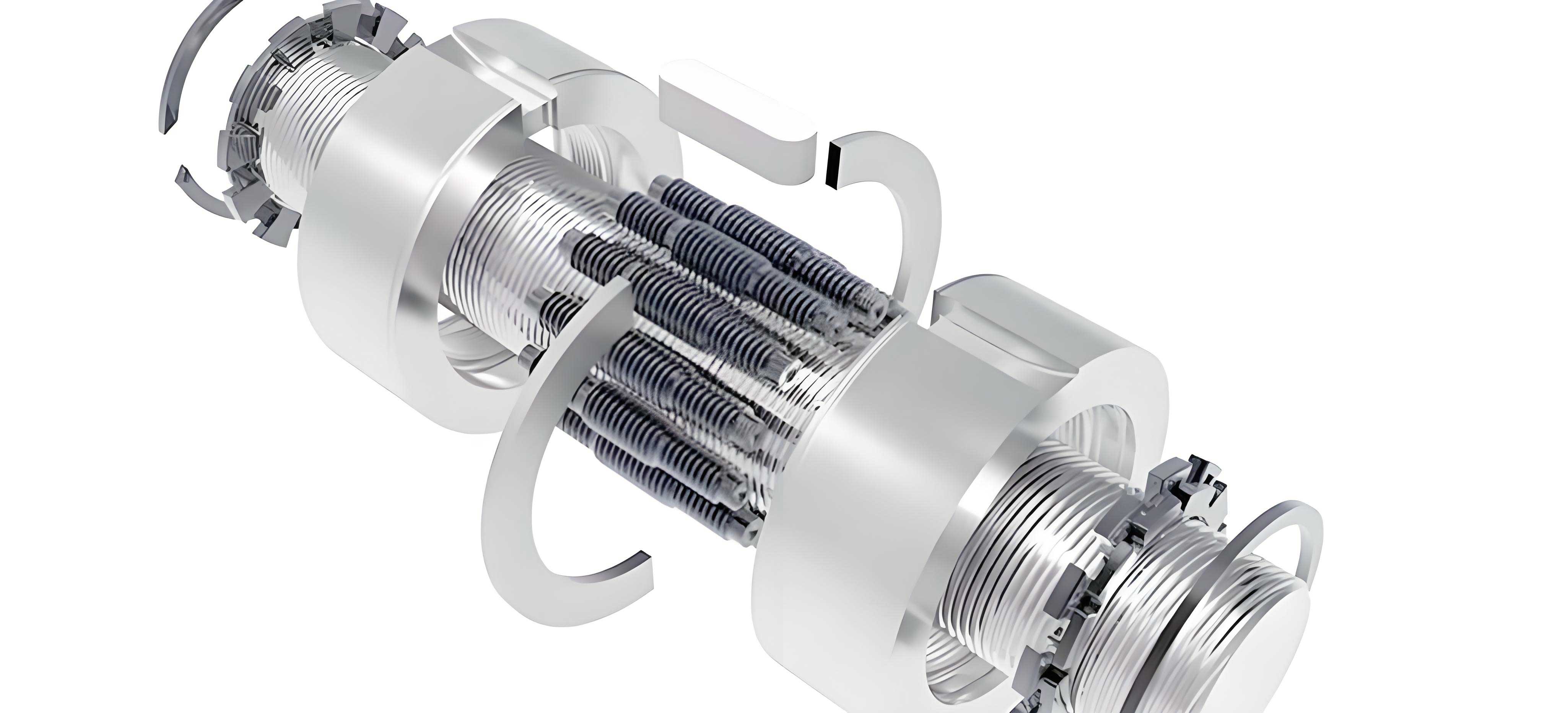
The planetary roller screw assembly comprises several core components: the screw, rollers, nut, internal gear ring, and cage. Typically, the screw and nut feature multi-start linear thread profiles, while the rollers have single-start arc-shaped thread profiles. In operation, multiple rollers (usually 6 to 12) are evenly distributed around the screw, engaging with both the screw and nut threads to facilitate motion conversion. The precision of these threads is crucial, as any deviations can lead to performance degradation, including increased friction, uneven load distribution, and reduced travel accuracy. Grinding is the primary method for machining these small-pitch hard-surface threads, but it is fraught with challenges such as tool wear, thermal deformation, and dynamic errors. To improve the manufacturing process, a thorough understanding of thread machining errors is essential. This involves detecting thread profiles, evaluating errors such as pitch diameter error, pitch error, eccentricity error, and tooth profile angle error, and statistically analyzing these errors across different samples. In this study, we selected five typical models of planetary roller screw assemblies: one from an international manufacturer (representing top-tier quality) and four from domestic manufacturers (representing current domestic capabilities). We utilized contact measurement methods to obtain axial thread profiles and applied evaluation techniques like the gradient threshold method and axis transformation theory to assess various errors. The results provide a detailed comparison of machining quality, highlight typical abnormal machining phenomena, and offer practical recommendations for process optimization. This work underscores the importance of precision in planetary roller screw assembly manufacturing and lays the groundwork for future improvements in domestic production.
To ensure the accuracy and reliability of our analysis, we employed a high-precision coordinate measuring machine (Leitz PMM-C) with a resolution of 0.004 μm for contact measurement of thread profiles. The measurement process involved scanning axial profiles at four cross-sections (0°, 90°, 180°, and 270°) for each component—screw, roller, and nut—across all five planetary roller screw assembly samples. A needle-shaped probe with a radius of 0.1 mm was used, with a scanning speed of 0.5 mm/s and a sampling density of 0.5 μm. The scanned data points, denoted as \( A_i(x_i, y_i, z_i) \), were then processed to remove outliers and correct for axis misalignment. The gradient threshold method was applied to segment the thread profile into regions: tooth crest, left flank, right flank, and tooth root. The gradient threshold \( S_t \) is calculated based on the theoretical tooth profile angle \( \alpha \) (typically 45° for these planetary roller screw assemblies) using the formula:
$$S_t = \frac{\tan(90^\circ – \alpha/2)}{2}$$
For each adjacent point pair, the gradient \( S_i \) is compared to \( S_t \), and points are assigned to respective regions:
$$
\begin{align*}
L_{\text{top}} &= \{ A_i \mid -S_t < S_i < S_t, z_i > d_{\text{des}} \} \\
L_{\text{left}} &= \{ A_i \mid S_i > S_t \} \\
L_{\text{right}} &= \{ A_i \mid S_i < -S_t \} \\
L_{\text{bot}} &= \{ A_i \mid -S_t < S_i < S_t, z_i < d_{\text{des}} \}
\end{align*}
$$
where \( d_{\text{des}} \) is the theoretical pitch diameter. After segmentation, axis correction is performed by fitting the crest lines using least squares and rotating the point cloud by the angle \( \gamma \) between the bisector of these lines and the axis. The transformation is given by:
$$
\begin{bmatrix} x’_i \\ z’_i \end{bmatrix} = \begin{bmatrix} \cos(-\gamma) & -\sin(-\gamma) \\ \sin(-\gamma) & \cos(-\gamma) \end{bmatrix} \begin{bmatrix} x_i \\ z_i \end{bmatrix}
$$
Subsequently, axial-to-normal profile conversion is applied to align the measured data with the design profile. For a point \( A’_i(x’_i, y’_i, z’_i) \), the normal profile point \( A”_i(x”_i, y”_i, z”_i) \) is obtained by rotating by the lead angle \( \lambda \):
$$
\begin{bmatrix} x”_i \\ y”_i \\ z”_i \end{bmatrix} = \begin{bmatrix} 1 & 0 & 0 \\ 0 & \cos \lambda & \sin \lambda \\ 0 & -\sin \lambda & \cos \lambda \end{bmatrix} \begin{bmatrix} x’_i \\ y’_i \\ z’_i \end{bmatrix}
$$
The processed point clouds are then fitted using cubic splines via least squares to derive continuous thread profiles. The fitting minimizes the error sum of squares \( s \):
$$
s = \sum_{i=1}^{n} | f(x_i) – y_i |^2
$$
where \( f(x_i) = \theta_0 x_i^3 + \theta_1 x_i^2 + \theta_2 x_i + \theta_3 \). The coefficients \( \theta_j \) are determined by solving the matrix equation \( X\theta = Y \), with:
$$
X = \begin{bmatrix}
n & \sum x_i & \sum x_i^2 & \sum x_i^3 \\
\sum x_i & \sum x_i^2 & \sum x_i^3 & \sum x_i^4 \\
\sum x_i^2 & \sum x_i^3 & \sum x_i^4 & \sum x_i^5 \\
\sum x_i^3 & \sum x_i^4 & \sum x_i^5 & \sum x_i^6
\end{bmatrix}, \quad \theta = \begin{bmatrix} \theta_3 \\ \theta_2 \\ \theta_1 \\ \theta_0 \end{bmatrix}, \quad Y = \begin{bmatrix} \sum y_i \\ \sum x_i y_i \\ \sum x_i^2 y_i \\ \sum x_i^3 y_i \end{bmatrix}
$$
This fitting achieves high precision, with errors on the order of \( 10^{-4} \) mm, suitable for evaluating planetary roller screw assembly threads. Based on the fitted profiles, key machining errors are evaluated: pitch diameter error \( \Delta d_{Xi} \) (where \( X = S, R, N \) for screw, roller, nut, and \( i \) is the tooth index), pitch error \( \Delta p_{Xi} \), cumulative pitch error \( \Delta p_{\sum Xi} \), eccentricity error \( \varepsilon_{Xi} \), and tooth profile angle errors \( \Delta \beta_{XLi} \) and \( \Delta \beta_{XRi} \). The eccentricity error is derived from the deviation between the thread axis center and the workpiece rotational axis, computed from four cross-sectional profiles. Statistical analysis is performed using kernel density estimation to determine error distributions, with outliers identified via the interquartile range (IQR) method. The median of each error dataset is used to represent overall error levels, ensuring robustness against outliers.
The five planetary roller screw assembly samples studied are designated as A-2506 (international), B-1806, C-3005, D-1505, and E-2005 (domestic). Their structural parameters are summarized in Table 1, which includes key dimensions such as pitch diameters, pitch, tooth profile angle, number of rollers, and thread starts. These parameters are critical for understanding the context of machining errors in each planetary roller screw assembly.
| Model | Screw Pitch Diameter (mm) | Roller Pitch Diameter (mm) | Nut Pitch Diameter (mm) | Pitch (mm) | Tooth Profile Angle (°) | Number of Rollers | Screw/Nut Thread Starts | Roller Thread Starts | Screw Lead Angle (°) | Roller Lead Angle (°) | Nut Lead Angle (°) |
|---|---|---|---|---|---|---|---|---|---|---|---|
| A-2506 | 23.94 | 8.0 | 40.0 | 1.2 | 45 | 11 | 5 | 1 | 3.793 | 2.734 | 2.734 |
| B-1806 | 18.82 | 6.3 | 31.5 | 1.2 | 45 | 10 | 5 | 1 | 5.767 | 3.468 | 3.468 |
| C-3005 | 29.95 | 10.0 | 50.0 | 1.0 | 45 | 10 | 5 | 1 | 3.037 | 1.823 | 1.823 |
| D-1505 | 14.94 | 5.0 | 25.0 | 1.0 | 45 | 10 | 5 | 1 | 6.056 | 3.643 | 3.643 |
| E-2005 | 19.45 | 6.5 | 32.5 | 1.0 | 45 | 10 | 5 | 1 | 4.666 | 2.804 | 2.804 |
The materials used for these planetary roller screw assemblies are typically high-carbon chromium bearing steel (GCr15), known for its high hardness, wear resistance, and fatigue strength after quenching. The chemical composition includes 0.95–1.05% C, 0.15–0.35% Si, 0.25–0.45% Mn, 1.4–1.65% Cr, and <0.1% Mo. Heat treatment processes involve spheroidizing annealing, quenching, and tempering to achieve a hardness of HRC 58–62, followed by aging to relieve stresses. Thread grinding is performed on precision grinders, where the workpiece rotates and moves axially while the grinding wheel rotates and feeds radially. The process includes rough, semi-finish, finish, and final grinding stages to achieve the required accuracy. However, challenges such as wheel wear, thermal effects, and machine errors can introduce deviations in the thread profiles.
Our analysis begins with pitch diameter error, a critical parameter affecting the meshing contact and load distribution in a planetary roller screw assembly. The pitch diameter error \( \Delta d_{Xi} \) is defined as the deviation between the actual pitch diameter (derived from the thread profile where tooth thickness equals space width) and the theoretical pitch diameter. For screws and nuts, the error distributions are shown in Figure 1, but since we avoid referencing figures, we summarize the data in Table 2. The international sample A-2506 exhibits a pitch diameter error of -5.6 μm with a narrow error band of 4 μm, approximating a normal distribution. In contrast, domestic samples show larger errors and wider bands; for instance, B-1806 has an error of 0.8 μm but a band of 10 μm, while C-3005 has a band up to 24.3 μm. For nuts, A-2506 has an error of -4 μm with a 5 μm band, whereas domestic samples like D-1505 reach 21 μm. This indicates that internal thread machining (nuts) is more challenging domestically. For rollers, the pitch diameter error consistency is assessed via variance across rollers within each planetary roller screw assembly. The variance \( S^2 \) is computed as:
$$
S^2 = \frac{1}{N} \sum (X – \mu)^2
$$
where \( X \) is the pitch diameter error per roller, \( \mu \) is the mean, and \( N \) is the number of rollers. Results show that A-2506 has low variance (indicating good consistency), while domestic samples like D-1505 have higher variance, reflecting poorer uniformity. Notably, some screws exhibit taper or “drum-shaped” pitch diameter variations along the axis. Taper occurs due to progressive wheel wear during grinding, reducing tooth height away from the start point. For example, A-2506 shows a 4 μm taper, and E-2005 shows 10 μm. Drum-shape arises from radial grinding forces causing workpiece bending, with the mid-section having lower stiffness; B-1806 demonstrates this with a pitch diameter increase in the middle. These phenomena highlight the need for process control in planetary roller screw assembly manufacturing.
| Component | A-2506 | B-1806 | C-3005 | D-1505 | E-2005 |
|---|---|---|---|---|---|
| Screw | -5.6 | 0.8 | -2.1 | 3.5 | -4.2 |
| Nut | -4.0 | 12.5 | 15.3 | 21.0 | 10.8 |
| Roller Variance | 0.15 | 0.08 | 1.20 | 2.50 | 0.90 |
Pitch error and cumulative pitch error are next evaluated, as they influence travel accuracy and load distribution in a planetary roller screw assembly. Pitch error \( \Delta p_{Xi} \) is the deviation between actual and theoretical axial distances between adjacent teeth. Cumulative pitch error \( \Delta p_{\sum Xi} \) is the maximum deviation over the measured thread length. For screws, A-2506 has pitch errors within ±1 μm, resembling a normal distribution, while domestic samples like C-3005 have errors ranging from -6 to 5 μm with wider bands. Nuts show similar trends, with A-2506 errors between 0.3 and 2.4 μm, and domestic samples often exceeding ±2 μm. Rollers generally have pitch errors near zero, with domestic samples slightly larger but comparable to A-2506. Cumulative pitch errors are presented in Table 3. A-2506 shows 3.4 μm for screws, 1.0 μm for nuts, and 1.7 μm for rollers. Domestic B-1806 is close with 2.9 μm, 3.3 μm, and 1.5 μm, respectively, but others like C-3005 and D-1505 exceed 6 μm for screws, indicating room for improvement. An interesting finding is periodic pitch fluctuation with the number of thread starts (e.g., every 5 teeth for 5-start threads). This is caused by indexing errors during multi-start thread grinding, where deviated thread paths shift left or right, altering pitch at those locations. A-2506 has minimal fluctuation, while domestic samples show larger amplitudes, underscoring the need for precise machine indexing in planetary roller screw assembly production.
| Component | A-2506 | B-1806 | C-3005 | D-1505 | E-2005 |
|---|---|---|---|---|---|
| Screw | 3.4 | 2.9 | 8.5 | 6.2 | 7.1 |
| Nut | 1.0 | 3.3 | 4.8 | 9.3 | 4.5 |
| Roller | 1.7 | 1.5 | 3.2 | 5.0 | 2.8 |
Eccentricity error \( \varepsilon_{Xi} \), defined as the distance between the thread axis and the workpiece rotational axis, impacts running smoothness and load distribution in a planetary roller screw assembly. For screws, A-2506 has an eccentricity error of 0.8 μm with a 1.5 μm band, while domestic samples range from 2.2 to 14.6 μm (D-1505) with wider bands. Nuts show higher errors overall; A-2506 is 5.5 μm, and domestic samples like D-1505 reach 21 μm. Roller eccentricity errors are also higher for domestic samples, with variances indicating consistency issues. For instance, A-2506 roller variance is low, but domestic B-1806 and D-1505 have high variances. These errors stem from factors such as inaccurate center hole grinding, misalignment of machine centers, or tool vibration during internal thread grinding. In particular, internal thread grinding uses slender tool holders prone to chatter, degrading accuracy. Rollers, being small-diameter components, are susceptible to deformation from clamping or grinding forces. Addressing these issues is vital for improving the planetary roller screw assembly quality.
Tooth profile angle error, comprising left and right flank deviations \( \Delta \beta_{XLi} \) and \( \Delta \beta_{XRi} \), affects contact stress and transmission efficiency in a planetary roller screw assembly. For screws, A-2506 errors are within ±0.2°, approximating normal distribution, while domestic samples have bands over 0.5°, with E-2005 showing bimodal distribution. Nuts follow a similar pattern, with A-2506 at 0.1° and domestic samples over 0.5°. Rollers exhibit larger errors due to their complex arc profiles; A-2506 errors range from -0.3° to 0.9°, whereas domestic samples like B-1806 reach 1.85°. Interestingly, some components show systematic differences between left and right flanks (e.g., C-3005 nut has left angles consistently larger by 0.4°), attributed to asymmetric grinding forces and deformations. This asymmetry can lead to uneven wear and performance variation in planetary roller screw assemblies. The data distributions often bimodal or with gaps, suggesting unstable grinding processes domestically.
To quantify the overall error levels, we compute statistical metrics for each error type across all planetary roller screw assembly samples. The median errors and interquartile ranges (IQR) are summarized in Table 4, providing a concise comparison. The IQR is calculated as the difference between the 75th and 25th percentiles, and outliers are defined as points beyond 1.5 times IQR from the quartiles. This robust analysis confirms that international samples generally exhibit smaller errors and tighter distributions, highlighting the gap in manufacturing precision for planetary roller screw assemblies.
| Error Type | Component | A-2506 (Median, IQR) | B-1806 (Median, IQR) | C-3005 (Median, IQR) | D-1505 (Median, IQR) | E-2005 (Median, IQR) |
|---|---|---|---|---|---|---|
| Pitch Diameter (μm) | Screw | -5.6, 2.0 | 0.8, 5.0 | -2.1, 12.1 | 3.5, 8.5 | -4.2, 6.3 |
| Nut | -4.0, 2.5 | 12.5, 3.0 | 15.3, 4.2 | 21.0, 5.5 | 10.8, 3.8 | |
| Pitch (μm) | Screw | 0.1, 0.8 | 0.0, 1.2 | -0.5, 3.0 | 0.3, 2.1 | -0.2, 2.5 |
| Eccentricity (μm) | Screw | 0.8, 0.7 | 2.5, 1.8 | 4.2, 2.5 | 14.6, 5.0 | 3.8, 2.2 |
| Tooth Angle (°) | Screw | 0.0, 0.1 | 0.1, 0.3 | -0.2, 0.4 | 0.2, 0.5 | 0.0, 0.6 |
The discussion delves into the mechanisms behind these errors and proposes optimization strategies for planetary roller screw assembly manufacturing. Pitch diameter taper and drum-shape are primarily due to wheel wear and radial grinding forces, respectively. To mitigate taper, we recommend using multi-thread wheels to distribute wear, selecting abrasives with good self-sharpening properties, frequent wheel dressing, and implementing a final pass with constant feed. For drum-shape, reducing grinding feed rates, adding auxiliary supports for long screws, and optimizing parameters to minimize forces are effective. Pitch periodic fluctuations arise from indexing errors in multi-start thread grinding, which can be addressed by enhancing machine accuracy, using high-precision circular and linear encoders, and ensuring proper thermal stabilization of the workpiece and machine. Eccentricity errors result from center hole inaccuracies, misalignment, or tool holder chatter. Solutions include precision center hole grinding, aligning machine centers, checking runout before grinding, using stiff tool materials (e.g., titanium alloys) for internal threads, and minimizing extension lengths for rollers. Tooth profile angle asymmetry stems from uneven grinding forces; this can be improved by optimizing wheel profile design via computational methods, employing diamond roller dressing for accurate wheel form, and implementing in-process monitoring to adjust wheel wear compensation. Additionally, overall process stability can be enhanced by controlling grinding parameters (e.g., lower feed rates, higher wheel speeds), improving cooling lubrication, and conducting regular machine maintenance. These strategies aim to elevate the quality of domestic planetary roller screw assemblies to international standards.
From a broader perspective, the planetary roller screw assembly is a sophisticated system where thread errors interact to affect performance. For instance, pitch diameter errors combined with eccentricity can exacerbate load imbalance among rollers, while pitch errors and tooth angle deviations influence travel accuracy and efficiency. Mathematical models can describe these interactions. For example, the load distribution in a planetary roller screw assembly under machining errors can be modeled using equivalent load theory and deformation compatibility equations. The travel error \( \Delta L \) per revolution may be expressed as a function of errors:
$$
\Delta L = f(\Delta d_S, \Delta d_N, \varepsilon_S, \varepsilon_N, \Delta p, \Delta \beta)
$$
where subscripts S and N denote screw and nut. Such models help in setting tolerance limits and guiding process control. Furthermore, statistical process control (SPC) techniques can be applied to monitor error trends during production of planetary roller screw assemblies, enabling proactive adjustments. For domestic manufacturers, investing in high-precision grinding machines, advanced metrology equipment, and workforce training is crucial. Collaborative research between academia and industry can accelerate innovation, as seen in this study’s methodology combining experimental measurement with analytical evaluation.
In conclusion, this study provides a comprehensive statistical analysis and comparative assessment of thread machining errors in planetary roller screw assemblies from international and domestic sources. The key findings are: (1) International samples exhibit superior precision, with smaller errors and tighter distributions across pitch diameter, pitch, eccentricity, and tooth profile angle. (2) Domestic samples show larger error magnitudes and variability, particularly for internal threads and roller consistency. (3) Typical abnormal machining phenomena include pitch diameter taper due to wheel wear, pitch periodic fluctuations from indexing errors, and tooth angle asymmetry from grinding force imbalances. (4) Process optimization strategies—such as wheel management, parameter adjustment, machine accuracy enhancement, and tooling improvements—can significantly uplift domestic manufacturing quality. The implications extend beyond planetary roller screw assemblies to other precision thread components, offering a framework for error analysis and quality control. Future work should focus on real-time error compensation during grinding, advanced sensor integration, and development of predictive models for error propagation in assembled planetary roller screw mechanisms. By addressing these challenges, domestic production can advance toward matching international standards, supporting the growth of high-tech industries reliant on precision motion control. Ultimately, this research underscores the importance of meticulous machining and rigorous quality assurance in the manufacturing of planetary roller screw assemblies, contributing to the broader goal of technological self-reliance and innovation in precision engineering.