
In the intricate world of precision gear manufacturing, the process of gear shaping stands as a cornerstone technology, particularly for the production of internal gears and complex gear assemblies. As an engineer deeply involved in cutting tool design, I have encountered a significant and fascinating challenge within the realm of gear shaping: designing effective shaper cutters for small-module, highly positively modified involute gears, such as those used in harmonic drive systems. This task pushes conventional design methodologies to their limits and necessitates a more sophisticated, principle-based approach.
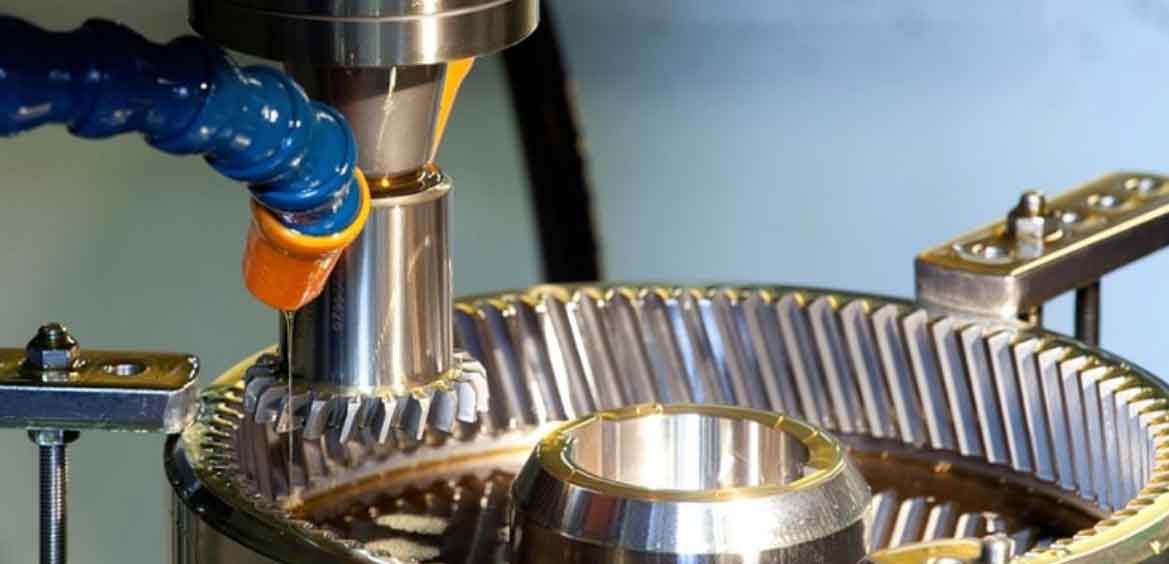
The principle of gear shaping is elegant in its simulation of meshing. A shaper cutter, which is essentially a gear with relieved cutting edges and appropriate rake and clearance angles, generates the tooth form on a workpiece through a precise rotary and reciprocating motion. This process is governed by the fundamental law of gearing: the base pitch of the cutter and the gear being generated must be identical to ensure correct conjugate action. The design of the shaper cutter is therefore a critical exercise in defining a tool that will accurately and efficiently produce the desired gear geometry while maintaining its own structural integrity and cutting performance.
Standard involute gear parameters are well-established. For a gear with module $$m$$, pressure angle $$\alpha$$, and number of teeth $$z$$, the fundamental dimensions are calculated as follows:
The pitch diameter: $$d = m \cdot z$$
The base diameter: $$d_b = m \cdot z \cdot \cos(\alpha)$$
The base pitch: $$p_b = \pi \cdot m \cdot \cos(\alpha)$$
For a standard, non-modified gear (profile shift coefficient $$\xi = 0$$), the tooth thickness and space width at the pitch circle are equal, each being $$s = e = \pi m / 2$$.
However, in applications like harmonic drives, significant positive profile shift ($$\xi >> 0$$) is employed to enhance performance, eliminate undercut, and improve load capacity. This modification drastically alters the gear’s geometry. The tool is effectively moved away from the gear center during generation, resulting in a thicker tooth at the pitch circle and a general outward shift of the entire tooth profile. The modified tooth thickness at the pitch circle is given by:
$$s = \frac{\pi m}{2} + 2m\xi \tan(\alpha)$$
for an external gear, and
$$s = \frac{\pi m}{2} – 2m\xi \tan(\alpha)$$
for an internal gear. Consequently, the addendum and dedendum diameters also change. For a highly positively modified internal gear, a unique problem arises: the addendum (minor) diameter can become larger than the nominal pitch diameter. This scenario breaks the standard design assumption for gear shaping tools.
In conventional shaper cutter design for internal gears, the cutter’s reference parameters (module and pressure angle) match those of the workpiece gear. The cutter’s design is anchored at the gear’s pitch circle. Key dimensions, like the cutter addendum $$h_{a0}$$, are derived from the gear’s dedendum:
$$h_{a0} = \frac{d_{f,\text{gear}} – d_{\text{gear}}}{2}$$
where $$d_{f,\text{gear}}$$ is the gear’s root diameter and $$d_{\text{gear}}$$ is its pitch diameter. When $$d_{a,\text{gear}} > d_{\text{gear}}$$, this calculation for the cutter’s addendum becomes nonsensical or negative, indicating the traditional reference point is invalid. The standard design framework for gear shaping collapses.
| Design Aspect | Standard Gear (ξ ≈ 0) | Highly Positively Modified Internal Gear (ξ >> 0) |
|---|---|---|
| Pitch Diameter (d) | Lies between addendum and dedendum circles. | Can be smaller than the addendum circle. |
| Tooth Thickness at d | s = πm/2 (for internal, s = πm/2 – 2mξtanα). | s becomes very small or negative, indicating pitch circle is within the tooth “tip”. |
| Reference for Cutter Design | Cutter parameters (m, α) equal gear parameters. Design is based on gear’s pitch circle. | Gear’s pitch circle is an unsuitable reference. Requires a new, virtual reference circle. |
| Cutter Addendum (h_a0) | Calculated from gear dedendum relative to gear pitch circle. | Traditional formula fails. Must be calculated from gear dedendum relative to a new reference diameter. |
| Design Methodology | Direct, standard calculations. | “Variable Module & Variable Pressure Angle” method based on constant base pitch. |
To overcome this fundamental challenge in gear shaping tool design, we employ the principle of “Variable Module and Variable Pressure Angle.” This method recognizes that the only inviolable requirement for correct meshing in gear shaping is the equality of base pitches. We are free to choose a new, convenient reference circle on the workpiece gear—typically a circle between its actual addendum and dedendum diameters—and assign it a new set of design parameters that satisfy the base pitch condition.
The core of the method lies in this identity: the base pitch of the gear, defined by its standard parameters, must equal the base pitch defined by any other chosen pair of module and pressure angle on a different reference circle.
$$p_b = \pi m \cos(\alpha) = \pi m_y \cos(\alpha_y)$$
Here, $$m_y$$ and $$\alpha_y$$ are the “virtual” or “design” module and pressure angle associated with a newly chosen reference circle of diameter $$d_y$$ on the internal gear. From the equality, we derive the design module:
$$m_y = m \frac{\cos(\alpha)}{\cos(\alpha_y)}$$
The diameter $$d_y$$ of this new reference circle is then logically:
$$d_y = m_y \cdot z$$
Next, we must calculate the tooth thickness $$s_y$$ on this new reference circle. This is found using the formula for tooth thickness at an arbitrary diameter for a modified gear:
$$s_y = d_y \left[ \frac{s}{d} + \text{inv}(\alpha) – \text{inv}(\alpha_y) \right]$$
Where $$s$$ and $$d$$ are the tooth thickness and diameter at the standard pitch circle, and $$\text{inv}(x) = \tan(x) – x$$ is the involute function. This calculation is crucial for defining the cutter’s tooth thickness.
With $$m_y$$, $$\alpha_y$$, $$d_y$$, and $$s_y$$ established for the workpiece, we now design the shaper cutter for this gear shaping operation. The cutter’s fundamental design parameters become:
Cutter Module: $$m_{0} = m_y$$
Cutter Pressure Angle: $$\alpha_{0} = \alpha_y$$
The cutter’s reference pitch diameter is: $$d_{0} = m_{0} \cdot z_{0}$$ where $$z_{0}$$ is the chosen number of teeth on the cutter.
On the cutter’s reference line (usually the front face or “original section”), its key dimensions are calculated based on the *gear’s* geometry relative to the new reference circle $$d_y$$:
Cutter Tooth Thickness (Reference Line): $$s_{0} = \pi m_{0} – s_y$$
Cutter Addendum: $$h_{a0} = \frac{d_{f,\text{gear}} – d_y}{2}$$ (engages the gear’s dedendum)
Cutter Dedendum: $$h_{f0} = \frac{d_y – d_{a,\text{gear}}}{2} + c \cdot m_{0}$$ (where $$c$$ is the clearance coefficient)
This approach seamlessly resolves the earlier contradiction by shifting the design reference to a logically consistent circle within the gear’s tooth height, all while strictly adhering to the fundamental law of gearing through constant base pitch. It is a powerful demonstration of applied theory in gear shaping tool engineering.
Let’s consider a practical application to illustrate this gear shaping cutter design method. We are tasked with designing a shaper cutter for a harmonic drive internal gear (rigid ring) with the following specifications:
Standard Module, $$m = 0.25 \text{ mm}$$
Standard Pressure Angle, $$\alpha = 20^\circ$$
Number of Teeth, $$z = 160$$
Addendum Diameter, $$d_a = 41.58 \text{ mm}$$
Dedendum Diameter, $$d_f = 42.48 \text{ mm}$$
Measured span measurement or pin diameter indicates a highly positive profile shift.
First, we confirm the problem. The nominal pitch diameter is $$d = m \cdot z = 0.25 \cdot 160 = 40.00 \text{ mm}$$. We observe that $$d_a (41.58 \text{ mm}) > d (40.00 \text{ mm})$$. The tooth thickness at the standard pitch circle calculates to a negative value, confirming the pitch circle is not a valid reference for gear shaping cutter design. The profile shift coefficient is found to be approximately $$\xi = 4.697$$.
We now apply the variable module/pressure angle method. We must choose a suitable design pressure angle $$\alpha_y$$. A value between the standard and the operating pressure angle is often effective. Let’s select $$\alpha_y = 26^\circ$$.
1. Calculate the design module:
$$m_y = m \frac{\cos(\alpha)}{\cos(\alpha_y)} = 0.25 \cdot \frac{\cos(20^\circ)}{\cos(26^\circ)} \approx 0.261376 \text{ mm}$$
2. Calculate the new reference diameter on the gear:
$$d_y = m_y \cdot z = 0.261376 \cdot 160 \approx 41.8202 \text{ mm}$$
3. We need the tooth thickness at the standard pitch circle (d=40 mm). From gear measurement/calculation, let’s assume we find $$s \approx -0.462 \text{ mm}$$ (negative, as anticipated). Now calculate tooth thickness at $$d_y$$:
$$s_y = d_y \left[ \frac{s}{d} + \text{inv}(\alpha) – \text{inv}(\alpha_y) \right]$$
$$s_y = 41.8202 \left[ \frac{-0.462}{40.00} + \text{inv}(20^\circ) – \text{inv}(26^\circ) \right]$$
$$s_y \approx 41.8202 \left[ -0.01155 + 0.014904 – 0.032051 \right]$$
$$s_y \approx 41.8202 \cdot (-0.028697) \approx -1.200 \text{ mm}$$
Wait, a negative thickness on the new reference circle is also problematic. This indicates our choice of $$\alpha_y$$ might need adjustment, or more critically, we must use the correct formula for an *internal* gear tooth thickness, which is space width focused. The appropriate relation for the space width $$e_y$$ on the new circle is often more direct. The cutter tooth thickness $$s_{0}$$ should equal the gear space width. Let’s redefine the approach for clarity in gear shaping:
The gear’s space width at the standard pitch circle is: $$e = \pi m – s = \pi \cdot 0.25 – (-0.462) \approx 0.7854 + 0.462 = 1.2474 \text{ mm}$$.
The space width at the new reference diameter $$d_y$$ is given by:
$$e_y = d_y \left[ \frac{e}{d} – \text{inv}(\alpha) + \text{inv}(\alpha_y) \right]$$
$$e_y = 41.8202 \left[ \frac{1.2474}{40.00} – 0.014904 + 0.032051 \right]$$
$$e_y = 41.8202 \left[ 0.031185 – 0.014904 + 0.032051 \right]$$
$$e_y = 41.8202 \cdot 0.048332 \approx 2.021 \text{ mm}$$
Now, we design the shaper cutter. We choose a cone-shank style cutter with tooth count $$z_0 = 100$$.
Cutter Parameters: $$m_0 = m_y = 0.261376 \text{ mm}$$, $$\alpha_0 = \alpha_y = 26^\circ$$.
Cutter Reference Pitch Diameter: $$d_0 = m_0 \cdot z_0 = 0.261376 \cdot 100 = 26.1376 \text{ mm}$$.
Cutter Tooth Thickness at Ref. Line: $$s_0 = e_y \approx 2.021 \text{ mm}$$. (It equals the gear’s space width at $$d_y$$).
Cutter Addendum: $$h_{a0} = \frac{d_{f,\text{gear}} – d_y}{2} = \frac{42.48 – 41.8202}{2} \approx 0.3299 \text{ mm}$$.
Cutter Dedendum: $$h_{f0} = \frac{d_y – d_{a,\text{gear}}}{2} + c \cdot m_0$$. Using $$c=0.25$$, $$h_{f0} = \frac{41.8202 – 41.58}{2} + 0.25 \cdot 0.261376 \approx 0.1201 + 0.065344 \approx 0.1854 \text{ mm}$$.
With these core dimensions established, the remaining design of the shaper cutter—including rake angles, relief angles, tolerances, and structural features—proceeds according to standard gear shaping tool practices. The cutter, designed with these “virtual” parameters, will correctly generate the actual highly modified internal gear because the fundamental requirement of base pitch equality $$(p_b = \pi m \cos\alpha = \pi m_0 \cos\alpha_0)$$ has been meticulously honored.
The challenge of designing shaper cutters for highly positively modified gears underscores a profound principle in gear shaping: the process is not merely about matching nominal parameters but about ensuring kinematic congruence. The “Variable Module and Variable Pressure Angle” method is a powerful tool that liberates the designer from the constraints of unsuitable reference geometries. By anchoring the design to a physically meaningful circle on the workpiece and leveraging the invariant nature of the base pitch, we can develop effective tools for even the most geometrically challenging gears. This approach exemplifies the blend of theoretical understanding and practical ingenuity required to advance the art and science of gear shaping, enabling the manufacture of high-performance components critical to advanced technologies like aerospace and precision instrumentation.