
The performance and reliability of power transmission systems are fundamentally tied to the dynamic behavior of their core component: the gear pair. Among these, the spur cylindrical gear is one of the most prevalent and fundamental types. A critical parameter governing the vibration and noise generation in these cylindrical gear systems is the mesh stiffness, which represents the resistance of the gear teeth to deflection under load. Conventionally, mesh stiffness is treated as a function solely of the gear’s rotational position, calculated through static or quasi-static methods such as the potential energy method or finite element analysis. However, this approach inherently neglects a crucial operational factor—the rotational speed of the gear system itself. The system’s inertia, damping, and the time-dependent nature of force application suggest that the effective stiffness experienced during dynamic operation may deviate significantly from its static counterpart. This discrepancy can lead to inaccurate predictions of dynamic transmission error (DTE), resonance conditions, and overall vibrational response. Therefore, developing a methodology to calculate a speed-dependent dynamic mesh stiffness and understanding its subsequent impact on the nonlinear dynamics of cylindrical gears is of paramount importance for improving transmission design, enhancing durability, and mitigating noise and vibration.
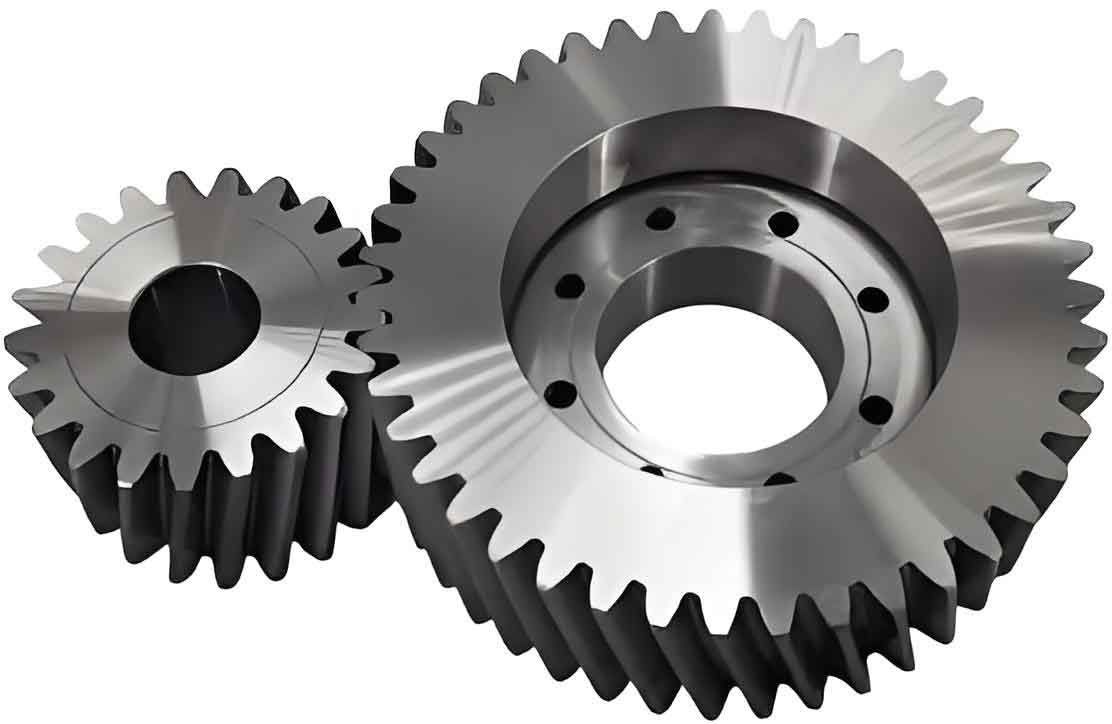
In this investigation, I address this gap by proposing a novel algorithm for calculating the dynamic mesh stiffness of spur cylindrical gears, explicitly accounting for the influence of rotational speed. The algorithm is formulated within a finite element framework and employs the average acceleration method to solve for the dynamic tooth deformation under moving mesh forces. Subsequently, I integrate this dynamic mesh stiffness into a well-established two-degree-of-freedom (2-DOF) nonlinear dynamic model of a spur cylindrical gear pair. Through comprehensive numerical simulations, I compare and contrast the system’s dynamic characteristics—such as DTE amplitude, frequency spectra, bifurcation behavior, and resonance shifts—when using the proposed dynamic mesh stiffness versus the traditional static mesh stiffness. My analysis reveals significant and often non-intuitive influences of speed-dependent stiffness on the predicted dynamic response, providing crucial insights that can inform the design and analysis of high-performance cylindrical gear transmissions.
Computational Methodology for Speed-Dependent Dynamic Mesh Stiffness
The core of this study lies in the calculation of the dynamic mesh stiffness, which I define as the effective stiffness obtained from the dynamic elastic deformation of gear teeth under a moving load at a specified rotational speed. To efficiently model the meshing process of a pair of cylindrical gears, I utilize a simplified yet representative single-tooth model for both the driving and driven gears. The inner bore of each gear model is fixed, simulating the connection to a rigid shaft. The meshing action is simulated by applying a concentrated force Fi at discrete points i along the tooth profile’s line of action. For the driving cylindrical gear, the force moves from the start of active profile (SAP) to the tip; for the driven cylindrical gear, it moves in the opposite direction.
The dynamic response of the gear tooth structure to this moving force is governed by the discrete equation of motion from finite element theory:
$$ \mathbf{M} \ddot{\mathbf{X}}_i + \mathbf{C} \dot{\mathbf{X}}_i + \mathbf{K} \mathbf{X}_i = \mathbf{F}_i $$
Here, $\mathbf{X}_i$, $\dot{\mathbf{X}}_i$, and $\ddot{\mathbf{X}}_i$ are the nodal displacement, velocity, and acceleration vectors, respectively, at the i-th load step. $\mathbf{M}$ and $\mathbf{K}$ are the global mass and stiffness matrices of the finite element model. $\mathbf{C}$ is the damping matrix, modeled using Rayleigh damping: $\mathbf{C} = \alpha \mathbf{M} + \beta \mathbf{K}$, where $\alpha$ and $\beta$ are the mass and stiffness proportional damping coefficients. The external force vector $\mathbf{F}_i$ has non-zero components only at the degrees of freedom corresponding to the i-th contact point. Its magnitude is the mesh force, and its direction is defined by the pressure angle at that specific point on the profile of the cylindrical gear.
The innovation in my approach is the explicit incorporation of rotational speed $\dot{\theta}_p$ into the solution process via the load step definition. The mesh force moves along the tooth profile with a velocity $v_i$ that is directly proportional to the rotational speed and the radius at the contact point:
$$ v_i = \frac{\pi \dot{\theta}_p \sqrt{x_i^2 + y_i^2}}{30} $$
where $(x_i, y_i)$ are the coordinates of the i-th contact point. The average speed $v_a$ between two consecutive points i and i+1 is used to determine the time interval $\Delta t_i$ required for the force to traverse between them:
$$ \Delta t_i = \frac{2 \sqrt{(x_{i+1} – x_i)^2 + (y_{i+1} – y_i)^2}}{v_a} $$
This $\Delta t_i$ becomes the fundamental load step in the temporal integration of the equation of motion. I employ the average acceleration method (a type of Newmark-$\beta$ method with $\beta=1/4$, $\gamma=1/2$), which is unconditionally stable, to solve for $\mathbf{X}_i$, $\dot{\mathbf{X}}_i$, and $\ddot{\mathbf{X}}_i$ iteratively. The initial conditions at the first contact point are set using a static solution: $\mathbf{X}_1 = \mathbf{K}^{-1}\mathbf{F}_1$, with initial velocity and acceleration set to zero. The iteration proceeds until the force reaches the final contact point on the tooth flank of the cylindrical gear.
From the dynamically solved displacement vector $\mathbf{X}_i$, I extract the deformation components $(\Delta x_i, \Delta y_i)$ at the contact point. The dynamic single-tooth stiffness for the driving gear $k_{p,i}$ and driven gear $k_{g,i}$ at point i is then calculated as:
$$ k_{p,i} = \frac{F_i}{\Delta x_i \cos(\pi/2 – \beta_i) + \Delta y_i \cos(\beta_i)} $$
$$ k_{g,i} = \frac{F_i}{\Delta x’_i \cos(\pi/2 – \beta’_i) + \Delta y’_i \cos(\beta’_i)} $$
The combined dynamic mesh stiffness for a single tooth pair is obtained by treating the two teeth as springs in series:
$$ k_{ms,i} = \frac{1}{\frac{1}{k_{p,i}} + \frac{1}{k_{g,i}}} $$
Finally, the total dynamic mesh stiffness $k_m(t)$ for the cylindrical gear pair is assembled by considering the contact ratio, summing the stiffness contributions from all tooth pairs in simultaneous contact at any given mesh position.
Nonlinear Dynamic Model of a Spur Cylindrical Gear System
To investigate the impact of the calculated dynamic mesh stiffness, I employ a lumped-parameter, two-degree-of-freedom torsional model for a spur cylindrical gear pair. The model considers the gears as rigid disks connected by a nonlinear spring-damper element representing the gear mesh, along with sliding friction forces on the tooth flanks.
The equations of motion derived from Newton’s second law are:
$$
\begin{aligned}
J_p \ddot{\theta}_p + R_{bp} \sum_{j=1}^{n} F_m^j – \sum_{j=1}^{n} R_{fp}^j F_f^j &= T_p \\
J_g \ddot{\theta}_g – R_{bg} \sum_{j=1}^{n} F_m^j + \sum_{j=1}^{n} R_{fg}^j F_f^j &= -T_g
\end{aligned}
$$
Here, $J_p$ and $J_g$ are the mass moments of inertia; $\theta_p$ and $\theta_g$ are the angular displacements; $T_p$ and $T_g$ are the input and load torques; $R_{bp}$ and $R_{bg}$ are the base circle radii; and $n$ is the number of tooth pairs in contact. $R_{fp}^j$ and $R_{fg}^j$ are the friction arms for the j-th tooth pair.
The mesh force $F_m^j$ for the j-th pair consists of an elastic component and a viscous damping component:
$$ F_m^j = k_m^j(t) \delta(t) + c_m \dot{\delta}(t) $$
In this study, $k_m^j(t)$ is the central variable. It will be assigned either the traditional static mesh stiffness (function of position only) or the newly proposed dynamic mesh stiffness (function of position and speed, $k_m^j(t, \dot{\theta}_p)$) for comparative analysis. The mesh damping $c_m$ is calculated from an empirical formula involving the average mesh stiffness and a damping ratio $\zeta$.
The sliding friction force $F_f^j$ is modeled as:
$$ F_f^j = \mu F_m^j \cdot \text{sign}(u_s^j) $$
where $\mu$ is a time-varying friction coefficient and $u_s^j$ is the relative sliding velocity.
The primary dynamic output of interest is the Dynamic Transmission Error (DTE), defined as the relative displacement of the gears along the line of action:
$$ \delta(t) = R_{bp} \theta_p(t) – R_{bg} \theta_g(t) $$
The parameters of the example spur cylindrical gear pair used throughout this study are summarized in the table below.
| Parameter | Driving Gear | Driven Gear |
|---|---|---|
| Number of Teeth | 23 | 47 |
| Module (mm) | 2.5 | |
| Pressure Angle (deg) | 20 | |
| Face Width (mm) | 10 | |
| Mass (kg) | 0.21 | 0.37 |
| Young’s Modulus (GPa) | 211 | |
| Poisson’s Ratio | 0.3 | |
Validation and Analysis of the Dynamic Mesh Stiffness
I first validate the proposed algorithm under a quasi-static condition ($\dot{\theta}_p = 0.01 \text{ r/min}$). The calculated dynamic single-tooth stiffness (DSTS) is compared against the static single-tooth stiffness obtained from a commercial finite element analysis (FEA) software. The results show excellent agreement in trend, with minor deviations attributable to differences in numerical integration schemes between the custom algorithm and the commercial FEA solver. At a high operational speed ($\dot{\theta}_p = 1300 \text{ r/min}$), the comparison between the DSTS from my algorithm and a transient dynamic FEA solution also confirms the algorithm’s validity, exhibiting consistent dynamic fluctuations.
The more critical comparison is between the proposed Dynamic Tooth Mesh Stiffness (DTMS) and the classic Potential Energy Method (PEM) result. As shown in the figure below, at quasi-static speed, my DTMS aligns more closely with the PEM result than the static FEA solution does, demonstrating good accuracy. At high speed, the DTMS exhibits the expected dynamic characteristics distinct from the static curve.
The fundamental influence of rotational speed on the mesh stiffness of cylindrical gears is analyzed in detail. The following table summarizes the observed effects on single-tooth and combined mesh stiffness:
| Aspect | Observation with Increasing Speed | Probable Cause |
|---|---|---|
| Amplitude Fluctuation | The dynamic stiffness fluctuates around the static stiffness curve with increasing amplitude. | Elastic deformation from previous contact points does not fully recover before new load is applied, leading to a cumulative wave effect. |
| Oscillation Frequency | The number of oscillations within one mesh cycle decreases. | The system’s dynamic response (governed by its natural frequencies and damping) cannot keep pace with the rapidly moving excitation, causing a slower recovery. |
| Zone of Max Influence | The double-tooth contact region is more significantly affected than the single-tooth contact region. | Double-tooth stiffness is a superposition of two single-tooth stiffness waves. Speed-induced phase differences and amplitude changes in these waves lead to pronounced combined effects. |
| Peak/Valley Shift | The temporal position of peaks and valleys of the DTMS waveform shifts relative to the static stiffness. | The time-dependent dynamic response introduces a phase lag/lead relative to the purely geometric static excitation. |
This speed-dependent, time-varying nature of the mesh stiffness is the key differentiator that will influence the global dynamic response of the cylindrical gear system.
Dynamic Characteristics of the Gear System Under Dynamic Mesh Stiffness
I now integrate the calculated DTMS into the 2-DOF dynamic model and compare the results with those from the model using static mesh stiffness (SMS). A primary indicator is the maximum DTE amplitude over a wide speed range (500 to 8000 r/min). The velocity sweep reveals that while both models predict a similar number of resonance zones, the resonance speeds calculated using DTMS are consistently shifted—either advanced or delayed—compared to those from the SMS model. Furthermore, the relationship between the DTE amplitudes of the two models is not consistent; at some speeds, DTMS predicts higher vibration, while at others, SMS predicts higher vibration. This non-uniform effect directly stems from the shifting peaks and valleys of the DTMS waveform described earlier.
To gain deeper insight, I examine time-domain responses, frequency spectra, and phase portraits at three specific speeds.
At a moderate speed (2050 r/min): The DTMS model shows a slightly modulated DTE time signal compared to the nearly pure sinusoidal response of the SMS model. The spectrum for the DTMS case contains more pronounced higher harmonic components of the mesh frequency, indicating stronger nonlinear interactions induced by the dynamic stiffness variation in the cylindrical gears.
At a higher speed near resonance (3700 r/min): Both models exhibit significant super-harmonic responses. However, the response from the DTMS model shows greater complexity and a richer frequency content. The phase portrait for the DTMS model remains a smooth, periodic orbit but is distinct in shape from the SMS model’s orbit, confirming a different periodic solution.
At a high speed (6140 r/min): The disparity in super-harmonic content remains evident, with the DTMS model again generating stronger high-frequency vibrations. This suggests that models based on static stiffness may underestimate vibration severity in certain high-speed regimes for cylindrical gear drives.
The most profound impact is observed in the system’s bifurcation behavior, which maps the long-term periodic nature of the response against the control parameter (input speed). The bifurcation diagrams for both models are constructed by plotting the local maxima of the DTE. The comparison reveals that the dynamic mesh stiffness alters the vibration periodicity in specific speed ranges for the cylindrical gear system.
| Vibration Period | Speed Range (SMS Model) | Speed Range (DTMS Model) | Effect of DTMS |
|---|---|---|---|
| 5-Period (5P) | 3349 – 4356 r/min | 3301 – 4325 r/min | Range slightly shifted and narrowed. |
| 4-Period (4P) | 4357 – 5023 r/min | 4326 – 4999 r/min | Range shifted to lower speeds. |
| 3-Period (3P) | 5024 – 6821 r/min | 5120 – 7059 r/min | Range shifted to higher speeds and widened. |
| 2-Period (2P) | >6821 r/min | >7059 r/min | Onset of 2P motion is delayed. |
This table clearly shows that the speed ranges associated with specific subharmonic motions (like 5P, 4P, 3P) are not fixed but are dynamically modified by the speed-dependent stiffness. The overall trend shows a progression from higher-period to lower-period motions as speed increases, eventually stabilizing in a 2-period motion, but the transition points are clearly different between the two stiffness models.
Conclusion
In this study, I have proposed and implemented a novel algorithm for calculating the dynamic mesh stiffness of spur cylindrical gears, explicitly incorporating the influence of rotational speed through a dynamic finite element framework solved with the average acceleration method. My analysis demonstrates conclusively that the effective mesh stiffness in operating cylindrical gears is not static but is a dynamic entity that oscillates around the static stiffness value. The amplitude of these oscillations increases with rotational speed, while their frequency decreases, primarily affecting the stiffness in the double-tooth contact zone.
The integration of this dynamic mesh stiffness into a nonlinear dynamic model of a cylindrical gear system reveals significant consequences:
- Resonance Shift: The critical resonance speeds of the system are either advanced or delayed compared to predictions based on static stiffness models. This has direct implications for defining “critical speeds” or “rattle zones” in cylindrical gear transmission design.
- Amplitude Prediction: The relationship between DTE amplitudes predicted by dynamic and static stiffness models is inconsistent across the speed range, meaning static models may be non-conservative (or overly conservative) at specific operating conditions.
- Enhanced Nonlinearity: The dynamic stiffness model excites stronger super-harmonic and high-frequency vibrational components, particularly at medium to high speeds, suggesting a richer and potentially more severe vibration spectrum.
- Altered Periodicity: The bifurcation structure of the system changes, with speed ranges corresponding to specific subharmonic periodic motions being shifted or resized. This indicates a fundamental change in the system’s nonlinear dynamic signature.
The findings underscore the importance of considering the dynamic nature of mesh stiffness in high-fidelity modeling and analysis of cylindrical gear systems. For designers and analysts, this implies that traditional methods may lead to inaccuracies in predicting noise, vibration, and harshness (NVH) performance, as well as fatigue life estimates based on dynamic loads. The proposed methodology offers a pathway to more accurate simulations, which can contribute to the optimization of cylindrical gear designs for improved performance, reduced noise, and enhanced reliability in advanced mechanical transmission systems. Future work may extend this approach to helical cylindrical gears, include the effects of profile modifications, and couple the torsional model with lateral vibrations for a more comprehensive analysis.