
As a researcher deeply involved in the field of power transmission and gear manufacturing, I find spiral bevel gears to be among the most fascinating and complex mechanical components. Their ability to transmit power and motion between intersecting or offset axes with high efficiency, load capacity, and smooth, quiet operation makes them indispensable in modern machinery. From the demanding environments of aerospace and marine propulsion to the precision required in automotive differentials and machine tools, the performance of these gears is critical. My focus has been on understanding the evolution of their manufacturing technology and, more recently, on the intricate physical phenomena that occur during their final finishing processes, particularly precision grinding. This article consolidates my perspective on the historical development, current theoretical underpinnings, and the sophisticated multi-physics challenges involved in producing high-performance spiral bevel gears.
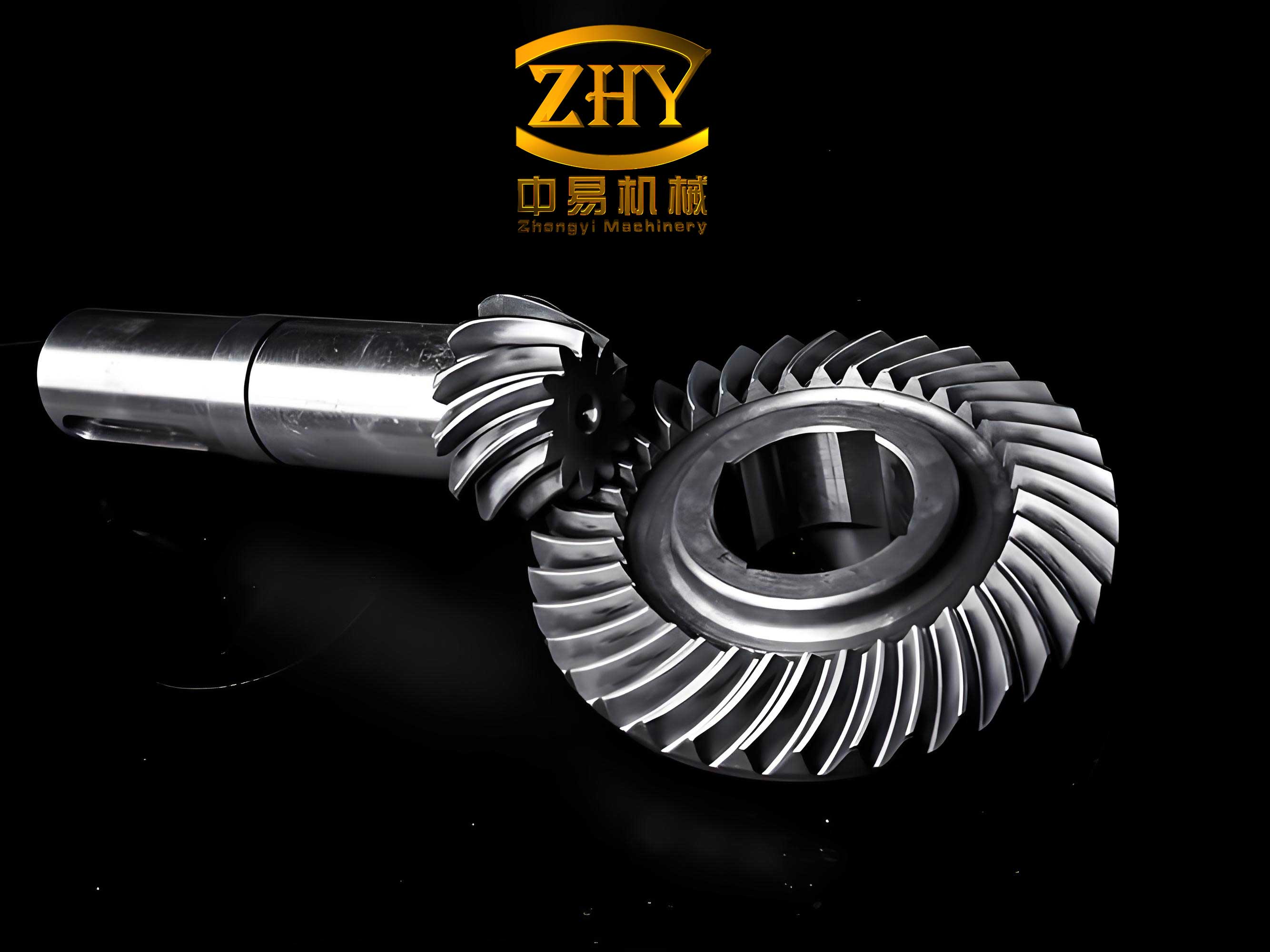
The journey of manufacturing spiral bevel gears is dominated by three distinct gear tooth systems, each associated with specific machine tool builders: Gleason, Oerlikon, and Klingelnberg. For decades, the methods and mathematics behind the Oerlikon and Klingelnberg systems were considered somewhat empirical and relied heavily on approximate formulas and proprietary experience. This reliance, coupled with incompatible parameter definitions between the systems, created significant hurdles for manufacturers. The Gleason system, based in the United States, established a profound theoretical foundation known as the “local conjugate principle.” This principle deliberately creates a point-contact tooth pairing from a initially line-contact theoretical concept, allowing for controlled localization of the bearing contact area to ensure stable and predictable performance under load. The mathematical rigor and subsequent development of advanced simulation tools by Gleason created a formidable technological advantage that was closely guarded.
The theoretical breakthrough for spiral bevel gears is best exemplified by the development of Tooth Contact Analysis (TCA) and Loaded Tooth Contact Analysis (LTCA). TCA is a computational method for simulating the kinematic meshing of a gear pair under no-load or light-load conditions. It predicts the path of contact, transmission errors, and the size and location of the contact ellipse on the tooth flank. The core of TCA involves solving the system of equations that describe the mating surfaces being in continuous tangency. For a pair of spiral bevel gears, the fundamental equations can be represented as:
$$ \mathbf{r}_1(u_1, \theta_1) = \mathbf{r}_2(u_2, \theta_2, \phi) $$
$$ \mathbf{n}_1(u_1, \theta_1) = \mathbf{n}_2(u_2, \theta_2, \phi) $$
Here, $\mathbf{r}_1$ and $\mathbf{r}_2$ are the position vectors of points on the pinion and gear tooth surfaces, defined by surface parameters $u, \theta$. $\mathbf{n}_1$ and $\mathbf{n}_2$ are the corresponding unit normal vectors. The parameter $\phi$ represents the angle of rotation of one gear relative to the other. Solving this system for a series of $\phi$ values yields the contact path and the motion transmission function $\phi_2(\phi_1)$, whose deviation from linearity defines the transmission error, a key excitations source for noise and vibration in spiral bevel gears.
LTCA extends this concept into the elastostatic domain, incorporating the deflections of the teeth, shafts, and housing under operational loads. It reveals how the contact ellipse deforms, pressure redistributes, and the motion transmission characteristic changes under load—factors crucial for predicting durability, fatigue life, and noise behavior. The development of LTCA was a monumental step, but its details remained proprietary for a long time, spurring independent research efforts worldwide to decode the complex tribo-dynamics of spiral bevel gears.
| System (Origin) | Characteristic Tooth Line | Traditional Machining Method | Theoretical Foundation | Key Historical Challenge |
|---|---|---|---|---|
| Gleason (USA) | Circular Arc | Face Milling (Fixed Setting), Face Hobbing | Local Conjugate Principle, TCA/LTCA | Technology secrecy and complex mechanical adjustment calculations. |
| Oerlikon (Switzerland) | Cycloidal (Epicycloidal) | Face Hobbing (Continuous Indexing) | Plane Generating Theory | Empirical elements in tooth geometry generation. |
| Klingelnberg (Germany) | Extended Epicycloid (Palloid) | Face Hobbing (Continuous Indexing) | Plane Generating Theory | Similar to Oerlikon, with distinct and incompatible design codes. |
The advent of Computer Numerical Control (CNC) technology fundamentally transformed the landscape for manufacturing spiral bevel gears. Traditional mechanical machines relied on complex train of gears, cams, and linkages to generate the necessary relative motions between the cutter and the workpiece. Setting up these machines for a new gear design was time-consuming and required high skill. CNC machines replaced these physical linkages with software-controlled servo axes. A modern 6-axis CNC bevel gear grinding or cutting machine typically controls the following movements independently: the work rotation ($C_w$), the cradle or cutter head rotation ($C_c$), the radial distance ($X$), the workpiece offset ($Y$), the machine root angle ($\Sigma$ or $B$), and the workpiece tilt ($A$). This flexibility allows for the direct realization of sophisticated tooth flank modifications (like tip/root relief, bias, and crowning) through tool path programming, which were difficult or impossible to achieve consistently on mechanical machines.
The shift to CNC also democratized access to advanced manufacturing strategies. With the underlying mathematical models for spiral bevel gears becoming more widely understood and published by academia, software solutions emerged that could perform TCA, calculate machine settings, and even optimize tooth contact patterns. This broke the monopoly held by traditional machine builders over the “know-how.” Manufacturers could now use generic CNC platforms to produce high-quality spiral bevel gears, provided they possessed the correct digital design and process model.
While cutting (hobbing, milling) establishes the basic tooth form, precision grinding is often the final and most critical operation for high-end spiral bevel gears, especially those made from hardened steel. Grinding achieves the required surface finish, final geometry accuracy, and desired residual stress state. However, the grinding process is a severe source of thermo-mechanical coupling. The interaction between the abrasive grits of the grinding wheel and the gear tooth flank generates substantial heat and mechanical forces. The table below categorizes the primary research approaches for modeling these interdependent phenomena.
| Phenomenon | Primary Modeling Approaches | Key Challenges for Spiral Bevel Gears |
|---|---|---|
| Mechanical Forces | 1. Analytical Models (e.g., mechanistic models based on undeformed chip geometry). 2. Empirical Models (e.g., regression from experimental data). 3. Finite Element Analysis (FEA) Simulations (explicit or implicit). |
Complex 3D, time-varying engagement geometry due to curved tooth flank and grinding path. Capturing the stochastic nature of abrasive grit interaction in a deterministic model. |
| Heat Generation & Temperature | 1. Analytical Heat Source Models (e.g., Jaeger’s moving heat source, triangular heat flux distribution). 2. Comprehensive Convective-Diffusive Models (e.g., Rowe’s model incorporating wheel sharpness, coolant). 3. Computational Fluid Dynamics (CFD) & FEA Coupling. |
Predicting the partition of heat flux into workpiece, wheel, chips, and coolant in a complex, enclosed gear geometry. Modeling effective coolant delivery to the grinding zone on a contoured surface. |
| Thermo-Mechanical Coupling | 1. Sequentially Coupled Analysis: Force field drives a thermal analysis, whose temperature field drives a stress analysis. 2. Fully Coupled Analysis: Simultaneous solution of mechanical equilibrium and energy equations. |
Extremely high computational cost for 3D, transient simulations of the entire grinding pass. Accurately defining material properties (yield stress, thermal conductivity) as functions of temperature and strain rate. |
From my analysis, the core of the grinding challenge lies in the intense energy concentration. A significant portion of the mechanical work done by the grinding forces is converted into heat within a very small volume at the grit-workpiece interface. The peak temperatures in this zone can easily exceed the phase transformation temperature of steel, leading to metallurgical damage such as burns, untempered martensite, or re-hardened white layers, and inducing detrimental tensile residual stresses. The fundamental heat generation per unit width can be related to the specific grinding energy $u$ and the material removal rate:
$$ q = u \cdot a_p \cdot v_w $$
where $q$ is the heat flux entering the workpiece (in W/m²), $a_p$ is the depth of cut, and $v_w$ is the workpiece speed. The specific energy $u$ itself is not constant; it is highly dependent on the grinding wheel condition, coolant effectiveness, and the aforementioned chip formation mechanics. A common model for the tangential grinding force $F_t$, which is the primary source of energy, is:
$$ F_t = K \cdot (a_p \cdot v_w / v_s)^\epsilon $$
where $K$ and $\epsilon$ are constants related to the wheel-workpiece combination, and $v_s$ is the wheel speed. The normal force $F_n$ is typically proportional to $F_t$ via a friction coefficient. These forces, while causing elastic deflection and possible chatter, also drive the thermal model. The temperature rise in the workpiece subsurface is governed by the heat conduction equation. For a moving heat source on a semi-infinite body, a foundational solution for the temperature field $T(x,y,z,t)$ is given by:
$$ T(x,y,z,t) = \frac{1}{\rho c (4 \pi \alpha)^{3/2}} \int_0^t \int_A \frac{Q(\xi,\eta,\tau)}{(t-\tau)^{3/2}} \exp\left(-\frac{(x-\xi-v\tau)^2 + (y-\eta)^2 + z^2}{4 \alpha (t-\tau)}\right) dA d\tau $$
where $\rho$, $c$, and $\alpha$ are the density, specific heat, and thermal diffusivity of the workpiece material, $Q$ is the heat source intensity, $A$ is the contact area, and $v$ is the heat source velocity. Solving this for the complex 3D case of a grinding wheel engaged with a spiral bevel gear tooth requires sophisticated numerical methods like FEA.
The real complexity, which is the frontier of current research, is the fully coupled simulation. The mechanical forces ($\sigma_{ij}$) depend on the temperature field because material strength and flow stress are temperature-sensitive. Conversely, the heat generation depends on the mechanical forces and the plastic deformation. A simplified representation of the coupled system for a material point in the finite element context can be expressed as:
Mechanical Equilibrium: $$ \sigma_{ij,j} + f_i = 0 $$
Constitutive Relation: $$ d\sigma_{ij} = C_{ijkl}(T, \dot{\epsilon}) : (d\epsilon_{kl} – d\epsilon_{kl}^p – d\epsilon_{kl}^th) $$
Energy Balance: $$ \rho c \dot{T} = (k T_{,i})_{,i} + \dot{q}_{mech} $$
where $f_i$ are body forces, $C_{ijkl}$ is the temperature ($T$) and strain-rate ($\dot{\epsilon}$) dependent stiffness tensor, $d\epsilon_{kl}$, $d\epsilon_{kl}^p$, and $d\epsilon_{kl}^th$ are increments of total, plastic, and thermal strain, $k$ is thermal conductivity, and $\dot{q}_{mech}$ is the heat generation rate from plastic work. Solving this system for the dynamic, large-strain process of abrasive grit interaction with a complex geometry like a spiral bevel gear tooth is a monumental computational task. Researchers are exploring multi-scale modeling, where the macro-scale gear deformation is coupled with micro-scale models of the grinding zone, and advanced solver techniques to make this feasible.
The ultimate goal of this research is predictive process control. If we can accurately model the force and temperature fields during the grinding of spiral bevel gears, we can proactively optimize the process parameters—wheel speed $v_s$, workpiece speed $v_w$, depth of cut $a_p$, feed rate, grinding path, and coolant application—to achieve the desired outcomes. These outcomes are quantified in the following table.
| Target Outcome | Key Influencing Thermo-Mechanical Factors | Desired Process Window |
|---|---|---|
| High Geometric Accuracy (Profile, Lead) | 1. Elastic deflection of gear/wheel due to grinding forces. 2. Thermal expansion of gear blank. 3. Wheel wear dynamics. |
Minimize quasi-static force magnitude and gradient; maintain stable, uniform thermal state. |
| Superior Surface Integrity (No burns, compressive residual stress) | 1. Peak grinding zone temperature. 2. Temperature gradient and cooling rate. 3. Mechanical deformation beneath the surface. |
Keep temperature below critical phase change threshold; promote beneficial plastic deformation. |
| Optimal Surface Finish (Low Ra) | 1. Grit-workpiece interaction mechanics (rubbing, ploughing, cutting). 2. Vibration/chatter induced by process forces. |
Promote efficient chip formation (cutting) over inefficient rubbing; ensure dynamic stability. |
| High Process Efficiency (Metal Removal Rate) | 1. Specific grinding energy. 2. Wheel loading and wear. 3. Power and force limits of machine. |
Operate at highest material removal rate that still satisfies surface integrity and accuracy constraints. |
Looking forward, the convergence of digital twins, advanced sensor integration, and artificial intelligence presents a compelling vision for the future manufacturing of spiral bevel gears. A high-fidelity digital twin of the grinding process, built upon the coupled thermo-mechanical models discussed, would allow for virtual process optimization and root-cause analysis of defects without costly physical trials. Real-time data from force, acoustic emission, and infrared temperature sensors on the machine can be fed into the model for adaptive control, adjusting parameters on-the-fly to maintain the process within the optimal window. The development of domestic, high-precision CNC spiral bevel gear grinders has been a strategic achievement, making this advanced manufacturing capability more accessible. However, the full harnessing of their potential hinges on mastering the underlying science of the process. For the global industry, the relentless pursuit of understanding and controlling the grinding of spiral bevel gears is not merely an academic exercise; it is the pathway to achieving the next leap in performance, durability, and efficiency for these critical power transmission components.