
In my years of research and practical experience in industrial lubrication, I have witnessed a significant transformation in the field of worm gear lubrication. Worm gears, essential components in reducers, elevators, and various transmission systems, present unique challenges due to their sliding contact and high friction. The development of synthetic worm gear oils has been a game-changer, addressing limitations of traditional mineral-based lubricants. This article delves into the progression, performance, and practical applications of synthetic worm gear oils, emphasizing the critical role of advanced base oils like polyalphaolefins (PAO), synthetic esters, and polyalkylene glycols (PAG). I will explore their properties through comparative tables and mathematical models, highlighting why synthetic formulations are increasingly vital for modern, high-demand worm gear systems.
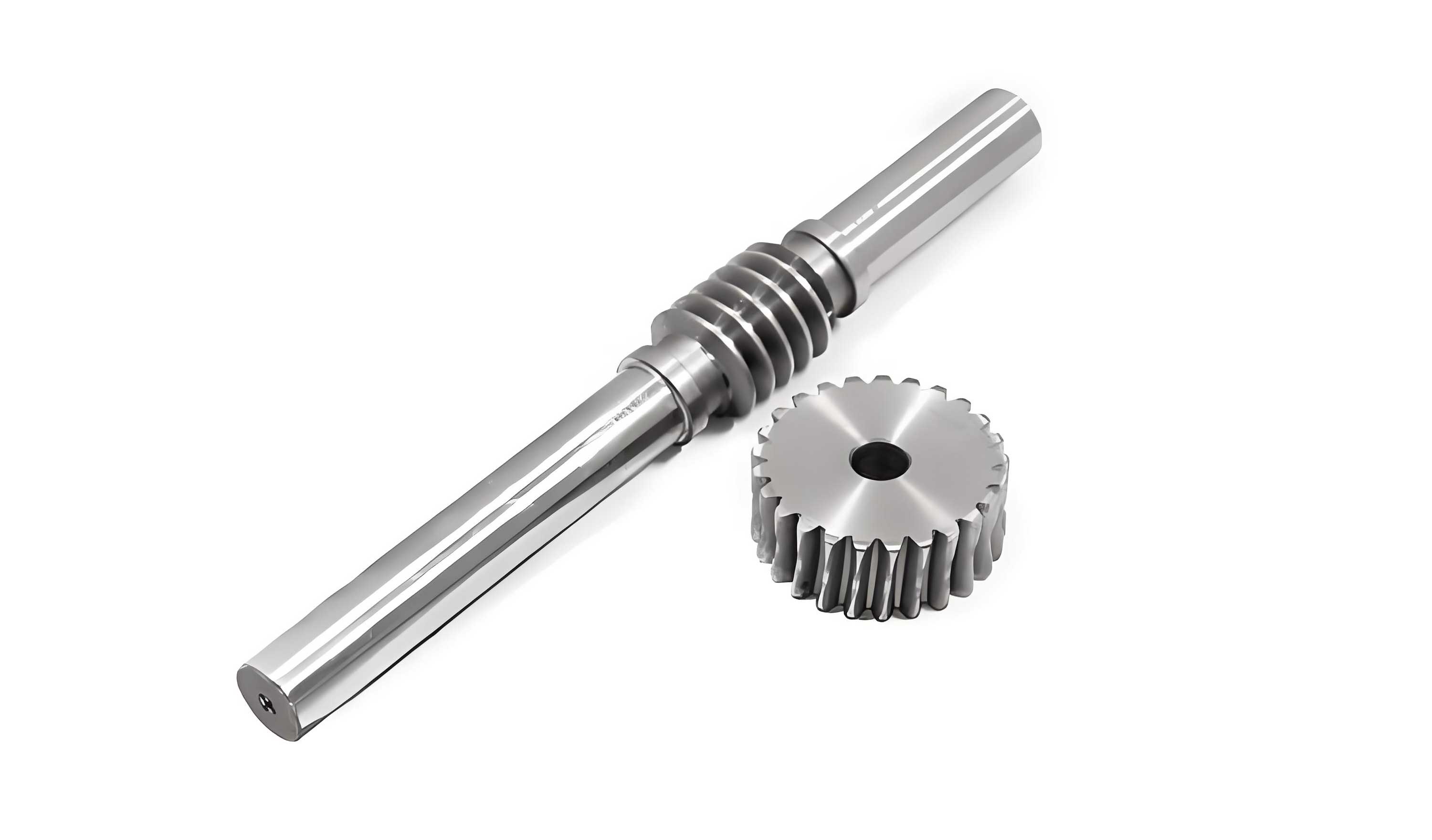
The fundamental operation of worm gears involves a worm (screw) meshing with a worm wheel, resulting in a high reduction ratio and compact design. However, this configuration leads to substantial sliding velocities between the teeth, generating significant heat and wear. Effective lubrication is paramount to reduce friction, prevent scuffing, and ensure efficiency. Historically, mineral oils were the standard, but their performance boundaries are often exceeded in severe operating conditions such as high load, elevated temperature, or frequent start-stop cycles. This is where synthetic worm gear oils enter the scene. Their tailored molecular structures offer superior thermal stability, oxidation resistance, and viscosity characteristics, making them indispensable for protecting worm gears in demanding environments.
The evolution of worm gear oils mirrors advancements in both machinery design and lubricant technology. Early worm gear systems relied on simple mineral oils, often blended with animal fats or synthetic fats to improve lubricity. These formulations, while a step forward, struggled with thermal degradation, high wear rates, and limited temperature ranges. The introduction of dedicated worm gear oil standards in the late 20th century marked a turning point. However, the real paradigm shift began with the adoption of synthetic base oils. These are not merely refined from crude oil but are chemically engineered to possess specific desirable properties. For worm gears, this means oils that can maintain a stable lubricating film under extreme pressure and sliding conditions, thereby extending equipment life and reducing energy consumption.
Synthetic worm gear oils are primarily classified based on their base oil composition. The American Petroleum Institute (API) categorizes base oils into Groups I-V, with Groups IV and V representing true synthetics. Group IV comprises polyalphaolefins (PAO), while Group V includes other synthetics like esters and polyglycols. In the context of worm gears, three major synthetic base oil types dominate: PAOs, synthetic esters, and polyalkylene glycols (PAG). Each offers a distinct set of advantages tailored to the harsh operating environment of worm gears.
Polyalphaolefins (PAO) are synthesized through the oligomerization of alpha-olefins. They are arguably the most common synthetic base oils due to their excellent all-round performance. For worm gear applications, PAO-based oils exhibit outstanding viscosity-temperature behavior. The viscosity index (VI) of a lubricant is a critical measure of how much its viscosity changes with temperature. A high VI is desirable for worm gears, as it ensures adequate film thickness at high operating temperatures while maintaining fluidity at startup. The VI for PAOs can be mathematically represented as:
$$ VI = \frac{L – U}{L – H} \times 100 $$
where (L) and (H) are the kinematic viscosities at 40°C of reference oils with VI of 0 and 100 respectively, and (U) is the kinematic viscosity at 40°C of the oil in question. PAOs typically have VIs exceeding 130, compared to 80-100 for mineral oils. This translates to a more stable lubricant film across the temperature range experienced by worm gears. Furthermore, PAOs have low pour points, excellent thermal-oxidative stability, and low volatility. Their compatibility with mineral oils allows for the creation of cost-effective semi-synthetic blends that still offer significant performance benefits for worm gears.
Synthetic esters are produced by reacting carboxylic acids with alcohols. Their strong polarity is a key asset for worm gear lubrication. Polar molecules have a natural affinity for metal surfaces, allowing ester-based oils to adsorb strongly and form durable, protective boundary films. This is crucial for worm gears, where elastohydrodynamic lubrication (EHL) conditions prevail, and the film thickness can be calculated using the Dowson-Higginson equation:
$$ h_{min} = 2.65 \frac{R^{0.43} (\eta_0 u)^{0.7}}{E’^{0.03} W^{0.13}} $$
Here, (h_{min}) is the minimum film thickness, (R) is the reduced radius of curvature, (\eta_0) is the dynamic viscosity at atmospheric pressure, (u) is the entrainment speed, (E’) is the reduced modulus of elasticity, and (W) is the load per unit width. The strong adsorption of esters enhances this film under boundary conditions, reducing direct metal-to-metal contact in worm gears. Esters also boast high natural lubricity, excellent thermal stability, and good biodegradability. However, their hygroscopic nature and potential incompatibility with certain seals require careful formulation and application consideration for worm gear systems.
Polyalkylene glycols (PAG), particularly polyether types, represent another cornerstone of synthetic worm gear oils. They are synthesized from ethylene oxide (EO) and propylene oxide (PO). A unique advantage of PAGs for worm gears is their inherently high lubricity and load-carrying capacity, often reducing the need for extreme pressure (EP) additives that can be corrosive. Their viscosity can be precisely tailored through the EO/PO ratio and molecular weight. PAGs are also completely wax-free, granting them superb low-temperature fluidity, which is beneficial for worm gears in cold-start applications. The friction coefficient ((\mu)) in a worm gear mesh can be significantly lower with PAGs. This coefficient relates to the power loss (P_{loss}) due to friction:
$$ P_{loss} = \mu \cdot F_N \cdot v_s $$
where (F_N) is the normal load and (v_s) is the sliding velocity. Lower ( \mu ) directly translates to higher efficiency and lower operating temperatures for the worm gear set.
To comprehensively compare the performance of these synthetic base oils for worm gears against traditional mineral oils, the following table summarizes their key properties:
| Property | Mineral Oil (Group I/II) | PAO (Group IV) | Synthetic Ester (Group V) | PAG (Group V) |
|---|---|---|---|---|
| Viscosity Index (Typical) | 95-105 | >130 | 120-180 | 150-250 |
| Pour Point (°C) | -15 to -10 | < -50 | < -50 | < -40 |
| Thermal Stability | Moderate | Excellent | Excellent | Very Good |
| Oxidation Stability | Poor to Fair | Excellent | Good to Excellent | Good (with inhibitors) |
| Lubricity / Film Strength | Low (requires additives) | Good | Excellent (inherent) | Excellent (inherent) |
| Seal Compatibility | Good | Good | Fair to Poor | Poor (swells some elastomers) |
| Hydrolytic Stability | Excellent | Excellent | Poor | Good |
| Biodegradability | Low | Low to Moderate | High | High (water-soluble types) |
| Relative Cost | Low | High | Very High | High |
The performance advantages of full synthetic worm gear oils are multifaceted and directly address the core challenges in worm gear operation. One of the most significant benefits is energy efficiency. The lower friction coefficients of synthetic formulations, especially PAGs, reduce parasitic losses. In practical terms, replacing a mineral oil with a PAO-based oil in a worm gearbox can improve mechanical efficiency by 8-9%, while a switch to a PAG oil can yield efficiency gains of up to 18%. This not only saves power but also reduces the heat generated within the worm gear set, leading to a cooler operating temperature. For instance, after 300 hours of continuous operation, the sump temperature of a worm gearbox might be 110°C with mineral oil, 90°C with PAO oil, and only 75°C with PAG oil. This thermal management is crucial for the longevity of both the lubricant and the worm gears.
Wear protection is another critical area where synthetic worm gear oils excel. The enhanced film strength and additive response of synthetics lead to markedly reduced wear rates. The wear volume (V) according to the Archard’s wear equation is:
$$ V = K \frac{F_N \cdot s}{H} $$
where (K) is the wear coefficient, (F_N) is the normal load, (s) is the sliding distance, and (H) is the material hardness. Synthetic oils, through robust film formation and effective anti-wear additives, significantly lower the wear coefficient (K) for the worm gear contact surfaces. This results in prolonged service life for both the worm and the wheel, minimizing downtime and maintenance costs.
The service life of the lubricant itself is dramatically extended with synthetic worm gear oils. Their superior resistance to oxidation and thermal degradation means they maintain their protective properties for much longer. Oxidation, a chain reaction leading to sludge and varnish, follows a rate law that is highly temperature-dependent. The Arrhenius equation models this:
$$ k = A e^{-E_a/(RT)} $$
Here, (k) is the rate constant, (A) is the pre-exponential factor, (E_a) is the activation energy, (R) is the gas constant, and (T) is the absolute temperature. Synthetic base oils have higher effective activation energies for oxidation, meaning the rate constant (k) increases more slowly with temperature. Consequently, at a steady operating temperature of 100°C, a mineral oil might require changing after 5,000 hours, a PAO oil after 15,000 hours, and a PAG oil after an impressive 25,000 hours. This extended drain interval offers substantial economic and environmental benefits by reducing lubricant consumption and waste generation.
The application of synthetic worm gear oils spans numerous industries where reliability and performance are non-negotiable. In heavy-duty mining equipment, worm gears in conveyor drives and hoists are subjected to shock loads and contamination. PAO-based synthetics with high VI and excellent shear stability ensure consistent performance. In food and beverage processing, where incidental contact is possible, FDA-approved synthetic ester or PAG oils provide safe and effective lubrication for worm gear reducers in mixers and packaging lines. The marine industry relies on synthetic worm gear oils for stern tube drives and hatch covers due to their wide temperature operating range and resistance to saltwater washout. Furthermore, in high-precision automation and robotics, where backlash and efficiency are critical, the low friction and consistent viscosity of PAG-based oils ensure precise positioning and smooth operation of worm gear actuators.
Formulating a high-performance synthetic worm gear oil is a balancing act. The choice of base oil is just the beginning. Additive packages are meticulously designed to complement the base oil’s inherent properties. For worm gears, these typically include:
- Anti-wear and Extreme Pressure (EP) Additives: Compounds like zinc dialkyldithiophosphates (ZDDP) or ashless phosphorus/sulfur additives form protective sacrificial films on worm gear teeth under high load.
- Antioxidants: Aromatic amines or hindered phenols scavenge free radicals, drastically slowing the oxidation process described by the Arrhenius equation.
- Rust and Corrosion Inhibitors: These protect the ferrous and non-ferrous components of the worm gear housing from moisture-induced damage.
- Friction Modifiers: In some cases, additional friction reducers like organic molybdenum compounds are used to further enhance the efficiency of the worm gear drive.
- Pour Point Depressants and Viscosity Index Improvers: While synthetics have naturally good low-temperature flow and high VI, these additives can fine-tune performance for specific climate conditions.
The interaction between the synthetic base oil and these additives is often synergistic, creating a formulation greater than the sum of its parts for worm gear protection.
Looking to the future, the trajectory for synthetic worm gear oils is pointed toward even greater specialization and environmental responsibility. As worm gear designs push for higher power density and efficiency, lubricants must evolve concurrently. We are likely to see more hybrid formulations, such as PAO/ester blends, that leverage the strengths of multiple synthetic base oils. The development of ionic liquids and other novel synthetic fluids as base stocks may offer step-change improvements in thermal stability and friction reduction for worm gears. Furthermore, the drive for sustainability is accelerating research into high-performance bio-based synthetic esters and polyglycols derived from renewable resources. These oils aim to provide the technical benefits of synthetics while offering complete biodegradability and a lower carbon footprint, aligning with circular economy principles for industrial lubrication of worm gears.
Another emerging trend is the integration of condition monitoring with advanced synthetic lubricants. The extended service life of these oils makes them ideal partners for predictive maintenance strategies. By analyzing the chemical composition of the used synthetic worm gear oil through techniques like spectrometric oil analysis (SOA) or Fourier-transform infrared spectroscopy (FTIR), one can track additive depletion, contamination, and the onset of oxidation. This data allows for optimal oil change intervals specific to the operating conditions of each worm gear set, maximizing resource utilization. The inherent cleanliness and thermal stability of synthetic oils also make them more compatible with sensitive online sensors, enabling real-time health monitoring of critical worm gear drives.
In conclusion, the development and application of synthetic worm gear oils represent a critical advancement in tribology and mechanical engineering. From my perspective, the transition from mineral-based to synthetic formulations is not merely an incremental improvement but a fundamental enabler for modern, high-performance worm gear systems. The unique chemistries of PAOs, esters, and PAGs provide tailored solutions to the inherent challenges of high sliding friction, heat generation, and wear in worm gears. Their demonstrated benefits in energy efficiency, equipment protection, and lubricant longevity deliver compelling economic and operational advantages. As industrial demands continue to intensify and environmental regulations become stricter, the role of synthetic worm gear oils will only become more central. Future innovations will likely yield even more sophisticated, sustainable, and intelligent lubricants, ensuring that worm gears remain reliable and efficient components in the machinery that drives our world forward.