
As a specialist in advanced manufacturing systems, I am tasked with explaining the intricacies of a highly specialized machine tool: the sector gear milling machine. This equipment is quintessential for the production of sector gears used in automotive steering mechanisms. Whether these gears are of conical or cylindrical design, they universally possess a defining characteristic: the center tooth is deliberately thickened through a modification process, making it slightly larger than its adjacent counterparts. Typically, these gears feature 5 or 6 teeth. The dedicated gear milling machine is engineered precisely to generate this specific tooth form. The machining process can be completed in one or two passes, contingent upon the module size. Generally, the cutting tools are versatile within a specified module range. The adjustability of tooth taper and slot width allows these gear pairs to fulfill unique application requirements.
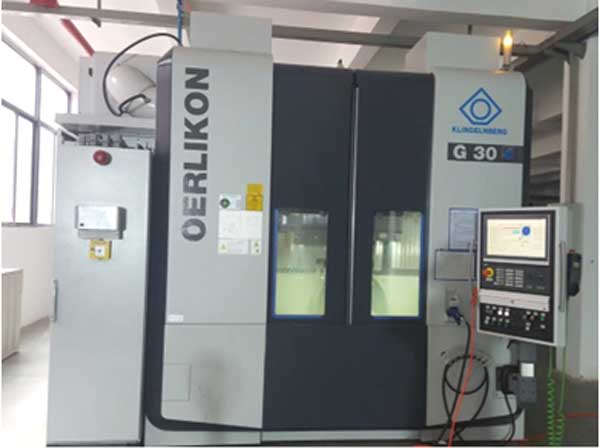
Characteristics of the Gear Milling Process
This specific methodology for gear milling is distinguished by several key operational advantages:
- Forming Tooth by Tooth: Each tooth space is generated in a complete, individual cycle.
- High Stock Removal Capacity and Short Generating Time: The robust design facilitates aggressive material removal rates, significantly reducing the time required for the generating roll.
- Distributed Stock Removal Across Multiple Inserts: The cutting load is shared across several highly functional inserts mounted on each large-diameter cutter head, enhancing tool life and process stability.
- High Speeds for Plunge and Generating Motions: Both the initial plunge feed and the subsequent generating roll are executed at high speeds, optimizing cycle time.
- Program-Controlled Passes: Whether a single or double-pass operation, the entire sequence is managed through a pre-selected, automated program cycle.
- Tool Versatility Within a Module Range: A single set of cutter inserts can be employed for a defined spectrum of gear modules, reducing tooling inventory and changeover complexity.
Principles of the Gear Milling Operation
The core of this gear milling machine lies in its unique kinematic principle. It employs two exceptionally large-diameter milling cutter heads, operating in a dividing (indexing) method to perform the roll-generating gear milling. The inserts on these cutter heads are arranged in a staggered, chain-like configuration at the cutting position. The straight cutting edges of these inserts collectively simulate the profile of a stationary, imaginary generating gear. The workpiece is cut as it rolls in mesh with this imaginary gear. The involute tooth form generated through this pure rolling motion is theoretically perfect.
Aside from their primary rotary motion, the cutter heads possess only one additional movement: a radial plunge. Notably, even when machining gears with face widths up to 100 mm, no longitudinal travel along the tooth width is required. The use of such large-diameter cutter heads completely eliminates the risk of unintended concavities at the root of the tooth space.
The rolling motion of the workpiece, which is mounted on the dividing spindle, is synthetically created by two perfectly synchronized movements: the linear travel of the rolling slide and the rotation of the workpiece about its own axis. This can be mathematically described. If the imaginary generating gear has a base circle radius $R_b$, and the workpiece (sector gear blank) has a base circle radius $r_b$, then for pure rolling without slip, the relationship between the linear slide displacement $s$ and the workpiece rotation angle $\theta$ is given by the fundamental law of gearing for generation:
$$ s = R_b \cdot \phi = r_b \cdot \theta $$
where $\phi$ is the angular rotation of the imaginary gear. In practice, $\phi$ and $s$ are kinematically linked through the machine’s generating mechanism, and $\theta$ is the resulting, precisely controlled rotation of the workpiece.
The machining cycle for each tooth space is sequential: First, a plunge cut (pure radial infeed without rolling) occurs. Subsequently, the generating roll takes place. The two opposing cutter heads plunge radially until the full tooth depth is reached, after which the rolling motion is engaged to finish the flank profiles. This method results in a significantly shorter generating roll path compared to generating a tooth space from a solid blank. Upon completing one tooth space, the cutter heads rapidly retract. The workpiece then indexes to the next position while simultaneously returning to its original starting position for the next generating roll. For larger module gears, a two-cut cycle is used: a first roughing plunge cut at the center of the tooth slot, followed by a second, finishing generating cut.
Machine Design Philosophy
The machine is built upon a rigid, rib-reinforced box-type bed, anchored to a solid foundation. Key sub-assemblies are mounted on this bed:
- Tool Slide: Carries two milling heads equipped with large-diameter, bearing-supported cutter heads, each holding numerous inserts.
- Workpiece Slide: Positioned at the front, it is supported by a heavy-duty lifting screw and carries the “rolling cradle” which houses the workpiece spindle.
The cutter heads are synchronously driven by a single motor via a V-belt pulley system and bevel gears, allowing cutting speeds in excess of 100 m/min. Their plunge and rapid retract motions are hydraulically actuated. The workpiece slide’s generating motion is derived from a variable-speed motor, transmitted through a recirculating ball screw, change gears, and a worm gear set to the workpiece spindle. Indexing is hydraulically driven, with the index stroke set via precision gauge blocks. An integrated chip management system features a permanent magnetic conveyor that efficiently separates chips from coolant, depositing chips into a container and returning clean coolant to the central tank.
Control and Drive Systems
The machine features a clear separation of drives, contributing to its precision and simplicity in gear milling.
| System | Drive Source | Transmission Path | Control/Feature |
|---|---|---|---|
| Cutter Head Rotation | Main 3-Phase Synchronous Motor | 3-Speed V-Belt Pulley → Bevel Gears → Auto-Centering Jaw Clutch to each head | Constant speed for cutting. |
| Workpiece Generating & Indexing | Variable-Speed Motor (e.g., Disk Rotor Motor) | Speed is infinitely variable via a potentiometer. Indexing is a separate hydraulic function. | |
| Radial Plunge Infeed | Hydraulic System | Hydraulic Cylinder/Valve Controlling Tool Slide | Infinitely variable feed rate. |
This decoupled design means the cutter head drive chain is independent of the generating and indexing kinematics, isolating cutting forces from the precision motion systems.
Versatility and High Stock Removal
The machine’s capacity for gear milling is defined by its robust construction and efficient cutter design. Its application range for steering sector gears typically includes:
- Module Range: approximately 4.0 mm to 10.0 mm.
- Maximum Root Diameter: up to 250 mm.
- Maximum Face Width: approximately 100 mm.
The combination of large cutter heads with many inserts, a high-efficiency cooling system, and a rigid plunge feed mechanism grants it exceptional metal removal capability.
Automated Cycles and Electronic Control
The machine offers pre-selectable automated gear milling cycles controlled by a solid-state electronic system. The control cabinet, often mounted on the hydraulic power unit, houses modern, low-wear electronic components on plug-in printed circuit boards. The operator panel provides all controls and cycle selection switches behind a lockable glass door.
| Cycle Program | Sequence Description | Typical Application |
|---|---|---|
| Program 1: Plunge & Generate | 1. Rapid advance. 2. Plunge to full depth. 3. Generating roll. 4. Rapid retract. 5. Workpiece index & return to start. | Finishing a tooth space from a solid or pre-slot blank for modules ≤ ~6.5 mm. |
| Program 2: Two-Cut Cycle | 1. Rapid advance. 2. Rough plunge cut (center slot). 3. Rapid retract. 4. (Optional repositioning). 5. Second advance. 6. Generating/Finishing roll. 7. Rapid retract. 8. Workpiece index & return. | Roughing and finishing in separate passes for larger modules (> ~6.5 mm). |
Independent Hydraulic Station
A self-contained, free-standing hydraulic station supplies power for all hydraulic functions: plunge infeed, rapid traverse of the tool slide, and indexing motion of the workpiece slide. With a substantial reservoir capacity (e.g., 200 liters), its separate installation ensures excellent heat dissipation without requiring auxiliary coolers.
Efficient and Economical Tooling System
The tooling system is a cornerstone of this gear milling machine’s productivity and cost-effectiveness. Each large-diameter cutter head is equipped with multiple, easily replaceable insert blades. These inserts feature a rectangular shank that seats into precisely machined slots in the cutter body’s clamping rings, enabling swift and secure changes. Their geometry resembles that of a turning tool, offering excellent cutting angles and adaptability.
A significant economic advantage is the versatility of the inserts. A single set of inserts can cover a range of modules. For instance, gears with modules from 4.0 to 10.0 mm and a pressure angle of 20° might be machined with just 4 different insert types, primarily differing in tip width and cutting length. Machining different pressure angles requires only a change in the generating ratio gears, while the insert tip width is selected to accommodate the required slot width at both the outer and inner ends of the tapered tooth.
Insert resharpening is economical, performed on a dedicated small-profile grinding machine. The cost-per-edge for this style of gear milling insert is remarkably low, contributing to a favorable total tooling cost.
Machine Setup and Special Feature: Center Tooth Modification
Machine setup follows a detailed setup card containing the workpiece parameters and corresponding machine adjustments. The procedure is streamlined for rapid and reliable changeovers. A critical adjustment is for the center tooth thickening. This is achieved by commanding a slight, controlled retraction of the tool slide when the generating roll reaches the gear’s center plane. This motion is typically implemented via a template or cam mechanism, allowing for a maximum retraction stroke configurable up to 0.5 mm to create the desired tooth thickness modification.
Technical Specifications and Performance Example
The following table summarizes the core technical capabilities of this class of sector gear milling machines:
| Parameter | Specification Range |
|---|---|
| Maximum Workpiece Outside Diameter | ~250 mm |
| Minimum Root Diameter | ~50 mm |
| Normal Module Range | ~4.0 – 10.0 mm |
| Minimum / Maximum Taper Angle | 0° / ~20° |
| Maximum Face Width (from solid) | ~100 mm |
| Cutter Head Diameter | e.g., 400 mm |
| Number of Inserts per Head | e.g., 16 |
The machine’s efficiency is best demonstrated with a practical example. Consider a steering sector gear with the following parameters: Number of teeth (sector) = 6, Module = 8.0 mm, Face width = 60 mm, Material = Case-hardening steel. The total machine cycle time for producing this gear from a solid blank using a two-cut cycle, excluding load/unload, can be in the range of 5 to 8 minutes. Setup time for a new batch is approximately 30 minutes, and changing all inserts on both cutter heads can be accomplished in about 15-20 minutes, underscoring the machine’s suitability for both batch and high-volume production in the demanding field of precision automotive gear milling.
In conclusion, the sector gear milling machine represents a sophisticated synthesis of robust mechanical design, precise kinematic principles, and automated control. Its defining use of large-diameter, multi-insert cutter heads operating on a plunge-and-generate cycle provides an unmatched solution for the high-productivity machining of modified sector gears, a critical component in global automotive steering system manufacturing. The process exemplifies efficiency, versatility, and cost-effectiveness in specialized gear milling applications.