
The evolution of modern industrial automation is inextricably linked to the precision and capability of its core components. As a cornerstone of advanced robotics, the rotary vector reducer, commonly known as the RV reducer, represents a pinnacle of mechanical transmission engineering. This device is fundamental to the function of industrial robots, particularly in their articulated joints, where it must fulfill a demanding set of requirements: transmitting high torque with exceptional precision, enduring significant overloads, and maintaining near-zero backlash over prolonged operational life. My analysis aims to dissect the journey, current technological plateau, and future trajectory of this critical component, with a focus on understanding the systemic challenges and opportunities that define its development landscape.
The central role of the rotary vector reducer cannot be overstated. In a typical industrial robot, these reducers can constitute over 30% of the total cost. Their performance directly dictates the robot’s positioning accuracy, motion stability, load capacity, and operational longevity. The mechanism ingeniously combines a first-stage planetary gear train with a second-stage cycloidal-pin wheel (Cyclo) reducer, resulting in a compact, high-ratio, high-rigidity, and low-backlash transmission system. The unique principle of force distribution across multiple teeth in the cycloidal stage provides exceptional resistance to shock loads, a feature crucial for dynamic robotic applications.
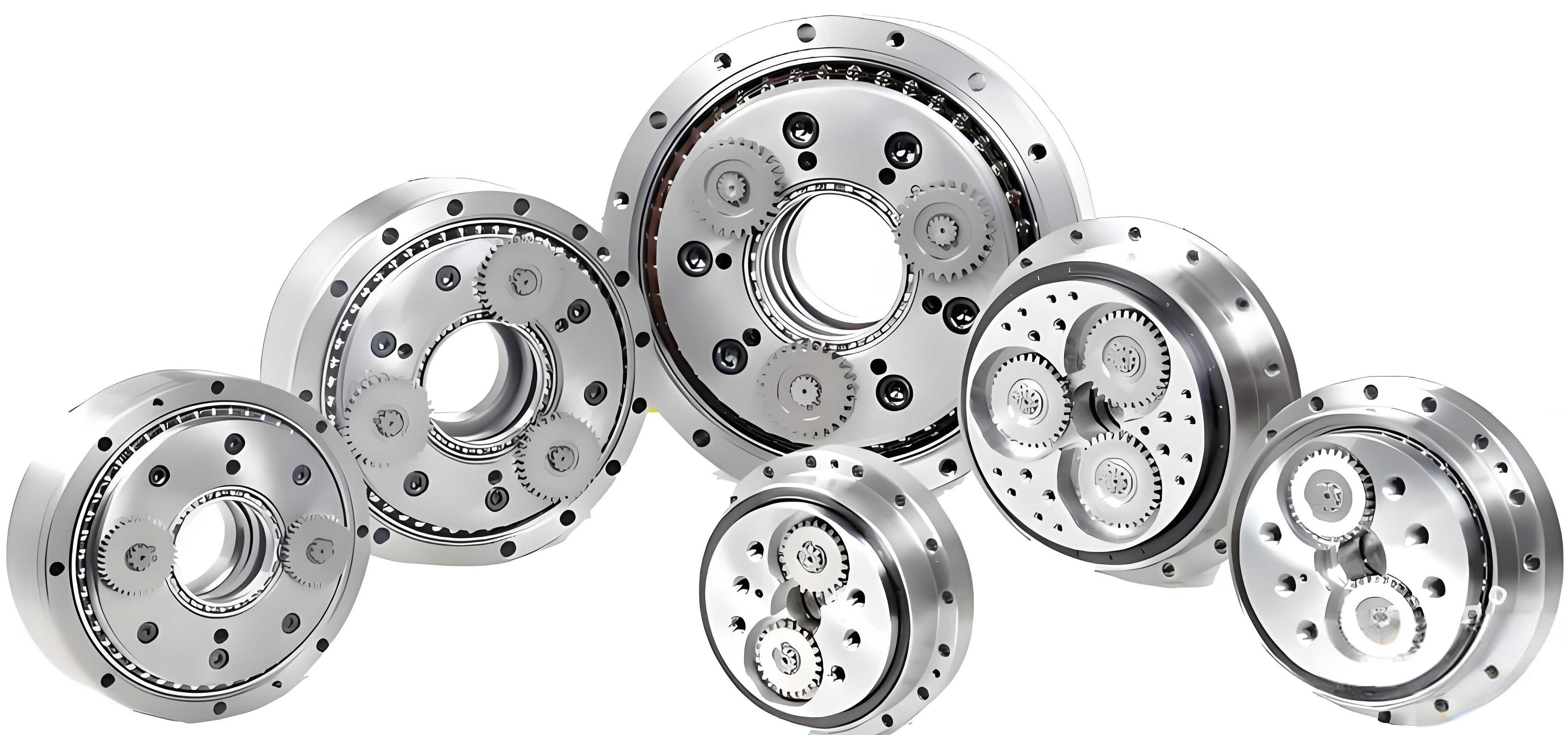
Historical Evolution and Technological Progression
The conceptual and technical lineage of the rotary vector reducer is a narrative of international innovation and specialization. The foundational technology lies in the cycloidal disc principle, first patented in the early 20th century. The significant leap, however, was the integration of this cycloidal stage with a preceding planetary stage, a synthesis that created the modern rotary vector reducer architecture. This development catalyzed its adoption in precision machinery, and ultimately, in industrial robotics.
| Era | Key Development | Primary Actors/Region | Impact |
|---|---|---|---|
| Early-Mid 20th Century | Invention and patenting of the fundamental cycloidal drive principle. | Germany | Laid the theoretical and practical groundwork for single-stage cycloidal speed reducers. |
| Late 20th Century | Innovation of the 2K-V compound transmission, integrating planetary and cycloidal stages to create the RV-type transmission. | Japan | Birth of the modern rotary vector reducer. Achieved superior compactness, higher reduction ratios, and improved torsional stiffness suitable for robotic joints. |
| Late 20th – 21st Century | Refinement, mass production, and establishment of a global supply monopoly for high-performance robotic applications. | Japan (Notably, Nabtesco Corporation) | Set the global standard for performance (backlash < 1 arcmin, high efficiency, durability). Created a significant technological and market barrier to entry. |
| 21st Century (Ongoing) | Globalization of demand and initiation of concerted efforts worldwide to develop domestic rotary vector reducer industries. | South Korea, Europe, China, among others. | Emergence of alternative designs and suppliers, challenging the established monopoly and driving incremental innovations. |
The mathematical foundation of the rotary vector reducer’s superior performance is rooted in the geometry of its cycloidal gear. The standard cycloidal tooth profile, derived from the rolling of a generating circle, can be expressed as:
$$ x = (R_r – R_p)\cos(\theta) + a\cos((1 – \frac{R_r}{R_p})\theta) $$
$$ y = (R_r – R_p)\sin(\theta) – a\sin((1 – \frac{R_r}{R_p})\theta) $$
Where $R_r$ is the radius of the pin wheel, $R_p$ is the radius of the generating (rolling) circle, $a$ is the eccentricity, and $\theta$ is the rolling angle. This profile ensures multiple tooth contacts simultaneously, leading to high load capacity. Advanced designs often employ modified profiles (“offset” or “corner” modifications) to optimize contact stress, lubrication, and reduce transmission error, described by more complex piecewise or polynomial equations.
Contemporary Technological Landscape
Dominant International Paradigm
A select group of corporations, primarily in Japan, have established a de facto global standard for the high-end rotary vector reducer. Their products are characterized by extraordinary consistency, longevity, and precision. The technical specifications for a typical high-performance rotary vector reducer series include:
| Performance Parameter | Typical Benchmark Value | Significance |
|---|---|---|
| Transmission Error (Backlash) | < 1 arcmin (often 0.5-0.8 arcmin) | Directly determines robotic arm positioning and path repeatability accuracy. |
| Torsional Stiffness | Extremely High (e.g., 300-1000 Nm/arcmin range) | Minimizes deflection under load, crucial for dynamic performance and control stability. |
| Transmission Efficiency | ≥ 85% (often 90-94% for certain models) | Impacts energy consumption and heat generation within the robot joint. |
| Rated/Peak Torque | Wide range (from tens to thousands of Nm) | Defines the payload and dynamic capability of the robot. |
| Noise Level | Very Low (< 60 dB typical) | Indicative of superior manufacturing quality, gear meshing, and bearing performance. |
| Life Expectancy | > 20,000 hours (often under rated load) | Reflects exceptional material science, heat treatment, and lubrication design. |
This performance is not accidental but the result of deep, proprietary knowledge spanning several domains: ultra-precise mathematical modeling for tooth profile optimization (including dynamic load tooth modifications), specialized metallurgy and heat treatment processes for core components like the cycloidal disc and crankshaft, and access to ultra-high-precision manufacturing and inspection equipment (e.g., form grinding machines, coordinate measuring machines). The dynamic transmission error $TE(t)$, a critical metric, is a function of multiple manufacturing imperfections:
$$ TE(t) = f(E_{profile}, E_{pitch}, E_{ecc}, E_{bearing}, E_{assembly}, \theta(t), T_{load}(t)) $$
Where $E_{profile}$, $E_{pitch}$, etc., represent errors from tooth profile deviation, pitch deviation, eccentricity, bearing clearance, and assembly, all modulated by the instantaneous position $\theta(t)$ and load torque $T_{load}(t)$. Mastery of minimizing these error terms is the essence of the incumbent’s technological lead.
The Pursuit of Indigenous Capability
Recognizing the strategic vulnerability and economic burden of dependency, significant efforts have been mobilized over the past decade to develop a domestic rotary vector reducer industry. Progress has been made on several fronts, transitioning from pure theoretical research and prototype development to initial small-batch production. Numerous academic institutions and corporate entities have engaged in intensive reverse-engineering, fundamental research, and process development.
The technical focus has been multifaceted: 1) Design & Analysis: Developing sophisticated FEM and multi-body dynamics models to simulate stress, strain, and dynamic response under load. Research on novel tooth profile modifications to improve performance without infringing on existing patents. 2) Materials & Heat Treatment: Experimenting with advanced alloy steels and carburizing/ nitriding processes to achieve the necessary surface hardness and core toughness for the cycloidal gear and pins. 3) Precision Manufacturing: This remains the most formidable challenge. Domestically producing or acquiring the capability to machine components like the cycloidal disc (requiring specialized form-grinding machines) and the crankshaft (requiring high-precision cylindrical and eccentric grinding) to sub-micron tolerances and superlative surface finishes. 4) Assembly & Testing: Developing clean-room assembly protocols and precision measurement systems for backlash, transmission error, efficiency, and lifetime testing.
While functional prototypes and market-available products now exist, a persistent performance gap remains when compared to the industry benchmark. The most significant disparities are often observed not in peak torque or nominal backlash, but in the consistency of performance (e.g., backlash variation across units), longevity under continuous high-load operation, noise and vibration characteristics, and long-term precision retention. This gap highlights that mastering the manufacturing process capability and system integration knowledge is as critical as understanding the design principles.
Systemic Constraint Analysis
The challenges impeding the rapid maturation of a globally competitive rotary vector reducer industry are systemic and interdependent. They extend beyond a simple lack of technical drawings or machine tools.
| Constraint Category | Specific Manifestations | Consequences |
|---|---|---|
| Technological & Industrial Foundation | Gaps in high-performance bearing steel and specialty alloy production; limited domestic supply of ultra-precision form grinders, gear honing machines, and high-end CMMs; underdeveloped niche expertise in specialized heat treatment and surface finishing. | Inconsistent material properties affect fatigue life. Dependence on imported, expensive machinery raises production costs and hinders process optimization. Component quality variability leads to performance inconsistency in the final rotary vector reducer assembly. |
| Innovation Ecosystem & Collaboration | Fragmented efforts between academia (focused on theory/analysis) and industry (focused on immediate production); limited deep, long-term collaboration on fundamental process challenges; “siloed” development within individual companies. | Slows the translation of theoretical research into practical process improvements. Hinders the pooling of resources to solve common, high-cost foundational problems like developing domestic precision grinding equipment. |
| Market Dynamics & Validation | Robot OEMs (Original Equipment Manufacturers) are often risk-averse, preferring the proven reliability of established rotary vector reducer brands for their high-value systems. Lack of extensive, long-duration field validation data for domestic reducers. | Creates a “catch-22”: domestic reducers need volume application to improve and prove reliability, but cannot gain volume application without proven reliability. Slows iterative, real-world feedback crucial for product maturation. |
| Comprehensive Design Philosophy | Historical over-emphasis on functional replication and static performance metrics (e.g., achieving a low nominal backlash). Less focus on holistic dynamic performance, reliability engineering, design-for-manufacturability, and cost-optimization from the outset. | Products may meet spec-sheet requirements but fail in nuanced areas like noise, heat generation, or precision decay over time, making them less attractive to integrators. Higher production cost erodes potential price advantage. |
From a purely technical modeling perspective, the challenge of matching the incumbent’s performance can be framed as an optimization problem with tightly coupled variables. For instance, the overall torsional stiffness $K_{total}$ of a rotary vector reducer is a complex series-parallel combination of the stiffness of its components:
$$ \frac{1}{K_{total}} \approx \frac{1}{K_{gear1}} + \frac{1}{K_{shaft}} + \frac{1}{K_{bearing}} + \frac{1}{K_{cycloid}} + \frac{1}{K_{housing}} $$
Maximizing $K_{total}$ requires not just designing stiff components, but mastering the manufacturing processes that achieve the precise geometries and fits (influencing $K_{bearing}$ and contact conditions) and the material treatments that yield the desired elastic modulus and micro-structure. Similarly, the transmission efficiency $\eta$ is heavily dependent on losses from friction, which are a function of surface finish $R_a$, lubrication film thickness $h$, and load distribution $p(\theta)$:
$$ \eta \approx 1 – \frac{\sum ( \mu(p, h, R_a) \cdot v_{sliding} )}{P_{in}} $$
Achieving the ultra-high efficiency of leading rotary vector reducer brands requires exquisite control over all parameters influencing friction, many of which are determined in the final finishing and assembly stages.
Forward Trajectory and Strategic Imperatives
Bridging the existing gap and establishing a sustainable, innovative rotary vector reducer sector requires a concerted, multi-pronged strategy that moves beyond imitation.
- Foundational Industrial Capacity Building: Prioritize the development of domestic capabilities in critical upstream areas: specialty metallurgy for bearing and gear steels, production of high-precision machine tools (especially grinding and honing), and advanced metrology equipment. This reduces external dependencies and allows for deeper process customization.
- Fostering Integrated Innovation Platforms: Establish and fund long-term, mission-oriented consortiums that bring together material scientists, mechanical designers, manufacturing engineers, and metrologists from universities, research institutes, and companies. The goal should be to co-develop next-generation processes, not just products.
- Paradigm-Shifting Design Innovation: While refining the existing rotary vector reducer architecture is necessary, parallel investment in fundamentally new transmission principles is crucial. Exploring concepts like magnetic gearing, high-ratio harmonic variants with new materials, or novel compound epicyclic-cycloidal layouts could yield competitive advantages and circumvent existing patent thickets.
- Advanced Dynamic Modeling and Digital Twins: Develop high-fidelity, multi-physics digital twins of the rotary vector reducer that integrate nonlinear bearing dynamics, elastohydrodynamic lubrication, thermo-mechanical effects, and microscopic surface interactions. This allows for virtual prototyping and optimization of dynamic performance, noise, and efficiency before physical manufacturing.
- Comprehensive Lifecycle and Reliability Engineering: Institute rigorous design-for-reliability (DFR) and accelerated life testing (ALT) protocols from the outset. Focus on understanding and designing against failure modes like wear, pitting, and lubrication degradation to ensure precision retention over the required service life.
- Creating Application-Specific Solutions: Instead of only targeting the broad industrial robot market dominated by incumbents, identify niche applications (e.g., collaborative robots, specific CNC axes, medical robotics) where performance requirements may differ slightly, allowing domestic rotary vector reducer designs to excel and gain critical validation experience.
- Intelligentization and Condition Monitoring: Integrate sensor technology (e.g., vibration, temperature, torque sensing) directly into the rotary vector reducer design. Develop embedded algorithms for condition-based monitoring, predictive maintenance, and real-time compensation of transmission error, adding value beyond the pure mechanical function.
The path forward for establishing a world-class rotary vector reducer industry is undoubtedly challenging, requiring patience, significant investment, and strategic coordination. It is a quintessential example of a high-precision, high-value mechanical system where excellence is achieved not through a single breakthrough, but through the relentless pursuit of perfection across dozens of interconnected disciplines—from atomic-scale material science to macro-scale system integration. The reward for this endeavor is not merely economic; it is the attainment of a foundational technological sovereignty that underpins the future of advanced manufacturing and automation. The rotary vector reducer, therefore, stands as both a symbol of current technological dependency and a beacon for future industrial capability.