
Cylindrical gears, as quintessential power transmission components, are renowned for their high transmission efficiency, extensive applicability, and superior load-bearing capacity, making them indispensable in critical sectors such as aerospace, automotive manufacturing, and machine tools. The conventional machining of these gears predominantly relies on subtractive processes like milling, hobbing, and shaping. However, with advancing industrial demands and technological progress, the limitations of these methods—including subpar mechanical properties of the final product, significant material wastage, and elevated production costs—have become increasingly apparent.
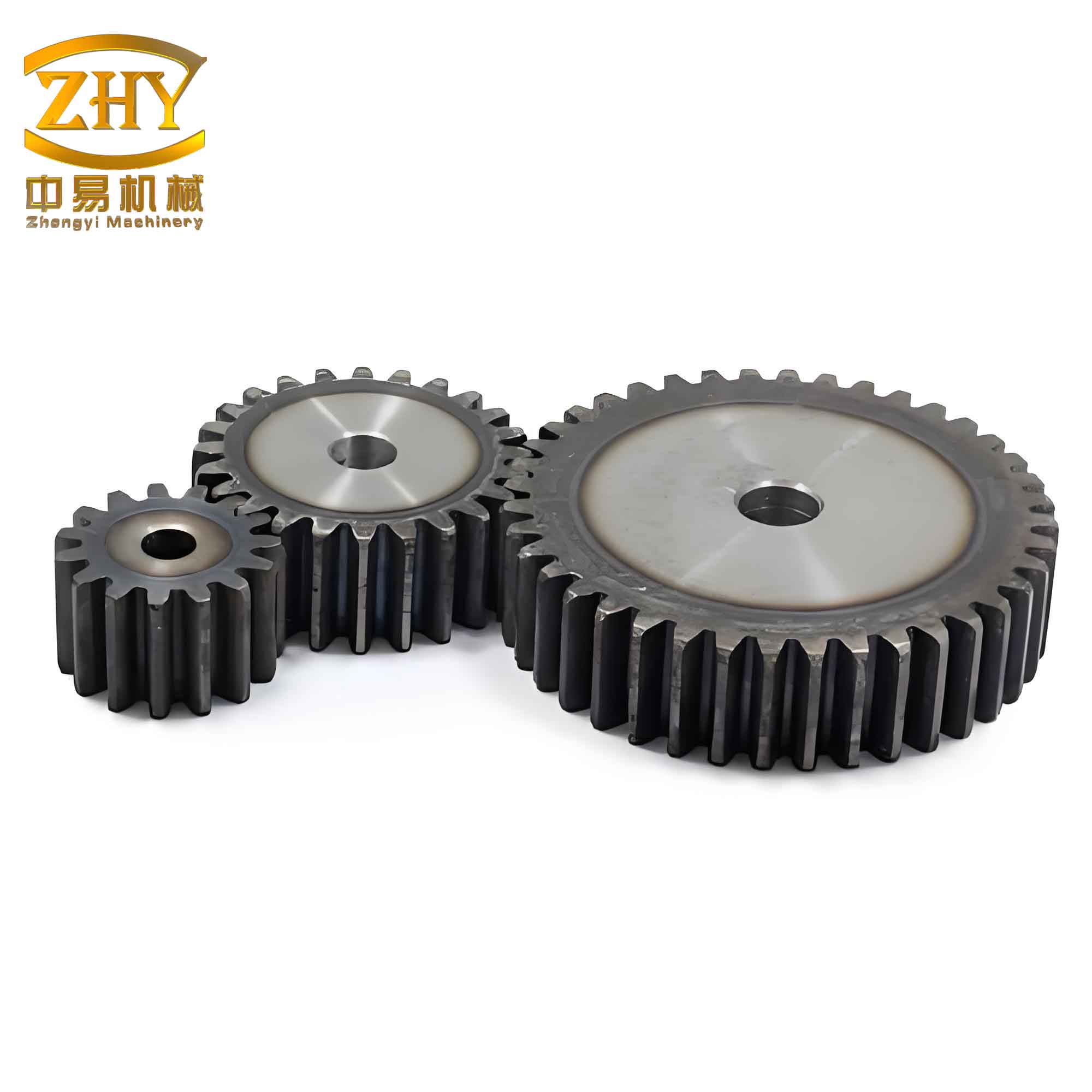
As an advanced near-net-shape forming technology, the cross-rolling process for cylindrical gears offers significant advantages, including high production efficiency, minimal material waste, and excellent surface finish, positioning it as a pivotal future manufacturing method for gears. The forming force during cross-rolling is a critical parameter influenced by material properties, roller geometry, and processing parameters. It has a profound impact on workpiece quality and roller service life. An accurate calculation of this forming force is therefore essential for optimal roller design and equipment selection.
1. Establishment of the Constitutive Model for 40CrNiMo Gear Steel
1.1 Determination of Material Flow Behavior
To characterize the plastic deformation behavior of the workpiece material under processing conditions, isothermal compression tests were conducted on 40CrNiMo alloy steel. The chemical composition of the steel is detailed in Table 1.
| Ni | Cr | Mn | C | Si | Mo | S | P | Cu | Fe |
|---|---|---|---|---|---|---|---|---|---|
| 1.34 | 0.78 | 0.67 | 0.39 | 0.20 | 0.199 | 0.003 | 0.016 | 0.02 | Bal. |
Specimens were compressed at temperatures of 20°C, 80°C, 140°C, and 200°C under strain rates of 0.005 s⁻¹, 0.05 s⁻¹, and 0.5 s⁻¹. The resulting true stress-true strain curves, essential for understanding material behavior during the forming of cylindrical gears, are presented in Figure 1. The curves exhibit the expected trends: flow stress increases with strain rate and decreases with rising temperature.
1.2 Development of a Modified Johnson-Cook Constitutive Model
The Johnson-Cook (J-C) model is widely used to describe material behavior under high strain rates and varying temperatures. The original model is expressed as:
$$ \sigma = (A + B\varepsilon^n) \left(1 + C\ln\dot{\varepsilon}^*\right) \left[1 – \left( \frac{T – T_0}{T_m – T_0} \right)^m \right] $$
Where:
$\sigma$ is the equivalent flow stress,
$\varepsilon$ is the equivalent plastic strain,
$\dot{\varepsilon}^* = \dot{\varepsilon}/\dot{\varepsilon}_0$ is the dimensionless strain rate,
$T$ is the workpiece temperature,
$T_0$ is the reference temperature (20°C),
$T_m$ is the melting temperature,
$A$, $B$, $n$, $C$, $m$ are material constants.
Fitting the experimental data to the original J-C model revealed a deviation, particularly at elevated temperatures, where the model over-predicted the flow stress. To enhance prediction accuracy, a modified Johnson-Cook model was employed. This modified version replaces the power-law hardening term $(A + B\varepsilon^n)$ with a cubic polynomial to better capture the work-hardening behavior of 40CrNiMo steel during the forming of cylindrical gears.
The modified model is given by:
$$ \sigma = (A_1 + B_1\varepsilon + B_2\varepsilon^2 + B_3\varepsilon^3) \left(1 + C_1\ln\dot{\varepsilon}^*\right) \left[1 – \left( \frac{T – T_0}{T_m – T_0} \right)^{m_1} \right] $$
The material constants were determined through regression analysis of the isothermal compression data. The values obtained are listed in Table 2.
| Parameter | $A_1$ (MPa) | $B_1$ (MPa) | $B_2$ (MPa) | $B_3$ (MPa) | $C_1$ | $m_1$ |
|---|---|---|---|---|---|---|
| Value | -221 | 17519 | -64889 | 82894 | 0.017 | 0.7744 |
The final constitutive equation for 40CrNiMo steel, critical for simulating the cross-rolling of cylindrical gears, is:
$$ \sigma = (-221 + 17519\varepsilon – 64889\varepsilon^2 + 82894\varepsilon^3)(1 + 0.017\ln\dot{\varepsilon}^*) \left[1 – \left( \frac{T – 20}{T_m – 20} \right)^{0.7744} \right] $$
The predictive capability of the modified model was validated against experimental data, showing a significantly lower root mean square error (RMSE = 9.575 MPa) compared to the original J-C model, confirming its superior accuracy for the analyzed conditions pertinent to cylindrical gear forming.
2. Theoretical Modeling of Cross-Rolling Force for Cylindrical Gears
2.1 Kinematics and Force Components
The cross-rolling process involves complex three-dimensional material flow. The primary force components acting on the forming tools during the cross-rolling of cylindrical gears are:
– Axial Forming Force ($F_z$): Parallel to the workpiece axis, related to the feed motion.
– Radial Forming Force ($F_\tau$): Directed along the line connecting the centers of the workpiece and the forming roll.
– Tangential Forming Force ($F_t$): Acts in the direction of the roll’s rotational motion, resisting the driving torque.
The process kinematics involve the rotation of the forming roll ($\omega_r$), the rotation of the workpiece ($\omega_g$), and the axial feed of the workpiece ($v_z$).
2.2 Theoretical Model for Tooth Height Evolution
A fundamental challenge in modeling the cross-rolling of cylindrical gears is predicting the growth of the tooth height from the initial blank. The process is governed by the principle of volume constancy; the volume of material displaced by the roll’s penetration must equal the volume of the formed tooth. The tooth profile generation is analogous to a gear shaping process with a variable center distance.
The analysis is divided into two distinct stages based on the depth of roll penetration ($H$):
Stage I: Penetration by Roll Tip and Fillet ($0 \leq H \leq c^* m$).
In this initial stage, only the tip arc and tip fillet of the roll profile contact and penetrate the workpiece blank. The increase in tooth height ($H_1$) is relatively small. The relationship is derived by equating the area displaced by the roll ($S_{BCDG}$) to the area contributing to tooth growth ($S_{AEFB}$), as shown in Figure 2.
$$ S_{BCDG} = \frac{x_C(y_C – y_D) + (x_C + x_B)(y_B – y_C) + x_B(y_G – y_B)}{2} $$
$$ S_{AEFB} \approx \frac{ \left( \sqrt{(x_E – x_A)^2 + (y_E – y_A)^2} + \sqrt{(x_F – x_B)^2 + (y_F – y_B)^2} \right) H_1}{2} $$
The condition $S_{BCDG} = S_{AEFB}$ allows solving for $H_1$ as a function of penetration depth $H_D$.
Stage II: Penetration by Roll Tip, Fillet, and Involute ($c^* m \leq H \leq (h_a^* + c^*)m$).
As penetration deepens, the involute flank of the roll profile actively forms the tooth. The displaced area ($S_{KLMNG}$) and the grown tooth area ($S_{HIJK}$) become more complex, involving involute geometry.
$$ S_{KLMNG} = \frac{x_M(y_M – y_N) + (x_M + x_L)(y_L – y_M) + (x_K + x_L)(y_K – y_L)}{2} $$
$$ S_{HIJK} = S_{\triangle H O_g I} + S_{H O_g K} – S_{\triangle J O_g K} $$
Where the areas are calculated using polar coordinates and involute functions based on the base circle radius ($r_b$) and the instantaneous tooth tip radius ($r_H$). The volume conservation equation $S_{KLMNG} = S_{HIJK}$ yields the relationship between total penetration $H_N$ and tooth height growth $H_H = r_H – r_0$ for this stage.
2.3 Contact Area Model
The instantaneous contact area between the forming roll and the workpiece is dynamic and highly complex. Assuming plane strain conditions at the workpiece mid-plane and neglecting axial material flow, the contact area is calculated by integrating the contact arc length along the axial direction. The “thin-slice” method combined with coordinate transformation of the engaging profiles is used.
For a given roll rotation angle (or equivalently, a specific penetration depth), the line of contact on a transverse slice is determined by finding the interference region between the roll profile and the evolving workpiece profile (calculated in Section 2.2). The contact arc length $l_r$ for one side of the tooth is:
$$ l_r = 2 \int_{x_0}^{x_i} \sqrt{1 + \left( \frac{dy}{dx} \right)^2 } \, dx $$
The total contact area $A_c$ for a single tooth engagement over the workpiece face width $L$ is then:
$$ A_c = \int_{0}^{L} l_r(z) \, dz $$
The calculation is performed separately for Stage I and Stage II, considering the different portions of the roll profile in contact.
2.4 Analytical Model for Average Forming Stress
The slab method (or uniform pressure method) is applied to a representative element within the plastic deformation zone to estimate the average forming stress $\bar{\sigma}$. Assuming plane strain and applying the equilibrium of forces in the radial direction, the differential equation is:
$$ \sigma_r h l – (\sigma_r + d\sigma_r) h l – 2 \tau l \, dr = 0 $$
Where $h$ is the approximate thickness of the deformation zone, $l$ is the axial length element, and $\tau = \mu k$ is the shear stress at the roll-workpiece interface with $\mu$ as the friction factor and $k$ as the shear yield strength ($k = \sigma_s / \sqrt{3}$ for von Mises criterion).
Combining with the yield criterion and integrating from the contact edge ($r_N$) to the deepest penetration point ($r_H$), the average pressure on the contact surface is derived:
$$ \bar{\sigma} = \frac{1}{A_c} \int_{r_N}^{r_H} \left[ -\frac{2\mu \sigma_s}{\sqrt{3} \, h} r + \frac{2\sigma_s}{\sqrt{3}} \left( 1 + \frac{\mu}{h} r_H \right) \right] l \, dr $$
Where $h$ is taken as $\pi m / 2$, representing a characteristic deformation zone thickness related to the module $m$ of the cylindrical gears.
2.5 Theoretical Cross-Rolling Force
The total theoretical forming force $F$ is obtained by multiplying the average forming stress by the total projected contact area. Two engagement scenarios are considered for cylindrical gears:
1. Single-Tooth Engagement Model: Assumes only one roll tooth is actively forming the workpiece at any instant.
2. Double-Tooth Engagement Model: Assumes two roll teeth are in simultaneous contact, which is typical during stable forming phases.
$$ F_{\text{single}} = \bar{\sigma} \cdot (A_{c1} + A_{c2}) $$
$$ F_{\text{double}} = \bar{\sigma} \cdot (A’_{c1} + A’_{c2}) $$
Here, $A_{c1}, A_{c2}$ and $A’_{c1}, A’_{c2}$ represent the contact areas for Stage I and Stage II in the single-tooth and double-tooth models, respectively.
3. Finite Element Analysis and Validation
3.1 Finite Element Model Setup
To validate the theoretical model, a 3D finite element (FE) simulation of the cross-rolling process for cylindrical gears was developed using DEFORM software. The model parameters are summarized in Table 3.
| Component | Property / Setting | Value / Detail |
|---|---|---|
| Workpiece | Material | 40CrNiMo (Modified J-C Model) |
| Dimensions | Ø80.8 mm × 40 mm | |
| Mesh | Tetrahedral, ~100k-136k elements, local refinement | |
| Forming Roll | Property | Rigid Body |
| Profile | Module (m)=1.75 mm, Pressure Angle=20°, Teeth=128 | |
| Process | Temperature | 20°C (Cold Rolling) |
| Friction | Shear Factor, μ = 0.15 | |
| Roll Speed | 1.05 rad/s (Rotation), 2.92 rad/s (Revolution) | |
| Feed Rate | 0.7 mm/s |
Both single-tooth and double-tooth engagement models were simulated to compare with the corresponding theoretical force models.
3.2 Simulation Results and Comparison
The FE simulation reveals the typical stages of cylindrical gear cross-rolling: dividing, forming, and sizing. The material flow and progressive tooth formation are clearly captured. The predicted tooth height growth from the FE model shows good agreement with the theoretical model, especially in the double-tooth model where axial material flow is constrained.
The evolution of the contact area and the forming force over time was extracted from the simulation. The forming force exhibits a characteristic single-peak trend: it increases during initial penetration and forming, reaches a maximum when the contact area is largest, and then decreases during the final sizing phase as the contact area diminishes.
A quantitative comparison between the theoretical model and the FE simulation is presented in Table 4. The maximum forming force from the single-tooth FE model is 255.36 kN, while the theoretical model predicts 258.49 kN, resulting in a relative error of only 1.23%. For the double-tooth model, the FE maximum force is 315.95 kN compared to the theoretical 347.79 kN, a relative error of 10.08%. The higher error in the double-tooth model is attributed to the theoretical assumption of perfect simultaneous two-tooth contact, whereas the FE simulation shows a more staggered engagement pattern in practice.
| Engagement Model | Theoretical Max Force (kN) | FE Simulated Max Force (kN) | Relative Error |
|---|---|---|---|
| Single-Tooth | 258.49 | 255.36 | 1.23% |
| Double-Tooth | 347.79 | 315.95 | 10.08% |
4. Experimental Verification
4.1 Experimental Setup and Procedure
Cross-rolling experiments were conducted on a dedicated gear rolling machine to validate the models. The workpiece material was 40CrNiMo steel with an initial diameter of Ø80.8 mm. The forming roll had the same specifications as in the FE model (m=1.75 mm, α=20°, z=128). The process parameters (roll speed, feed rate) were set to match the simulation conditions. A load cell integrated into the machine recorded the axial forming force during the process. The formed cylindrical gears were subsequently measured using a coordinate measuring machine (CMM) to determine the final tooth profile and height.
4.2 Experimental Results and Discussion
The experimentally measured tooth height growth versus roll penetration depth aligned closely with both the theoretical and FE-predicted trends. The final formed cylindrical gears exhibited good geometric accuracy and surface quality, confirming the feasibility of the process.
The recorded experimental forming force curve also showed the characteristic single-peak shape. The maximum experimental forming force was measured at 331.25 kN. This value lies between the theoretical prediction (347.79 kN) and the FE simulation result (315.95 kN) for the double-tooth model. The comparison is summarized in Table 5.
| Source | Maximum Forming Force (kN) | Notes |
|---|---|---|
| Theoretical Model (Double-Tooth) | 347.79 | Assumes ideal dual contact |
| Finite Element Simulation | 315.95 | Simulates actual staggered contact |
| Experimental Measurement | 331.25 | Includes real-world friction and material effects |
The relative error between the theoretical maximum force and the experimental maximum force is 4.48%. This level of accuracy demonstrates that the developed theoretical model, incorporating the modified constitutive equation, the tooth growth model, and the contact area analysis, provides a reliable and practical method for predicting the forming force in the cross-rolling process of cylindrical gears. This model is sufficiently accurate for guiding industrial process design, roll load estimation, and equipment selection for manufacturing cylindrical gears.
5. Conclusions
This study presents a comprehensive theoretical and experimental analysis of the forming force in the cross-rolling process of cylindrical gears. The key conclusions are as follows:
- The high-temperature deformation behavior of 40CrNiMo gear steel was characterized, and a modified Johnson-Cook constitutive model with a cubic hardening term was established. This model provides accurate flow stress prediction essential for simulating the cold/ warm forming of cylindrical gears.
- A theoretical model for tooth height evolution during cross-rolling was developed based on the principle of volume constancy and gear generation theory. This model successfully predicts the growth of the gear tooth from the initial blank as a function of roll penetration depth.
- An analytical model for the cross-rolling force was derived. It integrates the contact area calculation (via the thin-slice and integration method) with an average stress solution from the slab method, considering both single-tooth and double-tooth engagement scenarios for cylindrical gears.
- Finite element simulations validated the theoretical models. The maximum forming force from the single-tooth theoretical model showed excellent agreement with the simulation (1.23% error). The double-tooth model showed a larger but acceptable error (10.08%), primarily due to the idealized contact assumption.
- Experimental cross-rolling tests confirmed the model’s practical validity. The measured maximum forming force differed from the theoretical prediction by only 4.48%, proving the model’s effectiveness for industrial application in predicting loads for the forming of cylindrical gears.
The developed theoretical framework provides a solid foundation for optimizing the cross-rolling process parameters, designing robust forming rolls, and selecting appropriate machinery for the efficient and precise manufacturing of high-performance cylindrical gears.