
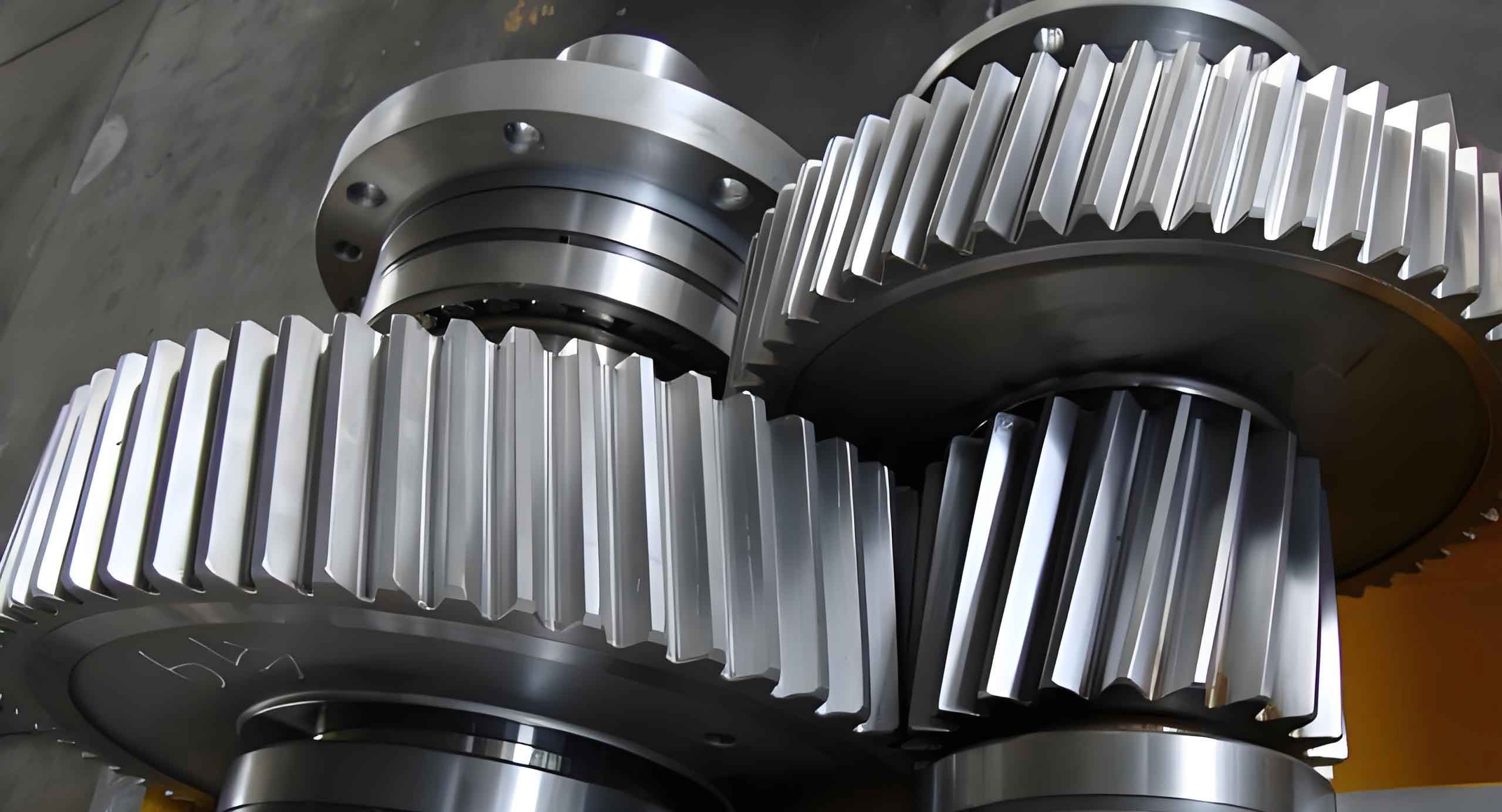
In the realm of mechanical power transmission, the helical gear stands as a cornerstone component due to its smooth operation, high load capacity, and reduced noise. Among various designs, the asymmetrical involute helical gear has garnered significant attention for its potential to enhance performance metrics like strength and longevity by employing different pressure angles on the drive and coast sides of the tooth profile. However, as operational speeds and transmitted loads escalate in modern machinery, thermal effects become paramount. The friction-generated heat during meshing can lead to non-uniform temperature fields, inducing thermal elastic deformation, altering load distribution, generating thermal stresses, and potentially causing failures such as scuffing or loss of backlash. Therefore, a comprehensive understanding of the thermal behavior and its interplay with mechanical stresses is crucial for optimizing gear design. This article presents a detailed investigation into the thermal and thermo-mechanical performance of an asymmetrical involute helical gear pair, employing analytical calculations and finite element analysis to model friction heat generation, steady-state temperature distribution, and the subsequent thermal-structural coupling effects.
The core of the thermal analysis lies in accurately determining the heat flux entering the gear teeth from friction. For a helical gear pair, the contact occurs along lines that move across the tooth face. The total length of these contact lines varies continuously throughout the meshing cycle due to the overlapping nature of helical gear engagement. We calculate this by projecting the tooth surface onto the plane of action. The plane of action is defined with the y-axis along the common tangent to the base circles and the x-axis along the gear axial direction. Any instantaneous contact line Lc in this plane is oriented at the base helix angle $\beta_b$. The length of each line segment between the boundaries of the gear face width b is computed. By summing the lengths of all simultaneous contact lines, we obtain the total contact length for any given meshing position. For the analyzed asymmetrical helical gear, the variation of total contact length over the mesh cycle is depicted conceptually, showing a periodic pattern aligned with the transverse contact ratio and overlap ratio.
The next critical parameter is the average Hertzian contact pressure along these lines. According to classical theory, for two cylindrical surfaces in line contact, the average pressure $\bar{P}$ is given by:
$$\bar{P} = \frac{\pi}{4} \sqrt{ \frac{ F_{ca} }{L} \cdot \frac{ \frac{1}{R_1} \pm \frac{1}{R_2} }{ \pi \left( \frac{1-\mu_1^2}{E_1} + \frac{1-\mu_2^2}{E_2} \right) } }$$
where $F_{ca}$ is the normal load per unit face width acting perpendicular to the contact line, $R_1$ and $R_2$ are the radii of curvature of the pinion and gear tooth profiles at the contact point, $L$ is the instantaneous total contact length, and $E$ and $\mu$ are the Young’s modulus and Poisson’s ratio, respectively. The sign depends on whether the contacting surfaces are convex or concave. For the asymmetrical helical gear, the pressure angle on the drive side (e.g., 35°) differs from that on the coast side (e.g., 20°), leading to different curvature radii and thus a distinct pressure distribution compared to a standard symmetrical helical gear. The pressure is highest near the region where the curvature is smallest, typically towards the root and tip zones, and lower around the pitch line.
Frictional heat generation is directly proportional to the contact pressure, the relative sliding velocity between the mating tooth surfaces, and the coefficient of friction. In a gear mesh, the sliding velocity is not constant. The tangential velocities of the pinion and gear at the contact point, $V_1$ and $V_2$, can be expressed using a dimensionless parameter $\Gamma$ which represents the position along the line of action relative to the pitch point ($\Gamma=0$). For a pinion rotating at $n_1$ rpm:
$$V_1 = \frac{\pi n_1 |1 – \Gamma| R_{b1} \tan\alpha_t}{30 \cos\beta_b}, \quad V_2 = \frac{\pi n_1 |\Gamma + u| R_{b1} \tan\alpha_t}{30 u \cos\beta_b}$$
where $u$ is the gear ratio, $R_{b1}$ is the pinion base radius, and $\alpha_t$ is the transverse pressure angle. The relative sliding velocity is $V_c = |V_1 – V_2|$. It is zero at the pitch point and increases towards the tip and root. The heat flux generated per unit area, $q$, is $q = \eta f \bar{P} V_c$, where $\eta$ is the fraction of frictional work converted to heat (typically ~0.95-1.0), and $f$ is the friction coefficient. This heat is partitioned between the two contacting bodies. The heat partition coefficient $\kappa$, determining the fraction entering the pinion, is derived from the thermal effusivity of the materials:
$$\kappa = \frac{\sqrt{\lambda_1 \rho_1 c_1 V_1}}{\sqrt{\lambda_1 \rho_1 c_1 V_1} + \sqrt{\lambda_2 \rho_2 c_2 V_2}}$$
where $\lambda$, $\rho$, and $c$ are thermal conductivity, density, and specific heat capacity, respectively. Consequently, the heat fluxes into the pinion and gear surfaces are $q_{1c} = \kappa \eta f \bar{P} V_c$ and $q_{2c} = (1-\kappa) \eta f \bar{P} V_c$. Since each tooth on a helical gear enters and exits mesh multiple times per revolution, the average heat flux per tooth surface area per revolution is calculated by integrating these instantaneous fluxes over the path of contact. The resulting distribution of heat flux on the tooth surface of an asymmetrical helical gear is highly non-uniform, with peaks in the high-sliding regions near the tooth tips and roots, and a null at the pitch line. A comparison of key parameters between the analyzed asymmetrical and a baseline symmetrical helical gear is summarized in Table 1.
| Parameter | Asymmetrical Helical Gear | Symmetrical Helical Gear (Baseline) |
|---|---|---|
| Normal Module, $m_n$ (mm) | 5 | 5 |
| Number of Teeth ($Z_1$ / $Z_2$) | 54 / 87 | 54 / 87 |
| Drive-side / Coast-side Normal Pressure Angle, $\alpha_n$ (°) | 35 / 20 | 20 / 20 |
| Helix Angle, $\beta$ (°) | 21.2 | 21.2 |
| Face Width, $b$ (mm) | 60 | 60 |
| Input Power, $P$ (kW) | 6200 | 6200 |
| Input Speed, $n_1$ (rpm) | 8600 | 8600 |
| Material (Steel) Young’s Modulus, $E$ (GPa) | 206 | 206 |
| Material Poisson’s Ratio, $\mu$ | 0.3 | 0.3 |
| Thermal Conductivity, $\lambda$ (W/m·K) | Approx. 45 | Approx. 45 |
| Density, $\rho$ (kg/m³) | 7850 | 7850 |
| Specific Heat, $c$ (J/kg·K) | 460 | 460 |
To solve for the steady-state temperature field, boundary conditions describing heat dissipation must be established. For a rotating helical gear, convective cooling occurs on all exposed surfaces: the tooth flanks, tips, ends, and the bore. The convective heat transfer coefficient $h$ varies significantly depending on the surface geometry, local fluid (air/oil mist) velocity, and properties. For the gear end faces, which rotate like a disk, the flow regime can be turbulent. The coefficient is often derived from empirical correlations for rotating disks. Considering a mixture of oil and air, an effective fluid property set is used. The local Nusselt number $Nu_r$ for a rotating disk at a radius $r$ is correlated with the local Reynolds number $Re_r = \omega r^2 / \nu_{eff}$ and Prandtl number $Pr_{eff}$:
$$Nu_r = \frac{h_t r}{\lambda_{eff}} = C Re_r^m Pr_{eff}^{n}$$
where $C$, $m$, $n$ are constants (e.g., for turbulent flow, $C \approx 0.0197$, $m \approx 0.8$, $n \approx 0.6$), $\omega$ is angular velocity, and $\nu_{eff}$, $\lambda_{eff}$, $Pr_{eff}$ are effective kinematic viscosity, thermal conductivity, and Prandtl number of the oil-air mixture. This yields a convection coefficient that increases with radius: $h_t \propto r^{0.6}$. For the tooth flanks and tips, the geometry is more complex. A simplified approach uses an average coefficient based on the gear pitch line velocity and lubricant properties. A common correlation for gear teeth sprayed with oil is:
$$h_s = 0.228 Re^{0.731} Pr^{0.333} \frac{\lambda_o}{d}$$
where $Re$ is based on the pitch diameter $d$ and pitch line velocity, $Pr$ is the lubricant Prandtl number, and $\lambda_o$ is the lubricant conductivity. The oil bath or spray temperature, $T_{oil}$, serves as the far-field coolant temperature. For this analysis, $T_{oil}$ is taken as 60°C.
With the heat generation and dissipation models defined, a three-dimensional finite element model (FEM) of a helical gear sector (representing periodic symmetry) is constructed for thermal analysis. Using ANSYS Parametric Design Language (APDL), the precise tooth geometry of the asymmetrical involute helical gear is generated from its basic parameters. The solid model is meshed with SOLID70 thermal solid elements. The calculated spatially-varying heat flux $q(x,y)$ is applied as a surface load on the active tooth flank elements. Convective boundary conditions with the calculated coefficients $h_t$ and $h_s$ are applied to all external surfaces using SURF152 elements. The steady-state thermal analysis solves the heat conduction equation:
$$\nabla \cdot (\lambda \nabla T) + \dot{q}_{gen} = 0$$
with the applied boundary conditions $-\lambda \frac{\partial T}{\partial n} = h (T – T_{oil})$ on convective surfaces and $q = q_{applied}$ on the contact surfaces. The solution yields the temperature distribution throughout the helical gear body.
The results for the asymmetrical helical gear pinion indicate a significant temperature gradient from the tooth surface to the core. The maximum temperature occurs not at the very edge but slightly inward on the tooth flank, around the mid-face width region closer to the tooth tip, where the heat flux is high and the conductive path to the cooler gear body is longer. The predicted maximum tooth body temperature for the asymmetrical helical gear is notably lower—by approximately 18%—than that of an equivalent symmetrical helical gear operating under identical conditions. This reduction is attributed to the altered load distribution and pressure angles of the asymmetrical design, which likely reduces the peak contact pressures and modifies the sliding velocity profile, thereby lowering the peak frictional heat generation. This finding is critical as the maximum bulk temperature is a primary factor in assessing scuffing resistance; a lower operating temperature directly enhances the anti-scuffing capacity of the helical gear tooth surface.
The obtained steady-state temperature field is not merely an output but a crucial input for assessing mechanical integrity. Temperature gradients induce thermal strains, which when constrained, lead to thermal stresses and alter the gear’s geometry, thereby affecting the contact pattern and load distribution. This necessitates a coupled thermal-structural analysis. In this work, an indirect sequential coupling method is employed. The nodal temperatures from the steady-state thermal analysis are imported as a body load into a structural model. The finite element model is switched to structural elements (e.g., SOLID185). Boundary conditions simulating the mounting are applied: the gear bore is constrained radially and axially, while the pinion bore is constrained radially, axially, and in rotation except for the driven rotation about its axis. A torque equivalent to the input power is applied to the pinion’s hub. A surface-to-surface contact pair is defined between the mating tooth flanks of the pinion and gear sectors to model the load sharing and contact stresses. The structural analysis solves for deformations and stresses under the combined action of mechanical loads and thermal expansion.
The results reveal a profound impact of the thermal field. The total elastic deformation of the helical gear teeth, when thermal effects are included, is substantially larger—by about 86%—compared to a purely mechanical analysis that neglects temperature. This dramatic increase underscores that thermal expansion is the dominant contributor to tooth deflection under high-speed, high-load conditions. The contact stress pattern is also significantly altered. The maximum contact pressure on the tooth surface increases by approximately 16% in the thermo-mechanical case relative to the isothermal mechanical analysis. This is because the non-uniform temperature rise causes the tooth to expand more in the hot regions (the flank surfaces), effectively creating a “bulging” or crowning effect. This thermal crown reduces the nominal contact area and can cause edge loading, leading to higher localized stresses. Furthermore, the effective length of the contact lines under load decreases due to this thermal distortion, shifting the load distribution across the face width. These effects are summarized in Table 2, which contrasts key outcomes from the mechanical and coupled analyses for the asymmetrical helical gear.
| Metric | Pure Mechanical Analysis (Isothermal) | Coupled Thermo-Mechanical Analysis | Relative Change |
|---|---|---|---|
| Maximum Tooth Bulk Temperature (°C) | Not Applicable (Assumed Uniform) | T_max (e.g., ~110°C for asym.) | N/A |
| Maximum Total Deformation (µm) | δ_mech | δ_thermomech | Increase ~86% |
| Maximum Contact Pressure (MPa) | σ_c,mech | σ_c,thermomech | Increase ~16% |
| Effective Loaded Contact Ratio | Based on geometric design | Reduced due to thermal crowning | Decreased |
| Peak Stress Location | Near pitch line/root | Shifted towards edges/tip-root | Altered |
The implications of these findings are substantial for the design of high-performance helical gear drives. First, the demonstrated thermal advantage of the asymmetrical tooth profile confirms its potential for applications where thermal loading is a limiting factor, such as in aerospace transmissions or high-speed compressors. The lower operating temperature directly translates to a higher safety margin against scuffing and micropitting. Second, the significant thermal deformation and the associated increase in contact stress highlight that traditional iso-thermal design and rating standards (like AGMA or ISO) may be non-conservative for such demanding applications. A coupled analysis is essential for accurate life prediction. This also points to the necessity of incorporating intentional geometric modifications (tip and root relief, lead crowning) not just to compensate for manufacturing errors and mechanical deflections, but specifically to counteract the predictable thermal deformations. The optimal tooth modification for a helical gear under high load and speed would be a “thermo-mechanical compensation profile” that ensures a uniform contact pressure under real operating temperatures.
The modeling approach itself, while powerful, involves several assumptions that warrant discussion. The friction coefficient was treated as a constant average value, though in reality it depends on lubrication regime, surface roughness, temperature, and sliding speed. A more advanced model could implement a variable friction coefficient. The heat partition coefficient $\kappa$ assumes semi-infinite bodies and steady-state heat conduction at the flash temperature scale; for very high-speed meshing, transient effects might be relevant. The convective boundary conditions, especially for the complex tooth spaces, are approximations. More accurate results could be obtained using computational fluid dynamics (CFD) to simulate the oil-air flow and heat transfer around the rotating helical gear. Furthermore, the analysis presented is a steady-state “hot operating” condition. A transient thermal analysis from cold start to equilibrium would provide insights into thermal shock and transient stresses. Despite these simplifications, the model captures the primary physical phenomena and provides valuable comparative insights between symmetrical and asymmetrical helical gear designs.
In conclusion, this detailed analysis underscores the critical importance of thermal effects in the design and analysis of modern high-performance helical gears. We have demonstrated through analytical modeling and finite element simulation that an asymmetrical involute helical gear design offers a significant thermal advantage over a conventional symmetrical design, achieving a lower maximum bulk temperature under identical operating conditions. This thermal benefit directly enhances the helical gear’s resistance to surface failure modes like scuffing. However, the non-uniform temperature field induces substantial thermal elastic deformation, which alters the contact pattern and increases the maximum contact pressure compared to an isothermal analysis. This thermomechanical coupling effect must be rigorously accounted for to ensure accurate stress prediction and reliable gear design. Future work should focus on refining the thermal boundary conditions, exploring transient effects, and integrating this coupled analysis into an automated optimization loop for helical gear macro- and micro-geometry. The overarching goal is to harness the full potential of advanced helical gear designs, such as the asymmetrical profile, to build more compact, efficient, and durable power transmission systems for the next generation of machinery.
The formulas and tables presented throughout this discussion serve to encapsulate the key relationships and quantitative findings. The fundamental heat generation for a helical gear contact can be summarized as:
$$q_{gen} = \eta f \bar{P} V_c, \quad \text{with } \bar{P} \text{ from Hertz and } V_c = |V_1 – V_2|.$$
The thermal deflection that critically influences performance is driven by the linear thermal strain $\epsilon_{th} = \alpha \Delta T$, where $\alpha$ is the coefficient of thermal expansion. The interplay between this strain and the mechanical constraints generates the coupled response. For any engineer designing a helical gear system for demanding duty cycles, moving beyond the standard mechanical calculations to include a coupled thermal-structural analysis, as outlined here, is not just an academic exercise but a practical necessity for achieving robustness and reliability.