
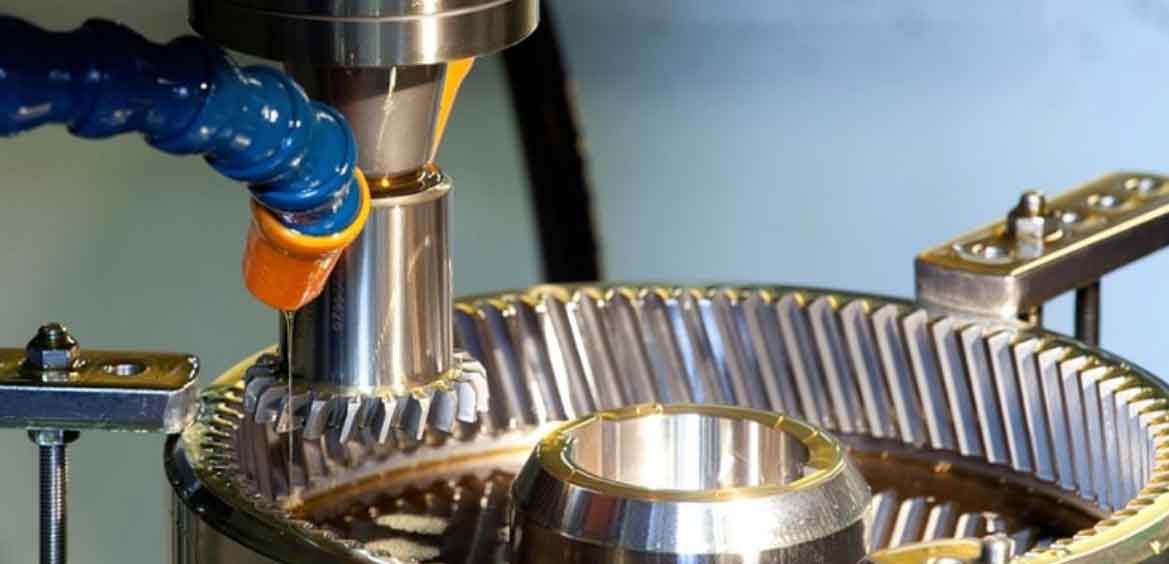
The process of gear shaping stands as a fundamental and versatile method for generating both internal and external spur and helical gears, particularly those with complex geometries like multi-diameter gears with undercuts. At the heart of this process lies the gear shaping cutter, a sophisticated cutting tool whose performance and accuracy directly determine the quality of the manufactured gears. Unlike a standard gear, a straight-tooth gear shaping cutter possesses a uniquely complex three-dimensional geometry. It is essentially a continuously modified gear from its large end to its small end, coupled with side relief surfaces that form a specific type of involute helicoid. This intricate structure presents a significant challenge for direct three-dimensional modeling using standard commands available in conventional CAD software. The absence of robust modeling techniques hinders progress in critical areas such as cutter design optimization, finite element analysis for stress and wear, precision error analysis, and the verification of grinding processes. This article, therefore, presents a comprehensive methodology for the three-dimensional digital modeling of straight-tooth gear shaping cutters, followed by the development and simulation of a three-dimensional generative grinding model, specifically tailored for the gear shaping tool manufacturing process.
To effectively model a gear shaping cutter, a thorough analysis of its structure is imperative. A typical straight-tooth gear shaping cutter tooth comprises four surfaces and three cutting edges: one front face (rake face), two side relief faces, one top relief face, two side cutting edges, and one top cutting edge. The accuracy of the gear shaping process is predominantly governed by the side cutting edges, which are formed by the intersection of the side relief faces and the front rake face. To mathematically describe this geometry, establishing a precise coordinate system is the first step. We define an inertial coordinate system $O_0(x_0, y_0, z_0)$ fixed in space, with its origin at the center of the cutter’s large end. The $X_0$-axis aligns with the cutter’s axis, pointing from the large end to the small end. A second coordinate system, $O_1(x_1, y_1, z_1)$, is attached to the cutter and is obtained by rotating the inertial system about the $X_0$-axis by an angle $\theta$.
The top relief angle $\alpha_e$ and the rake angle $\gamma$ are measured in a plane containing the cutter axis. Crucially, from the large end to the small end, the tooth profile undergoes continuous modification. Each cross-section perpendicular to the axis can be viewed as the profile of a spur gear with a progressively varying addendum, dedendum, and profile shift coefficient. This is the essence of its “continuously modified” nature in gear shaping tools. To generate the required side relief angle $\alpha_\varepsilon$, the side relief face is not a simple cylindrical surface but is formed by subjecting an involute curve to a helical motion, creating a special involute helicoid. The spiral angle $\beta$ and the side relief angle $\alpha_\varepsilon$ are derived from the tool geometry as follows:
$$ \beta = \arctan \left( \frac{r_x}{r_0} \tan \alpha_0 \tan \alpha_e \right) $$
$$ \alpha_\varepsilon = \arctan ( \sin \alpha_0 \tan \alpha_e ) $$
where $r_0$ is the pitch radius, $r_x$ is any radius, and $\alpha_0$ is the standard pressure angle. The modification (profile shift) coefficient $\xi_0$ at any axial section located a distance $b_x$ from the large end is given by:
$$ \xi_0 = -\frac{b_x}{m} \tan \alpha_e + \xi_b $$
where $m$ is the module and $\xi_b$ is the modification coefficient at the large end.
Mathematical Foundation for the Tooth Surface
The core challenge in modeling the gear shaping cutter lies in accurately defining its side relief surface. This surface has two key characteristics: (1) the range of the involute parameter changes at each cross-section due to the continuously varying addendum and dedendum circles, and (2) the base circle and the involute’s angular offset (denoted as $\delta_0$) vary at each section due to the continuous profile shift. Therefore, a standard helicoid generation from a fixed involute is insufficient. We parameterize the surface using the involute roll angle $u$ and the axial coordinate $b_x$.
The parametric equations for the left and right side relief faces in the cutter coordinate system $O_1$ are:
$$
\begin{aligned}
x_1 &= b_x \\
y_1 &= r_b \cos(u + \delta_0) + r_b u \sin(u + \delta_0) \\
z_1 &= \pm \left[ r_b \sin(u + \delta_0) – r_b u \cos(u + \delta_0) \right]
\end{aligned}
$$
where $r_b$ is the base radius. The ‘+’ sign corresponds to the left flank and the ‘-‘ sign to the right flank. The parameter $\delta_0$, which represents the angular offset of the involute’s starting point due to profile shift and standard tooth thickness, is calculated for each section as:
$$ \delta_0 = \frac{\pi m / 4 – \xi_0 m \tan \alpha_0}{r_0} – (\tan \alpha_0 – \alpha_0) $$
The critical aspect is defining the precise limits for the parameter $u$ at every axial station $b_x$. These limits are determined by the pressure angles at the local addendum and dedendum circles:
$$
\begin{aligned}
r_{ax} &= r_a – b_x \tan \alpha_e \\
r_{fx} &= r_f – b_x \tan \alpha_e \\
\alpha_{ax} &= \arccos\left( \frac{r_b}{r_{ax}} \right) \\
\alpha_{fx} &= \arccos\left( \frac{r_b}{r_{fx}} \right) \\
u &\in \left[ \tan \alpha_{fx},\ \tan \alpha_{ax} \right] \\
b_x &\in \left[ 0,\ b_0 \right]
\end{aligned}
$$
where $r_a$ and $r_f$ are the addendum and dedendum radii at the large end, and $b_0$ is the total cutter width. This formulation provides a complete and accurate description of the complex side relief surface inherent to gear shaping cutters.
To complete the tooth groove model, equations for the top land, bottom land, root fillet, and tip chamfer are also derived. The top land (at the modified addendum radius $r_{ax}$) and bottom land (at the modified dedendum radius $r_{fx}$) are simple cylindrical segments:
$$
\begin{aligned}
\text{Top:} & \quad \begin{cases} x_{1a} = b_x \\ y_{1a} = r_{ax} \cos t_a \\ z_{1a} = r_{ax} \sin t_a \end{cases} \\
\text{Bottom:} & \quad \begin{cases} x_{1f} = b_x \\ y_{1f} = r_{fx} \cos t_f \\ z_{1f} = r_{fx} \sin t_f \end{cases}
\end{aligned}
$$
with their angular parameters $t_a$ and $t_f$ defined within limits based on $\delta_0$ and the involute functions at the respective circles.
Implementation of 3D Digital Modeling
With the mathematical model established, the next step is its implementation to generate a watertight 3D CAD model suitable for gear shaping cutter analysis. The workflow involves computational geometry followed by CAD solid modeling.
A dedicated algorithm is implemented in MATLAB. The core steps are:
- Define the basic parameters of the gear shaping cutter (module, number of teeth, pressure angle, relief angles, width, etc.).
- Discretize the axial direction ($b_x$) and the involute parameter ($u$) into a grid of points. A parameter $a$ defines the grid resolution, where a higher $a$ yields higher model accuracy.
- For each discrete axial section, calculate the local profile shift $\xi_0$, the angular offset $\delta_0$, and the parameter limits for $u$.
- Use the parametric equations to compute the $(x_1, y_1, z_1)$ coordinates for points on the side flanks, top land, and bottom land for a single tooth space.
- Transform these points from the cutter coordinate system $O_1$ to the inertial system $O_0$ by applying a rotation matrix for each tooth index $ii$: $ \theta = ii \cdot 2\pi / z_0 $.
- Output the coordinate points for each axial section into a file format readable by CAD software (e.g., SLDCRV for SolidWorks).
The following table summarizes key parameters for an example gear shaping cutter used to validate the modeling approach.
| Parameter | Symbol | Value |
|---|---|---|
| Module | $m$ | 4.0 mm |
| Number of Teeth | $z_0$ | 31 |
| Pressure Angle | $\alpha_0$ | 20° |
| Addendum Diameter (Large End) | $d_a$ | 132.179 mm |
| Dedendum Diameter (Large End) | $d_f$ | 113.5 mm |
| Base Circle Diameter | $d_b$ | 110.273 mm |
| Tooth Width | $b_0$ | 30.0 mm |
| Rake Angle | $\gamma$ | 5.0° |
| Top Relief Angle | $\alpha_e$ | 6.0° |
The computed point clouds, representing cross-sectional curves of the tooth space, are imported into SolidWorks. Using the “Curve Through XYZ Points” feature, each set of points is converted into a 3D sketch curve. Subsequently, the powerful “Loft” surface command is used to create a solid by lofting through these guiding curves along the axial direction. The result is a precise, feature-based 3D digital model of the complete gear shaping cutter. To validate the geometric accuracy of this digital model, the coordinate data of a single tooth groove section was exported and measured on a high-precision gear measuring center (Klingelnberg P26). The comparison between the model and a master cutter showed a total profile form error within an acceptable range, confirming the fidelity of the digital modeling method for gear shaping cutter design and analysis.
3D Modeling of the Generative Grinding Process
The manufacturing of precision gear shaping cutters typically involves a generative grinding process on a multi-axis CNC tool grinder. Simulating this process in 3D is invaluable for validating grinding wheel paths, avoiding collisions, and studying the effects of machining parameters. We now present a method to create a 3D model that simulates the material removal during the generative grinding of a gear shaping cutter.
The grinding process on a 5-axis machine involves two primary coordinated motions: the generating (indexing) motion and the relief (traverse) grinding motion. The generating motion simulates the meshing between the grinding wheel (simplified as a rack with a profile angle $\alpha_s$) and the gear shaping cutter workpiece. It is achieved by synchronizing the rotation of the cutter (A-axis) with the tangential movement of the wheel (X-axis). Their relationship is derived from the rack-generation principle:
$$ \Delta x_m = \int_{0}^{\Delta A_\phi} r_b \cos \alpha_s \, d\theta $$
where $\Delta x_m$ is the X-axis displacement step and $\Delta A_\phi$ is the A-axis rotation step.
The relief grinding motion creates the helical relief surface and is performed by coordinating the radial (Y-axis) and axial (Z-axis) feed of the wheel. Their relationship is governed by the top relief angle:
$$ \frac{\Delta y_m}{\Delta z_m} = \tan \alpha_e $$
The complete grinding path for one tooth flank involves a series of positions: rapid approach, radial infeed to depth, synchronized relief and generating motion along the tooth length, and finally retraction. This cycle is repeated for each tooth flank.
To model this process, we use SpaceClaim and its scripting capability. The workflow is as follows:
- A simplified cutter blank is modeled as a truncated cone, with a smaller cone subtracted from the large end to create the basic rake face geometry.
- The grinding wheel is modeled as a single-tooth rack with a relief angle matching the cutter’s $\alpha_e$.
- A script is written to automate the grinding simulation. The script inputs key grinding parameters, including the starting engagement points for the left and right flanks and the total generating rotation $\alpha_z$ required to fully form the tooth profile.
- Inside a loop, the script iteratively moves the grinding wheel assembly according to the calculated $\Delta x_m$ and simultaneously rotates the cutter blank by $\Delta A_\phi$. After each small step, a Boolean subtraction operation is performed, simulating the material removal by the wheel.
- The loop continues until the total generating angle $\alpha_z$ is completed, resulting in a solid model that accurately represents the tooth groove ground by the simulated process.
| Parameter | Value |
|---|---|
| Starting Cutter Rotation for Right Flank | -11.678° |
| Starting Wheel X-Position for Right Flank | -11.238 mm |
| Starting Cutter Rotation for Left Flank | 12.229° |
| Starting Wheel X-Position for Left Flank | 11.768 mm |
| Total Generating Rotation per Flank ($\alpha_z$) | 23.907° |
| Generating Step Angle ($\Delta A_\phi$) | 0.451° |
Executing the script with the parameters from Table 2 yields a fully realized 3D model of a gear shaping cutter tooth space as if it were produced by the generative grinding process. The geometric accuracy of this generative grinding model was also verified using the same coordinate measurement technique. The measured profile error was found to be within a tight tolerance band, demonstrating that the simulated grinding kinematics correctly produce the intended gear shaping cutter geometry. This validates the model’s utility for process planning and virtual prototyping in gear shaping cutter manufacturing.
Conclusion
This article has presented two robust and complementary methodologies for the three-dimensional modeling of straight-tooth gear shaping cutters. First, a precise mathematical model of the cutter’s complex tooth surface was derived, explicitly accounting for its continuous modification and special involute helicoid relief faces. This model was successfully implemented via computational software (MATLAB) to generate coordinate data, which was then used to construct a high-fidelity digital solid model in CAD software (SolidWorks). Second, moving beyond static design, the kinematics of the generative grinding process used to manufacture such cutters were analyzed and translated into a dynamic 3D simulation model using scripting within SpaceClaim. This model effectively simulates the material removal process, resulting in a ground tooth form model.
Both modeling approaches were validated through comparison with high-precision physical measurements, confirming their geometric accuracy and feasibility. The developed digital model serves as a critical foundation for advanced engineering activities related to gear shaping, including finite element analysis for structural and thermal performance, precision error溯源, and design optimization. Furthermore, the generative grinding model provides a powerful virtual platform for validating and optimizing grinding wheel paths, preventing machine collisions, and studying the influence of grinding parameters on the final cutter quality before physical trials. Together, these methodologies significantly enhance the design, analysis, and manufacturing process development capabilities for the essential tool at the core of the gear shaping process: the gear shaping cutter.