
Spur gears are one of the most fundamental and widely used components in mechanical transmission systems, valued for their simplicity, reliability, and efficiency in power transfer. However, the inherent characteristics of spur gears, such as time-varying mesh stiffness due to alternating single- and double-tooth contact, often lead to vibrations, noise, and dynamic loads that can compromise performance and longevity. To mitigate these issues, tooth profile modifications, particularly tip relief, have been extensively studied and applied. Tip relief involves removing a small amount of material from the tooth tip region to smooth the transition during mesh entry and exit, thereby reducing impact forces and dynamic excitation. In this article, we present a detailed analytical and numerical investigation into the parameter design of tip relief for spur gears with addendum modification. We develop an enhanced analytical model for calculating time-varying mesh stiffness that incorporates tip relief, nonlinear contact effects, revised fillet-foundation stiffness, and extended tooth contact. This model is rigorously validated using finite element analysis. Subsequently, we propose a novel design methodology based on minimizing the harmonic content of the mesh stiffness to identify optimal tip relief parameters. Extensive results, including stiffness curves, Fourier transforms, and stress distributions, are discussed to demonstrate the effectiveness of the proposed approach. The insights gained here provide a robust theoretical foundation for the design and optimization of spur gears in practical engineering applications.
The dynamic behavior of spur gears is predominantly governed by the periodic variation in mesh stiffness, which arises from the changing number of tooth pairs in contact as the gears rotate. This time-varying stiffness acts as a primary internal excitation source, inducing vibrations and acoustic emissions. For standard spur gears, the mesh stiffness fluctuates significantly at the transitions between single- and double-tooth engagement zones. These fluctuations are exacerbated by manufacturing errors, assembly misalignments, and elastic deformations under load. To address this, tooth profile modifications, such as tip relief, are employed to tailor the tooth geometry and alleviate undesirable kinematic and dynamic effects. Tip relief specifically modifies the tooth profile near the tip to compensate for deflections and errors, ensuring smoother meshing and reduced transmission error. The design of tip relief parameters—namely, the relief amount \(C_a\) and relief length \(L_a\)—is critical; insufficient relief may not adequately reduce impacts, while excessive relief can weaken the tooth or cause premature contact loss. Therefore, a systematic approach to determining optimal parameters is essential for enhancing the performance of spur gears.
In this study, we focus on spur gears with addendum modification, which involves shifting the gear tooth profile to adjust the center distance or improve strength characteristics. Addendum modification, often implemented through positive or negative shifting coefficients, alters the tooth geometry and consequently affects the mesh stiffness and load distribution. Combining addendum modification with tip relief introduces additional complexity in predicting mesh behavior. Our objective is to establish a comprehensive analytical framework that accounts for these factors and enables efficient optimization of tip relief parameters. The core of our approach lies in the analytical computation of time-varying mesh stiffness, which serves as a key metric for assessing dynamic performance. We then apply a frequency-domain analysis via Fast Fourier Transform (FFT) to quantify the stiffness fluctuations, aiming to minimize the harmonic amplitudes associated with dynamic excitation. This method offers a direct link between geometric modifications and vibrational response, facilitating targeted design improvements.
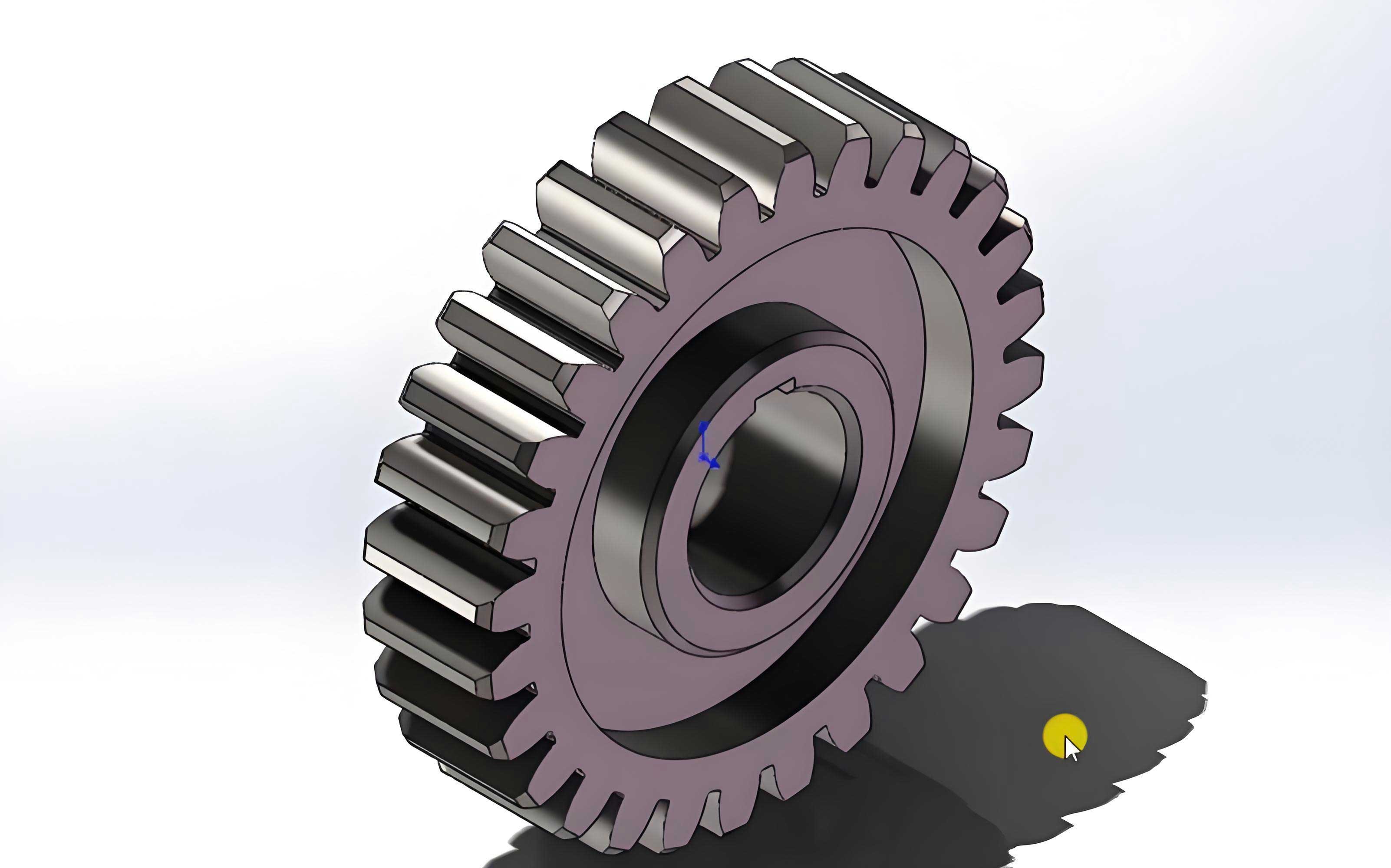
To begin, we derive the analytical model for time-varying mesh stiffness of spur gears considering tip relief. The mesh stiffness \(k(t)\) at any instant \(t\) is influenced by the stiffness contributions from the contacting tooth pairs, which depend on tooth geometry, material properties, and profile deviations. For a spur gear pair with tip relief, the modified tooth profile can be described by a power-law function. Let \(C\) be the relief amount at a position \(x\) along the line of action, measured from the start of relief. The relief curve is given by:
$$ C = C_a \left( \frac{x}{L_a} \right)^s $$
where \(C_a\) is the maximum relief amount at the tooth tip, \(L_a\) is the relief length along the line of action, and \(s\) is an exponent defining the curve shape (typically \(s = 1\) for linear relief). The effective profile deviation \(E_p\) at mesh position \(x\) is computed as the Euclidean distance between the original involute profile and the relieved profile:
$$ E_p = \sqrt{(x_{DE} – x_{ME})^2 + (y_{DE} – y_{ME})^2} $$
Here, \((x_{DE}, y_{DE})\) and \((x_{ME}, y_{ME})\) are coordinates on the original involute and relieved profiles, respectively. This deviation affects the contact conditions and load sharing between tooth pairs.
Considering multiple tooth pairs in contact, the static transmission error \(E_r\) for the \(j\)-th tooth pair is expressed as:
$$ E_r^{(j)} = E_{d1}^{(j)} + E_{d2}^{(j)} + E_{p1}^{(j)} + E_{p2}^{(j)} $$
where \(E_d^{(j)}\) represents the deformation-induced error and \(E_p^{(j)}\) is the profile deviation error for the driving and driven gears (subscripts 1 and 2). The load \(F^{(j)}\) on the \(j\)-th tooth pair relates to the transmission error and overall mesh force \(F\). For two simultaneously contacting tooth pairs (e.g., pairs 1 and 2), the compatibility condition yields:
$$ F^{(j)} = \frac{E_r^{(j)} – E_p^{(j)}}{Q^{(j)}} $$
with \(Q^{(j)}\) being the compliance of the \(j\)-th tooth pair, calculated as:
$$ \frac{1}{Q^{(j)}} = \frac{1}{k_{h}^{(j)}} + \frac{1}{k_{b1}^{(j)}} + \frac{1}{k_{s1}^{(j)}} + \frac{1}{k_{a1}^{(j)}} + \frac{1}{k_{b2}^{(j)}} + \frac{1}{k_{s2}^{(j)}} + \frac{1}{k_{a2}^{(j)}} $$
Here, \(k_h\) is the Hertzian contact stiffness, \(k_b\) is the bending stiffness, \(k_s\) is the shear stiffness, and \(k_a\) is the axial compressive stiffness; subscripts denote gear 1 or 2. The individual tooth stiffness \(k_{\text{tooth}}^{(j)}\) is then:
$$ k_{\text{tooth}}^{(j)} = \frac{F^{(j)}}{E_r^{(j)} – E_p^{(j)}} $$
The total mesh stiffness \(k\) of the spur gear pair, incorporating foundation stiffness corrections and extended contact effects, is obtained by summing the contributions from all active tooth pairs:
$$ \frac{1}{k} = \sum_{j} \left( \frac{1}{\lambda_1 k_{f1} + \lambda_2 k_{f2} + k_{\text{tooth}}^{(j)}} \right) $$
where \(k_{f1}\) and \(k_{f2}\) are the fillet-foundation stiffnesses of the driving and driven gears, and \(\lambda_1\), \(\lambda_2\) are correction factors accounting for foundation deformation influences. This analytical model comprehensively captures the nonlinearities introduced by tip relief and addendum modification in spur gears.
To validate the analytical model, we employ finite element analysis (FEA) using a two-dimensional plane strain approach. The spur gear pair parameters are listed in Table 1. The gears are modeled with appropriate material properties and contact definitions. Meshing is performed with fine elements near the contact zones to ensure accuracy. The FEA simulations compute the mesh stiffness under various tip relief parameters by applying a static torque and measuring the resultant deformations. Comparisons between analytical and FEA results for different relief amounts \(C_a\) and lengths \(L_a\) show excellent agreement, confirming the reliability of our analytical model. Sample results are summarized in Table 2, which presents mesh stiffness values at key engagement positions. The consistency across methods validates our model’s capability to predict stiffness variations in spur gears with tip relief.
| Parameter | Driving Gear | Driven Gear |
|---|---|---|
| Number of teeth, \(z\) | 17 | 48 |
| Module, \(m\) (mm) | 1.5 | |
| Pressure angle, \(\alpha_0\) (degrees) | 20 | |
| Addendum modification coefficient | 0.5 | 0.4076 |
| Face width, \(L\) (mm) | 35 | |
| Young’s modulus, \(E\) (GPa) | 210 | |
| Poisson’s ratio, \(\nu\) | 0.275 | |
| Input torque, \(T\) (N·m) | 76 | |
The time-varying mesh stiffness \(k(t)\) is periodic with the gear mesh frequency. To analyze its harmonic content, we apply the Fast Fourier Transform (FFT), expressing \(k(t)\) as a Fourier series:
$$ k(t) = k_m + \sum_{n=1}^{N} \left[ a_n \cos(n \omega_0 t) + b_n \sin(n \omega_0 t) \right] $$
where \(k_m\) is the mean mesh stiffness, \(\omega_0\) is the mesh frequency, and \(a_n\), \(b_n\) are Fourier coefficients. The amplitudes \(A_n = \sqrt{a_n^2 + b_n^2}\) represent the magnitude of the \(n\)-th harmonic. Higher harmonics contribute to dynamic excitations; thus, reducing these amplitudes can lead to lower vibration and noise. We propose a design objective: minimize the sum of the first five harmonic amplitudes \(S = \sum_{n=1}^{5} A_n\). This criterion focuses on the dominant low-frequency components that are most critical for dynamic response in spur gears.
Using the analytical model, we compute \(S\) for a range of tip relief parameters: \(C_a\) from 0 to 24 μm and \(L_a\) from 0.4 to 0.7 mm. The results are visualized in a contour plot (conceptually represented in Table 3), where the minimum \(S\) identifies the optimal region. For the spur gears studied, the minimum occurs around \(C_a = 8\) μm and \(L_a = 0.5\) mm. Compared to an unmodified gear (\(C_a = 0\), \(L_a = 0\)), the optimal tip reduces \(S\) by approximately 44.2%, indicating a significant suppression of stiffness fluctuations. This reduction directly correlates with improved dynamic performance, as lower harmonic amplitudes imply smoother torque transmission and reduced vibrational energy.
| Tip Relief Parameters | Analytical Mean Stiffness | FEA Mean Stiffness | Deviation (%) |
|---|---|---|---|
| \(C_a = 0\) μm, \(L_a = 0\) mm | 2.15 | 2.08 | 3.3 |
| \(C_a = 8\) μm, \(L_a = 0.5\) mm | 2.10 | 2.03 | 3.4 |
| \(C_a = 12\) μm, \(L_a = 0.6\) mm | 2.07 | 2.00 | 3.5 |
| \(C_a = 18\) μm, \(L_a = 0.6\) mm | 2.04 | 1.97 | 3.6 |
To further verify the optimal parameters, we conduct stress analysis using FEA. Stress distributions on the tooth surfaces are evaluated at several meshing positions (e.g., start of engagement, pitch point, end of engagement). The maximum von Mises stress values are recorded for different tip relief configurations. As shown in Table 4, the optimal parameters (\(C_a = 8\) μm, \(L_a = 0.5\) mm) yield the most uniform stress distribution and the lowest peak stress at critical engagement points. Specifically, at the initial contact position, the peak stress drops from 2248 MPa for the unmodified spur gear to 694 MPa for the optimally modified spur gear—a reduction of about 70%. This dramatic decrease confirms that tip relief effectively mitigates impact loads and stress concentrations, enhancing the durability of spur gears. The stress contours from FEA visually demonstrate the smoothed contact patterns, affirming the benefits of our design approach.
| \(C_a\) (μm) \ \(L_a\) (mm) | 0.4 | 0.5 | 0.6 | 0.7 |
|---|---|---|---|---|
| 0 | 16.9 | 16.9 | 16.9 | 16.9 |
| 4 | 12.5 | 11.8 | 12.1 | 12.6 |
| 8 | 10.2 | 9.43 | 9.85 | 10.5 |
| 12 | 9.87 | 9.65 | 9.92 | 10.8 |
| 16 | 10.5 | 10.1 | 10.4 | 11.2 |
| 20 | 11.3 | 10.9 | 11.2 | 12.0 |
| 24 | 12.2 | 11.8 | 12.1 | 12.9 |
The effectiveness of tip relief in spur gears can be understood through the modulation of mesh stiffness curves. Without modification, the stiffness exhibits sharp discontinuities at the transitions between single- and double-tooth contact. With optimal tip relief, these discontinuities are smoothed, resulting in a more gradual stiffness variation. This smoothing effect reduces the impulsive forces that cause vibration and noise. Moreover, the reduced stiffness fluctuations decrease the dynamic transmission error, which is a direct measure of meshing smoothness. For spur gears operating at high speeds or under heavy loads, such improvements are crucial for reliability and acoustic comfort.
Our analytical model also allows exploration of the interaction between addendum modification and tip relief. Addendum modification alters the tooth thickness and contact ratio, influencing the baseline mesh stiffness. When combined with tip relief, the overall stiffness characteristics can be fine-tuned to achieve desired dynamic properties. For instance, positive addendum modification (i.e., profile shifting to increase tooth thickness) typically increases mesh stiffness, while tip relief reduces stiffness fluctuations. The synergistic effect can be optimized using our FFT-based approach. We recommend that designers of spur gears consider both modifications concurrently to maximize performance gains.
In practice, the implementation of tip relief requires precise manufacturing control. The relief parameters \(C_a\) and \(L_a\) must be maintained within tight tolerances to ensure consistent performance. Our study provides clear guidelines: for the spur gears analyzed, the optimal range is \(C_a = 6-10\) μm and \(L_a = 0.45-0.55\) mm, centered around the identified optimum. This range offers robustness against minor variations in operating conditions or manufacturing errors. Additionally, the linear relief profile (\(s=1\)) is straightforward to produce using standard gear grinding or shaping processes, making it feasible for industrial applications.
| Meshing Position | Unmodified (\(C_a=0\), \(L_a=0\)) | Optimal Relief (\(C_a=8\) μm, \(L_a=0.5\) mm) | Suboptimal Relief (\(C_a=15\) μm, \(L_a=0\) mm) |
|---|---|---|---|
| Start of engagement (A) | 2248 | 694 | 714 |
| Pitch point (B) | 639 | 409 | 1265 |
| Mid-engagement (C) | 621 | 555 | 491 |
| End of engagement (D) | 610 | 771 | 928 |
| Exit point (E) | 607 | 792 | 960 |
The dynamic implications of optimized tip relief extend beyond mere stiffness reduction. By minimizing the harmonic amplitudes of mesh stiffness, we effectively lower the excitation forces that drive gearbox vibrations. This can lead to reduced noise levels, lower bearing loads, and extended component life. For spur gears in sensitive applications such as automotive transmissions, aerospace systems, or precision machinery, these benefits are highly valuable. Furthermore, the reduced stress concentrations decrease the risk of tooth root fatigue failure, enhancing the overall durability of the gear pair.
It is worth noting that our methodology is not limited to the specific spur gear parameters used here. The analytical model is general and can be adapted to other gear geometries, materials, and loading conditions. The design objective of minimizing FFT harmonic amplitudes provides a universal criterion for tip relief optimization. Engineers can apply this approach to customize relief parameters for their particular spur gear designs, ensuring optimal performance across a wide range of applications.
In conclusion, we have developed a comprehensive framework for designing tip relief parameters in spur gears with addendum modification. The analytical model for time-varying mesh stiffness accurately captures the effects of tip relief, validated by finite element analysis. By minimizing the sum of the first five FFT amplitudes of mesh stiffness, we identify optimal relief parameters that significantly reduce stiffness fluctuations and dynamic excitation. Stress analysis confirms that these parameters also lower contact stresses, particularly at mesh entry and exit. This integrated approach offers a efficient and effective path for enhancing the dynamic performance and durability of spur gears. Future work may explore nonlinear dynamics simulations to directly link tip relief parameters to vibration response, or extend the methodology to helical gears and planetary gear sets. Nonetheless, the principles established here provide a solid foundation for advancing gear design practices.
The study underscores the importance of systematic parameter design in gear engineering. For spur gears, which remain ubiquitous in machinery, even small improvements in meshing smoothness can yield substantial benefits in noise reduction, efficiency, and reliability. We hope that the insights and methods presented will aid designers in developing quieter, more robust gear systems for the challenges of modern engineering.
Throughout this article, we have emphasized the role of spur gears in mechanical transmissions and the critical impact of tip relief on their performance. The analytical and numerical tools described enable a deeper understanding of gear mesh behavior and facilitate data-driven design decisions. As manufacturing technologies advance, allowing for more precise profile modifications, the optimization of tip relief parameters will become increasingly important for achieving superior gear performance. We encourage further research and application of these concepts to push the boundaries of gear technology.