
In the realm of mechanical power transmission, helical gears are widely recognized for their superior performance characteristics, including smooth operation, high load capacity, and reduced noise and vibration. However, under high-speed and heavy-duty conditions, these gears often encounter challenges such as transmission error, uneven load distribution, and increased dynamic excitation, which can lead to premature failure and reduced operational lifespan. To address these issues, we propose and investigate a comprehensive topological modification method that combines profile and lead corrections for helical gears. This study encompasses theoretical derivation, simulation-based optimization, and experimental validation to demonstrate the effectiveness of this approach in enhancing the meshing performance of helical gears.
The core of our methodology lies in applying a bidirectional modification to the gear tooth surface, often referred to as topological modification. This technique modifies both the profile (in the direction of the tooth depth) and the lead (along the tooth width) to create a controlled deviation from the ideal involute and helical surfaces. The goal is to compensate for elastic deformations under load and manufacturing inaccuracies, thereby minimizing transmission error and ensuring a more uniform distribution of contact pressure across the tooth flank. Our work is structured as follows: we first establish the theoretical framework for the modification, then create a detailed simulation model using advanced software, optimize the modification parameters, analyze the results, and finally confirm our findings through physical vibration loading tests on a pair of helical gears.
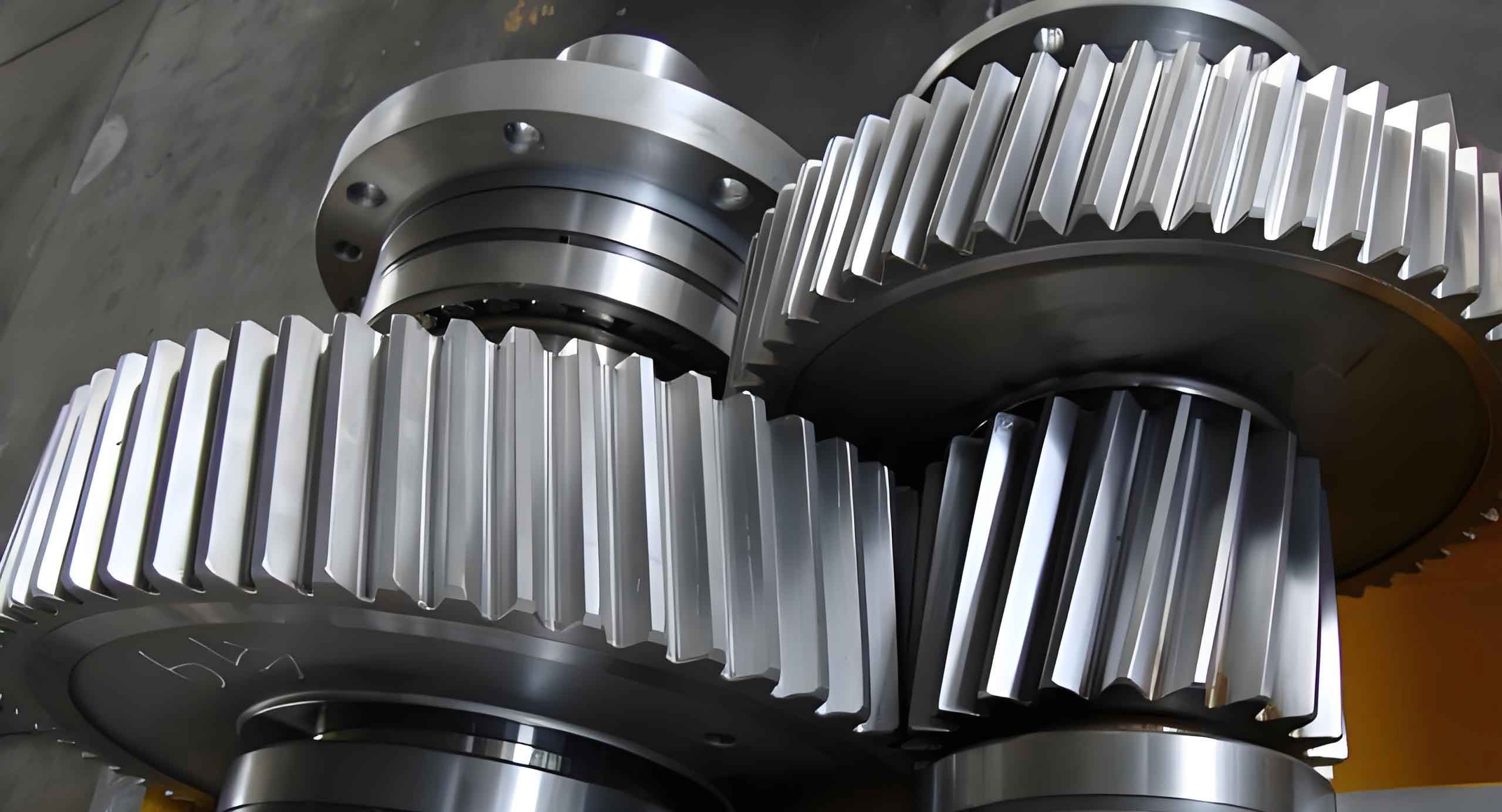
The fundamental advantage of helical gears over their spur counterparts is the gradual engagement of teeth due to the helix angle, which results in higher contact ratios and smoother torque transfer. Nevertheless, this inherent benefit can be compromised by system deflections. When a pair of helical gears transmits power, the teeth, shafts, and housing experience elastic deformations. These deformations, coupled with potential misalignments, cause the actual contact pattern to shift towards the edges of the tooth face, leading to stress concentration, increased transmission error, and elevated vibration levels. Over time, this can manifest as pitting, scuffing, or tooth breakage. Gear modification has emerged as a proven countermeasure. While profile modification (such as tip and root relief) primarily targets reducing mesh-in and mesh-out impacts, lead modification (like crowning or end relief) aims to correct for misalignment and ensure contact occurs centrally on the tooth face. The topological modification we employ is a synthesis of these two techniques, applied strategically across different zones of the tooth surface to achieve a globally optimized performance.
To mathematically define our topological modification, we consider the tooth surface as being divided into nine distinct zones. The central zone remains unmodified, serving as the reference. The four corner zones receive combined profile and lead modification, the edge zones along the profile direction receive only profile modification, and the edge zones along the lead direction receive only lead modification. This targeted approach allows for precise control over the tooth surface geometry. The profile modification is typically applied as a parabolic relief relative to the theoretical involute curve. The modification amount $$ \Delta L $$ at a given point on the profile is a function of the involute roll angle and can be expressed as:
$$ \Delta L = a_{mp} r_b^2 (u_1 – u_0)^2 $$
In this equation, $$ a_{mp} $$ represents the profile modification coefficient, $$ r_b $$ is the base circle radius of the gear, $$ u_0 $$ is the roll angle at the start of the modification zone, and $$ u_1 $$ is the current roll angle. The coordinate of a point on the modified profile in a transverse section can then be derived. For a helical gear, the three-dimensional surface coordinates are obtained by incorporating the helix. The lead modification, on the other hand, introduces a slight curvature or taper along the face width. A common form is crowning, which gives the tooth a barrel-like shape. The crowning amount $$ C_a $$ is often determined based on the anticipated load and the system’s deflection characteristics. A simplified formula for estimating the required crowning is:
$$ C_a = \frac{2 F_m F_{\beta y}}{C b} \quad \text{for } b_{cal} < b $$
$$ C_a = 0.5 F_{\beta y} + \frac{F_m}{C} \quad \text{for } b_{cal} \ge b $$
Here, $$ b $$ is the face width, $$ b_{cal} $$ is the effective contact width, $$ F_m $$ is the tangential force, $$ F_{\beta y} $$ is the lead alignment error, and $$ C $$ is the mesh stiffness. In our integrated topological approach, the final tooth surface is the superposition of these profile and lead modification vectors onto the nominal helical involute surface.
The success of modification for helical gears hinges on selecting optimal values for the modification parameters, such as the amount of profile relief, the start and end points of relief, the crowning magnitude, and any lead slope. To systematically find these optimal parameters, we employed a simulation-driven optimization workflow. We utilized Romax Designer, a specialized software for drivetrain simulation and analysis, as our primary platform. The first step was to create a precise system model of the helical gear pair within its operational context. The basic parameters of the helical gears studied are summarized in the table below.
| Parameter | Pinion (Driver) | Gear (Driven) |
|---|---|---|
| Number of Teeth | 30 | 30 |
| Hand of Helix | Right Hand | Left Hand |
| Normal Module (mm) | 6.5 | 6.5 |
| Normal Pressure Angle (deg) | 20 | 20 |
| Helix Angle (deg) | 13 | 13 |
| Face Width (mm) | 53 | 53 |
| Profile Shift Coefficient | +0.72 | -0.72 |
| Center Distance (mm) | 208.4 | |
This model included not just the gears but also simplified representations of the supporting shafts and bearings to account for system compliance. A nominal operating condition was simulated, with an input speed of 2000 RPM and an input power of 104 kW, corresponding to a significant torque load. Within Romax Designer’s micro-geometry module, we defined the topological modification parameters as variables. To navigate the multi-dimensional parameter space efficiently and find the global optimum, we integrated a Genetic Algorithm (GA) with the simulation. The GA is a population-based metaheuristic inspired by natural selection. It works by generating a set of candidate solutions (a population), evaluating their fitness (in our case, a lower transmission error and more uniform load distribution are fitter), selecting the best performers, and creating new solutions through crossover and mutation over many generations. The objective function for the optimization was formulated to minimize the peak-to-peak transmission error (TE) while constraining the maximum contact pressure to an acceptable level. After numerous iterations, the GA converged on an optimal set of modification parameters. For the profile, the optimized parabolic relief had a maximum amplitude of 9.54 µm, combined with a slight linear slope of 4.33 µm across the active profile. For the lead, a crowning amount of 4.50 µm and a lead slope of 1.70 µm were determined to be optimal. These parameters define the precise topological surface we applied to the driver helical gear.
The primary metric for evaluating gear mesh quality is Transmission Error (TE). It is defined as the difference between the actual angular position of the driven gear and its theoretical position assuming perfectly rigid and conjugate teeth, reflected as a linear displacement along the line of action. A lower TE indicates smoother, quieter operation with less dynamic excitation. The formula for calculating TE in a single mesh cycle is:
$$ TE = (\theta_1 – \theta_{01}) – (\theta_2 – \theta_{02}) \frac{z_2}{z_1} $$
Where $$ \theta_1 $$ and $$ \theta_2 $$ are the actual rotation angles of the driver and driven helical gears, $$ \theta_{01} $$ and $$ \theta_{02} $$ are the initial reference angles, and $$ z_1 $$, $$ z_2 $$ are the tooth numbers. We analyzed the TE for both the unmodified and topologically modified helical gear pairs under the same loading condition in Romax. The results were striking. For the unmodified helical gears, the TE curve showed significant variation over the mesh cycle, with a peak-to-peak value of 2.16 µm. In contrast, the helical gears with topological modification exhibited a dramatically flattened TE curve. The peak-to-peak TE was reduced to merely 0.51 µm, representing a reduction of over 76%. This substantial decrease signifies a major improvement in kinematic precision and a reduction in the primary source of gear vibration.
Another critical aspect is the load distribution on the tooth surface. Uneven loading, often manifesting as edge or corner contact, leads to high local stresses and accelerated wear. Romax Designer provides detailed contact analysis, showing the contact pressure distribution across the three-dimensional tooth flank. For the unmodified helical gears, the load distribution plot revealed severe edge loading. The highest contact pressures were concentrated at the ends of the face width and near the tip or root edges. This pattern is indicative of misalignment and deflection under load. After applying the topological modification, the load distribution transformed significantly. The contact pattern became centralized on the tooth flank. While the unit load (pressure) in the central region increased slightly due to the concentrated contact area, the detrimental high-stress peaks at the edges were completely eliminated. The load was distributed over a broader, more central area of the tooth, which drastically improves bending and contact fatigue life and reduces the risk of failure. This optimized load distribution is a direct consequence of the combined profile and lead corrections, which effectively pre-compensate for the expected system deflections, ensuring that under load, the teeth make contact in an ideal, centered pattern.
To validate the simulation predictions and conclusively demonstrate the benefits of topological modification for helical gears, we designed and conducted a vibration loading experiment. Simulation models, while powerful, rely on assumptions about boundary conditions, material properties, and damping. Physical testing provides indispensable confirmation. We constructed a dedicated test rig capable of applying controlled loads to a pair of helical gears identical to those modeled. The test setup consisted of a variable-frequency AC motor as the prime mover, a magnetic powder brake as the loading device, a torque sensor to monitor applied load, high-precision rotary encoders (optical gratings) on both input and output shafts to measure rotational speed and calculate transmission error indirectly, piezoelectric accelerometers mounted on the bearing housings to capture vibration signals, and a sound level meter to record operating noise. The helical gear pair was installed in a rigid test housing with properly aligned bearings. Prior to testing, a thin layer of marking compound (like red lead paste) was applied to the teeth of the driver gear. Upon running under load, this compound transfers to the mating gear, leaving a visible contact pattern that reveals the actual area of tooth contact.
We performed two sets of tests: one with the standard, unmodified helical gears, and another with the driver gear replaced by the topologically modified version. The operating condition was set to an input speed of 500 RPM and an applied torque of 185 N·m. The vibration signals from the accelerometers were acquired using a data acquisition system and processed using Fast Fourier Transform (FFT) to obtain the frequency spectrum. The fundamental meshing frequency $$ f_z $$ for this gear pair at 500 RPM is calculated as $$ f_z = n z / 60 = (500 \times 30) / 60 = 250 \text{ Hz} $$. The spectrum for the unmodified helical gears showed prominent peaks at the meshing frequency (250 Hz) and its harmonics (500 Hz, 750 Hz). The vibration acceleration amplitudes at these frequencies were 0.0581 g, 0.11059 g, and 0.13649 g, respectively. The spectrum for the modified helical gears also showed peaks at the same frequencies, but the amplitudes were significantly lower: 0.02227 g at 250 Hz, 0.0593 g at 500 Hz, and 0.08118 g at 750 Hz. This represents a reduction of approximately 62%, 46%, and 41% at the first three harmonics. Moreover, the overall vibration energy across the measured frequency range was noticeably lower for the modified gears. The contact patterns provided visual corroboration. The unmodified gears showed a contact印痕 biased towards one end of the tooth face, clearly indicating edge contact. The modified gears, however, displayed a contact印痕 that was well-centered both along the profile and the lead, covering a more rectangular area in the middle of the tooth flank. These experimental results—reduced vibration amplitudes and a centered contact pattern—align perfectly with the simulation predictions for the topologically modified helical gears, confirming the effectiveness of our optimization approach.
The integration of advanced simulation tools like Romax Designer with robust optimization algorithms such as the Genetic Algorithm provides a powerful framework for the design of high-performance helical gears. The process begins with an accurate system model that captures the stiffness and boundary conditions. The definition of topological modification parameters within the software allows for virtual prototyping of various modification schemes. The GA automates the search for the best parameters by iteratively running simulations and evaluating the results against predefined objectives. This data-driven approach is far more efficient than traditional trial-and-error methods. It is important to note that the optimal modification is not universal; it depends on the specific gear geometry, operating load, speed, and system stiffness. Therefore, this simulation-optimization cycle should be an integral part of the design process for critical helical gear applications. The outcome is a set of micro-geometry data that can be directly used to program modern CNC gear grinding or honing machines, enabling the precise manufacture of the optimized tooth form.
From a broader perspective, the benefits of properly applied topological modification extend beyond just noise and vibration reduction for helical gears. By ensuring a uniform load distribution, the modified gears experience lower peak contact stresses, which directly enhances their pitting resistance (contact fatigue life). The reduced transmission error also means lower dynamic loads on the teeth, improving bending fatigue strength. Furthermore, by mitigating edge loading, the risk of premature wear and scuffing is minimized. This leads to increased reliability, longer service intervals, and potentially lighter gearbox designs as safety margins can be optimized. The method is particularly valuable for applications where helical gears are pushed to their limits, such as in wind turbine gearboxes, aerospace actuators, high-speed compressors, and heavy vehicle transmissions. The ability to predict and correct for deflections through modification allows engineers to confidently design more compact and efficient drivetrains.
In conclusion, our comprehensive study on the topological modification of helical gears has demonstrated a significant pathway to superior gear performance. We developed a method that synergistically combines profile and lead modifications, optimized the modification parameters using a Genetic Algorithm within a high-fidelity simulation environment, and validated the results through rigorous physical testing. The findings consistently show that topological modification for helical gears leads to a drastic reduction in transmission error, a more favorable and centered load distribution on the tooth flank, and consequently, lower vibration and noise levels. These improvements directly translate to enhanced durability, reliability, and operational smoothness of gear transmissions. The successful correlation between simulation and experiment underscores the maturity and accuracy of modern gear contact analysis tools when coupled with appropriate system modeling. This work provides a validated theoretical and practical framework for the optimal design and manufacture of advanced helical gears, contributing to the ongoing pursuit of efficiency and quietness in mechanical power transmission systems. Future work could explore the application of this topological modification approach to other gear types, such as double-helical or bevel gears, and investigate its sensitivity to manufacturing tolerances and long-term wear under varying operating conditions.