
As an engineer specializing in automotive transmission systems, I have extensively studied the dynamic behavior of drive axles, which are core components in micro-vehicle drivetrains. These systems endure complex loads, directly impacting vehicle safety, comfort, and power performance. Specifically, the vibration and noise generated by hyperbolic gear transmission systems significantly affect the overall Noise, Vibration, and Harshness (NVH) characteristics. To master the influence laws of drive axle vibration response and achieve active control of dynamic properties, I focused on the hyperbolic gear transmission system within the drive axle. This analysis considers key internal excitations such as time-varying mesh stiffness, damping, transmission error, and impact forces. By developing a multi-parameter coupled vibration model based on the lumped mass method and solving the derived differential equations, I aim to predict vibration responses and enhance product dynamic performance.
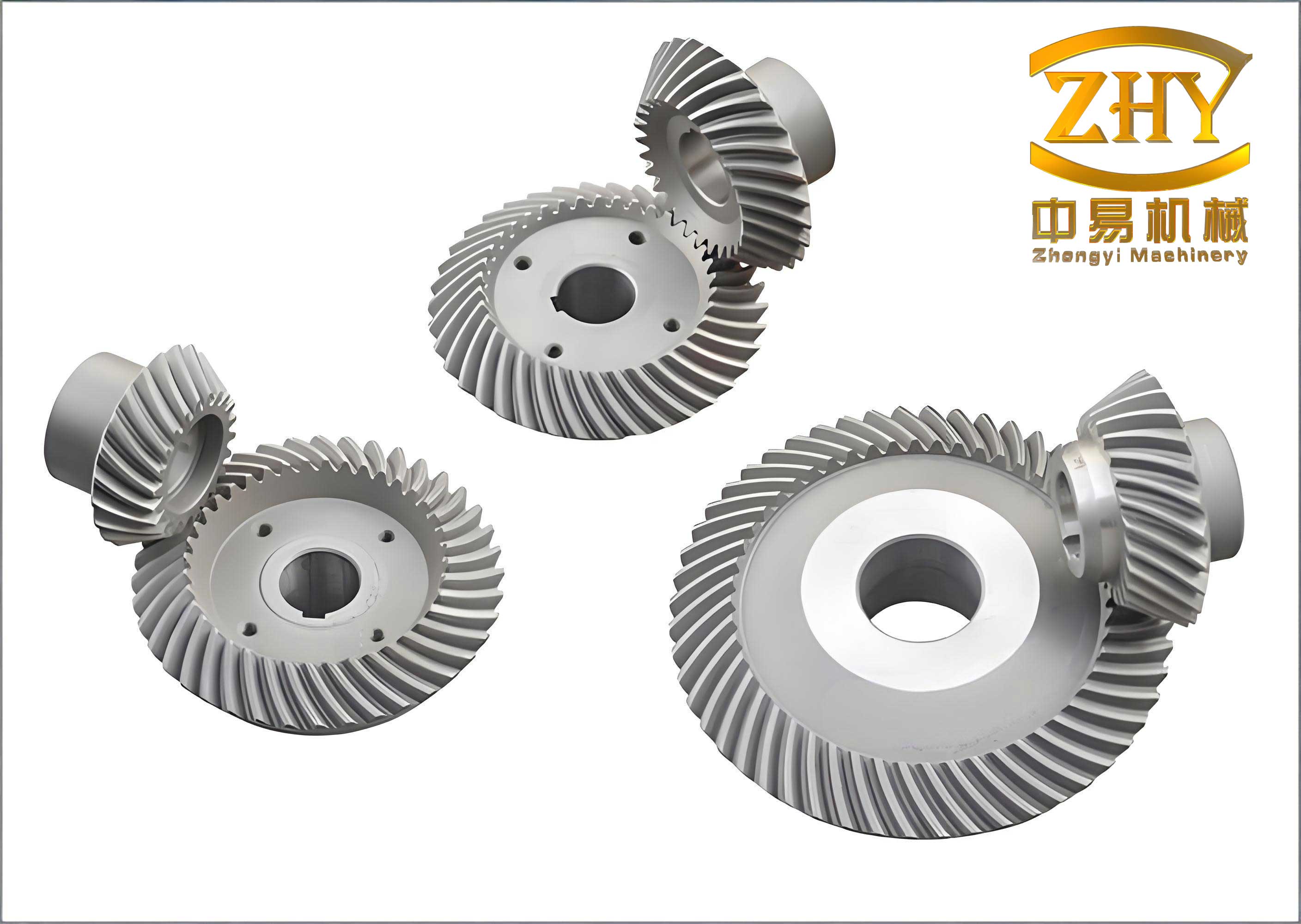
The hyperbolic gear, often referred to as a hypoid gear, is pivotal in drive axle systems due to its ability to transmit power between non-intersecting shafts. However, its complex geometry induces nonlinear vibrations, making it essential to analyze internal excitations. The primary internal excitations in hyperbolic gear systems include time-varying mesh stiffness, error excitation from manufacturing and assembly, and meshing impact. These factors collectively drive the dynamic response, leading to potential noise and fatigue issues. In my research, I calculated these excitations through gear contact analysis, including Tooth Contact Analysis (TCA) and Loaded Tooth Contact Analysis (LTCA), to obtain accurate data for modeling.
Time-varying mesh stiffness is a critical parameter, as it fluctuates periodically due to changes in contact positions and elastic deformations during meshing. For a hyperbolic gear pair, the comprehensive mesh stiffness can be represented as a Fourier series to ensure continuity for dynamic analysis. The stiffness function, \( k_{mv}(t) \), is derived from discrete values obtained via LTCA and fitted as follows:
$$ k_{mv}(t) = k_0 + \sum_{n=1}^{8} \left( a_n \cos(n \omega_m t) + b_n \sin(n \omega_m t) \right) $$
where \( k_0 \) is the mean stiffness, \( a_n \) and \( b_n \) are Fourier coefficients, and \( \omega_m \) is the meshing frequency. This approach allows for a smooth representation of stiffness variations over time, essential for solving vibration equations.
Transmission error excitation arises from manufacturing inaccuracies, thermal deformations, and misalignments. I modeled this error using a harmonic function combined with Fourier expansion to account for periodic deviations. The equivalent comprehensive transmission error, \( e(t) \), is expressed as:
$$ e(t) = e_{r0} + e_r \sin(2\pi f_m t + \phi) + \sum_{n=1}^{N} e_{hn} \sin(n Z_w \omega t + \phi_n) $$
Here, \( e_{r0} \) and \( e_r \) are constant and amplitude of gear error, \( f_m \) is the meshing frequency, \( Z_w \) is the number of teeth on the indexing worm gear, and \( \phi \) is the phase angle. This formulation captures both low-frequency and high-frequency error components that excite vibrations.
Meshing impact, particularly at the entry point, generates impulsive forces due to base pitch errors. The maximum impact force, \( F_{cs} \), is calculated based on relative velocity and system compliance:
$$ F_{cs} = \Delta v \sqrt{ \frac{b I_1 I_2}{q_s (I_1 R_{b2}^2 + I_2 R_{b1}^2)} } $$
where \( \Delta v \) is the impact velocity, \( b \) is the tooth width, \( I_1 \) and \( I_2 \) are moments of inertia, \( R_{b1} \) and \( R_{b2} \) are base radii, and \( q_s \) is the comprehensive flexibility. This impact force introduces nonlinearities into the system dynamics, necessitating careful analysis.
To model the hyperbolic gear transmission system, I adopted a lumped mass approach, representing gears, differentials, and shafts as rigid bodies with equivalent springs and dampers. The system includes multiple degrees of freedom (DOFs) to capture translational and rotational vibrations. The generalized coordinate vector, \( \mathbf{X} \), encompasses displacements for the pinion (active gear), driven gear, planetary gears, side gears, and half-shafts across three directions: vertical (y-axis), axial (z-axis), and torsional (θ-axis). For instance, the pinion’s DOFs include \( x_p, y_p, z_p, \theta_{px} \), while the driven gear has \( x_g, y_g, z_g, \theta_{gy} \), and so on. This results in a high-dimensional system that accurately reflects real-world complexities.
The nonlinear vibration differential equations are derived using Newton’s second law. For each component, forces from mesh stiffness, damping, errors, and impacts are balanced with inertial terms. Consider the pinion’s vertical vibration equation at the rear bearing support point:
$$ m_{py1} \ddot{y}_{p1} + c_{py1} \dot{y}_{p1} + k_{py1} f(y_{p1}, b_{py1}) = -F_{py1} $$
Here, \( m_{py1} \) is the equivalent mass, \( c_{py1} \) is damping, \( k_{py1} \) is stiffness, \( f(y_{p1}, b_{py1}) \) is a nonlinear gap function accounting for bearing clearance, and \( F_{py1} \) is the external force. The gap function is defined as:
$$ f(H, b) = \begin{cases} H – b, & H > b \\ 0, & -b \le H \le b \\ H + b, & H < -b \end{cases} $$
This piecewise function introduces nonlinearities that can lead to chaotic behavior under certain conditions.
The mesh force between the pinion and driven gear in the hyperbolic gear pair is a key driver of vibrations. It combines stiffness and damping effects with transmission error:
$$ F_{mpg} = c_{mpg} (\dot{\delta}_{mpg} – \dot{e}_{pg}) + k_{mpg} f(\delta_{mpg} – e_{pg}, b_{pg}) $$
where \( \delta_{mpg} \) is the relative displacement along the mesh line, given by:
$$ \delta_{mpg} = (x_p + r_{p1} \theta_{py}) \cos \delta_p \sin \alpha_n – (x_g + r_{p2} \theta_{gy}) \cos \delta_g \sin \alpha_n + \text{(other geometric terms)} $$
In this expression, \( \delta_p \) and \( \delta_g \) are pitch cone angles, \( \alpha_n \) is the normal pressure angle, and \( r_{p1}, r_{p2} \) are reference radii. The complexity of this relation highlights the coupled nature of hyperbolic gear dynamics.
To solve the system of differential equations, I employed the fourth-order Runge-Kutta (RK) method with variable step size. This numerical approach handles the nonlinearities and time-varying parameters effectively. The initial conditions assume steady-state operation, and simulations run for sufficient time to capture transient and stable responses. Key parameters for the hyperbolic gear system are summarized in the table below, which includes gear geometry, inertia, and support properties.
| Component | Parameter | Value |
|---|---|---|
| Hyperbolic Pinion | Number of Teeth | 10 |
| Module (mm) | 3.953 | |
| Mass (kg) | 1.208 | |
| Moment of Inertia (kg·m²) | 6.958 × 10⁻⁴ | |
| Hyperbolic Driven Gear | Number of Teeth | 43 |
| Module (mm) | 3.953 | |
| Mass (kg) | 3.184 | |
| Moment of Inertia (kg·m²) | 2.306 × 10⁻² | |
| Planetary Gear | Number of Teeth | 10 |
| Mass (kg) | 0.146 | |
| Moment of Inertia (kg·m²) | 7.732 × 10⁻⁵ | |
| Side Gear | Number of Teeth | 16 |
| Mass (kg) | 0.288 | |
| Moment of Inertia (kg·m²) | 1.525 × 10⁻⁴ | |
| Half-shaft | Mass (kg) | 6.247 |
| Half-shaft | Moment of Inertia (kg·m²) | 2.147 × 10⁻³ |
| Bearings | Types | HM86649, HM89449, 32008X1WC, 46T080805 |
After establishing the model, I analyzed vibration characteristics by comparing optimized and original hyperbolic gear designs. Optimization involved tooth surface modification using ease-off topology to improve contact patterns and reduce transmission error. The modified hyperbolic gear pair showed better stress distribution and lower error amplitudes. Under a typical operating condition—input speed of 1500 rpm and torque of 273 N·m—I solved the vibration equations and extracted time-domain responses for pinion and driven gear in vertical, torsional, and axial directions.
The vertical vibration displacement of the pinion, for example, exhibited a reduction in amplitude after optimization. The original design had a steady-state amplitude of approximately 18 µm, while the optimized design showed about 13.5 µm, a 25% decrease. The vibration velocity and acceleration followed similar trends, indicating enhanced dynamic performance. Frequency domain analysis via Fast Fourier Transform (FFT) revealed dominant peaks near the meshing frequency (250 Hz), confirming that hyperbolic gear excitations drive the system response. The table below summarizes key vibration metrics before and after optimization for the pinion.
| Vibration Metric | Original Design | Optimized Design | Improvement |
|---|---|---|---|
| Vertical Displacement Amplitude (µm) | 18.0 | 13.5 | 25% reduction |
| Vertical Velocity Amplitude (mm/s) | 22.49 | 18.97 | 15.7% reduction |
| Vertical Acceleration Amplitude (m/s²) | 39.04 | 20.55 | 47.4% reduction |
| Axial Displacement Amplitude (µm) | 15.2 | 10.8 | 29% reduction |
| Torsional Displacement Amplitude (degrees) | 0.15 | 0.14 | 6.7% reduction |
Phase portraits and Poincaré sections further illustrated the dynamic behavior. For the original hyperbolic gear system, vertical vibration phase plots showed complex, near-chaotic patterns with irregular elliptical orbits, while torsional vibrations displayed quasi-periodic motions. After optimization, the phase trajectories became more regular, indicating reduced nonlinearity. The Poincaré sections, sampled at the meshing period, revealed scattered points that coalesced into tighter clusters post-optimization, suggesting improved stability. This analysis underscores the effectiveness of tooth modification in mitigating chaotic tendencies in hyperbolic gear systems.
External excitations, such as input speed and load torque, significantly influence hyperbolic gear vibration. I varied these parameters while keeping others constant to isolate their effects. For input speeds of 500 rpm, 1000 rpm, and 2000 rpm, with a fixed torque of 273 N·m, the vibration amplitudes increased proportionally. Axial vibrations were most sensitive, followed by vertical and then torsional directions. This trend aligns with the hyperbolic gear geometry, where axial forces are prominent due to the offset between shafts. The equations governing these responses can be linearized for small perturbations, but nonlinearities dominate at higher speeds.
For instance, the pinion’s axial vibration acceleration, \( a_z \), scales with input speed, \( n \), approximately as:
$$ a_z \propto n^2 \cdot F_{mpg} $$
where \( F_{mpg} \) is the mesh force, which itself depends on speed through time-varying stiffness and error excitations. Similarly, load torque variations from 100 N·m to 800 N·m, at a constant speed of 1500 rpm, showed that higher torques amplify vibrations, especially in the axial direction. The sensitivity coefficients, derived from simulation data, are tabulated below.
| External Excitation | Change | Axial Vibration Increase | Vertical Vibration Increase | Torsional Vibration Increase |
|---|---|---|---|---|
| Input Speed | 500 rpm to 2000 rpm | 85% | 60% | 25% |
| Load Torque | 100 N·m to 800 N·m | 70% | 45% | 20% |
These results emphasize that hyperbolic gear systems are highly susceptible to operational conditions, necessitating robust design strategies.
To validate the theoretical model, I conducted vibration tests on a drive axle assembly using tri-axial accelerometers and a multi-channel data acquisition system. The test setup adhered to standard protocols, such as QC/T533-1999 and GB/T6882-2008, ensuring reliability. Sensors were placed at critical locations: the main reducer housing bottom, differential cover, and half-shaft tubes. The hyperbolic gear pair was tested under four conditions: (1) 200 N·m, 800 rpm; (2) 200 N·m, 1500 rpm; (3) 400 N·m, 800 rpm; (4) 400 N·m, 1500 rpm. Each test measured vertical vibration acceleration at the reducer housing, comparing original and optimized hyperbolic gear samples.
The experimental data corroborated the simulation trends. Optimized hyperbolic gears exhibited lower vibration amplitudes across all conditions. For example, at 1500 rpm and 400 N·m, the vertical acceleration peak reduced from 0.612 m/s² to 0.533 m/s², a 13% improvement. Frequency spectra showed dominant components near the meshing frequency, with fewer harmonics in optimized gears, indicating smoother operation. The table below summarizes test results for vertical vibration at the reducer housing bottom.
| Test Condition (Torque, Speed) | Original Vibration Acceleration (m/s²) | Optimized Vibration Acceleration (m/s²) | Reduction |
|---|---|---|---|
| 200 N·m, 800 rpm | 0.207 | 0.143 | 30.9% |
| 200 N·m, 1500 rpm | 0.404 | 0.315 | 22.0% |
| 400 N·m, 800 rpm | 0.424 | 0.294 | 30.7% |
| 400 N·m, 1500 rpm | 0.612 | 0.533 | 12.9% |
These findings confirm that hyperbolic gear optimization via tooth surface modification effectively enhances dynamic performance. The close agreement between theoretical and experimental results validates the lumped mass model as a powerful tool for predicting hyperbolic gear vibration responses.
In conclusion, my analysis of hyperbolic gear transmission systems reveals intricate vibration mechanisms driven by internal and external excitations. The lumped mass model, incorporating time-varying stiffness, errors, and impacts, accurately captures nonlinear dynamics. Optimization strategies, such as ease-off tooth modification, significantly reduce vibration amplitudes and mitigate near-chaotic behavior. Furthermore, input speed and load torque critically influence axial vibrations, highlighting the need for comprehensive design considerations. Experimental tests reinforce these insights, demonstrating tangible improvements in NVH performance. This research provides a framework for analyzing key excitation factors in hyperbolic gear systems, enabling proactive vibration control and advancing automotive drivetrain technology. Future work could explore additional factors like friction, thermal effects, and mass unbalance to further refine the model and enhance hyperbolic gear reliability in drive axle applications.
Throughout this study, the hyperbolic gear has been central to understanding drive axle dynamics. Its unique geometry poses challenges but also offers opportunities for optimization. By repeatedly analyzing hyperbolic gear behavior under varying conditions, I have developed methods to predict and mitigate vibrations, ultimately contributing to quieter and more efficient vehicles. The integration of theoretical modeling, numerical simulation, and experimental validation forms a robust approach for advancing hyperbolic gear technology in the automotive industry.