
In the automotive industry, the drive axle is a critical assembly within the transmission system, directly influencing vehicle power performance and fuel economy. Central to the drive axle’s function are the hypoid or spiral bevel gears, which transmit torque while changing the direction of rotation. The assembly quality of these bevel gears, primarily determined by the tooth contact pattern and backlash, is paramount for ensuring durability, efficiency, and noise-vibration-harshness (NVH) characteristics. Traditional assembly methods rely heavily on empirical adjustments and iterative physical trials, which are time-consuming, resource-intensive, and prone to introducing errors due to component deformation. In this study, I explore and present a virtual assembly methodology that leverages advanced simulation software to predict and optimize the assembly of bevel gears, thereby streamlining the process and enhancing final product quality.
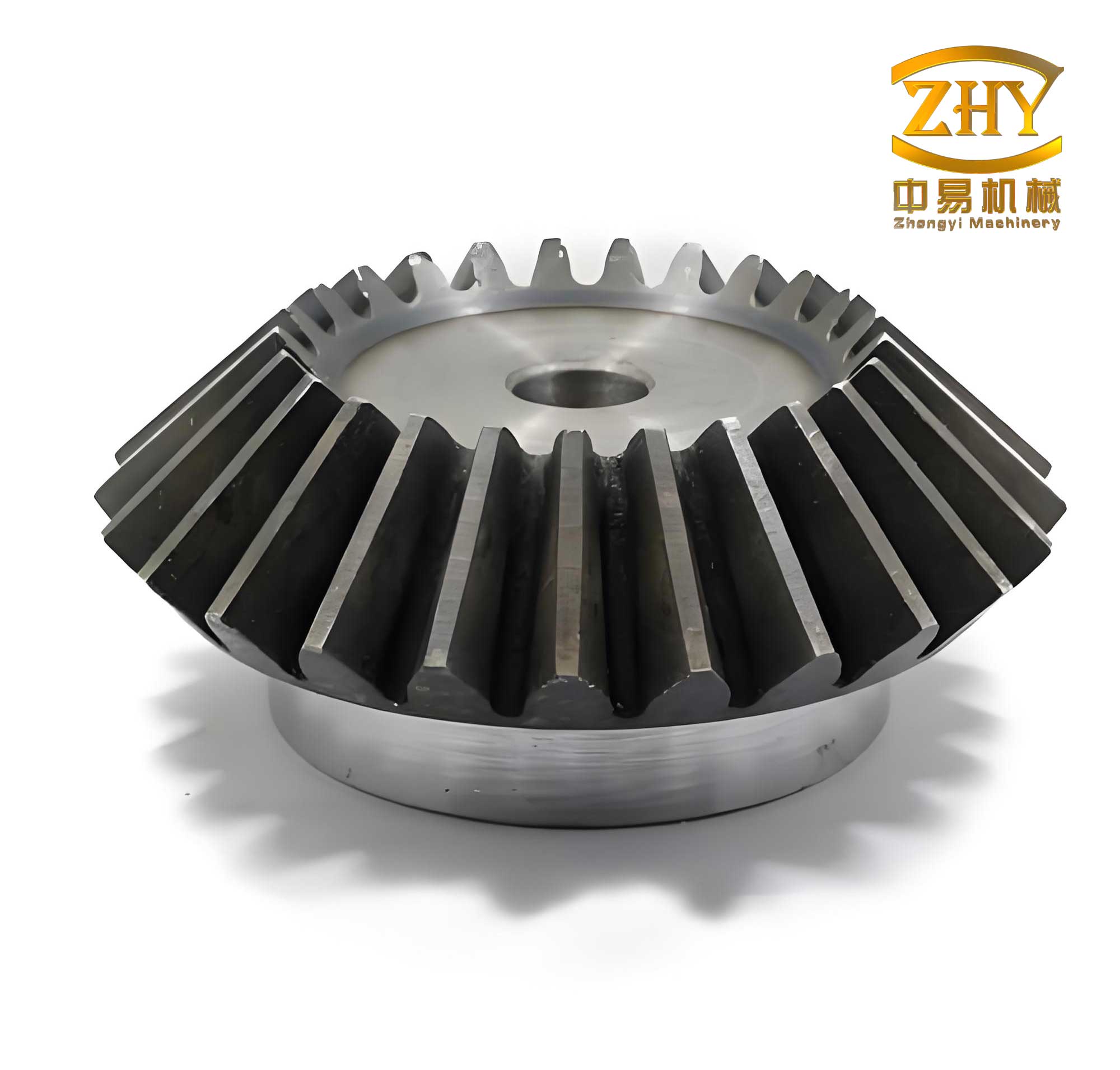
The core challenge in assembling bevel gears lies in achieving a precise meshing relationship between the pinion (main gear) and the ring gear (slave gear). This relationship is governed by several geometric alignment parameters, often referred to as misalignments. Even minor deviations from theoretical design specifications can lead to suboptimal contact patterns—such as edge bearing—and incorrect backlash, resulting in premature wear, pitting, scoring, or even catastrophic failure. Therefore, developing a robust virtual assembly technique is not merely an academic exercise but a practical necessity for modern manufacturing. This article details a comprehensive approach, combining simulation analysis with physical validation, to address assembly anomalies for a passenger car drive axle. The methodology focuses on using simulation to diagnose issues and prescribe shim adjustment schemes, effectively bridging the gap between digital design and physical assembly.
The fundamental parameters controlling the meshing of bevel gears are the misalignments. For a hypoid or spiral bevel gear pair, four primary misalignments define the relative position between the pinion and ring gear axes: Pinion Offset (P), Gear Offset (G), Shaft Angle Error (A), and Eccentricity or Offset Distance Error (E). These are illustrated conceptually in the following relationship defining the theoretical position vector between gear axes:
$$ \vec{M} = P\hat{i} + G\hat{j} + E\hat{k} + A\hat{\theta} $$
Where \(\hat{i}, \hat{j}, \hat{k}\) are unit vectors along the pinion axis, gear axis, and offset direction, respectively, and \(\hat{\theta}\) represents angular deviation. In practice, \(A\) and \(E\) are largely determined by housing machining accuracy and bearing seat tolerances, while \(P\) and \(G\) can be actively adjusted via shims during assembly. The tooth contact pattern \(C(x,y)\) and backlash \(B\) are functions of these misalignments and the gear geometry:
$$ C = f(P, G, E, A, \phi, \Psi) $$
$$ B = g(P, G, E, A, \beta) $$
Here, \(\phi\) represents the gear tooth surface geometry parameters, \(\Psi\) denotes load conditions, and \(\beta\) is the gear design backlash parameter. The objective of virtual assembly is to model these functions accurately to predict \(C\) and \(B\) for a given set of assembly conditions.
| Misalignment Type | Symbol | Primary Influence | Adjustable via Shims? |
|---|---|---|---|
| Pinion Setting Distance | P | Contact pattern length, heel/toe bias | Yes |
| Gear Setting Distance | G | Contact pattern height, root/top bias | Yes |
| Shaft Angle Error | A | Pattern skewness, differential flank contact | No (Housing) |
| Offset Distance Error | E | Pattern lateral shift, conjugate action | No (Housing) |
In this investigation, the virtual assembly process was implemented using specialized gear contact analysis software, GEMS (Gear Engineering Modeling and Simulation). This software employs tooth contact analysis (TCA) and loaded tooth contact analysis (LTCA) algorithms to simulate the meshing of bevel gears under various alignment conditions. The software inputs include detailed gear geometry data (such as tooth profile, spiral angle, pressure angle), material properties, and the aforementioned misalignment parameters. The output provides high-resolution visualization of the contact pattern on the tooth flank and calculates the resulting backlash.
The subject of this study is a passenger car drive axle utilizing an equal-depth hypoid bevel gear set. The theoretical design specifications for the contact pattern and backlash were established during the gear design phase. Under ideal conditions, the contact pattern should be centered on the tooth flank, both in the drive (forward) and coast (reverse) directions, with a backlash range of 0.14 mm to 0.26 mm. However, the initial physical assembly of the first prototype unit yielded unacceptable results. The observed contact pattern on the physical gear set, obtained via rolling check under a light load of 5 N·m, was severely biased. For the drive side, the pattern was shifted towards the toe and top (large end, tooth top). For the coast side, it was shifted towards the heel and top (small end, tooth top). Furthermore, the measured average backlash was 0.42 mm, far exceeding the design上限.
Such a condition is problematic. An edge-bearing contact pattern concentrates stress on a small area of the tooth, drastically reducing load capacity and leading to accelerated wear, pitting, and risk of fracture under high torque. Excessive backlash increases impact forces during meshing, contributing to higher noise levels, vibration, and abnormal wear. Diagnosing the root cause of this misassembly through traditional trial-and-error would require multiple disassembly and reassembly cycles, risking damage to components like bearings and housing seats. This is where the virtual assembly approach proves its value.
The first step in the virtual diagnostic process was to rule out gear manufacturing errors as the primary cause. High-quality bevel gears are typically qualified on a gear rolling tester, where they are mounted at their theoretical setting distances and checked for contact pattern and backlash. The certification report for the gear set in question showed a contact pattern very close to the theoretical design when mounted on the tester at the nominal settings and a median backlash. This indicated that the inherent quality of the bevel gears themselves was acceptable and not the source of the assembly problem.
Next, I gathered the dimensional inspection reports for all critical assembly components: the differential carrier (housing), the pinion and ring gear bearings, the spacer sleeves, and the shims. From these reports, the potential contributions to the four misalignments due to manufacturing tolerances were quantified. A statistical stack-up analysis was performed to estimate the worst-case or probable deviation in P, G, E, and A. The shaft angle error A was found to be negligible. The contributions to P and G from component tolerances were on the order of a few hundredths of a millimeter. The offset error E had a measurable but small deviation.
I then constructed a simulation model in GEMS software, inputting the nominal gear geometry and the misalignment values derived from the tolerance stack-up. The simulated contact pattern under these “as-manufactured” conditions showed a slight bias towards the root of the tooth, but it was still largely centered. The simulated backlash was 0.153 mm, well within the design range. This simulation suggested that the cumulative effect of component manufacturing tolerances alone could not explain the severe misassembly observed in practice. A key simulation was run considering only the housing-induced offset error E. The resulting contact pattern change was minimal, and the backlash remained near 0.213 mm. This confirmed that the non-adjustable misalignment E was not the dominant factor.
Therefore, the problem had to stem from the adjustable parameters: the pinion setting distance P and the gear setting distance G. Essentially, the shims selected for the initial assembly were incorrect, leading to large, compensatory errors in P and G. To confirm this hypothesis, I used the GEMS software in a reverse-engineering mode. I systematically varied the P and G input values in the simulation, aiming to reproduce a contact pattern that closely matched the abnormal pattern observed on the physically assembled unit. After several iterations, a simulation scenario was found that yielded a remarkably similar pattern bias—toe/top for drive, heel/top for coast—and a simulated backlash of approximately 0.44 mm (close to the measured 0.42 mm). The misalignment values required to achieve this simulated state were: Pinion Offset P = +0.025 mm and Gear Offset G = +0.40 mm. The positive sign indicates an increase in the nominal setting distance.
This virtual diagnosis was crucial. It translated the observed physical problem (bad contact pattern and backlash) into quantifiable assembly errors: the pinion was positioned 0.025 mm too far out, and the ring gear was positioned 0.40 mm too far out from their theoretical settings. The next step was to devise a corrective shim adjustment plan. The drive axle assembly utilizes four shim locations: an inner pinion shim (adjusts P), an outer pinion shim (adjusts pinion bearing preload), and left and right differential carrier shims (adjust G and differential bearing preload collectively). The relationship between shim thickness changes and the resulting changes in P and G can be expressed linearly for small adjustments:
$$ \Delta P = \alpha \cdot \Delta S_{pinion-inner} $$
$$ \Delta G = \beta_L \cdot \Delta S_{diff-left} + \beta_R \cdot \Delta S_{diff-right} $$
Where \(\alpha\), \(\beta_L\), and \(\beta_R\) are sensitivity coefficients, typically close to 1 for direct-acting shims. \(\Delta S\) denotes the change in shim thickness. To correct the diagnosed errors, we needed: \(\Delta P = -0.025 mm\) and \(\Delta G = -0.40 mm\). This implied increasing the inner pinion shim thickness by 0.025 mm to move the pinion inward, decreasing the left differential shim (on the ring gear’s far side) by 0.40 mm, and increasing the right differential shim (on the ring gear’s near side) by 0.40 mm to move the ring gear assembly inward while maintaining differential bearing preload. The outer pinion shim would be adjusted separately to achieve the specified pinion bearing preload.
| Shim Location | Primary Function | Initial Assembly Thickness (mm) | Proposed Corrective Thickness (mm) | Final Adjusted Thickness (mm) |
|---|---|---|---|---|
| Pinion Inner Shim | Adjust Pinion Setting (P) | 3.650 | 3.675 (+0.025) | 3.675 |
| Pinion Outer Shim | Pinion Bearing Preload | 2.200 | 2.225 (for preload) | 2.225 |
| Diff. Left Shim (Gear Far Side) | Adjust Gear Setting (G), Preload | 3.000 | 2.600 (-0.400) | 2.600 |
| Diff. Right Shim (Gear Near Side) | Adjust Gear Setting (G), Preload | 2.775 | 3.175 (+0.400) | 3.200* |
*Final adjustment: Increased by an additional 0.025 mm to achieve proper differential bearing preload after initial corrective assembly check.
The proposed shim kit was used in a new physical assembly. After assembling the drive axle with these shims, the differential bearing preload was found to be slightly low. Therefore, a final micro-adjustment was made: the right differential shim was increased by one more step (0.025 mm) to a final thickness of 3.200 mm. This minor change affects G minimally but ensures correct bearing setting. The fully assembled unit was then subjected to the standard rolling check. The results were highly satisfactory. The contact pattern was now centered on the tooth flank for both drive and coast sides, exhibiting the desired elliptical shape within the central region. The measured average backlash was 0.20 mm, perfectly within the specified range of 0.14 mm to 0.26 mm. The bearing preloads for both the pinion and the differential were also verified to be within specification.
The success of this virtual assembly guided correction validates the methodology. By using simulation to model the complex interaction of bevel gears under misaligned conditions, we were able to accurately diagnose the root cause of an assembly failure without destructive or repetitive physical trials. The process highlighted several important aspects. First, a disciplined workflow integrating component inspection data, simulation, and physical verification is essential. The virtual model’s accuracy hinges on precise input data, including gear geometry and measured component dimensions. Second, while simulation is powerful, it has limitations. In this case, the simulated contact pattern trend matched reality, but the exact pattern shape and sensitivity to misalignment might not be perfectly captured due to modeling simplifications regarding surface micro-geometry and elastic deformations under very light load. Nevertheless, the direction and magnitude of required adjustments were correctly identified.
The broader implication of this virtual assembly technology for bevel gears is significant for industry. It enables what is often called “right-first-time” assembly, reducing prototype build times, lowering costs associated with rework and scrap, and improving final product quality and consistency. For new gear designs or new production lines, simulation can be used proactively to define initial shim selection guidelines or even to optimize housing tolerances by understanding the sensitivity of the gear mesh to various manufacturing errors. The methodology can be extended to study the effects of thermal deformation under operating conditions or the impact of run-in wear on contact pattern evolution.
In conclusion, the virtual assembly of bevel gears, centered on sophisticated contact simulation software, represents a paradigm shift from experience-based adjustment to knowledge-based precision assembly. This study demonstrated a practical application where simulation diagnosed specific misalignments in pinion and gear setting distances, leading to a precise shim adjustment plan that resolved unacceptable contact pattern and backlash issues. The corrected assembly met all design specifications, confirming the efficacy of the approach. The core principle is to minimize the net gear mesh misalignment, and virtual tools provide the fastest, most economical path to achieve this for complex assemblies like drive axles. As simulation fidelity continues to improve and integrates more closely with manufacturing data systems, the virtual assembly of bevel gears will become an indispensable standard practice in automotive and other gear-dependent industries, ensuring the reliable and efficient performance of these critical mechanical components.