
In the field of mechanical engineering, the worm gear drive is a crucial mechanism for transmitting power between non-intersecting shafts, typically at right angles. It offers advantages such as high reduction ratios, compact design, and smooth operation, making it widely used in various industrial applications like conveyors, lifts, and automotive systems. However, traditional design methods for worm gear drives often rely on empirical approaches and iterative trials, leading to suboptimal solutions that may not fully leverage material efficiency or performance potential. As an engineer focused on advancing mechanical design, I have explored multi-objective optimization techniques to address these limitations. This article presents a comprehensive methodology for optimizing worm gear drives, emphasizing key objectives like minimizing worm wheel crown volume and center distance while maximizing sliding speed within practical limits. Through detailed mathematical modeling and computational tools, this approach aims to enhance design efficiency and performance, ensuring that worm gear drives meet modern engineering demands for cost-effectiveness and reliability.
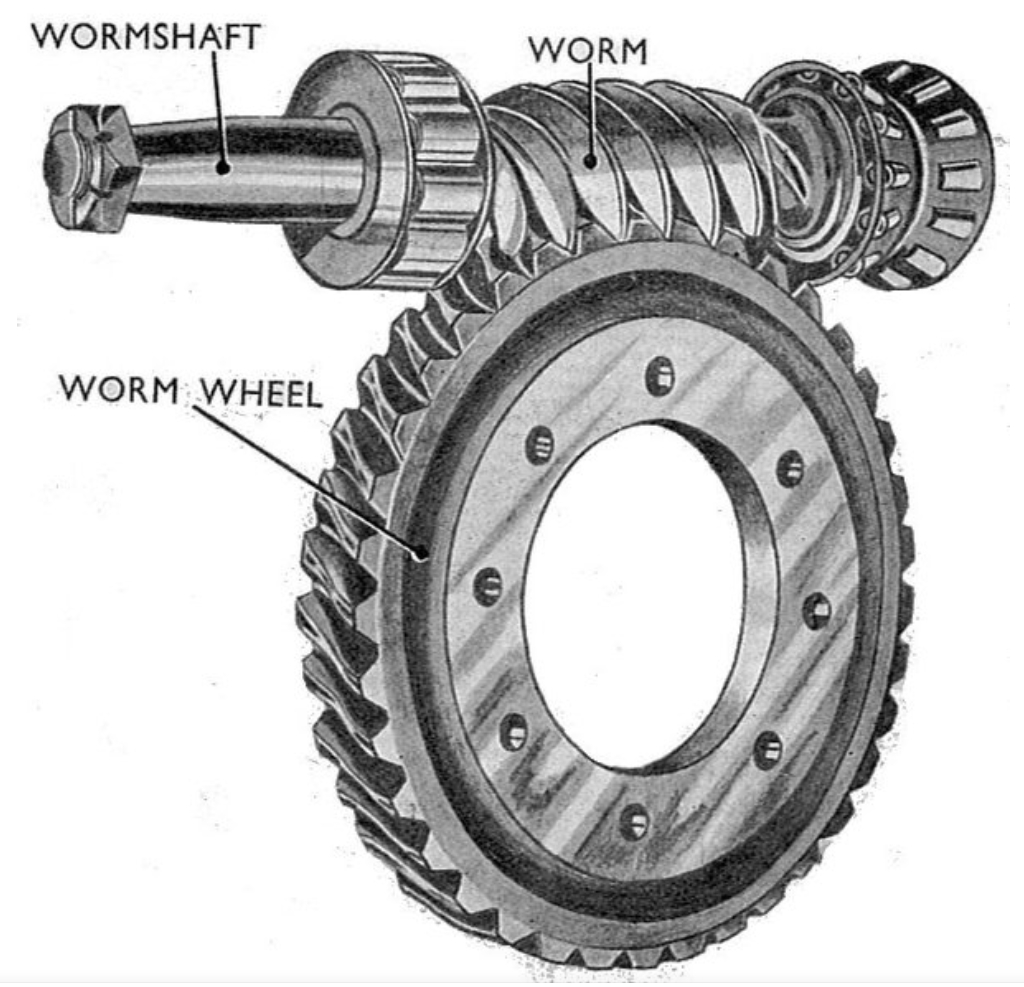
The traditional design process for a worm gear drive involves selecting initial parameters based on experience, followed by verification through strength and performance checks. If the design fails to meet requirements, parameters are adjusted iteratively until a satisfactory solution is found. This method is not only time-consuming but also heavily influenced by designer subjectivity, often resulting in varied designs for the same specifications without guaranteeing optimality. In contrast, multi-objective optimization provides a systematic framework to simultaneously consider multiple performance criteria, balancing trade-offs to achieve an overall superior design. For worm gear drives, this is particularly valuable due to the high cost of materials like bronze used in worm wheels and the need for compact, efficient configurations. My work focuses on developing a robust optimization model that integrates these aspects, leveraging computational tools like MATLAB to solve complex nonlinear problems efficiently.
To establish a multi-objective optimization model for worm gear drive design, it is essential to define the design variables, objective functions, and constraints based on mechanical principles. The worm gear drive operates through the meshing of a worm (similar to a screw) and a worm wheel, with key parameters including module, number of worm threads, and diameter quotient. These parameters directly influence critical aspects such as gear size, efficiency, and manufacturing cost. In this study, I consider a closed worm gear drive with specific operating conditions: input power of 5.5 kW, input speed of 970 rpm, transmission ratio of 21, load factor of 1.2, and expected service life of 12,000 hours. The materials include 40Cr steel for the worm (hardened to 45-55 HRC) and cast tin-phosphorus bronze (ZCuSn10P1) for the worm wheel rim, with a gray cast iron (HT100) core. These conditions set the foundation for the optimization framework, aiming to improve upon conventional designs that may overlook holistic performance metrics.
Mathematical Modeling for Worm Gear Drive Optimization
The core of the multi-objective optimization for worm gear drive lies in formulating appropriate objective functions and constraints. I select three primary objectives that are closely tied to the economic and functional aspects of the worm gear drive. First, minimizing the volume of the worm wheel crown, which is made of expensive bronze, reduces material cost and weight. Second, minimizing the center distance enhances compactness, facilitating installation in space-constrained environments. Third, maximizing the sliding speed within a safe range can improve transmission efficiency by promoting better lubrication. However, excessive sliding speed may lead to wear and thermal issues, so it is constrained appropriately. These objectives are transformed into mathematical expressions using design variables, allowing for systematic optimization.
The design variables are chosen as the module (m), number of worm threads (z1), and diameter quotient (q). These variables are fundamental in determining the geometry and performance of the worm gear drive. In vector form, they are represented as:
$$ \mathbf{X} = [z_1, m, q]^T = [x_1, x_2, x_3]^T $$
Using these variables, the objective functions are derived. The worm wheel crown volume, denoted as f1(X), is calculated based on the geometric dimensions of the worm wheel, including the throat diameter, root diameter, outer diameter, and width. The formula incorporates the transmission ratio i, module m, diameter quotient q, number of worm threads z1, and tooth width coefficient ψ (typically 0.67 to 0.75). The expression is:
$$ f_1(\mathbf{X}) = \frac{\pi \psi x_2^3 (x_3 + 2)}{4} \left[ \left( i x_1 + 2 + \frac{6}{x_1 + 2} \right)^2 – (i x_1 – 6.4)^2 \right] $$
This function aims to minimize the bronze usage, which is costly, thereby reducing the overall cost of the worm gear drive. The center distance, f2(X), is a direct measure of the compactness of the worm gear drive. It is given by:
$$ f_2(\mathbf{X}) = \frac{x_2 (x_3 + i x_1)}{2} $$
A smaller center distance indicates a more space-efficient design, which is desirable in many applications. The sliding speed, f3(X), affects the efficiency and thermal behavior of the worm gear drive. It is defined as:
$$ f_3(\mathbf{X}) = \frac{\pi x_2 x_3 n_1}{60000 \cos \gamma} $$
where γ is the lead angle of the worm, calculated as $$ \gamma = \arctan\left(\frac{x_1}{x_3}\right) $$, and n1 is the input speed in rpm. Maximizing sliding speed can enhance lubrication and reduce friction, but it must be controlled to prevent excessive wear. To combine these objectives into a single optimization problem, I use the goal programming approach, which normalizes each objective relative to an ideal value. The unified objective function is:
$$ f(\mathbf{X}) = \sum_{j=1}^{3} \left[ \frac{f_j(\mathbf{X}) – f_{0j}}{f_{0j}} \right]^2 $$
where f0j represents the ideal values for each objective, derived from preliminary analyses or design standards. This formulation allows the optimization algorithm to seek a balanced solution that minimizes deviations from the ideal targets, ensuring that all aspects of the worm gear drive are considered simultaneously.
Constraints in Worm Gear Drive Optimization
The optimization of worm gear drive must adhere to various constraints to ensure practical feasibility and mechanical integrity. These constraints include linear inequalities related to parameter ranges and nonlinear inequalities derived from strength, stiffness, efficiency, and thermal considerations. For the worm gear drive under study, the constraints are categorized as follows:
Linear inequality constraints define the allowable ranges for design variables based on engineering standards. For the number of worm threads, z1, it is typically between 2 and 6 for power transmissions to balance efficiency and manufacturability. Thus:
$$ g_1(\mathbf{X}) = 2 – x_1 \leq 0 \quad \text{and} \quad g_2(\mathbf{X}) = x_1 – 6 \leq 0 $$
However, from the transmission ratio i=21, the worm wheel teeth number z2 = i * z1 must be between 28 and 80 to avoid undercutting and ensure proper meshing. This leads to:
$$ g_3(\mathbf{X}) = 28 – i x_1 \leq 0 \quad \text{and} \quad g_4(\mathbf{X}) = i x_1 – 80 \leq 0 $$
Since i=21, these imply x1 must be at least 1.33 and at most 3.81, but combined with g1 and g2, the effective range for x1 is 2 to 3.81. For the module m, standard values for power transmissions range from 2 to 16 mm, so:
$$ g_5(\mathbf{X}) = 2 – x_2 \leq 0 \quad \text{and} \quad g_6(\mathbf{X}) = x_2 – 16 \leq 0 $$
The diameter quotient q is usually between 8 and 18 to ensure adequate stiffness and efficiency:
$$ g_7(\mathbf{X}) = 8 – x_3 \leq 0 \quad \text{and} \quad g_8(\mathbf{X}) = x_3 – 18 \leq 0 $$
Nonlinear inequality constraints are derived from mechanical performance criteria. The contact fatigue strength of the worm wheel rim, made of bronze, dictates a minimum size based on transmitted torque. The constraint is expressed as:
$$ g_9(\mathbf{X}) = \frac{20968.1}{x_1^2} – x_2^3 x_3 \leq 0 $$
This ensures that the worm gear drive can withstand the contact stresses without premature failure. Another critical aspect is the stiffness of the worm shaft, as excessive deflection can misalign the meshing and reduce efficiency. The deflection constraint is:
$$ g_{10}(\mathbf{X}) = 457970.92 x_1^2 \sqrt{10.45 \left( \frac{x_1}{x_3} \right)^2 + 1} – x_2^3 x_3 (x_3 – 2.4)^4 \leq 0 $$
This formula considers the tangential and radial forces on the worm, the moment of inertia of the worm shaft, and the allowable deflection, which is set as d1/1000. For the worm gear drive efficiency, a minimum value of 85% is required, leading to:
$$ g_{11}(\mathbf{X}) = 0.85 – \frac{0.95 x_1 (x_3 – 0.11 x_1)}{x_1 x_3 + 0.11 x_3^2} \leq 0 $$
This accounts for the friction angle and lead angle, ensuring that the worm gear drive operates efficiently. The sliding speed must not exceed 8 m/s to prevent excessive wear and thermal buildup:
$$ g_{12}(\mathbf{X}) = \frac{\pi x_2 x_3 n_1}{60000 \cos \gamma} – 8 \leq 0 $$
Finally, thermal balance is crucial for closed worm gear drives to avoid overheating. The constraint based on heat dissipation is:
$$ g_{13}(\mathbf{X}) = \frac{3262758}{[x_2 (x_3 + 21 x_1)]^{1.75}} – 40 \leq 0 $$
This ensures that the temperature rise of the lubricant remains within 40°C above ambient, considering the surface area of the gearbox and heat transfer coefficients. After analyzing these constraints, some are redundant; for instance, g2 and g4 are消极 constraints, so the optimization problem effectively involves 11 constraints. This set of constraints ensures that the optimized worm gear drive meets all mechanical and operational requirements while pursuing the multi-objective goals.
Implementation and Solution Using MATLAB Optimization Toolbox
To solve the multi-objective optimization problem for the worm gear drive, I employed the MATLAB Optimization Toolbox, which provides robust algorithms for constrained nonlinear optimization. The process involves writing functions for the objective and constraints, setting initial guesses and bounds, and using the fmincon solver to find the optimal solution. This approach leverages MATLAB’s computational power to handle the complexity of the worm gear drive model efficiently.
First, I defined the unified objective function in a file named wg_f.m. This function computes the normalized sum of squares based on the ideal values, which were obtained from a conventional design analysis. The code snippet is:
function f = wg_f(x)
gama = atan(x(1) / x(3));
f1 = 0.67 * pi * ((x(1) * 21 + 6 / (2 + x(1)) + 2)^2 - (x(1) * 21 - 6.4)^2) * x(2)^3 * (x(3) + 2) / 4;
f2 = (x(1) * 21 + x(3)) * x(2) / 2;
f3 = 1 / (0.0162 * pi * x(2) * x(3) / cos(gama));
f = ((f1 - 7.3393e6) / 7.3393e6)^2 + ((f2 - 442.12) / 442.12)^2 + ((f3 - 0.16939) / 0.16939)^2;
end
Here, the ideal values for crown volume, center distance, and sliding speed inverse are set as 7.3393e6 mm³, 442.12 mm, and 0.16939 s/m, respectively, based on preliminary calculations. The inverse of sliding speed is used to align with minimization. Next, the nonlinear constraints are defined in wg_y.m, which includes the five nonlinear inequalities g9 to g13. The code is:
function [c, ceq] = wg_y(x)
gama = atan(x(1) / x(3));
c(1) = 20968.1 / x(1)^2 - x(2)^3 * x(3);
c(2) = 457970.92 * x(1)^2 * sqrt(10.45 * (x(1) / x(3))^2 + 1) - x(2)^3 * x(3) * (x(3) - 2.4)^4;
c(3) = 0.85 - 0.95 * x(1) * (x(3) - x(1) * 0.11) / (x(1) * x(3) + 0.11 * x(3)^2);
c(4) = 0.0162 * pi * x(2) * x(3) / cos(gama) - 8;
c(5) = 3262758 / (x(2) * (x(3) + 21 * x(1)))^1.75 - 40;
ceq = [];
end
The linear constraints are handled separately through matrices A and b for inequality constraints, and lower and upper bounds lb and ub. The calling script wg_fy.m sets up the problem:
x0 = [2; 2; 8];
lb = [2; 2; 8];
ub = [3.81; 16; 18];
A = [-1 0 0; 1 0 0; 0 -1 0; 0 1 0; 0 0 -1; 0 0 1];
b = [-2; 3.81; -2; 16; -8; 18];
[x, fval] = fmincon(@wg_f, x0, A, b, [], [], lb, ub, @wg_y);
The initial guess x0 is set based on typical values for worm gear drive parameters. The bounds reflect the linear constraints: z1 from 2 to 3.81 (since i=21 limits z2 to 28-80, giving x1 between 28/21≈1.33 and 80/21≈3.81, but combined with the earlier range, we use 2 to 3.81), m from 2 to 16, and q from 8 to 18. The matrices A and b represent the linear inequalities for x1, x2, and x3 ranges. The fmincon solver then iteratively searches for the optimal vector X that minimizes the objective function while satisfying all constraints. This process demonstrates the power of computational tools in optimizing complex systems like worm gear drives, enabling precise and efficient design solutions.
Analysis of Optimization Results for Worm Gear Drive
After running the optimization algorithm, the results provide insights into the improved performance of the worm gear drive. The optimal design variables are obtained, and they are rounded to standard values for practical implementation in worm gear drive manufacturing. The comparison between conventional design and multi-objective optimization design is summarized in the table below, highlighting key metrics such as worm wheel crown volume, center distance, and transmission efficiency.
| Design Scheme | Number of Worm Threads (z1) | Module (m) in mm | Diameter Quotient (q) | Worm Wheel Crown Volume (mm³) | Center Distance (mm) | Transmission Efficiency (%) |
|---|---|---|---|---|---|---|
| Conventional Design | 4 | 10 | 16 | 1.4465 × 10⁷ | 500 | 88.41 |
| Multi-Objective Optimization Design | 4 | 8 | 10 | 5.0023 × 10⁶ | 376 | 88.99 |
From the table, it is evident that the multi-objective optimization significantly enhances the worm gear drive design. The worm wheel crown volume is reduced by approximately 65.42%, from 1.4465 × 10⁷ mm³ to 5.0023 × 10⁶ mm³. This reduction directly translates to lower material costs, especially since bronze is an expensive material. For the worm gear drive industry, this can lead to substantial savings in production without compromising performance. The center distance is reduced by 24.8%, from 500 mm to 376 mm, indicating a more compact design. This compactness is beneficial for applications where space is limited, such as in automotive or aerospace systems, making the worm gear drive easier to install and integrate. The transmission efficiency sees a slight improvement from 88.41% to 88.99%, demonstrating that the optimization balances multiple objectives without sacrificing efficiency. In fact, by maximizing sliding speed within constraints, the worm gear drive achieves better lubrication and reduced friction, contributing to this efficiency gain.
To further illustrate the mathematical outcomes, the optimal values of the design variables are z1=4, m=8 mm, and q=10. These values satisfy all constraints and minimize the unified objective function. For instance, checking the nonlinear constraints: the contact fatigue strength constraint g9(X) evaluates to a negative value, indicating satisfaction. Similarly, the stiffness constraint g10(X) is negative, ensuring the worm shaft deflection is within limits. The efficiency constraint g11(X) is negative as the achieved efficiency exceeds 85%, and the sliding speed constraint g12(X) is negative since the sliding speed is below 8 m/s. The thermal constraint g13(X) is also negative, confirming that the worm gear drive will operate within safe temperature ranges. These validations underscore the robustness of the optimization model for worm gear drive design.
The implications of these results extend beyond mere numbers. In practical terms, the optimized worm gear drive offers a lighter and more cost-effective solution while maintaining or improving performance. This aligns with modern engineering trends toward sustainability and resource efficiency. Moreover, the use of optimization tools like MATLAB streamlines the design process, reducing the time and effort required compared to traditional trial-and-error methods. For engineers working on worm gear drive systems, this approach provides a systematic pathway to achieve optimal designs that meet multiple criteria simultaneously.
Discussion on Multi-Objective Optimization Methodology
The multi-objective optimization methodology presented here for worm gear drive design offers several advantages over conventional approaches. By formalizing the design problem into mathematical objectives and constraints, it eliminates subjective biases and enables a comprehensive search of the design space. The worm gear drive benefits particularly from this because of its complex interplay between geometric parameters and performance metrics. For example, the module m affects both the size and strength of the gear teeth, while the diameter quotient q influences the lead angle and thus the efficiency and sliding speed. Through optimization, these parameters are tuned holistically to achieve the best compromise.
One key aspect is the handling of multiple objectives. In worm gear drive design, objectives like minimizing crown volume and center distance may conflict with maximizing sliding speed. The goal programming method used here assigns weights implicitly through normalization, allowing the solver to find a Pareto-optimal solution where no objective can be improved without worsening another. This is crucial for real-world applications where trade-offs are inevitable. Additionally, the constraints ensure that the optimized worm gear drive adheres to mechanical standards, such as strength and thermal limits, preventing impractical designs.
The role of computational tools cannot be overstated. MATLAB’s Optimization Toolbox provides advanced algorithms like interior-point methods that efficiently handle nonlinear constraints. For the worm gear drive problem, this reduces computation time and increases accuracy. Moreover, the toolbox allows for easy modification of parameters, making it adaptable to different worm gear drive specifications. For instance, if the input power or transmission ratio changes, the model can be re-run quickly to obtain new optimal designs. This flexibility is valuable in iterative design processes common in engineering.
However, there are challenges in multi-objective optimization for worm gear drives. The accuracy of the model depends on the correctness of the mathematical formulations and the assumed ideal values. In practice, factors like manufacturing tolerances and lubrication conditions may introduce variability. Future work could incorporate probabilistic methods or robust optimization to account for uncertainties. Furthermore, while this study focuses on specific objectives, other goals like noise reduction or durability could be included to enhance the worm gear drive design further. Despite these challenges, the current methodology provides a solid foundation for improving worm gear drive performance through systematic optimization.
Conclusion
In conclusion, the multi-objective optimization design method for worm gear drive offers a significant improvement over traditional design approaches. By focusing on minimizing worm wheel crown volume and center distance while maximizing sliding speed within safe limits, this method achieves a balanced solution that enhances both economic and functional aspects. The mathematical model, built with design variables z1, m, and q, along with comprehensive constraints, ensures that the optimized worm gear drive meets all mechanical requirements for strength, stiffness, efficiency, and thermal stability. The use of MATLAB Optimization Toolbox facilitates efficient solving, yielding results that show a 65.42% reduction in crown volume, a 24.8% reduction in center distance, and a slight increase in transmission efficiency compared to conventional design.
This work underscores the value of computational optimization in mechanical engineering, particularly for complex systems like worm gear drives. It demonstrates how multi-objective techniques can lead to more compact, cost-effective, and efficient designs, aligning with industry demands for performance and sustainability. For engineers and designers, adopting such methods can streamline the development process and produce superior worm gear drive solutions. As technology advances, further integration of optimization with simulation tools like FEM could unlock even greater potentials, making worm gear drives more reliable and adaptable to diverse applications. Ultimately, the pursuit of optimized designs is essential for advancing mechanical systems and meeting the evolving challenges of modern engineering.