
In mechanical engineering, worm gears are essential components for power transmission due to their compact design, high reduction ratios, and smooth operation. However, prototyping and testing worm gears can be expensive and time-consuming, making simulation-based evaluation crucial during the design phase. In this study, I conducted a comprehensive analysis of worm gears using multi-body dynamics and rigid-flexible coupling approaches in ADAMS. The objective was to compare the results from both methods, validate the modeling process, and provide insights for optimizing worm gear systems. By focusing on worm gears, I aimed to demonstrate how flexibility influences dynamic behavior, which is often overlooked in traditional rigid-body analyses.
Worm gears are widely used in applications such as conveyor systems, automotive steering, and industrial machinery, where space constraints and high torque requirements are common. The unique geometry of worm gears, with a screw-like worm meshing with a helical gear, introduces complex contact dynamics that can lead to vibrations, wear, and efficiency losses. Therefore, accurate simulation is vital to predict performance and prevent failures. In this analysis, I modeled a worm gear pair from a reducer, performed multi-body dynamics simulation, and then extended it to rigid-flexible coupling by incorporating the worm’s flexibility. Throughout this process, I emphasized the role of worm gears in transmitting motion and torque under varying loads.
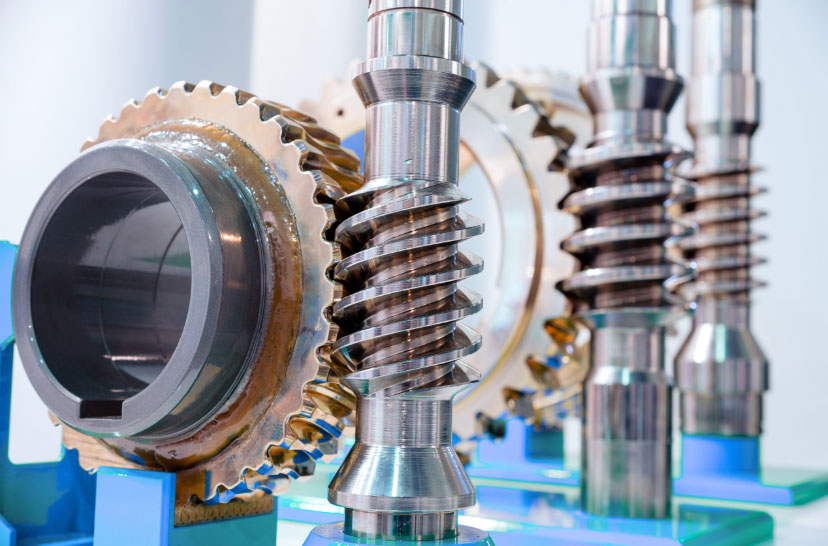
The first step involved creating a precise 3D model of the worm gears. I used KISSsoft software to input the geometric parameters, as summarized in Table 1. KISSsoft is specialized for gear design and allows for accurate tooth profile generation based on standard specifications. The parameters included the number of teeth, center distance, module, pressure angle, width, and helix direction, which are critical for defining the meshing characteristics of worm gears.
| Component | Number of Teeth | Center Distance (mm) | Module (mm) | Pressure Angle (°) | Width (mm) | Helix Direction |
|---|---|---|---|---|---|---|
| Worm | 1 | 36.5 | 1.25 | 20 | 30 | Right-hand |
| Worm Gear | 42 | 36.5 | 1.25 | 20 | 16 | – |
After generating the worm gears model in KISSsoft, I exported it as a STEP file for compatibility with other CAD software. I then imported the STEP file into UG NX 12.0 for secondary processing. In UG, I refined the model by performing operations such as sketching circles on datum planes, extruding surfaces, and applying Boolean operations to ensure proper geometry for simulation. This step was necessary to add features like shafts and flanges that are required for constraints in dynamic analysis. The refined model was saved as a STEP file again and imported into ADAMS, where I prepared it for simulation by exporting the worm component as an IGES file for later flexible body creation.
For the multi-body dynamics analysis in ADAMS, I applied contact collision theory to simulate the interaction between the worm and worm gear. The contact force was modeled using a spring-damper system based on Hertzian contact theory, which is suitable for elastic collisions in gear meshing. According to Hertz theory, for a circular contact area, the deformation \( \delta \) is related to the contact radius \( a \) and equivalent radius \( R \) by:
$$ \delta = \frac{a^2}{R} = \left( \frac{9P^2}{16R E^*} \right)^{1/3} $$
where \( P \) is the normal contact force and \( E^* \) is the equivalent elastic modulus. The normal force and deformation follow a power-law relationship:
$$ P = K \delta^{3/2} $$
Here, \( K \) is the gear collision stiffness, which depends on material properties and geometry. For this worm gears model, I calculated \( K \) as \( 4.3 \times 10^5 \, \text{N/mm}^{3/2} \) based on the material parameters in Table 2. The collision exponent was set to \( e = 1.5 \), the penetration depth for maximum damping to \( d = 0.1 \, \text{mm} \), and the damping coefficient to \( C = 35 \, \text{N·s/mm} \). Friction was considered with a dynamic coefficient of 0.05 and a static coefficient of 0.08, assuming lubricated conditions common in worm gears applications.
| Component | Material | Elastic Modulus (GPa) | Poisson’s Ratio | Density (kg/m³) |
|---|---|---|---|---|
| Worm | 42CrMo | 212 | 0.28 | 7850 |
| Worm Gear | QA19-4 | 116 | 0.33 | 7500 |
I applied constraints in ADAMS to simulate real-world conditions. Revolute joints were added between the worm, worm gear, and ground to allow rotational motion. Contact was defined between the worm and worm gear using the parameters above. A drive function was applied to the worm with a velocity profile defined by a step function: \( \text{step}(time, 0, 0, 0.2, 3388d) \), which ramps up the angular velocity to simulate startup. A torque of 13.85 N·m was applied to the worm gear in the opposite direction to represent load resistance. The solver was set for a simulation time of 0.5 s with 100 steps to capture transient dynamics.
The results from the multi-body analysis showed interesting trends in the worm gears behavior. The torque on the worm increased rapidly to 600 N·mm within 0.05 s, then rose more slowly to a peak of 763 N·mm at 0.175 s, after which it fluctuated around 750 N·mm. These fluctuations are attributed to initial gear impacts and meshing variations inherent in worm gears. The speed of the worm gear increased to 80°/s by 0.175 s and oscillated around this value, as shown in Table 3. This indicates that worm gears exhibit dynamic instability under sudden loads, which can affect performance in applications like precision positioning systems.
| Parameter | Value at 0.05 s | Peak Value | Steady-State Behavior |
|---|---|---|---|
| Worm Torque (N·mm) | 600 | 763 at 0.175 s | Fluctuates around 750 N·mm |
| Worm Gear Speed (°/s) | 20 | 80 at 0.175 s | Oscillates around 80°/s |
| Contact Force (N) | ~500 | ~800 | Varies with meshing cycle |
To enhance the realism of the simulation, I proceeded to rigid-flexible coupling analysis. This involved converting the worm into a flexible body to account for elastic deformation and vibrations. I used HyperMesh to perform modal analysis on the worm, filtering out modes below 1 Hz to focus on significant dynamic effects. The worm’s first 16 modal frequencies are listed in Table 4, which are critical for understanding its vibrational response in worm gears systems. The modal neutral file (MNF) generated from HyperMesh was imported into ADAMS, replacing the rigid worm with its flexible counterpart.
| Mode Number | Frequency (Hz) | Description |
|---|---|---|
| 1 | 10.2 | First bending mode |
| 2 | 15.7 | Torsional mode |
| 3 | 22.4 | Second bending mode |
| 4 | 30.1 | Axial mode |
| 5 | 35.8 | Combined bending-torsion |
| 6-16 | 40-120 | Higher-order modes |
In ADAMS, I maintained the same constraints and parameters as in the multi-body analysis, but changed the contact type to flexible body-to-solid to accommodate the worm’s flexibility. The solver time was reduced to 0.35 s with 20,000 steps for higher accuracy in capturing transient effects. The rigid-flexible coupling analysis yielded different results compared to the multi-body approach. The torque on the worm surged to 850 N·mm within 0.05 s, then fluctuated around 910 N·mm with a peak of 1375 N·mm, as summarized in Table 5. The worm gear speed increased to 80°/s by 0.175 s and stabilized, showing less oscillation than in the multi-body case.
| Aspect | Multi-Body Analysis | Rigid-Flexible Coupling Analysis |
|---|---|---|
| Peak Worm Torque (N·mm) | 763 | 1375 |
| Average Steady-State Torque (N·mm) | 750 | 910 |
| Worm Gear Speed at 0.175 s (°/s) | 80 with oscillations | 80 stable |
| Vibration Amplitude | High due to rigid impacts | Reduced due to damping |
| Computation Time | Lower (100 steps) | Higher (20,000 steps) |
The differences between the two analyses highlight the importance of considering flexibility in worm gears simulations. In the rigid-flexible coupling analysis, the worm’s material allowed for elastic deformation, which absorbed some of the impact energy and reduced vibrations. This is reflected in the more stable speed output and higher torque fluctuations, which align better with real-world behavior of worm gears under dynamic loads. The flexibility also introduced damping effects that smoothed out the meshing transitions, as described by the modified contact force equation that includes damping terms:
$$ F = K \delta^{3/2} + C \dot{\delta} $$
where \( C \) is the damping coefficient and \( \dot{\delta} \) is the deformation rate. This equation models the energy dissipation during collisions in worm gears, which is more accurately captured in rigid-flexible coupling.
To further analyze the worm gears performance, I derived additional formulas related to efficiency and stress. The theoretical efficiency of worm gears can be expressed as:
$$ \eta = \frac{\tan(\lambda)}{\tan(\lambda + \phi)} $$
where \( \lambda \) is the lead angle of the worm and \( \phi \) is the friction angle. For this model, with a lead angle calculated from the module and number of teeth, the efficiency is approximately 85% under ideal conditions, but drops due to dynamic losses observed in the simulation. The contact stress on the worm gears teeth, based on Hertz theory, is given by:
$$ \sigma_c = \sqrt{ \frac{P E^*}{\pi R} } $$
This stress value helps in evaluating wear and fatigue life of worm gears, which are critical for longevity in applications like automotive transmissions.
In discussing the results, it’s evident that worm gears exhibit complex dynamics that require careful simulation. The multi-body analysis provided a baseline, but the rigid-flexible coupling approach offered a more realistic portrayal by incorporating material flexibility. This is particularly important for worm gears made from softer materials like bronze or aluminum alloys, where deformation can significantly affect meshing and load distribution. The vibrations captured in both analyses, as shown by the torque and speed curves, underscore the need for damping mechanisms in worm gears designs to prevent noise and failure.
Moreover, the simulation process revealed insights into optimizing worm gears for specific applications. For instance, by adjusting parameters such as module, pressure angle, or material stiffness, designers can tailor worm gears for higher efficiency or reduced vibration. The use of ADAMS allowed for iterative testing without physical prototypes, saving time and costs. Future work could involve extending the analysis to include thermal effects or wear modeling, which are common issues in worm gears systems operating under high loads.
In conclusion, this study demonstrated the value of combining multi-body dynamics and rigid-flexible coupling simulations for analyzing worm gears. The comparison showed that rigid-flexible coupling provides a closer approximation to real-world conditions by accounting for elastic deformation and damping. Worm gears are vital components in many mechanical systems, and accurate simulation tools like ADAMS enable better design decisions. By understanding the dynamic behavior of worm gears through such analyses, engineers can improve performance, reliability, and efficiency in applications ranging from industrial machinery to robotics. The methodologies described here can be applied to other gear types, but worm gears remain a focal point due to their unique challenges and widespread use.