
In industrial applications, worm gears are fundamental components within speed reducers, prized for their high reduction ratios, compact design, and self-locking capabilities. However, their operational reliability is critically dependent on the precision of the meshing action between the worm and the worm wheel. Among various failure modes, the progressive deviation of the worm wheel tooth profile from its ideal geometry—a condition known as tooth profile deviation or change—presents a significant diagnostic challenge. This fault does not typically generate intense, abrupt vibrations but rather manifests as subtle modulations in the vibration signal, making early detection difficult. Left unaddressed, these deviations can escalate, leading to increased noise, reduced transmission efficiency, catastrophic failure, and unplanned downtime with substantial economic impact. This article presents, from a first-person research perspective, an integrated methodology for the effective extraction and diagnosis of fault features associated with tooth profile deviations in worm gears.
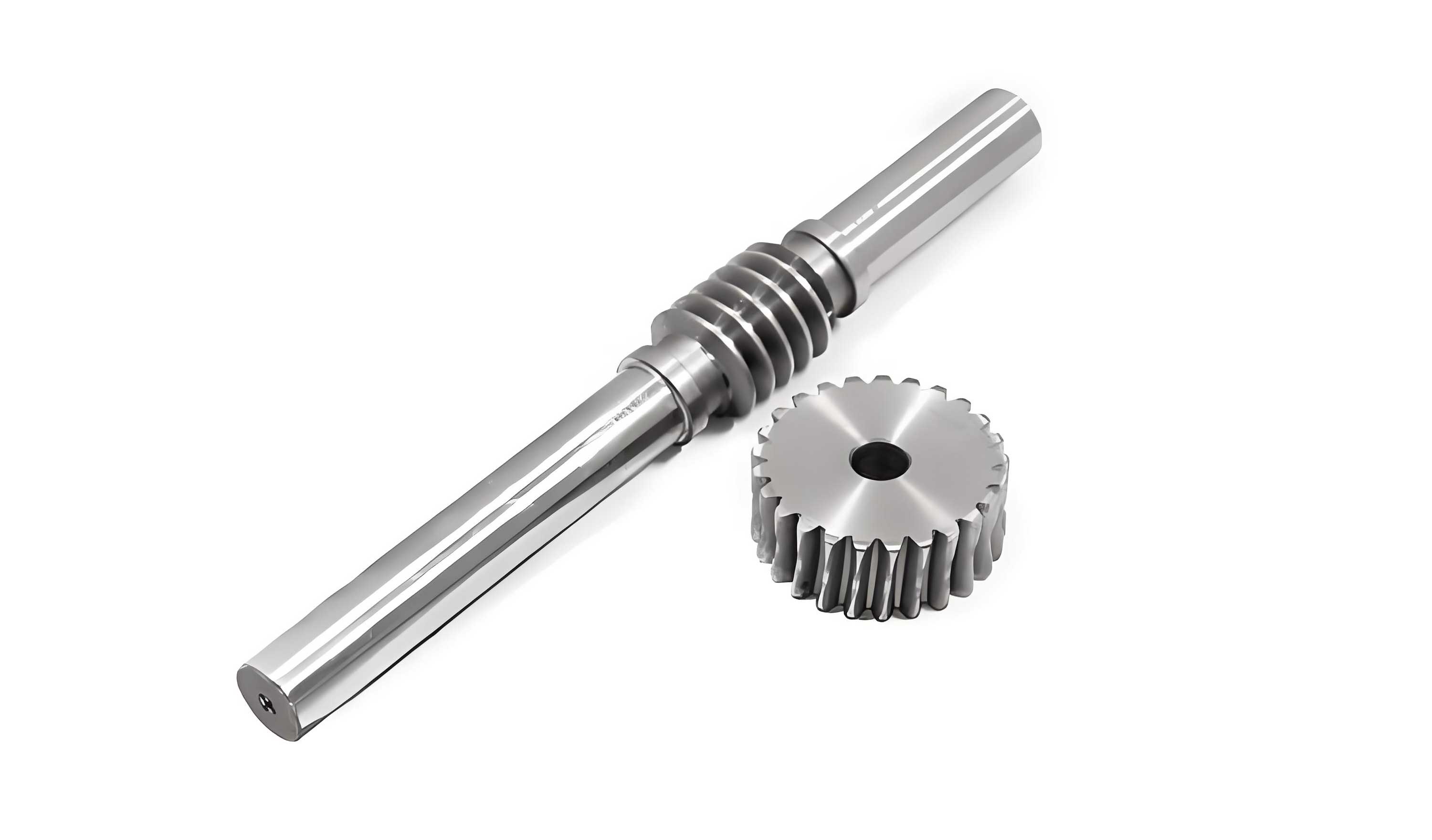
Characteristics of Tooth Profile Deviation Faults
The meshing of worm gears is a complex interaction. Under ideal conditions, contact occurs smoothly along the designed profile. Tooth profile deviation disrupts this ideal contact pattern. The primary characteristics of this fault are as follows:
| Feature | Description | Impact on Signal |
|---|---|---|
| Modulation Phenomenon | The deviation causes a periodic variation in the meshing stiffness and contact point. This results in amplitude and frequency modulation of the primary meshing frequency. | The vibration signal exhibits sidebands around the gear mesh frequency (GMF). The modulating frequency is typically the rotational frequency of the worm wheel ($$f_{wheel}$$). |
| Energy & Impact Level | In early stages, the fault generates low-energy vibrations without significant impulsive shocks. As the deviation worsens, impact forces increase. | Early fault signals are often buried in background noise. Advanced faults show increased energy at modulation sidebands and may excite structural resonances. |
| Frequency Domain Manifestation | The fault signature is not a single new frequency but a family of frequencies centered on the GMF. | The signature appears as: $$f_{sideband} = f_{mesh} \pm n \cdot f_{wheel}$$, where $$n = 1, 2, 3, …$$. |
The core challenge is to isolate this modulation signature from raw, often non-stationary vibration data contaminated by noise and other machine vibrations.
Methodology for Fault Feature Extraction
The proposed method is a synergistic combination of Empirical Mode Decomposition (EMD), autocorrelation analysis, and the Hilbert transform. This combination is particularly effective for the non-stationary signals common in worm gears under varying load conditions.
1. Empirical Mode Decomposition (EMD) – The Adaptive Filter Bank
EMD is a data-driven technique that decomposes a complex signal into a set of intrinsic mode functions (IMFs). Unlike Fourier or wavelet transforms, it does not require a pre-defined basis function, making it ideal for analyzing signals from mechanical systems like worm gears where the signal characteristics are unknown a priori.
The fundamental assumption of EMD is that any signal comprises different simple intrinsic modes of oscillation. Each IMF must satisfy two conditions:
1. The number of extrema and the number of zero-crossings must either be equal or differ at most by one.
2. At any point, the mean value of the envelope defined by the local maxima and the envelope defined by the local minima is zero.
The sifting process for a signal $$x(t)$$ is as follows:
| Step | Procedure |
|---|---|
| 1. Initialization | Set the residue $$r_0(t) = x(t)$$, and IMF index $$i = 1$$. |
| 2. Sifting for IMFi |
a. Identify all local maxima and minima of $$r_{i-1}(t)$$. b. Interpolate the maxima and minima to form upper envelope $$e_{max}(t)$$ and lower envelope $$e_{min}(t)$$. c. Calculate the mean envelope: $$m(t) = \frac{[e_{max}(t) + e_{min}(t)]}{2}$$. d. Obtain the candidate: $$h(t) = r_{i-1}(t) – m(t)$$. e. Check if $$h(t)$$ satisfies IMF conditions. If not, treat $$h(t)$$ as new data and repeat steps a-d. f. Once satisfied, set IMFi(t) = h(t). |
| 3. Update Residue | Update the residue: $$r_i(t) = r_{i-1}(t) – IMF_i(t)$$. |
| 4. Iteration | Repeat Step 2-3 with $$r_i(t)$$ until the residue becomes a monotonic function or has negligible amplitude. The final result is: $$x(t) = \sum_{i=1}^{N} IMF_i(t) + r_N(t)$$. |
For fault diagnosis in worm gears, the raw vibration signal $$x(t)$$ is decomposed into $$N$$ IMFs, each representing a specific oscillatory mode from high to low frequency. The fault-related modulations are typically contained within one or a few specific IMFs, not the entire signal.
2. Autocorrelation Analysis – Enhancing Periodic Components
To identify which IMF contains the periodic fault signature, we employ autocorrelation analysis. The autocorrelation function $$R_{xx}(\tau)$$ measures the similarity between a signal and a time-lagged version of itself, effectively suppressing random noise and highlighting periodic components.
For a discrete IMF signal $$IMF_i[n]$$, the autocorrelation function is estimated as:
$$ R_{IMF_i}[k] = \frac{1}{N} \sum_{n=0}^{N-1-k} IMF_i[n] \cdot IMF_i[n+k] $$
where $$k$$ is the lag index and $$N$$ is the length of the signal.
The key properties guiding our analysis are:
| Property | Utility in Fault Detection |
|---|---|
| $$R_{xx}(0) \geq |R_{xx}(\tau)|$$ | Normalizes the function for comparison across different IMFs. |
| For random noise, $$R_{xx}(\tau) \to 0$$ as $$\tau$$ increases. | Noise-dominated IMFs will show rapidly decaying autocorrelation. |
| For a periodic component, $$R_{xx}(\tau)$$ will also be periodic. | IMF containing the fault modulation will exhibit clear periodic peaks in its autocorrelation at lags corresponding to the fault period ($$1/f_{wheel}$$). |
By calculating the autocorrelation for each IMF and examining the periodicity of $$R_{IMF_i}[k]$$, we can objectively select the IMF(s) most likely containing the tooth profile deviation signature from the worm gears.
3. Hilbert Transform – Demodulation and Spectrum Generation
Once the relevant IMF (denoted as $$c(t)$$) is selected, the Hilbert Transform is applied to construct its analytic signal and extract the instantaneous amplitude and frequency. This is crucial for demodulating the amplitude-modulated signal caused by the fault in the worm gears.
The analytic signal $$z(t)$$ is defined as:
$$ z(t) = c(t) + j \hat{c}(t) = A(t)e^{j\phi(t)} $$
where $$\hat{c}(t)$$ is the Hilbert transform of $$c(t)$$:
$$ \hat{c}(t) = \frac{1}{\pi} \text{P.V.} \int_{-\infty}^{\infty} \frac{c(\tau)}{t – \tau} d\tau $$
From this, we extract:
– Instantaneous Amplitude: $$A(t) = \sqrt{c^2(t) + \hat{c}^2(t)}$$
– Instantaneous Phase: $$\phi(t) = \arctan\left(\frac{\hat{c}(t)}{c(t)}\right)$$
– Instantaneous Frequency: $$f(t) = \frac{1}{2\pi} \frac{d\phi(t)}{dt}$$
The Hilbert Spectrum, $$H(f, t)$$, provides a time-frequency representation of the signal’s energy distribution. More importantly for diagnosis, the Fourier spectrum of the instantaneous amplitude $$A(t)$$—known as the Hilbert Demodulation Spectrum—directly reveals the modulating frequencies. For a worm gears fault, this spectrum will show a prominent peak at the worm wheel rotational frequency $$f_{wheel}$$ and its harmonics, clearly indicating the presence of amplitude modulation due to tooth profile deviation.
Integrated Fault Diagnosis Procedure
Based on the above methodology, a systematic procedure for diagnosing tooth profile deviation in worm gears is established.
| Phase | Actions & Objectives |
|---|---|
| 1. Data Acquisition |
• Set up a test rig comprising a motor, the worm gears reducer under test, a magnetic powder brake for loading, and torque sensors. • Mount a high-sensitivity accelerometer radially on the housing, as close as possible to the worm wheel bearings. • Acquire vibration signals under constant load and speed conditions using a data acquisition system connected to a PC. Sample at a rate sufficiently high to capture the gear mesh frequency (typically >2.5 * GMF). |
| 2. Signal Decomposition |
• Input the raw time-domain vibration signal $$x(t)$$ into the EMD algorithm. • Obtain a set of IMFs, $$IMF_1(t)$$ (highest freq.) to $$IMF_N(t)$$ (lowest freq.), and a residue $$r_N(t)$$. • Visually inspect IMFs for components resembling amplitude-modulated oscillations. |
| 3. IMF Selection via Autocorrelation |
• Calculate the autocorrelation function $$R_{IMF_i}(\tau)$$ for each IMF. • Plot the normalized autocorrelation ($$R_{IMF_i}(\tau)/R_{IMF_i}(0)$$) for each. • Identify the IMF whose autocorrelation plot shows significant periodic peaks that do not decay rapidly to zero. This IMF is selected as the fault-sensitive component $$c(t)$$. |
| 4. Feature Extraction via Hilbert Demodulation |
• Apply the Hilbert Transform to the selected IMF $$c(t)$$ to obtain its analytic signal. • Extract its instantaneous amplitude $$A(t)$$. • Compute the Fast Fourier Transform (FFT) of $$A(t)$$ to generate the Hilbert Demodulation Spectrum. • Analyze this spectrum for distinct peaks at the theoretical worm wheel rotational frequency $$f_{wheel}$$ and its harmonics ($$2f_{wheel}, 3f_{wheel}, …$$). The presence of these peaks confirms amplitude modulation. |
| 5. Fault Verification & Severity Assessment |
• Compare the amplitude of the peak at $$f_{wheel}$$ in the demodulation spectrum to a baseline (healthy state) spectrum. • Correlate the finding with the theoretical sideband pattern in the traditional frequency spectrum: $$f_{mesh} \pm n \cdot f_{wheel}$$. • A higher amplitude at $$f_{wheel}$$ indicates a more severe tooth profile deviation. |
Parameter Measurement and Validation
To validate the diagnostic conclusions drawn from vibration analysis, direct physical measurement of the worm gears is essential upon disassembly. This is performed using precision gear measurement instruments.
Key parameters measured for the worm wheel include:
– Profile Deviation ($$f_{f\alpha}$$): The distance between the actual profile and the design profile, measured normal to the design profile over a defined evaluation range.
– Lead Deviation ($$f_{f\beta}$$): The deviation of the actual helical lead from the theoretical lead.
– Pitch Variation ($$f_{fp}$$): The variation in the distance between corresponding flanks of adjacent teeth.
A significant positive correlation is typically observed between the amplitude of the $$f_{wheel}$$ peak in the Hilbert Demodulation Spectrum and the measured value of the profile deviation ($$f_{f\alpha}$$). This correlation provides a quantitative link between the extracted vibration feature and the physical wear state of the worm gears, transforming the diagnosis from a qualitative assessment to a more quantitative one. The relationship can often be modeled, for a specific gearbox type, as:
$$ V_{f_{wheel}} \approx k \cdot (f_{f\alpha}) + C $$
where $$V_{f_{wheel}}$$ is the amplitude at the worm wheel frequency in the demodulation spectrum, $$k$$ is a system-dependent coefficient, and $$C$$ is a constant.
Conclusion
The integration of Empirical Mode Decomposition, autocorrelation analysis, and the Hilbert Transform provides a powerful and adaptive framework for the early detection and diagnosis of tooth profile deviation faults in worm gears. The strength of this method lies in its ability to handle non-stationary signals, adaptively separate signal components without pre-defined bases, suppress noise, and precisely extract the modulating frequency characteristic of the fault. The autocorrelation step is critical, as it provides an objective criterion for selecting the fault-relevant IMF from the EMD decomposition, preventing arbitrary or inefficient selection. The final Hilbert Demodulation Spectrum offers a clear and direct visualization of the fault signature—the worm wheel rotational frequency. When correlated with direct physical measurements, this vibration-based approach enables predictive maintenance strategies, allowing for timely intervention before the degradation of worm gears leads to catastrophic failure and costly production losses. Future work may focus on automating the IMF selection process and integrating this method with machine learning classifiers for real-time, multi-fault diagnosis in complex gearbox systems.