
In my extensive experience with precision machinery, particularly in CNC machine tools and rotary tables, I have consistently encountered the critical issue of backlash in worm gear systems. Worm gears, comprising a worm (the driving component) and a worm wheel (the driven component), are fundamental for transmitting motion between perpendicular, non-intersecting shafts. Their primary advantages include smooth operation, high reduction ratios, and low noise. However, a significant drawback is the inherent and progressive development of backlash—the undesirable clearance or lost motion between the mating teeth of the worm and the worm wheel. This backlash becomes acutely problematic during reversals in direction, leading to positioning errors, vibration, chatter marks on machined surfaces, and overall degradation of machining accuracy. This article, drawn from my practical work in maintenance and precision engineering, delves into the common and effective methods for eliminating or minimizing this backlash in worm gears. I will systematically explore radial and axial adjustment techniques, supported by practical case studies, formulas, and comparative tables.
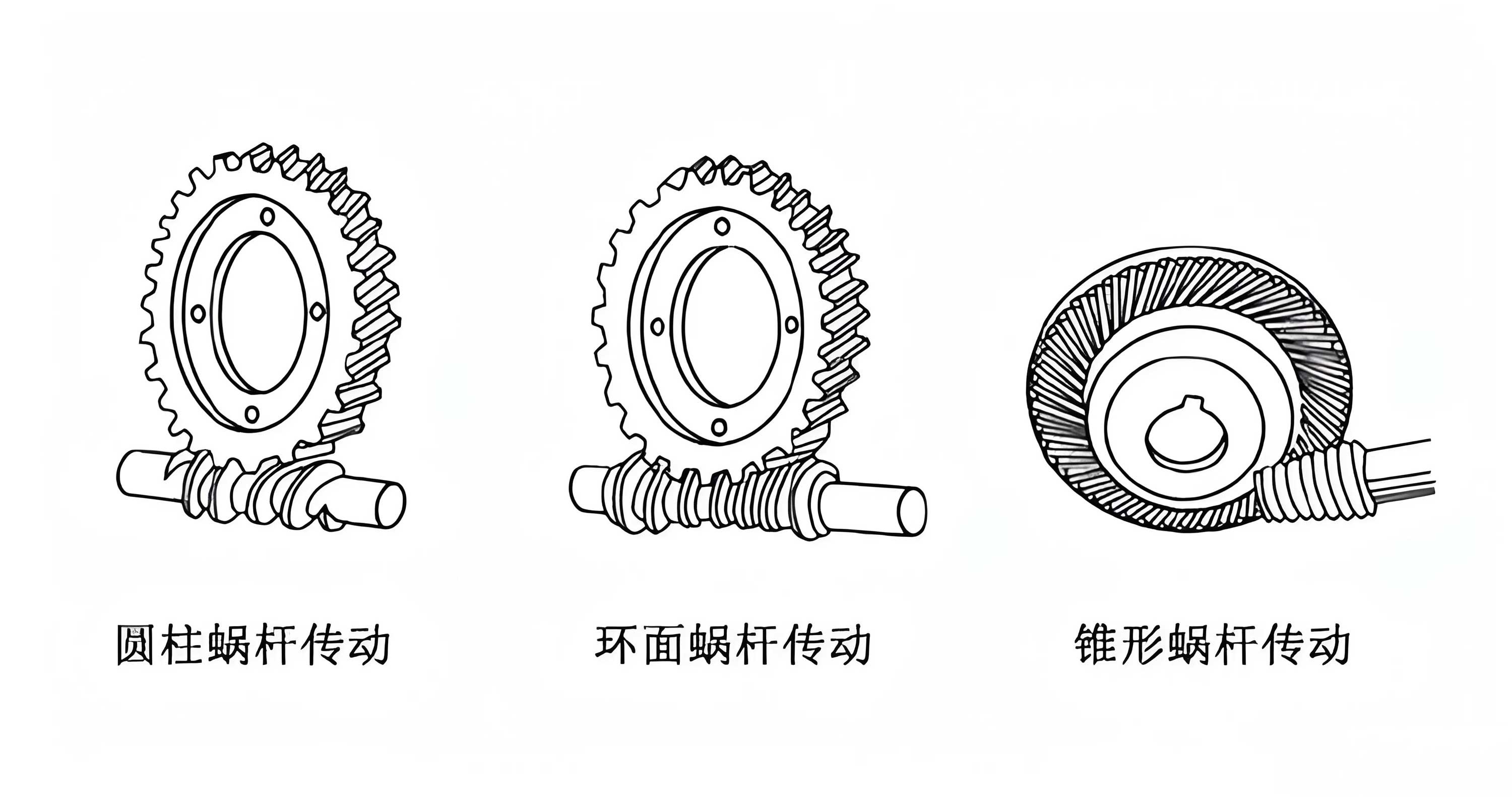
The fundamental cause of backlash in worm gears is wear. The sliding action between the worm and wheel teeth, especially under high load and speed, generates heat and accelerates wear. Over time, this wear removes material from the tooth flanks, increasing the clearance. In a semi-closed loop control system, this results in unaccounted positional error. In a full-closed loop system, the servo drive attempts to compensate for this physical gap, often leading to instability, hunting, and severe vibration. Therefore, mastering backlash adjustment is not merely maintenance; it is essential for preserving the life and precision of any equipment reliant on worm gears. The core principle of all adjustment methods is to forcibly bring the worm and wheel teeth into tighter contact, preloading the mesh to eliminate the free play.
Fundamental Principles and the Need for Backlash Control
To understand the adjustment methods, one must first grasp the basic geometry of worm gears. The worm is essentially a screw, and the worm wheel is a gear with teeth curved to envelop the worm. The transmission ratio is given by:
$$ i = \frac{N_w}{N_g} $$
where \( N_w \) is the number of threads (starts) on the worm and \( N_g \) is the number of teeth on the worm wheel. The high ratio often achieved with a single-start worm makes worm gears ideal for precise, slow rotation. However, the contact area is a line contact that slides, making lubrication critical. The backlash, \( B \), can be conceptually defined as the angular rotation of the worm wheel when the worm is held stationary, or vice versa. It relates to the center distance \( a \) and the pressure angle \( \alpha \). A simplified expression for the linear backlash along the pitch circle of the worm wheel can be approximated as a function of wear depth \( \delta \):
$$ B_l \approx 2 \delta \cdot \tan(\alpha) $$
This highlights how minute wear translates into measurable lost motion. The primary goal of the methods discussed below is to compensate for this \( \delta \) by repositioning the worm relative to the wheel.
Radial Adjustment Methods
Radial adjustment methods operate on the principle of altering the center distance between the worm and the worm wheel axes. By reducing this center distance, the teeth are forced into deeper mesh, thereby taking up the clearance. While conceptually straightforward and often easier to implement, these methods can lead to non-ideal contact patterns if not done carefully, potentially accelerating future wear. I categorize the common radial techniques as follows.
Eccentric Bush (Sleeve) Adjustment
In this configuration, the worm shaft is mounted within a dedicated eccentric bush or sleeve. This bush has an off-center bore, meaning the axis of the worm is not concentric with the outer diameter of the bush. The entire bush is housed in the machine’s bearing housing. By rotating the eccentric bush, the position of the worm axis shifts radially relative to the fixed worm wheel. This movement directly changes the center distance. A locking mechanism, often a set screw or a clamp, secures the bush after adjustment. The relationship between the rotation angle of the bush \( \theta \) and the resulting radial displacement \( \Delta r \) of the worm axis is:
$$ \Delta r = e \cdot \sin(\theta) $$
where \( e \) is the eccentricity of the bush. A variant uses two opposing eccentric bushes for finer control. The major drawback I have observed is that this adjustment can introduce misalignment, causing the worm axis to skew relative to the worm wheel plane. This leads to edge loading and concentrated stress on the teeth, which ironically hastens wear and defeats the purpose of the adjustment. It is best suited for applications where ultimate precision is not critical.
Shim or Pad Adjustment
A more stable, albeit labor-intensive, radial method involves the use of precision shims or ground pads. Here, the worm assembly (typically the entire worm and its bearing housing) is mounted against a reference surface on the machine structure. Between this mounting face and the structure, a set of calibrated shims or a single precisely ground pad is inserted. To reduce backlash, one removes the assembly, grinds down the thickness of the pad or removes shims, and reinstalls it. This brings the worm radially closer to the wheel. The adjustment amount \( \Delta s \) is directly the amount of material removed from the shim pack or pad. The challenge is that the required \( \Delta s \) is rarely known precisely and is not linearly related to the backlash reduction due to complex contact geometry. It often requires iterative disassembly, grinding, and reassembly—a trial-and-error process. The formula connecting shim change to center distance change is simple: \( \Delta a = -\Delta s \), assuming the shim is on the line of centers. However, the resulting backlash change \( \Delta B \) requires empirical determination for each specific worm gear set.
Maintenance Case Study: Radial Adjustment on a BOK607 Milling Machine
I recall a specific instance with a BOK607 vertical milling machine where the rotary table’s C-axis exhibited severe low-speed judder. Initial diagnostics ruled out the rotary encoder. Switching the control from full-closed to semi-closed loop eliminated the vibration, pointing directly to a mechanical backlash issue in the worm gear drive. Upon disassembly, significant wear was evident from copper dust in the lubricant. The adjustment mechanism was of the shim type. The initial shim thickness was measured. Without a precise calculation, I adopted an empirical approach. The first iteration involved grinding off 0.15 mm from the shim. Reassembly showed reduced but still perceptible play. A second grind of another 0.15 mm was performed. This time, the mesh became overly tight, creating excessive preload and resistance to manual rotation. To achieve the optimal preload, I added a 0.1 mm brass shim to the pack, creating a slight relief. After final assembly and testing, the C-axis operated smoothly without vibration. A laser interferometer check confirmed positioning accuracy within 3 arc-seconds, repeatability within 2 arc-seconds, and backlash reduced to 1 arc-second, fully restoring the machine to its factory specification. This case underscores the iterative nature of shim-based radial adjustment.
| Method | Mechanism | Advantages | Disadvantages | Typical Applications |
|---|---|---|---|---|
| Eccentric Bush | Rotating an off-center sleeve to shift worm axis. | Quick, convenient, requires no disassembly of worm shaft. | Risk of axis misalignment and skewed tooth contact, accelerating wear. | General-purpose machinery, where periodic readjustment is acceptable. |
| Shim/Pad Adjustment | Grinding/changing shims to move worm housing radially. | Stable, rigid setup once adjusted; good for heavy loads. | Time-consuming, iterative process requiring disassembly. | Machine tool rotary tables, indexing heads requiring high precision. |
Axial Adjustment Methods
Axial adjustment methods are generally superior for high-precision applications because they eliminate backlash without altering the critical center distance. This preserves the designed tooth contact pattern and pressure angle. Instead, these methods rely on axially displacing the worm or using special worm designs that allow the tooth thickness to be effectively varied. The wear compensation is achieved along the axis of the worm, which is much less sensitive to misalignment errors.
Variable Lead (Dual-Taper) Worm Adjustment
This design employs a special worm where the lead (or pitch) is not constant along its length. One common design is a dual-taper worm, where the tooth thickness varies progressively from one end to the other. The worm wheel is a standard constant-tooth-thickness gear. The worm is mounted in bearings that allow controlled axial movement but prevent rotation relative to its housing. When backlash increases due to wear, the worm is simply shifted axially toward the “fatter” portion of its teeth. This movement forces the flanks of the worm teeth against the flanks of the worm wheel teeth, taking up the clearance. The adjustment amount \( \Delta x \) (axial displacement) relates to the backlash reduction \( \Delta B \) through the lead gradient \( k \) (change in lead per unit length):
$$ \Delta B \approx k \cdot \Delta x $$
The lead gradient \( k \) is a design parameter, often very small, allowing for very fine adjustment. The main drawback is the higher cost and complexity of manufacturing a precision variable-lead worm. However, for critical applications, this cost is justified by the ease of maintenance and consistent performance.
Split (Dual) Worm Adjustment
This ingenious method uses a worm that is physically split into two coaxial halves. The left and right halves have identical nominal lead but can be rotated relative to each other or axially displaced. They are often connected via a precision differential thread or a setscrew arrangement. The worm wheel teeth are standard. In operation, one half of the worm primarily contacts one flank of the worm wheel teeth, while the other half contacts the opposite flank. To eliminate backlash, the two worm halves are adjusted so that they preload the worm wheel tooth in both rotational directions simultaneously. There are two primary implementation sub-methods:
- Tangential (Rotational) Adjustment: The two worm halves are threaded together with a fine-pitch differential thread. Rotating one half relative to the other causes a slight tangential shift, effectively changing the phasing between the teeth of the two halves. This creates a condition where both flanks of the worm wheel tooth are in constant contact with the respective worm halves.
- Axial Adjustment with Opposing Leads: The two halves are designed with slight opposing tapers or are simply spring-loaded apart. An axial clamping mechanism squeezes them together, forcing their respective flanks against the wheel.
The preload force \( F_p \) introduced by this adjustment must be carefully controlled to avoid excessive friction and heat generation. It can be related to the adjustment torque \( T_{adj} \) on the differential thread:
$$ F_p = \frac{2 \pi \cdot \eta \cdot T_{adj}}{p} $$
where \( p \) is the differential thread pitch and \( \eta \) is the efficiency. This method provides excellent, permanent backlash elimination but requires a more complex and costly worm assembly.
Maintenance Case Study: Axial Adjustment on an MCH800 Machining Center
A vivid example involved an MCH800 horizontal machining center where the B-axis (rotary table) exhibited violent vibration during rotation, especially under high inertia and low speed. Full-closed loop control exacerbated the issue. Switching to semi-closed loop eliminated the vibration, confirming a mechanical backlash problem. Inspection of the worm gear drive revealed a variable-lead worm design. One end of the worm was free, while the other end featured two locking (shrink) collars. The procedure was straightforward: loosen the locking collars, then gently tap the worm axially (from the wider-lead end toward the narrower-lead end) using a soft mallet and a dial indicator to monitor displacement. This axial movement, perhaps only 0.05-0.1 mm, was sufficient to take up the wear-induced clearance. The locking collars were then re-tightened to secure the worm in its new axial position. After reassembly and power-up, the B-axis ran smoothly with no vibration, and machine accuracy was fully restored. This case highlights the simplicity and effectiveness of axial adjustment in precision worm gears.
| Method | Mechanism | Advantages | Disadvantages | Typical Applications |
|---|---|---|---|---|
| Variable Lead Worm | Axial displacement of a worm with progressively changing tooth thickness. | Does not alter center distance; simple adjustment; maintains good contact pattern. | High-cost, complex worm manufacturing. | High-precision CNC rotary tables, radar drives, telescope mounts. |
| Split (Dual) Worm | Relative rotation or axial movement of two worm halves to preload wheel. | Extremely effective, near-zero backlash; high stiffness. | Very complex design and assembly; risk of over-preload and overheating. | Ultra-precision indexing systems, robotics, aerospace actuators. |
Advanced Considerations and Hybrid Systems
Beyond these fundamental methods, modern applications sometimes employ hybrid or electronically compensated systems. For instance, some high-end machine tools use a standard worm gear with a controlled preload mechanism, such as a hydraulic or pneumatic piston that applies axial force to the worm, effectively creating a “virtual” variable-lead effect. The preload force can be modulated based on load or even disengaged for free rotation. Furthermore, the stiffness of the entire system, including the worm gear housing and bearings, plays a crucial role in the effectiveness of any backlash adjustment. A compliant housing will absorb preload and allow backlash to reappear under load. The system stiffness \( K_{sys} \) can be modeled as a series of springs:
$$ \frac{1}{K_{sys}} = \frac{1}{K_{worm}} + \frac{1}{K_{bearing}} + \frac{1}{K_{housing}} $$
A successful backlash elimination strategy must ensure that \( K_{sys} \) is high enough that the elastic deformation under operating load is negligible compared to the backlash tolerance. Another critical factor is thermal expansion. Worm gears generate heat. The coefficients of thermal expansion for the worm (often steel) and the wheel (often bronze) differ. A design that is perfectly preloaded at room temperature may become over-constrained or develop clearance at operating temperature. The change in center distance \( \Delta a_{th} \) due to a temperature change \( \Delta T \) is:
$$ \Delta a_{th} = a \cdot (\alpha_{housing} \cdot \Delta T) $$
where \( \alpha_{housing} \) is the coefficient of thermal expansion of the gearbox housing material. This thermal effect must be considered in precision applications, sometimes necessitating temperature-controlled lubrication or materials with matched expansion coefficients.
General Procedure for Backlash Adjustment in Worm Gears
Based on my experience, I recommend the following systematic procedure when addressing backlash in any worm gear system, regardless of the specific method:
- Diagnosis: Confirm backlash is the root cause. Use dial indicators to measure linear or angular lost motion during reversal. Check for wear debris in lubricant.
- Documentation: Record all initial settings, shim thicknesses, and alignment marks before disassembly.
- Cleaning: Thoroughly clean all components to inspect wear patterns on teeth.
- Selection of Method: Identify the type of adjustment mechanism (radial via shim/eccentric bush or axial via variable-lead/split worm).
- Incremental Adjustment: Make small, measured adjustments. For radial methods, this means removing minimal material from shims (e.g., 0.05 mm increments). For axial methods, use a dial indicator to monitor axial displacement (e.g., 0.02 mm increments).
- Verification: After each adjustment, reassemble partially to check mesh feel. The worm should rotate smoothly with a slight, even drag—no binding and no perceptible “rock.”
- Final Assembly and Lubrication: Apply the correct grade and quantity of lubricant designed for sliding action in worm gears.
- Performance Test: Run the axis under no load, then under load. Check for temperature rise, which indicates excessive preload. Finally, perform a precision calibration to measure residual backlash and positioning accuracy.
In conclusion, the fight against backlash in worm gears is a central theme in maintaining precision mechanical systems. Both radial and axial adjustment methods have their place. Radial methods, like eccentric bushes and shim adjustment, offer simplicity and are adequate for many industrial applications. However, for the utmost precision and longevity in demanding applications like CNC machine tools, axial adjustment methods—particularly the variable lead worm and the split worm designs—are superior. They preserve the fundamental gear geometry while providing a straightforward means to compensate for wear. The choice depends on the required precision, cost constraints, and maintenance philosophy. As worm gears continue to be the workhorse for precise rotary motion transmission, understanding and skillfully applying these backlash elimination techniques remain indispensable skills for any maintenance engineer or machine designer. The key is a methodical approach, respecting the delicate balance between eliminating free play and introducing harmful preload, ensuring the longevity and accuracy of the valuable worm gear drive system.