
In the realm of precision mechanical transmission systems, the planetary roller screw assembly stands out as a critical component that converts rotational motion into linear motion with high efficiency and reliability. As a researcher deeply involved in intellectual property and advanced manufacturing, I find it imperative to conduct a comprehensive patent analysis on this technology. The planetary roller screw assembly, comprising a main screw, rollers, nut, ring gear, and flange, is renowned for its high load capacity, longevity, shock resistance, and dependability. Its applications span aerospace, new energy equipment, high-precision machine tools, automotive, marine, and robotics sectors. Given its pivotal role, especially in aerospace, analyzing the patent landscape of planetary roller screw assemblies is not just an academic exercise but a strategic necessity for innovation and competitive positioning.
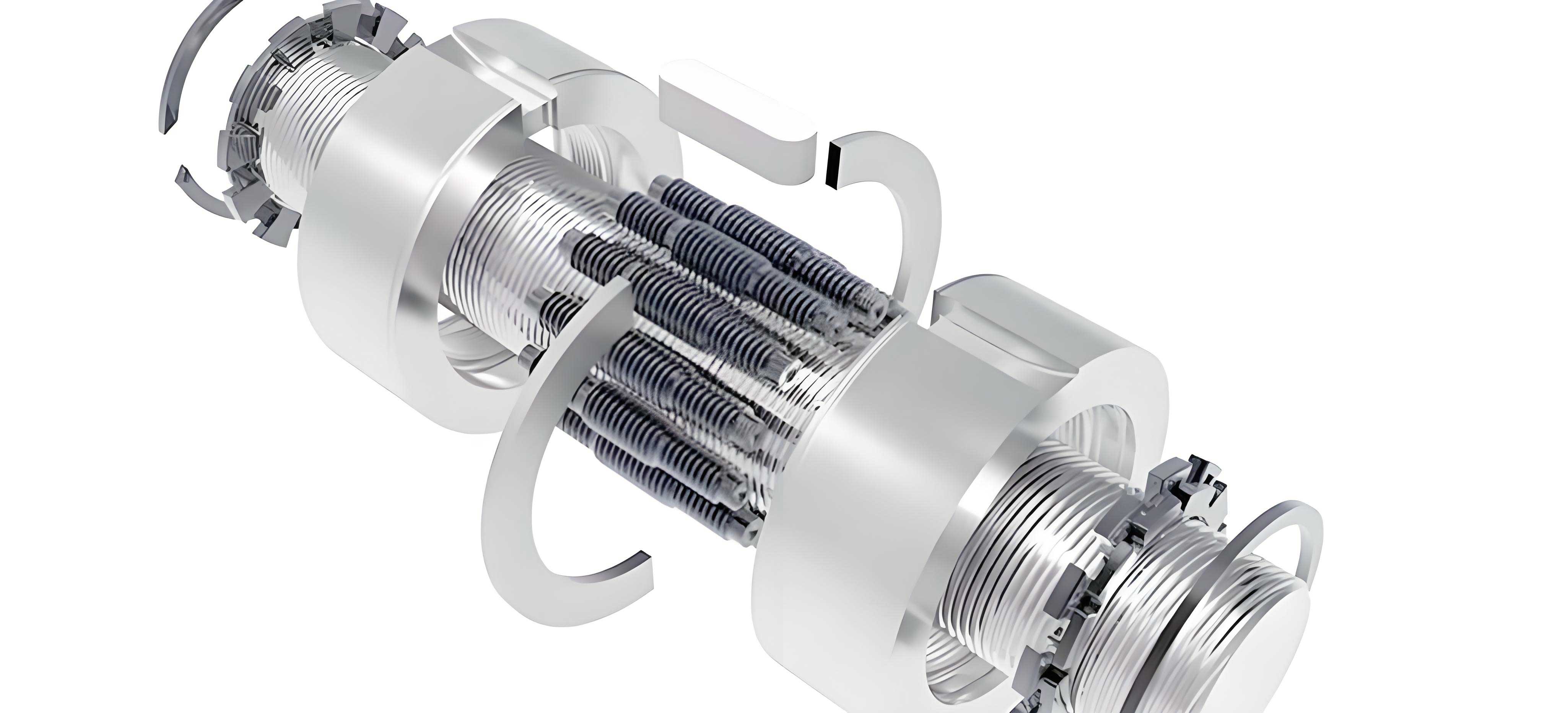
This analysis delves into the global patent data for planetary roller screw assemblies, sourced from databases like Incopat and Derwent, with a cutoff date of March 18, 2022. By examining key aspects such as patent application trends, technological compositions, regional distributions, and major applicants, we aim to uncover the current state and future trajectories of innovation in this field. The focus is on three core technological areas: design research of planetary roller screw assemblies, thread processing techniques, and comprehensive performance measurement methods. Through this lens, we can identify opportunities for advancement and potential risks, guiding strategic decisions in research and development.
Patent Application Trend Analysis
Using chronological analysis, we observe the evolution of patent filings for planetary roller screw assemblies over time. This approach reveals the technology’s lifecycle stages and predicts future trends. Patents related to planetary roller screw assemblies first emerged in the 1940s, but significant activity began in the late 1980s. The trend from 1988 onward can be segmented into two distinct phases: a germination period (before 2009) and a growth period (2010 to present). In the germination period, annual patent applications rarely exceeded 15, with contributions primarily from Japan, Germany, France, the United States, China, and Switzerland. These early patents focused on the overall structural design of planetary roller screw assemblies and thread manufacturing processes, driven by entities like Toyota, Schaeffler Technologies, SKF, and NSK Ltd.
The growth period marks a surge in patent activity, further divisible into two sub-phases. From 2010 to 2015, the increase was fueled by Germany, Sweden, France, and Japan, emphasizing structural design innovations. Post-2016, China’s patent share expanded dramatically, covering not only design but also thread processing, measurement techniques, and performance testing. This shift underscores China’s rising influence in the planetary roller screw assembly domain. To quantify this, consider the following table summarizing patent counts by period:
| Period | Year Range | Total Patents | Key Contributors | Primary Focus |
|---|---|---|---|---|
| Germination Period | Before 2009 | ~100 (cumulative) | Japan, Germany, France, US, China, Switzerland | Structural design, thread manufacturing |
| Growth Period (Phase 1) | 2010-2015 | ~150 | Germany, Sweden, France, Japan | Structural design innovations |
| Growth Period (Phase 2) | 2016-2022 | ~490 | China (dominant), others | Design, processing, measurement |
This trend indicates that the planetary roller screw assembly technology is still in a developmental stage, with ample room for innovation. The exponential growth in recent years suggests increasing competition and a need for robust patent strategies to safeguard intellectual property.
Patent Technology Composition Analysis
The patent landscape for planetary roller screw assemblies is categorized into three key technological branches: design research, thread processing research, and comprehensive performance measurement methods. Among these, design research dominates, accounting for 67.3% of the total 739 patents analyzed. Thread processing follows at 20.7%, while performance measurement trails at 12.0%. This distribution highlights areas where innovation is concentrated and where gaps exist, necessitating focused research efforts.
| Technology Branch | Number of Patents | Percentage | Sub-technologies |
|---|---|---|---|
| Design Research | 497 | 67.3% | Overall structure, meshing mechanism, contact characteristics, static stiffness, deformation, load distribution, equal-load methods, friction mechanism, transmission efficiency |
| Thread Processing Research | 153 | 20.7% | Hard-state thread turning, grinding wheel profile dressing, deep-hole internal thread manufacturing, large aspect ratio external thread manufacturing |
| Performance Measurement Methods | 89 | 12.0% | Internal/external thread detection, transmission accuracy measurement, stiffness testing, transmission efficiency measurement |
In design research, the overall structural design of planetary roller screw assemblies is the most patented sub-area, with major contributions from Germany, China, Japan, and Sweden. For instance, patents often address enhancements in load distribution to improve durability. A fundamental formula for contact stress in a planetary roller screw assembly can be expressed as: $$ \sigma_c = \sqrt{ \frac{2F}{\pi b} \cdot \frac{1}{R_e} } $$ where \( \sigma_c \) is the contact stress, \( F \) is the applied load, \( b \) is the contact width, and \( R_e \) is the equivalent radius of curvature. This relates to the meshing mechanism, which is critical for optimizing the lifespan of a planetary roller screw assembly.
Thread processing research focuses on manufacturing techniques, with deep-hole internal thread manufacturing being a hotspot. Patents cover grinding, milling, and turning methods, along with devices for monitoring grinding forces. For example, the material removal rate in thread grinding can be modeled as: $$ MRR = v_f \cdot a_e \cdot d_e $$ where \( v_f \) is the feed rate, \( a_e \) is the depth of cut, and \( d_e \) is the effective diameter. This is vital for precision in planetary roller screw assembly production.
Performance measurement methods, though less patented, are gaining traction, especially in transmission efficiency testing. Patents describe setups for bidirectional loading and comprehensive testing. The transmission efficiency of a planetary roller screw assembly can be calculated using: $$ \eta = \frac{P_{out}}{P_{in}} = \frac{F \cdot v}{T \cdot \omega} $$ where \( \eta \) is efficiency, \( F \) is output force, \( v \) is linear velocity, \( T \) is input torque, and \( \omega \) is angular velocity. This formula underscores the importance of accurate measurement for optimizing planetary roller screw assembly performance.
To visualize the trend across sub-technologies, the following table details patent counts over recent years:
| Sub-technology | 2015 | 2016 | 2017 | 2018 | 2019 | 2020 | 2021 |
|---|---|---|---|---|---|---|---|
| Overall Structural Design | 18 | 23 | 40 | 28 | 32 | 42 | 16 |
| Meshing Mechanism Research | 2 | 3 | 5 | 4 | 6 | 8 | 10 |
| Deep-hole Internal Thread Manufacturing | 5 | 7 | 9 | 11 | 15 | 18 | 20 |
| Transmission Efficiency Measurement | 3 | 4 | 6 | 8 | 10 | 12 | 14 |
This data reveals that overall structural design remains a primary focus, but emerging areas like meshing mechanisms and efficiency measurement are on the rise, largely driven by Chinese institutions. The planetary roller screw assembly, as a complex system, benefits from such multidisciplinary innovations.
Patent Application Regional Analysis
The geographic distribution of patents for planetary roller screw assemblies highlights global innovation hubs. China leads with 325 patents (44.0% of the total), followed by Germany at 178 (24.1%), Japan at 68 (9.2%), France at 43 (5.8%), Sweden at 37 (5.0%), the United States at 26 (3.5%), and other regions accounting for the remainder. This regional spread reflects both historical expertise and recent shifts in research investment.
| Region/Country | Number of Patents | Percentage | Dominant Technology Areas |
|---|---|---|---|
| China | 325 | 44.0% | All areas, especially design and measurement |
| Germany | 178 | 24.1% | Structural design, some processing and measurement |
| Japan | 68 | 9.2% | Design and thread processing |
| France | 43 | 5.8% | Structural design exclusively |
| Sweden | 37 | 5.0% | Structural design |
| United States | 26 | 3.5% | Diverse, but fewer patents |
| Others | 62 | 8.4% | Varied contributions |
China’s dominance is notable across all three technological branches, indicating a holistic approach to advancing planetary roller screw assembly technology. Germany excels in structural design, with patents often focusing on standard and recirculating types of planetary roller screw assemblies. Japan shows strength in thread processing, particularly in grinding wheel profile maintenance. France and Sweden concentrate solely on design aspects, underscoring their specialized expertise. This regional specialization suggests that collaborative opportunities exist, but also that competition is intensifying, especially as China accelerates its patent filings. For instance, in the context of load distribution, a key concern in planetary roller screw assemblies, regional patents might address different solutions, such as using mathematical models like: $$ \Delta F = \frac{F_{total}}{n} \cdot \cos(\theta) $$ where \( \Delta F \) is the load per roller, \( n \) is the number of rollers, and \( \theta \) is the contact angle. This formula is often cited in European patents to optimize performance.
Patent Applicant Analysis
Identifying major patent applicants provides insights into the competitive landscape. Schaeffler Technologies GmbH & Co. KG tops the list with 139 patents, predominantly in structural design for planetary roller screw assemblies. Other significant applicants include Beijing Precision Electromechanical Control Equipment Research Institute (42 patents), SKF (39 patents), Northwestern Polytechnical University (22 patents), Toyota (19 patents), NSK Ltd. (16 patents), Nanjing University of Science and Technology (14 patents), Harbin Institute of Technology (10 patents), and China Shipbuilding Industry Corporation 704 Research Institute (8 patents). These entities represent a mix of corporate and academic players, each contributing to the evolution of planetary roller screw assembly technology.
| Applicant | Number of Patents | Key Technology Focus | Notable Contributions |
|---|---|---|---|
| Schaeffler Technologies | 139 | Structural design (133 patents), some processing and measurement | Innovations in recirculating planetary roller screw assemblies |
| Beijing Precision Electromechanical Control Equipment Research Institute | 42 | Broad coverage across all areas | Integrated design and testing methods for aerospace applications |
| SKF | 39 | Structural design (38 patents), load distribution | Standard-type planetary roller screw assemblies with enhanced durability |
| Northwestern Polytechnical University | 22 | Design research, meshing mechanisms | Theoretical models for contact characteristics in planetary roller screw assemblies |
| Toyota | 19 | Structural design, thread processing | Applications in automotive steering systems |
| NSK Ltd. | 16 | Design and processing | High-precision grinding techniques for planetary roller screw assemblies |
| Nanjing University of Science and Technology | 14 | Performance measurement, stiffness testing | Novel apparatus for efficiency evaluation of planetary roller screw assemblies |
| Harbin Institute of Technology | 10 | Thread processing, measurement | Advanced deep-hole threading methods |
| China Shipbuilding Industry Corporation 704 Research Institute | 8 | Design and measurement | Marine applications of planetary roller screw assemblies |
Schaeffler’s portfolio is particularly robust, with patents covering various structural configurations to reduce wear in planetary roller screw assemblies. For example, their designs often incorporate optimization formulas like: $$ L_{life} = \left( \frac{C}{F} \right)^3 \cdot 10^6 $$ where \( L_{life} \) is the fatigue life in cycles, \( C \) is the dynamic load rating, and \( F \) is the applied load. This emphasizes the importance of material science in planetary roller screw assembly development. Academic institutions like Northwestern Polytechnical University contribute theoretical insights, such as modeling the stiffness matrix: $$ \mathbf{K} = \begin{bmatrix} k_{xx} & k_{xy} \\ k_{yx} & k_{yy} \end{bmatrix} $$ where \( \mathbf{K} \) represents the stiffness tensor for a planetary roller screw assembly under multidirectional loads. Such research enriches the foundational knowledge necessary for innovation.
Technical Development Recommendations
Based on the patent analysis, several strategic recommendations emerge for advancing planetary roller screw assembly technology. First, the technology is still in a growth phase, offering ample opportunities for original research and patent filing. Entities should prioritize continuous innovation in all three key areas—design, processing, and measurement—to secure competitive advantages. Second, the dominance of certain regions and applicants underscores the need for defensive and offensive patent strategies. To avoid infringement risks, it is crucial to conduct thorough freedom-to-operate analyses and differentiate self-developed technologies from existing patents. For instance, in thread processing, novel approaches like laser-assisted machining could be explored, modeled by: $$ T_{melt} = \frac{P_{laser}}{\rho \cdot c_p \cdot v} $$ where \( T_{melt} \) is the temperature rise, \( P_{laser} \) is laser power, \( \rho \) is density, \( c_p \) is specific heat, and \( v \) is processing speed. This might lead to unique patents for planetary roller screw assembly manufacturing.
Third, areas with fewer patents, such as comprehensive performance measurement methods, present high innovation potential. Investing in advanced testing protocols, perhaps using digital twin simulations, could yield valuable intellectual property. A simulation model for a planetary roller screw assembly might involve: $$ M \ddot{x} + C \dot{x} + K x = F(t) $$ where \( M \), \( C \), and \( K \) are mass, damping, and stiffness matrices, respectively, and \( F(t) \) is the time-varying load. Patenting such methodologies can create barriers to entry for competitors. Fourth, for technologies with dense patenting, like load distribution and deep-hole threading, focusing on incremental improvements or alternative solutions is advisable. For example, optimizing the helix angle in a planetary roller screw assembly using: $$ \tan(\beta) = \frac{p}{\pi d} $$ where \( \beta \) is the helix angle, \( p \) is the pitch, and \( d \) is the diameter, could lead to novel designs that circumvent existing patents.
Finally, a balanced patent portfolio should be built, combining broad protection for core innovations with targeted filings in niche areas. For planetary roller screw assemblies, this might include patents on material composites, lubrication systems, or integration with smart sensors. Additionally, considering the global market, priority regions for overseas filings should include Germany, the United States, Japan, the World Intellectual Property Organization (WIPO), the European Patent Office, France, and South Korea, with an emphasis on structural patents due to easier enforcement. Trade secrets may also be employed for sensitive manufacturing know-how, complementing the public patent strategy.
Concluding Remarks
In summary, the patent landscape for planetary roller screw assemblies is dynamic and increasingly competitive. The analysis reveals a technology in maturation, driven by global players with China emerging as a major force. Key insights include the predominance of design-related patents, the growing importance of thread processing and performance measurement, and the strategic positioning of leading applicants like Schaeffler Technologies and various Chinese institutions. For stakeholders, this underscores the imperative to innovate proactively, protect intellectual property rigorously, and collaborate strategically. The planetary roller screw assembly, as a cornerstone of precision engineering, will continue to evolve, and those who master its patent dynamics will likely lead in its future applications—from aerospace to robotics. By leveraging data-driven insights and fostering cross-disciplinary research, we can unlock new frontiers in the performance and reliability of planetary roller screw assemblies, ensuring their pivotal role in advanced mechanical systems for years to come.
As we move forward, it is essential to monitor emerging trends, such as the integration of IoT and AI in planetary roller screw assembly monitoring, which may open new patent avenues. Formulas like: $$ \epsilon_{pred} = \alpha \cdot \log(N) + \beta $$ where \( \epsilon_{pred} \) is predicted wear, \( N \) is cycles, and \( \alpha, \beta \) are constants derived from machine learning, could become the basis for future patents. Ultimately, a holistic approach—combining technical excellence with astute IP management—will define success in the realm of planetary roller screw assemblies.