
The pursuit of optimal performance in power transmission systems relentlessly drives research into the fundamental components that dictate their behavior. Among these, the helical gear stands out for its ability to provide smoother operation and higher load capacity compared to its spur counterpart, owing to the gradual engagement of its angled teeth. However, this advantage is contingent upon a complex interplay of design parameters that govern its dynamic meshing characteristics. Key among these are the profile modification coefficient and the helix angle, both of which are powerful tools in the hands of a designer to tailor performance for specific operational demands, such as minimizing vibration, noise, and transmission error, or maximizing load distribution and efficiency. While static and quasi-static analyses provide a foundation, the true performance envelope is revealed under dynamic conditions where time-varying stiffness, damping, and inertial effects come into play. This study employs an advanced multibody dynamics approach, treating the gear bodies as flexible components, to conduct a comprehensive investigation into how systematic variations in the modification coefficient and helix angle influence the critical dynamic responses of a helical gear pair, including its transmission error, tooth load, and sliding velocity.
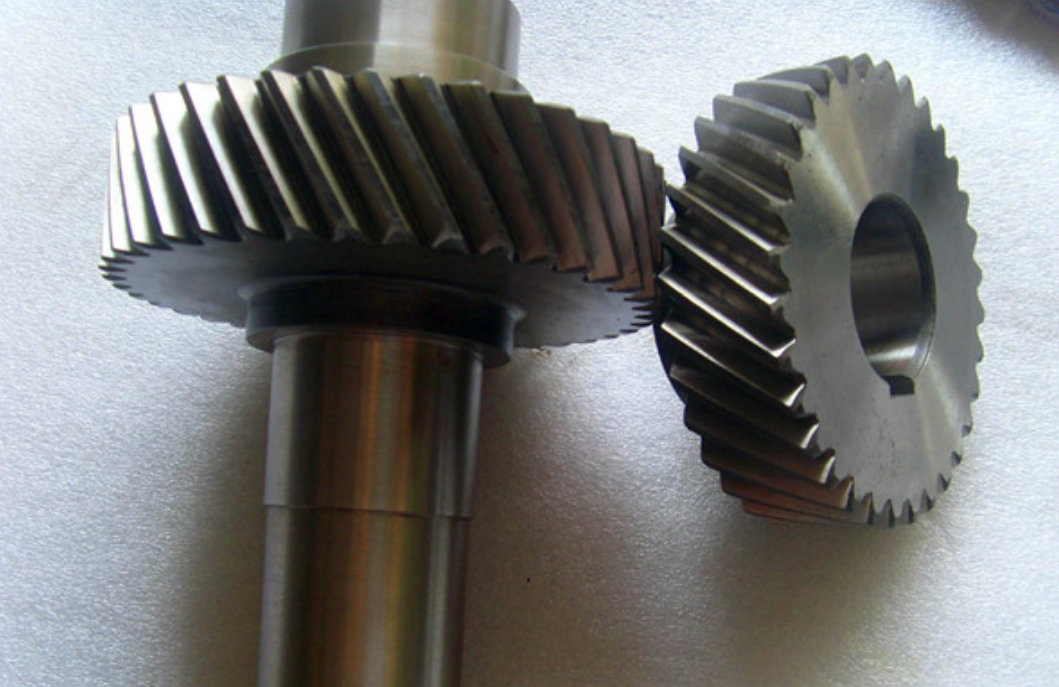
The analysis departs from traditional rigid-body or purely finite element-based transient analyses by constructing a high-fidelity flexible multibody dynamics model. In this framework, the helical gear wheels are discretized into finite elements, allowing for the computation of local deformations under load. The contact between multiple tooth pairs is modeled simultaneously, capturing the essential time-varying nature of the mesh stiffness, which is a primary source of dynamic excitation in geared systems. The equations of motion for this flexible system are derived using the principle of virtual work. For a system discretized into finite elements, the dynamic equilibrium equation for the gear pair can be expressed in matrix form as:
$$
\mathbf{M}(t+\Delta t) \ddot{\mathbf{u}} + \mathbf{C}(t+\Delta t) \Delta t \dot{\mathbf{u}} + \mathbf{K}(t) \mathbf{u} = \mathbf{F}(t+\Delta t) – \mathbf{Q}(t)
$$
where $\mathbf{M}$, $\mathbf{C}$, and $\mathbf{K}$ are the global mass, damping, and stiffness matrices, respectively. $\mathbf{u}$, $\dot{\mathbf{u}}$, and $\ddot{\mathbf{u}}$ are the displacement, velocity, and acceleration vectors. $\mathbf{F}$ represents the vector of externally applied forces and contact forces, while $\mathbf{Q}$ is the vector of internal stresses. The contact force vector $\mathbf{F}$ itself, when friction is considered, comprises normal and tangential components:
$$
\mathbf{F} = -\alpha \mathbf{N}^T \mathbf{N} \mathbf{g}_N \mathbf{e}_N – \mu \frac{s_1}{|\mathbf{s}_T|} \mathbf{e}_1 – \mu \frac{s_2}{|\mathbf{s}_T|} \mathbf{e}_2 = \mathbf{F}_N + \mathbf{F}_{T1} + \mathbf{F}_{T2}
$$
Here, $\alpha$ is a penalty factor, $\mathbf{N}$ is the shape function matrix, $\mu$ is the coefficient of friction, $\mathbf{g}_N$ is the normal gap, and $\mathbf{e}_N$, $\mathbf{e}_1$, $\mathbf{e}_2$ are unit vectors in the normal and two tangential directions, respectively. This formulation allows for the accurate resolution of the dynamic interaction between the deforming teeth of the helical gear pair throughout the meshing cycle.
The specific helical gear model used for this parameter study is defined with a baseline set of dimensions. A pair of helical gears is modeled with the driving pinion having 20 teeth and the driven gear having 32 teeth. The normal module is 1.5 mm, the normal pressure angle is 20 degrees, and the baseline helix angle is set at 20 degrees. Both gears are assigned material properties of alloy steel with a density of 7.83e-6 kg/mm³, a Young’s modulus of 219 GPa, and a Poisson’s ratio of 0.3. Friction is included in the model with static and dynamic coefficients. The analysis focuses solely on the gear mesh dynamics; supporting shafts and bearings are considered rigid to isolate the effects of the parameters under investigation.
| Parameter | Value |
|---|---|
| Pinion Tooth Number (z1) | 20 |
| Gear Tooth Number (z2) | 32 |
| Normal Module (mn) | 1.5 mm |
| Normal Pressure Angle (αn) | 20° |
| Baseline Helix Angle (β) | 20° |
| Profile Modification (Baseline) | 0 (Pinion), 0.3 (Gear) |
To understand the foundational dynamic behavior, the effect of applied load was first examined. The helical gear pair was subjected to a range of torques, from no-load to a substantially high load. The dynamic transmission error (DTE), defined as the difference between the theoretical and actual angular displacement of the driven gear, was the primary metric. The results revealed a significant influence of load on the character of the DTE. Under no-load conditions, the DTE exhibited low-frequency fluctuations with a relatively large amplitude. Upon applying load, the mean DTE shifted and the fluctuation pattern transformed into a higher-frequency, lower-amplitude signal, though the amplitude increased progressively with higher loads. This indicates that while a minimal load stabilizes the mesh, excessive load exacerbates dynamic excitations. The spectral analysis of the DTE under load showed not only the fundamental meshing frequency but also a rich content of higher harmonics, reflecting the complex, non-linear interaction of the multiple contacting tooth pairs in the helical gear mesh.
The core of this investigation involves a systematic, single-factor analysis of the profile modification coefficient. In this study, the pinion’s modification coefficient (x1) was held constant at zero, while the gear’s coefficient (x2) was varied across a wide spectrum from -0.5 to +0.5. A constant load was applied to all models for a consistent comparison. The key performance indicators—mean dynamic transmission error, peak tooth contact force, and maximum sliding velocity—were extracted and analyzed.
| Model ID | Pinion Mod. (x1) | Gear Mod. (x2) |
|---|---|---|
| M1 | 0 | -0.5 |
| M2 | 0 | -0.4 |
| M3 | 0 | -0.3 |
| M4 | 0 | -0.2 |
| M5 | 0 | -0.1 |
| M6 | 0 | 0.0 |
| M7 | 0 | +0.1 |
| M8 | 0 | +0.2 |
| M9 | 0 | +0.3 |
| M10 | 0 | +0.4 |
| M11 | 0 | +0.5 |
The results for the helical gear pair demonstrate a clear and correlated trend. The dynamic transmission error shows a distinct “V” shaped relationship with the modification coefficient. The most favorable (lowest) DTE values are achieved at the extremes of the tested range, specifically at x2 = -0.5 and x2 = +0.3. The worst performance occurs near x2 = -0.3. This trend is mirrored almost exactly by the peak tooth contact force. The maximum force spikes dramatically for x2 = -0.3, confirming that this modification leads to poor load sharing and high stress concentrations within the helical gear mesh. As the modification moves away from this critical point in either direction, the peak force drops significantly, indicating improved load distribution across the contacting teeth.
$$ \text{Min}(DTE) \rightarrow x_2 = -0.5 \text{ or } +0.3 $$
$$ \text{Max}(F_{contact}) \rightarrow x_2 \approx -0.3 $$
The maximum sliding velocity, a key parameter for predicting wear and scuffing risk in helical gears, follows a more monotonic trend. It generally decreases as the modification coefficient increases. However, a notable and sharp reduction occurs specifically at x2 = +0.3. This point represents a sweet spot where a favorable combination of low sliding velocity coincides with low transmission error and low contact force. Therefore, for this specific helical gear geometry and loading condition, a positive modification of x2 = +0.3 on the driven gear emerges as the most balanced and advantageous design choice, optimizing multiple dynamic performance metrics simultaneously.
The second major parameter study focuses on the helix angle (β). Keeping the optimal modification from the previous study (x1=0, x2=+0.3), the helix angle was varied from 8° to 20°, covering the typical practical range for helical gears. The same dynamic metrics were evaluated.
| Model ID | Helix Angle (β) |
|---|---|
| H1 | 8° |
| H2 | 10° |
| H3 | 12° |
| H4 | 14° |
| H5 | 16° |
| H6 | 18° |
| H7 | 20° |
The influence of the helix angle on the helical gear dynamics presents a more nuanced picture compared to the modification coefficient. Both the dynamic transmission error and the peak tooth contact force exhibit a strong non-linear relationship with β. Their trends are highly correlated: as the helix angle increases from 8°, both DTE and contact force initially rise to a peak around β = 10°-12°, then fall sharply to a clear minimum at β = 14°, before increasing steadily again up to β = 20°.
$$ \text{Min}(DTE, F_{contact}) \rightarrow \beta = 14^\circ $$
$$ \text{Local Max}(DTE, F_{contact}) \rightarrow \beta \approx 10^\circ-12^\circ $$
This identifies 14° as the optimal helix angle for minimizing dynamic excitation and contact stress for this particular helical gear pair under the given load. In contrast, the maximum sliding velocity shows a different, nearly linear relationship. It decreases consistently as the helix angle increases. This is intuitively understandable, as a larger helix angle increases the overlap ratio and provides a more gradual sliding action along the tooth profile. Therefore, the choice of helix angle involves a trade-off: while a 14° angle minimizes force and error, a larger angle (e.g., 18° or 20°) would be more beneficial for reducing sliding wear, albeit at the cost of increased axial thrust and slightly higher dynamic loads.
The underlying mechanics explaining these trends relate directly to the meshing properties of the helical gear. The profile modification coefficient alters the effective tooth thickness and the precise path of contact. An optimal value, such as the +0.3 found here, shifts the contact zone towards a region of more favorable conformity and better load sharing between successive tooth pairs entering the mesh. This reduces the fluctuation in the overall mesh stiffness, thereby lowering the dynamic transmission error and peak forces. The helix angle fundamentally controls the length and overlap of the contact lines. An angle that is too small (e.g., 8°) behaves more like a spur gear with abrupt engagement. An angle that is too large increases axial forces and can lead to other dynamic complications. The identified optimum of 14° likely represents a balance where the overlap is sufficient to smooth stiffness variations without introducing detrimental secondary effects, a critical consideration for the quiet and efficient operation of a helical gear transmission.
In conclusion, this detailed multibody dynamics investigation underscores the profound and distinct impacts of the profile modification coefficient and helix angle on the dynamic meshing characteristics of helical gears. The modification coefficient demonstrates a powerful ability to optimize dynamic transmission error, contact force, and sliding velocity in a correlated manner, with a clear optimum identified for the studied configuration. The helix angle exhibits a more complex, non-linear influence on error and force, presenting a clear minimum, while its effect on sliding velocity is separate and linear. These findings highlight that the design of a high-performance helical gear system is a multi-objective optimization task. Tools such as the flexible multibody dynamics method employed here are essential for navigating these trade-offs, enabling designers to precisely tailor the modification and helix angle to achieve desired performance goals—be it ultra-quiet operation, high load capacity, or extended wear life—for any specific helical gear application.