
In modern industrial manufacturing, the role of cylindrical gears as fundamental power transmission components is irreplaceable. Their accuracy directly dictates the performance metrics of machinery—efficiency, noise, vibration, and operational lifespan. Therefore, precise and efficient measurement of gear parameters is a critical control point in the production quality chain. Traditionally, metrology for cylindrical gears has relied heavily on contact-based systems like Coordinate Measuring Machines (CMMs) and dedicated CNC gear measuring centers. While offering high accuracy, these methods present significant drawbacks: high capital and maintenance costs, susceptibility to causing surface damage on delicate parts, relatively slow measurement cycles, and a requirement for specialized operational expertise. These factors collectively hinder their scalability for high-volume production or in-line inspection scenarios.
This exploration delves into the application of machine vision technology, specifically utilizing the Halcon software library, to develop a non-contact, rapid, and cost-effective solution for measuring key parameters of spur cylindrical gears. The core principle involves digitizing the physical gear into a high-fidelity image and subsequently employing advanced image processing and analysis algorithms to extract dimensional data. This paradigm shift from tactile probing to optical measurement offers compelling advantages: it eliminates the risk of part wear or deformation, drastically increases inspection speed, reduces operational labor intensity, and minimizes subjective errors associated with manual gauging.
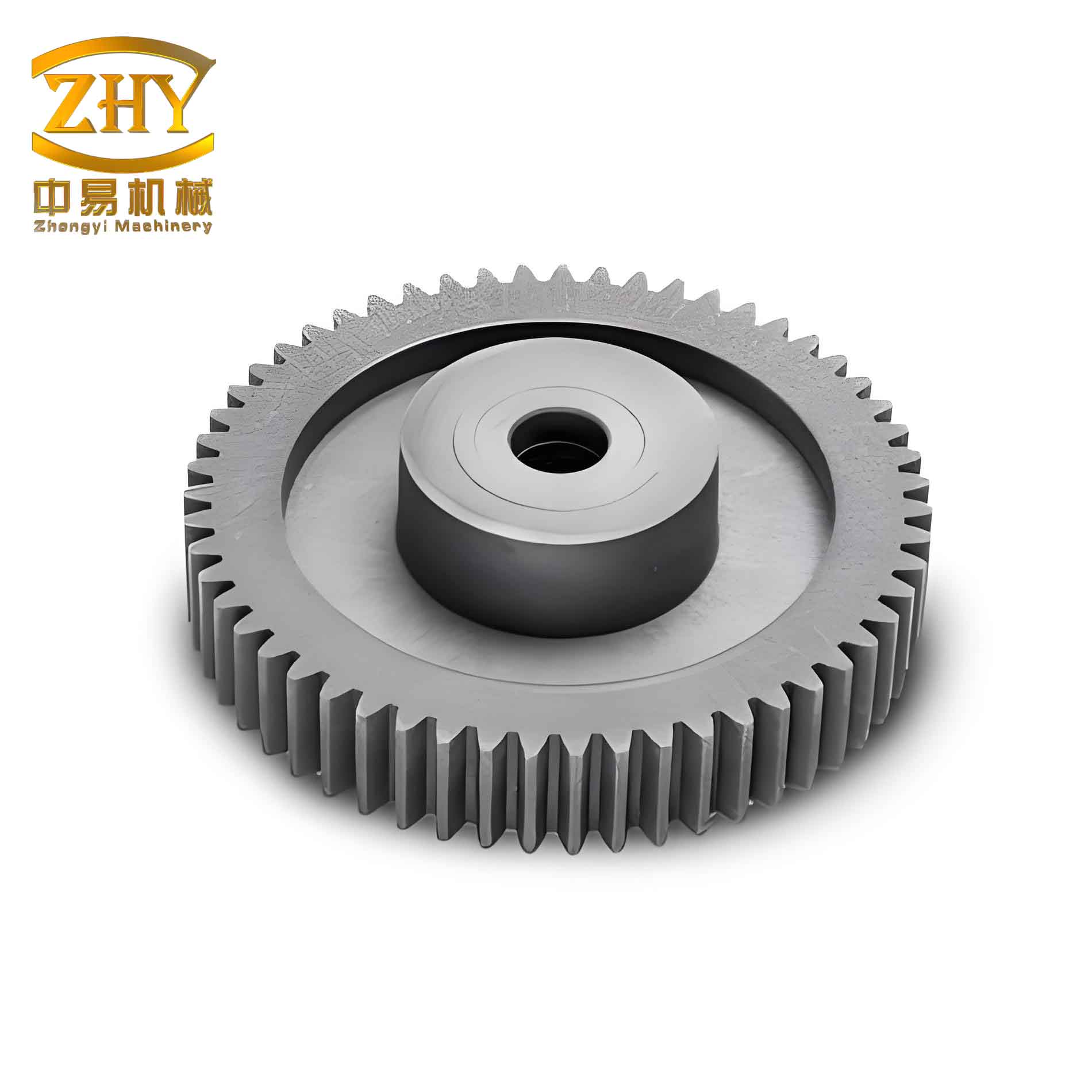
Design of the Machine Vision Inspection System
The efficacy of a vision-based measurement system is fundamentally dependent on the synergistic integration of its hardware components. A typical system architecture for measuring cylindrical gears includes the following key elements, as summarized in the table below:
| System Component | Description & Selection Rationale |
|---|---|
| Illumination (Back Light) | Employing a diffuse backlight is crucial. It creates high-contrast silhouettes of the gear, rendering sharp and well-defined edges. This technique minimizes specular reflections and surface texture noise, which is paramount for accurate edge detection and contour analysis of the cylindrical gear profile. |
| Imaging Sensor (CCD/CMOS Camera) | A high-resolution area scan camera is selected to capture sufficient pixel data across the gear’s diameter. The sensor’s resolution must be chosen such that the pixel size corresponds to a small enough physical dimension (e.g., 10-20 microns) to meet the required measurement tolerance for the cylindrical gear parameters. |
| Optics (Lens) | A precision fixed-focal length or telecentric lens is used. Telecentric lenses are preferred for metrology as they provide an orthographic projection, eliminating perspective error and ensuring that the magnification is constant regardless of minor part placement variations along the optical axis. |
| Mechanical Fixturing | A stable platform to hold the cylindrical gear perpendicular to the optical axis. For full parameter measurement, the gear’s axis should be aligned as closely as possible to be parallel to the camera’s axis to avoid elliptical distortions in the captured image. |
| Computing Unit & Software | A industrial PC running the Halcon development environment. Halcon provides a comprehensive suite of operators for image acquisition, calibration, processing, and geometric measurement, forming the software backbone of the solution. |
The operational workflow is linear: The gear is placed on a stage above the backlight. The camera and lens, mounted directly above, are focused on the gear plane. An image is acquired and transmitted to the computer for processing via a frame grabber or direct interface (e.g., GigE Vision, USB3 Vision).
Image Acquisition and Preprocessing Pipeline
Image Acquisition
Communication with the camera is established programmatically within Halcon. The process typically involves:
- Initialization: Opening a connection to the camera using an operator like `open_framegrabber`.
- Configuration: Setting parameters such as exposure time and gain to achieve optimal image contrast.
- Capture: Triggering a synchronous or asynchronous grab (e.g., `grab_image` or `grab_image_async`) to acquire a single, static image of the cylindrical gear. For robust inspection, multiple images under consistent lighting are often captured.
Camera Calibration
This is the most critical step for converting pixel coordinates into real-world metric dimensions. Without accurate calibration, measurements remain in pixels and are meaningless. The process involves determining the camera’s intrinsic parameters (focal length, principal point, lens distortion) and extrinsic parameters (position and orientation relative to a world coordinate system). A standard calibration target, often a checkerboard or dot grid with known precise dimensions, is used.
- Image Series Acquisition: Multiple images (e.g., 9-15) of the calibration target are captured at different orientations and positions within the camera’s field of view.
- Feature Extraction: Halcon operators like `find_caltab` and `find_marks_and_pose` automatically detect the calibration marks (corner points of the checkerboard or center of dots) in each image.
- Parameter Calculation: Using the known 3D coordinates of the marks and their corresponding 2D image coordinates from all images, Halcon’s `calibrate_cameras` operator performs a bundle adjustment to compute the accurate camera model.
- Mapping Function: The resulting calibration data allows the use of operators like `image_points_to_world_plane` to transform any pixel coordinate in the image into a coordinate on a defined measurement plane (e.g., the plane of the gear face), yielding measurements in millimeters or inches.
The mathematical model often involves correcting radial and tangential lens distortion. The transformation from a distorted image point $(u_d, v_d)$ to an undistorted point $(u, v)$ can be described by:
$$
\begin{aligned}
x &= (u_d – c_x) / f_x \\
y &= (v_d – c_y) / f_y \\
r^2 &= x^2 + y^2 \\
x_{corrected} &= x (1 + k_1 r^2 + k_2 r^4 + k_3 r^6) + 2p_1xy + p_2(r^2+2x^2)\\
y_{corrected} &= y (1 + k_1 r^2 + k_2 r^4 + k_3 r^6) + p_1(r^2+2y^2) + 2p_2xy\\
u &= f_x * x_{corrected} + c_x \\
v &= f_y * y_{corrected} + c_y
\end{aligned}
$$
where $(c_x, c_y)$ is the principal point, $f_x, f_y$ are focal lengths, and $k_1, k_2, k_3, p_1, p_2$ are distortion coefficients determined during calibration.
Image Preprocessing for Gear Analysis
The raw grayscale image of the cylindrical gear requires enhancement to facilitate reliable feature extraction. The standard preprocessing chain includes:
- Filtering (Noise Reduction): Applying a smoothing filter such as a mean filter or Gaussian filter to suppress sensor noise and minor surface imperfections without excessively blurring critical edges. In Halcon: `mean_image(Image, ImageMean, MaskWidth, MaskHeight)`.
- Thresholding (Segmentation): Converting the grayscale image into a binary image to separate the gear (foreground) from the background. Global thresholding (`threshold`) is effective under controlled backlighting, producing a region representing the gear’s silhouette.
- Region Post-Processing:
- Filling Holes: The binary region may have small holes inside tooth spaces due to reflections or imperfections. The `fill_up` operator fills these holes to create a solid region.
- Shape Selection: To isolate the main gear region from potential small, disconnected noise regions, shape features like compactness or area are used. The `select_shape` operator can filter regions, keeping only those with an area similar to the expected gear size.
The output is a clean, binary region corresponding precisely to the projected area of the cylindrical gear, ready for geometric measurement.
Algorithmic Measurement of Key Cylindrical Gear Parameters
With a preprocessed binary region, Halcon’s extensive geometric operators can be applied to measure the fundamental parameters of the spur cylindrical gear. The following table outlines the logical steps and corresponding Halcon operators for each parameter.
| Parameter | Measurement Principle & Halcon Methodology | Key Operators |
|---|---|---|
| Tip Diameter ($d_a$) | The smallest circle that completely encloses the gear region. This corresponds to the circle passing through the tips of all teeth on the cylindrical gear. | `smallest_circle` : Returns the center (Row, Column) and radius of the minimal enclosing circle. The diameter is $d_a = 2 \cdot Radius_{world}$ after coordinate transformation. |
| Root Diameter ($d_f$) | The largest circle that fits entirely inside the gear region. This corresponds to the circle running along the roots of the teeth. | `inner_circle` : Returns the center and radius of the maximal inscribed circle. The diameter is $d_f = 2 \cdot Radius_{world}$. |
| Number of Teeth ($z$) | Determined by isolating and counting the individual tooth regions between the tip and root circles. | 1. Create an annular Region of Interest (ROI) between the root and tip circles using `gen_circle` and set operations (`difference`). 2. Perform `connection` on the ROI to label each tooth as a separate region. 3. Use `count_obj` to get the total number of connected components, which equals the tooth count $z$. |
| Module ($m$) | A fundamental parameter defining the tooth size. For a standard spur gear with a dedendum of $1.25m$, it can be derived from the root diameter and tooth count. | Calculated using the formula derived from gear geometry: $$ m = \frac{d_f}{z – 2.5} $$ This formula is valid for standard full-depth teeth with a dedendum coefficient of 1.25. |
| Pitch Diameter ($d$) | The diameter of the imaginary reference circle where the spacing of the teeth is measured. | Calculated directly from the module and tooth count: $$ d = m \cdot z $$ Alternatively, it can be approximated as the mean of the tip and root diameters for a quick check: $d \approx (d_a + d_f)/2$. |
| Circular Pitch ($p$) | The distance measured along the pitch circle from a point on one tooth to the corresponding point on the adjacent tooth. | Calculated from the module: $$ p = \pi \cdot m $$ |
The process for tooth counting warrants a more detailed explanation, as it is a classic image analysis task. After obtaining the root circle (inner circle), a circular mask is generated with a radius slightly larger than the root radius but smaller than the tip radius. The intersection of this mask with the original gear region creates an annular band covering the tooth flanks. When this annular region is segmented via connectivity analysis, each distinct blob corresponds to one tooth (or one tooth space, depending on the threshold level). Counting these connected regions yields the tooth count $z$. This method for cylindrical gears is robust under consistent lighting.
Experimental Results, Error Analysis, and Discussion
To validate the proposed machine vision methodology, a series of tests were conducted on standard spur cylindrical gears with known nominal parameters. The system was calibrated as described, and for each gear, the image processing and measurement pipeline was executed automatically. A representative set of results for a gear with 22 teeth and a nominal module of 2.5 mm is presented below.
| Parameter | Theoretical Value (mm) | Vision Measurement (mm) | Absolute Error (mm) | Relative Error (%) |
|---|---|---|---|---|
| Tip Diameter ($d_a$) | 60.00 | 59.96 | -0.04 | -0.067 |
| Root Diameter ($d_f$) | 48.75 | 48.66 | -0.09 | -0.185 |
| Number of Teeth ($z$) | 22 | 22 | 0 | 0.000 |
| Module ($m$) | 2.500 | 2.498 | -0.002 | -0.080 |
| Pitch Diameter ($d$) | 55.00 | 54.96 | -0.04 | |
| Circular Pitch ($p$) | 7.854 | 7.847 | -0.007 | -0.089 |
The results demonstrate excellent agreement between the vision-based measurements and the theoretical values, with all relative errors well below 0.2%. This level of accuracy is sufficient for a wide range of industrial quality control applications for cylindrical gears, especially for go/no-go sorting and process trend monitoring.
Primary Sources of Measurement Uncertainty
Understanding potential error sources is key to refining the system. The main contributors include:
- Camera Calibration Error: The single most significant factor. Residual errors in the calculated camera parameters and lens distortion model directly propagate into world coordinate transformations. Using high-quality calibration targets and capturing more pose images can mitigate this.
- Edge Detection Ambiguity: The binary thresholding and the subsequent `smallest_circle`/`inner_circle` algorithms determine the physical edge location from pixel data. Slight blur in the image, lighting non-uniformity, or optical diffraction can cause a sub-pixel shift in the perceived edge.
- Mechanical Alignment: If the axis of the cylindrical gear is not perfectly parallel to the optical axis, the projected image is an ellipse, not a perfect circle, leading to systematic errors in diameter measurements. Using telecentric optics largely eliminates this error.
- Pixel Quantization: The fundamental limit is the size of a pixel in world coordinates (e.g., 0.01 mm/pixel). This sets the floor for measurement resolution. Sub-pixel edge detection algorithms in Halcon can improve this beyond the pixel grid.
| Error Source | Effect on Measurement | Mitigation Strategy |
|---|---|---|
| Calibration Inaccuracy | Scaling error in all dimensional measurements. | Use precise calibration targets; increase number of calibration poses; verify with a known reference standard. |
| Optical Distortion | Non-linear spatial error, worse at image corners. | Use high-quality, low-distortion lenses; ensure accurate distortion modeling during calibration. |
| Lighting & Thresholding | Biases in edge position, affecting diameters. | Implement highly uniform backlighting; use dynamic or robust thresholding methods. |
| Part Tilt (Perspective) | Elliptical projection causing diameter overestimation. | Use telecentric lenses; ensure proper mechanical fixturing. |
Conclusion and Outlook
The integration of machine vision, powered by a comprehensive software library like Halcon, presents a transformative approach for the metrology of cylindrical gears. This research has detailed a complete workflow from system design and camera calibration to image processing and the algorithmic extraction of critical gear parameters such as tip diameter, root diameter, tooth count, module, pitch diameter, and circular pitch. The experimental validation confirms that the method achieves high measurement accuracy suitable for industrial quality assurance.
The advantages over traditional contact methods are substantial: Speed (measurements can be completed in seconds), Cost-effectiveness (lower initial investment and no consumable probe tips), Non-contact (eliminating damage to delicate or finished gear surfaces), and Automation Potential (seamless integration into automated production lines for 100% inspection).
Future work can focus on extending this methodology to measure more complex parameters of cylindrical gears, such as tooth profile deviation (involute error), pitch error, and runout, which would require higher-resolution imaging, more sophisticated sub-pixel edge detection, and analysis of the tooth flank contour against a theoretical involute curve. Furthermore, the application of deep learning techniques integrated with Halcon could enhance robustness against variable lighting conditions, surface finishes, or the presence of contaminants, solidifying machine vision’s role as a cornerstone of modern, intelligent manufacturing metrology for power transmission components like cylindrical gears.