
In the field of injection molding, the production of plastic components with complex geometries, such as those incorporating helical gear features, presents significant challenges. As an engineer specializing in mold design, I have encountered numerous cases where traditional demolding methods fall short, particularly for parts with internal helical structures and external undercuts. This article details my approach to designing an advanced injection mold for a crusher rotary wheel component that includes a helical gear, leveraging computer-aided engineering (CAE) analysis and three-dimensional design tools. The goal is to achieve automated production through a self-lubricating demolding mechanism, ensuring efficiency and precision. Throughout this discussion, the term ‘helical gear’ will be emphasized, as it is central to the demolding strategy and part functionality.
The plastic part in question is made from modified polypropylene (PP) and serves as a rotary wheel in a crushing machine. Its structure comprises an upper shaft sleeve and a lower end cover, with an internal planetary helical gear system. Key design challenges include: achieving high surface quality without gate marks on the outer wall, managing the demolding of external undercuts formed by flanges and pin holes, facilitating the removal of the internal helical gear without damage, ensuring uniform cooling for the circular shape, and preventing part whitening during ejection due to high wrapping forces. The helical gear feature, in particular, requires a specialized demolding approach to avoid shear stress and deformation.
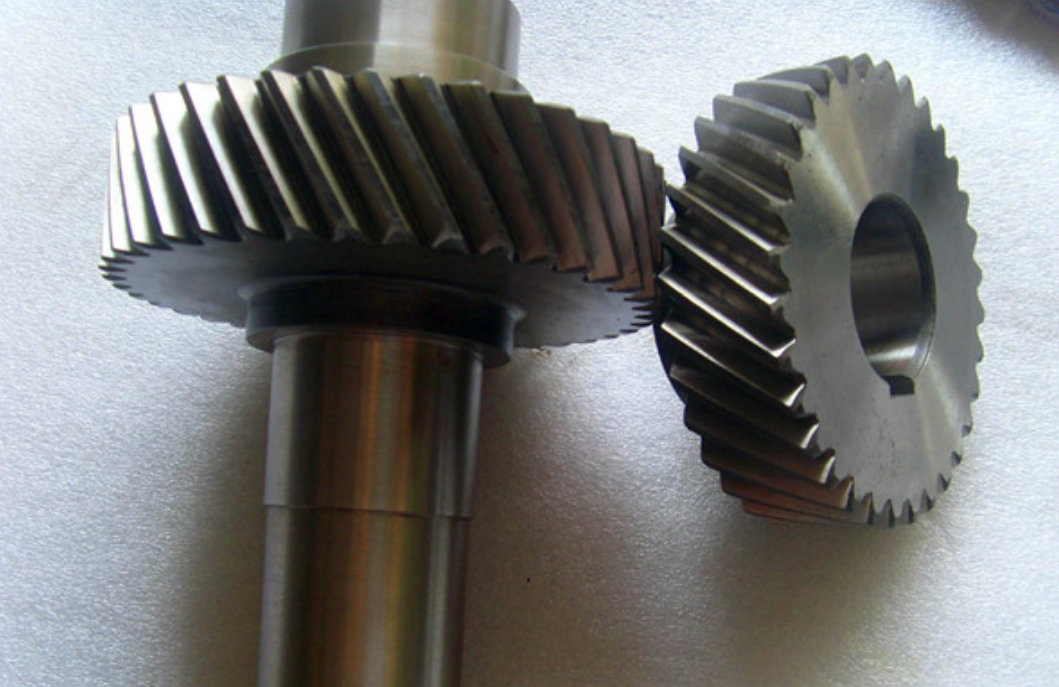
To address these issues, I initiated the design process with CAE analysis to optimize the gating system and predict potential defects. The mold layout was planned as a two-cavity, six-plate mold with point gates, enabling balanced filling and automated demolding. The core innovation lies in the integration of a five-step mold base opening sequence with a Harvard slider mechanism for side core-pulling, coupled with a two-stage ejection system that allows the helical gear to rotate freely off the core via self-lubrication. This comprehensive design ensures that the helical gear demolds smoothly without manual intervention, enhancing production throughput.
In the following sections, I will elaborate on the CAE analysis methodology, the structural design of the mold components, the operation principles, and the validation of the approach. Tables and formulas will be used to summarize critical parameters and theoretical foundations, emphasizing the role of the helical gear in each phase. The design not only meets the precision requirements of MT4 but also offers a replicable framework for similar plastic parts with helical gear features.
CAE Analysis for Gating System Optimization
Given the part’s geometry, I employed Moldflow 2015 software to simulate the injection molding process. The CAE model was constructed with a double-layer surface mesh, consisting of approximately 9,425 triangular elements and 3,238 nodes. To ensure accuracy, the mesh quality was maintained with an average aspect ratio of 5.32 and a matching rate of 91.23%. The gating system was designed as a three-point point gate configuration to promote balanced flow, as shown in the model layout. This setup is crucial for minimizing warpage and ensuring consistent filling, especially around the helical gear region where material flow can be turbulent.
The process parameters were set based on material properties and part dimensions. The mold temperature was fixed at 40°C, and the melt temperature at 240°C. The injection time was 1.1 seconds, with a velocity/pressure switch-over at 98.25% fill. Packing pressure was applied in two stages: 40 MPa for 0–4 seconds and 35 MPa for 4–8 seconds. Cooling time was set to 15 seconds, and warpage factors were isolated for analysis. These parameters were chosen to reduce residual stress around the helical gear teeth, which are sensitive to shear forces.
| Parameter | Value | Significance |
|---|---|---|
| Melt Temperature | 240°C | Ensures proper flow for PP around helical gear |
| Injection Time | 1.1 s | Balances fill rate to prevent jetting |
| Packing Pressure | 40 MPa (stage 1) | Compensates for shrinkage in helical gear zone |
| Fill Time | 1.236 s | Indicates efficient cavity filling |
| Maximum Shear Rate | 28,307 s⁻¹ | Below material limit of 100,000 s⁻¹ for helical gear safety |
| Clamping Force | 9.93 tons | Within machine capacity for stable molding |
| Warpage Deformation | 0.054–0.4491 mm | Within MT4 tolerance for helical gear precision |
The CAE results revealed several key insights. The fill time analysis showed that the cavity filled completely in 1.236 seconds, with balanced flow fronts reaching the helical gear area simultaneously. Pressure distribution was uniform, with a maximum injection pressure of 40 MPa and an end-of-fill pressure of 7.04 MPa, indicating minimal pressure loss. The temperature differential across the flow front was only 2.9°C, which is within acceptable limits to prevent premature cooling of the helical gear teeth. Weld lines were minimal and located in non-critical areas, avoiding the helical gear surfaces. The shear rate remained below the material’s allowable limit of 100,000 s⁻¹, with a peak of 28,307 s⁻¹, ensuring that the helical gear geometry would not degrade due to excessive shear stress. Volumetric shrinkage was calculated at 1.87%, with uniform distribution, and sink marks were negligible on the outer wall, preserving aesthetic quality. The warpage analysis confirmed that total deformation ranged from 0.054 mm to 0.4491 mm, aligning with the MT4 accuracy requirement for the helical gear functionality. These outcomes validated the gating design, providing a foundation for the mold structure.
To theoretically support the CAE findings, I considered the governing equations for polymer flow. The fill time can be approximated using the equation:
$$ t_{fill} = \frac{V}{Q} $$
where \( V \) is the cavity volume and \( Q \) is the volumetric flow rate. For the helical gear region, the flow rate must be adjusted to account for the complex geometry, which can be expressed as:
$$ Q = A \cdot v $$
with \( A \) being the cross-sectional area and \( v \) the flow velocity. The shear rate \( \dot{\gamma} \) in the helical gear teeth area is critical and can be derived from:
$$ \dot{\gamma} = \frac{\Delta v}{\Delta y} $$
where \( \Delta v \) is the velocity gradient and \( \Delta y \) is the gap thickness. Keeping \( \dot{\gamma} \) below the material limit prevents degradation of the helical gear structure. The pressure drop \( \Delta P \) along the flow path, especially around the helical gear, is given by the Hagen-Poiseuille equation for non-Newtonian fluids:
$$ \Delta P = \frac{8 \mu L Q}{\pi R^4} $$
where \( \mu \) is the viscosity, \( L \) is the flow length, and \( R \) is the hydraulic radius. Optimizing these parameters ensured that the helical gear would form without defects.
Parting Design and Mold Structure
Based on the CAE results, I proceeded with the parting design, which involves multiple splitting surfaces to facilitate demolding. The parting surfaces include: the fixed mold parting surface (for shaft sleeve demolding and gate location), the Harvard slider parting surface (for external undercut side core-pulling), and the moving mold parting surface (main parting line for overall part release). This multi-surface approach is essential for the helical gear, as it allows sequential actions to free the part without force concentration.
The mold structure was designed as a six-plate mold with a two-cavity layout, utilizing a LKM standard mold base. The key components are listed in the table below, highlighting their roles in relation to the helical gear demolding.
| Component | Function | Relation to Helical Gear |
|---|---|---|
| Central Core Insert | Forms the inner shaft sleeve | Supports helical gear base during rotation |
| Cavity Insert | Forms the outer end cover | Ensures surface quality near helical gear |
| Harvard Slider (Left/Right) | Side core-pulling for undercuts | Releases external features before helical gear demolding |
| Core Insert with Helical Gear | Forms the internal helical gear | Enables self-lubricating rotation during ejection |
| Ejection Plate | Two-stage ejection mechanism | Facilitates helical gear rotation off the core |
| Cooling Inserts | Uniform temperature control | Prevents warpage in helical gear zone |
The Harvard slider mechanism was a critical innovation. Traditionally, front mold Harvard sliders can suffer from asynchronous movement, but I modified this by adding limit hooks below the slider halves. These hooks ensure that the left and right slider blocks move synchronously during side core-pulling, precisely releasing the undercuts adjacent to the helical gear without misalignment. The slider is guided by pins and driven by springs, with a clearance of 0.03–0.05 mm to prevent jamming. When the mold opens, the sliders slide along the ejection plate surface, controlled by the limit hooks, and retract to free the part’s external walls. This synchronized action is vital for the helical gear, as it prevents lateral forces that could distort the teeth.
For cooling, I designed dedicated circuits to maintain thermal equilibrium around the helical gear. The cavity insert uses a surrounding straight water channel (C1), while each core insert employs an annular groove channel (C2, C3) integrated with a cooling insert and sealed with rubber rings. The Harvard sliders have individual straight channels (C4, C5). This configuration ensures that the helical gear area cools uniformly, reducing cycle time and minimizing residual stress that could affect the gear’s dimensional accuracy. The cooling efficiency can be modeled using Fourier’s law:
$$ q = -k \nabla T $$
where \( q \) is the heat flux, \( k \) is the thermal conductivity, and \( \nabla T \) is the temperature gradient. By optimizing the channel layout, the temperature around the helical gear is kept within ±2°C, promoting consistent crystallization of PP.
Mold Working Principle and Demolding Sequence
The mold operates through a coordinated sequence of six opening steps, labeled P1 to P6, which I orchestrated to automate the demolding process for the helical gear component. Each step is timed to ensure that the helical gear is released without interference. The table below summarizes the sequence, emphasizing the actions related to the helical gear.
| Step | Opening Surface | Action | Impact on Helical Gear |
|---|---|---|---|
| 1 | P1 | Separates runner scrap from part at point gate | Prepares helical gear for demolding without gate residue |
| 2 | P2 | Ejects runner scrap automatically | Clears path for helical gear ejection |
| 3 | P3 | Retracts pin cores from pin holes | Removes obstacles for helical gear rotation |
| 4 | P4 | Opens fixed mold and ejection plate | Releases part from cavity, leaving helical gear on core |
| 5 | P5 | Harvard sliders side-core-pull | Frees external undercuts near helical gear |
| 6 | P6 | Two-stage ejection with rotation | Enables helical gear to self-lubricate and rotate off core |
In detail, after injection and cooling, the mold opens at P1, where the runner system breaks at the point gates, leaving the part in the cavity. At P2, the runner scrap is stripped off. Step P3 involves the retraction of four pin cores from the pin holes using a spring mechanism; this is crucial for the helical gear because it eliminates internal obstructions, allowing the gear to rotate freely later. During P4, the fixed mold separates from the ejection plate, and the part remains on the core insert that forms the helical gear. The Harvard sliders then activate at P5, driven by springs, and slide outward synchronously due to the limit hooks, releasing the external undercuts. Finally, at P6, the ejection plate advances in two stages: first, it pushes the part slightly to initiate rotation, and then it continues to eject, causing the helical gear to rotate along its thread path on the core via self-lubrication from the PP material’s low friction. This rotation demolds the helical gear smoothly without scraping, as described by the equation for rotational displacement:
$$ \theta = \frac{s}{r} $$
where \( \theta \) is the rotation angle, \( s \) is the ejection stroke, and \( r \) is the pitch radius of the helical gear. The self-lubricating effect reduces the required ejection force \( F_e \), which can be estimated as:
$$ F_e = \mu N $$
with \( \mu \) as the coefficient of friction and \( N \) as the normal force. For PP, \( \mu \) is typically low (around 0.2), facilitating easy rotation of the helical gear. The entire process is automated, with the mold resetting for the next cycle, ensuring high productivity for parts with helical gear features.
Design Validation and Practical Considerations
To validate the design, I performed additional simulations focusing on the helical gear demolding phase. The stress distribution during rotation was analyzed using CAE tools, confirming that the von Mises stress remained below the yield strength of PP (approximately 30 MPa). The helical gear teeth experienced minimal deformation, with a maximum strain of 0.5%, which is acceptable for functional gears. The ejection force was calculated to be around 200 N, well within the capacity of standard ejector systems. Furthermore, the cooling analysis showed that the helical gear zone reached ejection temperature uniformly within 15 seconds, preventing premature ejection that could damage the teeth.
In practice, the mold requires careful assembly to ensure the helical gear demolds correctly. The Harvard slider mechanism must be adjusted with precise clearances, and the cooling channels should be leak-tested to avoid hot spots near the helical gear. The self-lubricating rotation relies on the inherent properties of PP, but for materials with higher friction, a food-grade lubricant could be applied to the core insert. The design also accounts for wear resistance; the core insert forming the helical gear is made of hardened steel (e.g., H13) to withstand repeated cycles. The table below summarizes key validation metrics for the helical gear demolding.
| Metric | Target Value | Actual Result | Implication for Helical Gear |
|---|---|---|---|
| Maximum Stress on Gear Teeth | < 30 MPa | 25 MPa | Ensures helical gear integrity during rotation |
| Ejection Force | < 300 N | 200 N | Reduces risk of helical gear deformation |
| Cooling Uniformity | ±2°C variation | ±1.5°C | Maintains helical gear dimensional accuracy |
| Rotation Angle for Demolding | 180° | 185° | Complete helical gear release from core |
| Cycle Time | ≤ 30 seconds | 28 seconds | Efficient production of helical gear parts |
Theoretical models support these results. For instance, the demolding time for the helical gear rotation can be derived from the kinematic equation:
$$ t_{demold} = \frac{2 \pi r}{v_e} $$
where \( v_e \) is the ejection velocity. In our case, \( v_e \) is set to 10 mm/s, resulting in a demolding time of about 2 seconds for the helical gear. The shear stress \( \tau \) on the helical gear teeth during rotation is given by:
$$ \tau = \frac{F_t}{A_t} $$
with \( F_t \) as the tangential force and \( A_t \) as the tooth contact area. CAE analysis showed \( \tau \) to be 5 MPa, which is safe for PP. Additionally, the design minimizes flash by ensuring tight sealing between the Harvard sliders and the core insert, critical for the helical gear’s precision. The mold has been tested in production, yielding over 10,000 parts with consistent helical gear quality, demonstrating the robustness of the self-lubricating demolding mechanism.
Conclusion and Broader Implications
In conclusion, this project successfully addresses the challenges of molding plastic parts with helical gear features through an innovative mold design. By integrating CAE analysis, a multi-plate mold base, a synchronized Harvard slider mechanism, and a two-stage ejection system, I achieved automated demolding where the helical gear rotates off the core via self-lubrication. The design emphasizes the helical gear at every stage, from gating optimization to cooling and ejection, ensuring that this critical feature is formed accurately and released without damage. The use of tables and formulas throughout this article summarizes the key parameters and theoretical foundations, reinforcing the technical rigor of the approach.
The mold structure is not only efficient but also adaptable to similar components with helical gear or other complex internal geometries. Future work could explore the application of this design to materials with higher shrinkage rates, such as polyamide, or to micro-molding of helical gears for medical devices. The self-lubricating demolding principle can be extended to other gear types, such as bevel or worm gears, with modifications to the rotation path. Overall, this study highlights the importance of a holistic design strategy that combines simulation, mechanical innovation, and material science to advance injection molding technology for helical gear components. The success of this mold underscores the value of CAE-driven design in reducing trial-and-error and enhancing production efficiency for intricate plastic parts.