
In the realm of power transmission, helical gear pairs are indispensable components, prized for their smooth operation, high load-carrying capacity, and reduced noise and vibration compared to their spur gear counterparts. This performance is intrinsically linked to their lubrication condition. The meshing of helical gears presents a complex tribological scenario characterized by time-varying parameters and finite line contact, making the analysis of their elastohydrodynamic lubrication (EHL) both critical and challenging. My focus here is to synthesize the current understanding and chart future paths in the EHL analysis of helical gears, with particular emphasis on the effects of profile modification—or “modification”—a design strategy employed to enhance performance further.
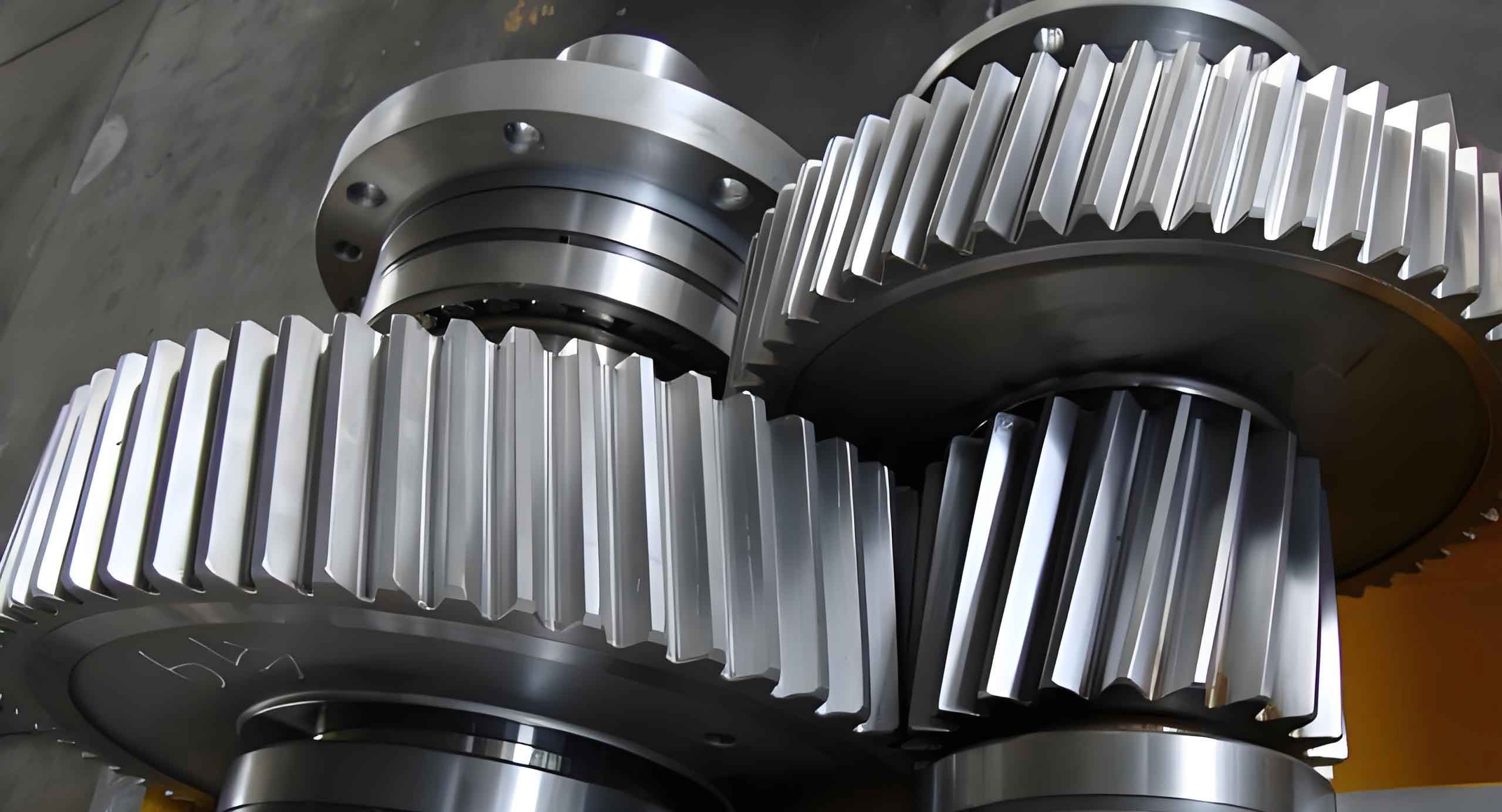
The fundamental challenge in analyzing helical gear lubrication stems from their geometry. Unlike spur gears, the contact line between mating teeth of a helical gear is not parallel to the gear axis. This results in a contact footprint that is of finite length, and its position, length, and orientation change continuously throughout the mesh cycle. Consequently, key parameters governing EHL—such as the effective radii of curvature, the entrainment and sliding velocities, and the load distribution along the contact line—are all transient. This pronounced time-varying effect, coupled with the three-dimensional nature of the contact (often simplified to a finite line contact problem), has historically made the EHL analysis of helical gears more complex and less explored than that of spur gears. The application of profile modification to helical gears, involving intentional deviations from the standard involute profile, introduces another layer of complexity. Modifications are primarily used to compensate for manufacturing errors, assembly misalignments, and elastic deflections under load, aiming to optimize the load distribution, reduce transmission error, minimize noise, and improve resistance to failure modes like scuffing. Therefore, a comprehensive EHL analysis that accounts for these modifications is not merely academic; it holds significant practical importance for predicting performance, enhancing durability, and guiding the design of modern, high-performance gear drives.
The Evolution of EHL Theory and Line Contact Foundations
The journey to understand gear lubrication laid the groundwork for EHL theory itself. Early work, such as that by Martin (1916), applied classical hydrodynamic lubrication theory (Reynolds equation) to gear teeth approximated as circular arcs. This ignored elastic deformation and the pressure-viscosity effect of lubricants. A paradigm shift occurred in the mid-20th century when researchers began to couple the Reynolds equation with Hertzian elastic contact theory, recognizing that contacting surfaces deform significantly under high pressure. The advent of computers enabled pioneers like Dowson and Higginson to obtain full numerical solutions for isothermal line contact EHL in the 1960s, establishing the famous central and minimum film thickness formulas. This classical EHL theory, however, often assumed infinite line contact, steady-state conditions, and Newtonian fluid behavior—simplifications that are not fully valid for helical gears.
Subsequent research has progressively relaxed these assumptions to better model real contacts, which directly informs helical gear analysis. Key advancements in line contact EHL, which serves as the fundamental building block, are summarized below.
| Aspect | Development | Significance for Helical Gear Analysis |
|---|---|---|
| Thermal Effects | Development of thermal EHL (TEHL) models accounting for heat generation in the contact due to sliding and shearing of the lubricant film. | Critical for helical gears operating at high speeds and under high loads, where flash temperatures can affect lubricant properties and surface durability. |
| Non-Newtonian Rheology | Incorporation of realistic fluid models (e.g., Ree-Eyring, limiting shear stress) to describe shear-thinning behavior under high strain rates. | Modern gear oils are formulated with polymer additives, exhibiting non-Newtonian behavior that influences film thickness and friction. |
| Finite Length & Free-Edge Effects | Moving from infinite to finite line contact models, studying stress concentrations and film thickness reduction at the contact ends. | Directly applicable to the finite contact lines in helical gears. The “quarter-space” elastic model is more realistic than the “half-space” model for simulating gear tooth ends. |
| Surface Roughness | Micro-EHL and mixed lubrication analyses considering real or simulated rough surfaces. | Accounts for the influence of surface finish on film thickness, pressure spikes, and the transition to asperity contact, which governs wear and micropitting. |
| Dynamic Effects | Models incorporating squeeze film effects and vibrations, studying the dynamic stiffness and damping of the EHL film. | Essential for analyzing the dynamic response of helical gear systems under varying loads and speeds, linking tribology with gear dynamics. |
The governing equations for a generalized transient, thermal, non-Newtonian, line contact EHL problem form the core mathematical model. The key set includes:
Reynolds Equation: Modified to account for variable properties and non-Newtonian flow.
$$ \frac{\partial}{\partial x}\left( \frac{\bar{\rho}}{\bar{\eta}^*} \frac{\partial p}{\partial x} \right) + \frac{\partial}{\partial y}\left( \frac{\bar{\rho}}{\bar{\eta}^*} \frac{\partial p}{\partial y} \right) = 12u_e \frac{\partial (\bar{\rho} h)}{\partial x} + 12 \frac{\partial (\bar{\rho} h)}{\partial t} $$
where $p$ is pressure, $h$ is film thickness, $x$ is the rolling direction, $y$ is the axial direction, $u_e$ is the entrainment velocity, $\bar{\rho}$ and $\bar{\eta}^*$ are the effective density and viscosity across the film, and $t$ is time.
Film Thickness Equation: Describes the gap between the two deformed surfaces.
$$ h(x,y,t) = h_0(t) + \frac{x^2}{2R_x(y,t)} + \frac{y^2}{2R_y} + v(x,y,t) $$
Here, $h_0$ is the rigid central separation, the terms with $R_x$ and $R_y$ represent the initial macro-geometry (including modification), and $v$ is the total elastic deformation calculated from the pressure distribution, often using the influence coefficient method for finite domains.
Load Balance Equation: Ensures the integrated pressure supports the applied load at each instant.
$$ \iint_{\Omega} p(x,y,t) \, dx \, dy = w(t) $$
where $w(t)$ is the instantaneous load per unit face width for the specific contact line of the helical gear.
Constitutive, Viscosity, Density, and Energy Equations: These describe the lubricant’s rheology (e.g., $\eta = \eta_0 \exp(\alpha p)$ for viscosity-pressure, $\eta^*$ for non-Newtonian shear), its density-pressure-temperature relationship ($\rho = \rho(p,T)$), and the heat generation and transfer within the film and the contacting solids.
The Peculiarities of Helical Gear EHL Analysis
Applying the general line contact EHL framework to a helical gear pair requires careful consideration of its unique kinematics and load-sharing characteristics. The standard approach involves a quasi-steady-state assumption: at any given instant in the mesh cycle, the contact conditions are assumed to change slowly enough that the transient term in the Reynolds equation can be neglected, and a steady-state solution for that specific geometry and loading is valid. The complex three-dimensional contact is typically simplified by representing the contacting tooth surfaces at a given instant as two opposing conical frustums or tapered rollers. This等效 model captures the essential feature of a finite line contact where the effective radius of curvature and the entrainment velocity vary along the contact line’s length.
The analysis proceeds by calculating the time-varying input parameters along the path of contact. For a helical gear pair, these include:
- Effective Radius of Curvature ($R_x$): Varies with the transverse plane profile and the position on the tooth flank. It is a function of the base circle radius and the roll angle.
- Entrainment Velocity ($u_e$): Given by $u_e = (u_1 + u_2)/2$, where $u_1$ and $u_2$ are the surface velocities of the pinion and gear in the direction perpendicular to the contact line. These velocities have components from both rotation and sliding along the tooth flank.
- Sliding Velocity ($u_s$): $u_s = u_1 – u_2$. This is crucial for calculating frictional heating in TEHL analyses.
- Load Distribution: Perhaps the most critical and complex aspect. The total transmitted load is shared among several teeth in contact simultaneously in a helical gear. Furthermore, the load is not uniformly distributed along each instantaneous contact line due to elastic deflections, manufacturing errors, and modifications. Determining the load $w(y,t)$ on each segment of the contact line requires solving a separate load-sharing problem, often using gear contact analysis or finite element methods, before it can be fed into the EHL model.
- Contact Line Length and Inclination: The length of the contact line changes during meshing, being shortest at the initial and final points of contact. Its inclination is equal to the base helix angle $\beta_b$.
Most early studies on helical gear EHL relied on empirical formulas or greatly simplified models. More recent, sophisticated analyses have employed the finite line contact TEHL model with the quasi-steady-state approach, sequentially solving for conditions at discrete points along the path of contact. These studies have successfully captured the evolution of pressure distribution, film thickness, and temperature rise throughout the mesh cycle, revealing significant variations that justify the need for transient analysis over simple, single-point calculations.
The Role and Impact of Profile Modification
Profile modification is a deliberate design alteration from the standard involute profile, typically applied as tip relief, root relief, or lead crowning. In the context of helical gears, modification serves several key purposes: to avoid edge loading at the tooth tips and roots, to compensate for deflection under load to achieve a more uniform pressure distribution, and to reduce transmission error and its associated noise. From an EHL perspective, modification directly alters the `film thickness equation` by changing the geometric separation term $x^2/(2R_x(y,t))$. This seemingly small change has profound effects on the lubrication performance.
A well-designed modification can significantly improve the EHL condition in a helical gear mesh. For instance, tip relief prevents contact at the very tip of the tooth, where sliding velocities are high and the effective radius of curvature is small—conditions conducive to thin films and high flash temperatures. By removing load from this critical region, the risk of scuffing and pitting is reduced. Lead crowning (modification along the face width) ensures that under load, the contact pattern remains centered on the tooth face, preventing stress concentration at the edges and mitigating the detrimental free-edge effects on film thickness.
Conversely, excessive or poorly designed modification can be detrimental. Too much relief can shorten the effective contact length excessively, leading to higher contact stresses on the remaining portion of the tooth and potentially negating the benefits of the helical gear‘s inherent load-sharing. It can also create a discontinuity in the load distribution as teeth engage and disengage, potentially inducing vibrations. Therefore, optimizing the modification parameters—such as the amount, length, and shape (linear, parabolic)—is a coupled problem involving gear dynamics, contact mechanics, and elastohydrodynamic lubrication. Research has shown that an optimal modification profile can lead to a more uniform pressure distribution, lower peak pressures and temperatures, and a more stable and thicker lubricant film throughout the mesh cycle compared to an unmodified gear.
| Modification Type | Primary Purpose | Potential Impact on EHL Conditions |
|---|---|---|
| Tip & Root Relief | Prevent edge contact at engagement/disengagement; reduce mesh stiffness variation. | Reduces load and sliding in high-risk zones, lowering flash temperature and risk of scuffing. Can alter load distribution and film thickness history. |
| Lead Crowning | Compensate for misalignment and shaft deflection; center contact pattern. | Prevents stress concentration at tooth ends, mitigates free-edge film thickness collapse, promotes more uniform pressure along contact line. |
| Profile Optimization | Minimize transmission error and contact stress simultaneously. | Aims to achieve the most favorable evolution of contact geometry and load for optimal film formation and minimum friction. |
Numerical Methods: The Engine of Solution
Solving the set of highly nonlinear, coupled differential and integral equations that define the EHL problem is only possible through numerical methods. The strong pressure dependence of viscosity leads to extremely high pressure gradients (spikes) in the outlet region, demanding robust and efficient algorithms. The development of numerical techniques has been integral to the advancement of EHL science.
Early methods included the direct iteration method and the inverse method pioneered by Dowson and Higginson. The introduction of the Newton-Raphson method significantly improved convergence, especially for heavily loaded contacts. However, the breakthrough for practical and efficient solution of complex EHL problems came with the development of the Multigrid Method and the related Multilevel Multi-integration technique. These methods solve the problem on a hierarchy of grids: iterations start on a very coarse grid to capture the low-frequency solution components cheaply, and then the solution is progressively refined on finer grids. This approach drastically reduces computational time and memory requirements, making it feasible to solve transient, thermal, and finite line contact problems with reasonable computational resources. Other advanced methods like the Finite Element Method (FEM) and specialized semi-analytical approaches for elastic deformation have also been employed. The choice of method often depends on the specific focus—whether it’s computational speed for parametric studies (favoring multigrid) or handling complex geometries (potentially favoring FEM).
| Method | Basic Principle | Advantages for Helical Gear Analysis |
|---|---|---|
| Multigrid/Multilevel | Solves problem on nested grids from coarse to fine. | High efficiency and speed, enabling solution of complex transient, thermal, and finite line contact problems. The standard for most modern full EHL simulations. |
| Newton-Raphson | Uses Jacobian matrix to find roots of equations. | Provides quadratic convergence near the solution. Often used in conjunction with multigrid for the pressure solution. |
| Finite Element Method (FEM) | Discretizes domain into elements; solves variational form. | Well-suited for problems with complex boundaries and material heterogeneity. Can be more complex to implement for pure EHL than multigrid. |
| Semi-Analytical Methods (e.g., Influence Coefficients) | Uses analytical or pre-calculated solutions (Green’s functions) for deformation. | Very efficient for calculating surface deformation due to pressure, especially for finite domains (quarter-space models). |
Future Directions and Concluding Perspectives
While significant progress has been made, the analysis of elastohydrodynamic lubrication in helical gears, particularly modified ones, remains a rich field with numerous avenues for further research. Based on the current state-of-the-art, the following directions are critical for advancing both theory and practice:
- Integrated Multiphysics and Dynamic Modeling: Future models must move beyond the quasi-steady-state assumption and fully couple the EHL analysis with gear system dynamics. This involves solving the equations of motion for the gear pair (considering time-varying mesh stiffness, damping, and errors) simultaneously with the transient EHL equations. This integrated approach is essential for accurately predicting behavior under fluctuating loads, during start-up/shut-down, or in the presence of significant vibrations, where squeeze film effects become dominant.
- Advanced Micro-Geometry and Surface Effects: Current modification models are often simple linear or parabolic profiles. Future work should incorporate more sophisticated, optimized micro-geometry designs (e.g., topological modifications) into the EHL analysis. Furthermore, the modeling of surface roughness needs to evolve from simple sinusoidal patterns to realistic, multi-scale fractal representations or measured 3D topography. This is vital for accurately predicting the transition from full-film to mixed/boundary lubrication, which governs wear, micropitting, and efficiency losses.
- High-Fidelity Material and Lubricant Models: Analyses should account for the specific viscoelastic properties of advanced gear materials (e.g., polymers, composites) and the complex, non-Newtonian, shear-thinning, and thermal behavior of modern lubricants, including grease and those containing solid additives like nanoparticles. The development and use of accurate constitutive equations for these materials are paramount.
- High-Ratio and Non-Standard Gear Drives: Most research focuses on parallel-axis, 1:1 to moderate-ratio helical gear drives. There is a need to extend analysis to high-ratio planetary systems, non-parallel axis drives (like crossed helical gears), and gears operating under extreme conditions (very high speed or very low temperature), where lubricant behavior and failure modes differ.
- Validation and Integration with Digital Twins: Increased effort is needed for experimental validation of advanced EHL models under controlled yet realistic conditions. The ultimate goal is to integrate validated, computationally efficient EHL sub-models into comprehensive digital twin frameworks for gearboxes, enabling predictive maintenance, performance optimization, and virtual prototyping.
In conclusion, the elastohydrodynamic lubrication of helical gears is a complex, multidisciplinary problem at the intersection of tribology, gear geometry, contact mechanics, and dynamics. The application of profile modification adds a powerful but intricate design variable to this system. While foundational theories and powerful numerical tools have been established, the field is moving towards more holistic, integrated, and high-fidelity simulations that capture the true multiphysics nature of gear meshing. By advancing research in the directions outlined, we can significantly improve the prediction accuracy, performance, reliability, and efficiency of helical gear transmissions, which are the workhorses of modern machinery.