
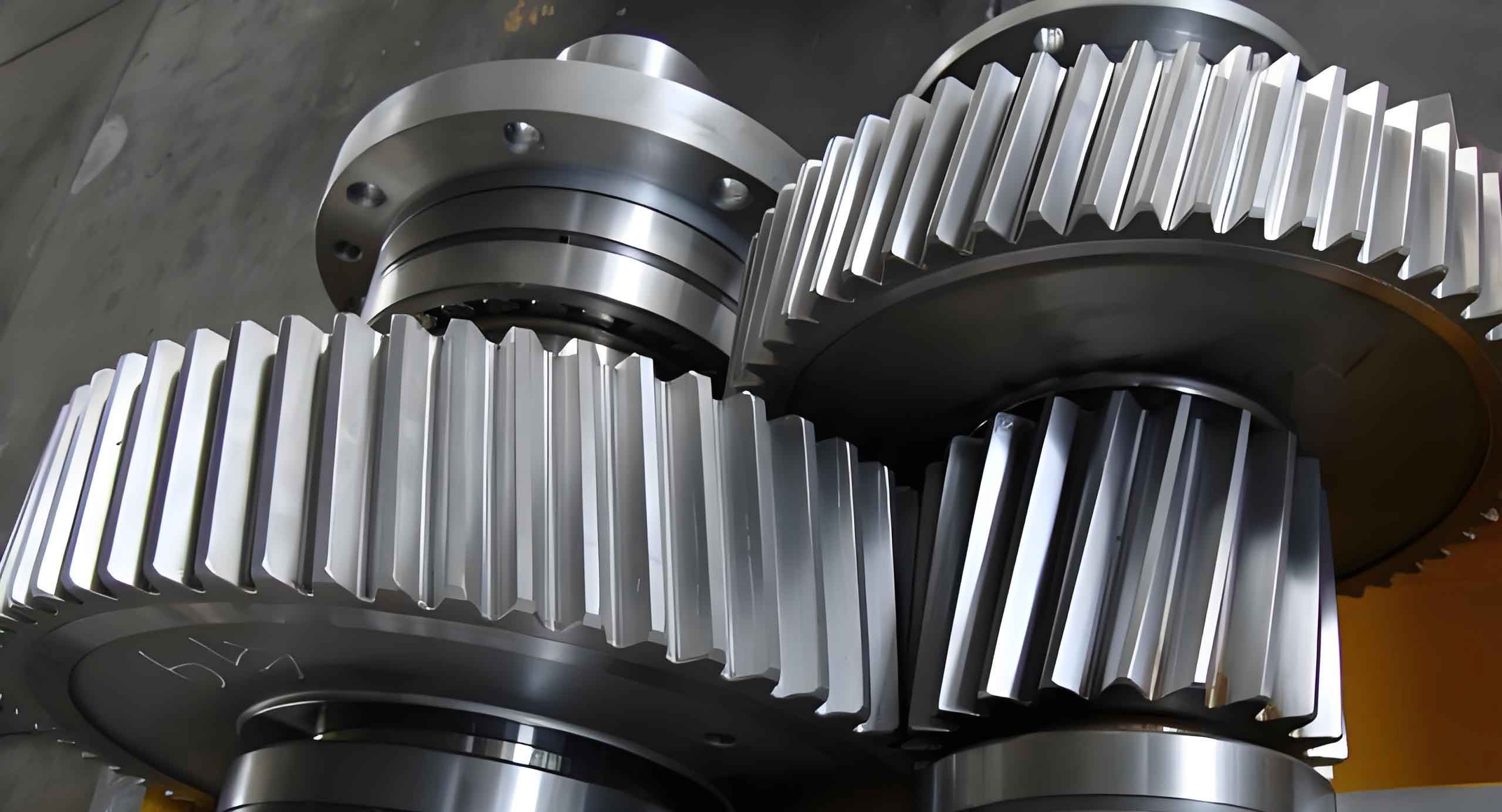
The reliable operation of gear transmission systems is paramount across numerous industrial sectors, including automotive, aerospace, and heavy machinery. Among various gear types, the helical gear is extensively favored for its smooth and quiet operation, attributed to the gradual engagement of its angled teeth. This characteristic leads to higher load-carrying capacity and reduced noise compared to spur gears. However, like all mechanical components, helical gears are susceptible to failure modes, with tooth root crack being one of the most critical and prevalent. A root crack typically initiates at the fillet region due to cyclic bending stress and can propagate across the tooth width, potentially leading to complete tooth breakage and catastrophic system failure. Therefore, a profound understanding of how such defects influence the gear’s stress state, particularly the contact stress, is crucial for predictive maintenance, remaining life assessment, and robust design.
Traditionally, gear contact strength has been evaluated using experimental methods and analytical formulas. While experimental testing provides direct data, it is often costly, time-consuming, and difficult to implement for probing internal stress fields in defective gears. Analytical methods, such as the Hertzian contact theory and standards like AGMA (American Gear Manufacturers Association), offer quick calculations but rely on significant simplifications regarding load distribution, geometry, and material behavior. In contrast, the Finite Element Method (FEM) has emerged as a powerful virtual tool, capable of modeling complex geometries, nonlinear material properties, and intricate contact conditions with high fidelity. It provides a detailed visualization of stress distribution and deformation, making it ideal for investigating the localized effects of defects like root cracks on helical gear performance.
This analysis employs a sophisticated three-dimensional finite element modeling approach to systematically investigate the impact of root crack propagation on the dynamic contact stress of a helical gear pair. The study validates the modeling methodology against established theoretical calculations and subsequently introduces cracks of varying severities to quantify their detrimental effects.
Theoretical Foundation for Gear Contact Stress
The contact between mating gear teeth is a classic problem in mechanical engineering. The foundational theory is provided by Hertz, which models the contact between two curved elastic bodies. For two parallel cylinders (analogous to spur gear teeth in a plane), the maximum contact pressure at the center of the contact ellipse is given by:
$$ \sigma_{H_{max}} = \sqrt{ \frac{F_{ca}}{\pi b} \cdot \frac{ \frac{1}{\rho_1} + \frac{1}{\rho_2} }{ \frac{1-\mu_1^2}{E_1} + \frac{1-\mu_2^2}{E_2} } } $$
Where:
$F_{ca}$ is the normal load per unit width,
$b$ is the half-width of the contact area,
$\rho_1$ and $\rho_2$ are the radii of curvature of the contacting surfaces,
$E_1$, $E_2$ are the Young’s moduli, and
$\mu_1$, $\mu_2$ are the Poisson’s ratios of the two materials.
For practical engineering design of helical gears, the AGMA standard provides a more comprehensive formula that accounts for geometry, dynamics, and load distribution factors. The fundamental contact stress equation according to AGMA is:
$$ \sigma_H = C_p \sqrt{ \frac{F_t}{b d I} \cdot \frac{\cos \beta}{0.95 C_R} \cdot K_V K_O (0.93 K_m) } $$
The elastic coefficient $C_p$ accounts for the material properties of the pinion and gear:
$$ C_p = 0.564 \sqrt{ \frac{1}{ \frac{1-\nu_1^2}{E_1} + \frac{1-\nu_2^2}{E_2} } } $$
The geometry factor $I$ for helical gears considers the pressure angle and gear ratio. The contact ratio $C_R$, a critical parameter for helical gears, is given by:
$$ C_R = \frac{ \sqrt{(r_1 + a)^2 – r_{b1}^2} + \sqrt{(r_2 + a)^2 – r_{b2}^2} – (r_1 + r_2)\sin\alpha_t }{\pi m_n \cos\alpha_t} $$
Where $r$ is pitch radius, $r_b$ is base radius, $a$ is addendum, $\alpha_t$ is transverse pressure angle, and $m_n$ is normal module. The dynamic factor $K_V$ approximates the effect of internal vibrations:
$$ K_V = \left( \frac{78 + \sqrt{200 V}}{78} \right)^{0.5} $$
where $V$ is the pitch line velocity.
Finite Element Modeling Strategy for Helical Gears
Accurate finite element analysis of helical gear contact poses significant challenges, primarily related to mesh quality and computational efficiency. A naive, uniformly fine mesh across the entire model leads to an impractically high number of elements, resulting in prohibitive solve times. Conversely, a coarse or free-mesh approach fails to capture the high stress gradients in the contact zone, yielding inaccurate results.
To address this, a manual zoning and mapped meshing strategy is adopted. This strategy intelligently allocates mesh density based on the expected stress field.
- Model Scope: Instead of modeling the full gear, only 4-5 tooth pairs around the contact zone are modeled, significantly reducing problem size.
- Geometric Zoning: Each tooth is partitioned into five distinct regions:
- Contact Flank Region (High-density mesh)
- Non-contact Flank Region (Medium-density mesh)
- Tooth Root/Fillet Region (High-density mesh, critical for bending stress)
- Transition Region (Graduated mesh density)
- Rim Region (Coarse mesh)
- Mapped Meshing: Structured, hexahedral elements are used in critical zones like the contact flank and root. This provides superior accuracy for stress calculation compared to unstructured tetrahedral elements.
This approach ensures that the mesh is finely discretized precisely where the contact stresses and bending stresses are highest, guaranteeing result accuracy while maintaining computational feasibility for nonlinear contact analysis.
The helical gear pair modeled has the following specifications, representative of a common power transmission application:
| Parameter | Pinion | Gear |
|---|---|---|
| Number of Teeth (Z) | 24 | 48 |
| Normal Module (mₙ) | 2 mm | |
| Helix Angle (β) | 14° (Right-hand) | |
| Face Width (b) | 20 mm | |
| Pressure Angle (αₙ) | 20° | |
| Material | Steel (E = 210 GPa, μ = 0.3) | |
Modeling Root Cracks in Helical Gears
Real-world fatigue cracks have complex, irregular shapes. For a controlled parametric study, the crack is simplified as a straight, through-thickness crack originating at the root fillet. This simplification is common in initial fault analysis and avoids the numerical singularities associated with extremely sharp crack tips in static analysis. The crack is defined by two parameters:
- Crack Length (l): The linear distance from the root along the crack path.
- Crack Propagation Angle (α): The angle between the crack path and the tooth centerline, measured from the root. A typical bending-induced crack propagates at an angle of approximately 60°.
Five distinct crack scenarios, including the healthy baseline, are analyzed to study the progression of damage. The crack length is expressed as a percentage of a reference “critical” length (e.g., the distance from root to a point near the tooth center).
| Tooth Case ID | Crack Status | Crack Length (l) | Crack Angle (α) | Severity (% of Ref. Length) |
|---|---|---|---|---|
| Case 1 | Healthy (Baseline) | 0 mm | – | 0% |
| Case 2 | Cracked | 0.58 mm | 60° | 25% |
| Case 3 | Cracked | 1.17 mm | 60° | 50% |
| Case 4 | Cracked | 1.75 mm | 60° | 75% |
| Case 5 | Cracked | 2.33 mm | 60° | 100% |
Validation of the Finite Element Model
Prior to analyzing defective gears, the accuracy of the FEM model and the manual zoning strategy must be verified. A static contact analysis is performed on the healthy helical gear pair. The boundary conditions are applied as follows:
- Pinion: A driving torque of T = 2760 N·m is applied to its inner bore surface.
- Gear: All degrees of freedom (translations and rotations) are constrained at its inner bore surface.
The analysis solves for the nonlinear contact, producing a stress contour plot. The maximum computed contact stress from the FEM is extracted and compared with results from the classical Hertz formula and the AGMA standard. The input parameters for the analytical calculations are derived from the same gear geometry and loading conditions.
| Calculation Method | Maximum Contact Stress (MPa) | Notes |
|---|---|---|
| Hertz Formula (Cylinder Approximation) | 1,686 – 1,417 | Range depends on exact curvature radius at contact point. |
| 3D Finite Element Analysis (This Study) | 1,800 | Result from manual zoning mesh model. |
| AGMA Standard Formula | 1,958 – 1,467 | Range depends on applied dynamic/load distribution factors. |
The FEM result of 1800 MPa lies comfortably within the expected ranges from both theoretical methods. The deviation from the Hertz mean is approximately 6.75%, and from a mid-range AGMA value is about -8.1%. This close agreement validates the finite element modeling methodology, confirming that the manual partition control and mapped meshing strategy yield accurate contact stress predictions for the helical gear system. This established model now serves as a reliable platform for introducing and studying defects.
Dynamic Contact Stress Analysis of Cracked Helical Gears
With the model validated, the investigation proceeds to the core objective: analyzing the dynamic behavior under motion. A transient analysis is set up to simulate one complete mesh cycle for the cracked tooth. The boundary conditions are adjusted for dynamics:
- Pinion: All degrees of freedom are fixed except for rotation about its axis. A constant angular velocity of ω = 1 rad/s is applied.
- Gear: A constant resisting torque of T = 2760 N·m is applied to its inner bore.
The analysis is run for all five cases (healthy, 25%, 50%, 75%, 100% crack). The dynamic mesh cycle, defined as the period from the cracked tooth’s entry into the mesh to its exit, is sampled at key angular positions (e.g., 0°, 1.5°, 3°, 4.5°, 6°, 7.5°). At each step, the maximum contact stress on the gear pair is recorded.
The table below summarizes the peak dynamic contact stress observed during the mesh cycle for each crack severity level, along with key observations:
| Crack Severity Case | Peak Dynamic Contact Stress (MPa) | Key Phenomenon Observed | Impact on Load Distribution |
|---|---|---|---|
| Case 1: Healthy (0%) | ~1,850 | Normal double-tooth contact pattern. Smooth stress transition. | Load shared predictably between two tooth pairs. |
| Case 2: 25% Crack | ~1,900 | Slight increase in stress magnitude. Minor local distortion near crack. | Negligible change in overall load sharing. |
| Case 3: 50% Crack | ~2,100 | Moderate stress concentration at crack tip. Visible tooth deflection. | Beginning of load shift away from the stiffest path. |
| Case 4: 75% Crack | ~2,400 | Severe local deformation. Contact pattern on cracked tooth altered. | Significant redistribution; adjacent teeth carry more load. |
| Case 5: 100% Crack | ~2,660 | Dramatic change in engagement. Cracked tooth severely compliant, causing a third tooth to engage prematurely (shock load). | Major disruption. Load path severely altered, inducing impact. |
The most critical insight comes from comparing the severely cracked case (100%) with the healthy baseline at a specific engagement angle (e.g., 3°). In the healthy helical gear, the stress is concentrated at the mid-flank of the main load-carrying tooth, following the expected elliptical Hertzian pattern. The magnitude is consistent with static validation.
In the 100% cracked case, the mechanics change fundamentally. The cracked tooth experiences significant compliance (reduced stiffness). This large deflection under load prevents it from carrying its share of the torque effectively. To maintain equilibrium, the neighboring tooth pair is forced into contact earlier than designed, and a third tooth may even begin to engage. This results in a shock load or an impact condition at the tip or root of the newly engaging tooth. Consequently, the maximum contact stress location shifts from the flank of the primary tooth to the point of impact on the adjacent tooth (often near the tip or root region), and its value spikes to 2660 MPa—an increase of over 40% compared to the healthy state.
The relationship between crack length, effective mesh stiffness $k_{mesh}$, and the induced impact force $F_{impact}$ can be conceptually described. As the crack grows, the local bending stiffness $k_{tooth}$ of that helical gear tooth decreases nonlinearly. The overall mesh stiffness is a periodic function dependent on the contact ratio and individual tooth stiffnesses:
$$ k_{mesh}(\theta) = \sum_{i=1}^{n_{in\_contact}} k_{tooth, i}(\theta, l_{crack}) $$
When $k_{tooth}$ for the cracked tooth drops below a threshold, the load is suddenly transferred to the next tooth. This transient can be approximated as a simplified impact, where the kinetic energy of the misaligned gear components is converted to strain energy, leading to a dynamic force amplification:
$$ F_{dynamic} \approx F_{static} \cdot \left( 1 + \sqrt{1 + \frac{2 h k_{eff}}{F_{static}}} \right) $$
Here, $h$ represents the effective loss of contact deflection due to the crack, and $k_{eff}$ is the effective stiffness of the impacting teeth. This model explains the severe spike in contact stress observed in the simulation of the fully cracked helical gear.
Discussion and Implications
The finite element analysis clearly demonstrates the profound and nonlinear influence of a root crack on the operational integrity of a helical gear pair. The initial stages of crack growth (25%-50%) cause a manageable increase in stress and mild redistribution of load. However, beyond a critical length (approximately 75% in this study), the effects become severe and destabilizing.
Firstly, the crack drastically alters the load distribution among the contacting teeth. The compromised tooth sheds load, overloading its neighbors. This not only increases the risk of failure in adjacent teeth but also changes the position of the maximum contact stress on the tooth flank, potentially moving it to less optimally designed regions.
Secondly, and most critically, a large crack induces severe mesh冲击. The transition from a smooth, continuous load transfer to a discontinuous, impact-like engagement generates stress pulses significantly higher than the nominal design stress. This phenomenon has two dire consequences: 1) It dramatically accelerates the propagation of the existing root crack due to the heightened stress intensity factor at its tip. 2) It imposes extreme contact stresses on other teeth, potentially initiating new surface failures like pitting or spalling on gears that were previously operating within safe limits.
The fluctuation of the maximum contact stress over a mesh cycle becomes increasingly violent as the crack propagates. This increased stress fluctuation amplitude is a direct indicator of rising failure probability. In practical terms, this means that a gearbox with a propagating root crack will experience rapidly escalating vibration and noise levels, culminating in a high probability of sudden tooth breakage if not detected.
For condition monitoring, this study highlights the importance of tracking dynamic transmission error and vibration signatures. The shift in load distribution and the onset of impact should be detectable as changes in sideband patterns around mesh harmonics in the vibration spectrum. The findings also underscore the necessity of incorporating fault-tolerant design principles or robust health management systems for critical helical gear drives in applications where unscheduled downtime is unacceptable.
Conclusion
This comprehensive investigation utilized an advanced finite element modeling strategy to elucidate the detrimental effects of tooth root cracks on the contact stress behavior of helical gears. The key conclusions are:
- The manual partition control and mapped meshing strategy for 3D helical gear modeling provides an excellent balance between computational efficiency and result accuracy, as validated against established theoretical contact stress calculations.
- The presence of a root crack modifies the fundamental load-sharing characteristics of the helical gear pair. As the crack length increases, the load is progressively redistributed to adjacent teeth, and the location of the maximum contact stress shifts from its nominal position.
- Beyond a critical severity, a root crack induces a drastic mechanical change: it transforms the smooth, continuous engagement of the helical gear into a discontinuous process characterized by shock loading. This results in dynamic contact stress peaks that can exceed nominal values by over 40%, representing a severe overload condition.
- This induced impact stress simultaneously accelerates the propagation of the existing crack and threatens the integrity of neighboring teeth, thereby exponentially increasing the probability of catastrophic tooth breakage and total gear failure.
Therefore, understanding the coupled relationship between root crack propagation and dynamic contact stress is vital for accurate remaining life prediction, effective condition-based maintenance, and the design of next-generation, resilient gear transmission systems. The methodologies and insights presented here form a solid foundation for further research into probabilistic crack growth modeling under such altered stress fields and the development of sensitive diagnostic indicators for early crack detection in helical gear applications.