
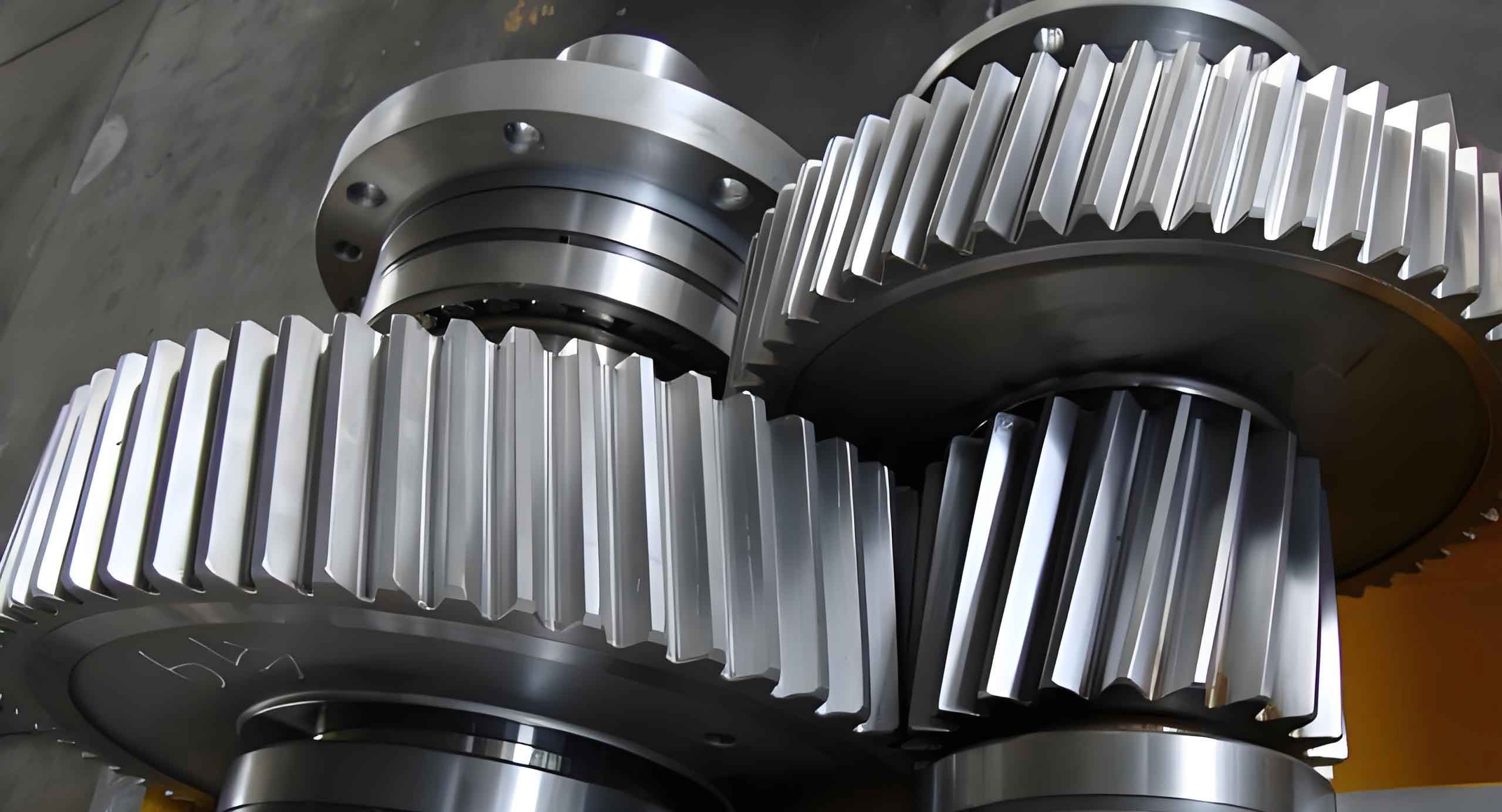
Helical gear pumps are widely recognized for their superior performance in high-speed applications, primarily due to their inherent advantages of low flow pulsation and reduced noise emission compared to their spur gear counterparts. The continuous meshing action of the helical teeth ensures a smoother transfer of fluid, which is critical for systems demanding stable hydraulic power. However, as operational demands push these pumps towards higher rotational speeds and pressures, vibration-related challenges become increasingly significant. Excessive vibration not only compromises the operational efficiency and accuracy of the pump but also accelerates wear and tear, potentially leading to premature failure and increased maintenance costs. Therefore, a profound understanding of the vibration characteristics under various working conditions is paramount for optimizing the design, enhancing reliability, and developing effective condition monitoring strategies for helical gear pumps.
The vibration signature of a helical gear pump is a complex phenomenon arising from the interplay of multiple dynamic sources. The primary excitation originates from the time-varying meshing stiffness and transmission error during gear tooth engagement. Each time a pair of helical teeth comes into contact, an impact force is generated, which excites the structural components of the pump. This meshing frequency $f_m$ and its harmonics are fundamental components of the vibration spectrum and can be calculated by:
$$f_m = \frac{Z \cdot n}{60}$$
where $Z$ is the number of teeth on the driving gear and $n$ is the rotational speed in revolutions per minute (RPM). For a helical gear, the axial overlap introduces additional complexity to the meshing dynamics. Furthermore, the internal fluid dynamics contribute substantially to the overall vibration. Flow ripples, pressure pulsations within the displacement chambers, and particularly cavitation—the formation and violent collapse of vapor bubbles in low-pressure regions—generate broadband fluid-borne noise and high-frequency structural excitation. The interaction between these mechanical and hydraulic excitations defines the unique vibration behavior of the pump under different loads and speeds.
To effectively diagnose and analyze these complex, non-stationary vibration signals, advanced signal processing techniques are indispensable. Traditional frequency-domain analysis, while useful, often falls short in isolating specific fault features masked by noise and other interferences. In this work, we employ the Improved Complete Ensemble Empirical Mode Decomposition with Adaptive Noise (ICEEMDAN) algorithm. This method adaptively decomposes a complex signal into a series of Intrinsic Mode Functions (IMFs), each representing a specific oscillatory mode embedded within the data. Compared to its predecessors like EMD and EEMD, ICEEMDAN offers superior robustness against mode mixing and residual noise in the decomposed components. The core principle involves iteratively extracting IMFs by calculating local means of signal ensembles with added adaptive white noise. The first IMF, $\delta_{IMF,1}$, and the first residual, $r_1$, are derived from the original signal $x(t)$ as follows:
$$r_1 = \langle M(x(t) + \beta_0 E_1(w^{(i)}(t))) \rangle$$
$$\delta_{IMF,1} = x(t) – r_1$$
where $M(\cdot)$ is the operator that produces the local mean, $E_k(\cdot)$ is the operator that produces the $k$-th mode via EMD, $w^{(i)}(t)$ is a realization of white noise, $\beta_0$ is the noise amplitude coefficient, and $\langle \cdot \rangle$ denotes the ensemble average. Subsequent IMFs are calculated recursively. This adaptive decomposition is crucial for isolating the vibration components directly related to the helical gear pump’s operational state from background noise and other unrelated vibrations.
However, the ICEEMDAN algorithm produces multiple IMFs, and not all are equally relevant for analysis. To objectively select the IMF component that contains the most significant information pertaining to the helical gear pump’s condition, we utilize a composite index $K$ constructed from two statistical measures: Fuzzy Entropy ($Y_{FE}$) and Kurtosis ($Kur$). Fuzzy Entropy measures the complexity and irregularity of a signal; a lower value suggests a more regular and potentially informative pattern related to deterministic mechanical events. Kurtosis is sensitive to impulsive signals; a higher kurtosis value indicates the presence of significant transient impacts or shocks, which are characteristic of meshing events and cavitation collapses in a helical gear pump. The composite index is defined as:
$$K = Y_{FE} + \frac{1}{Kur}$$
The IMF component with the smallest $K$ value is considered to have an optimal balance of regularity (low fuzzy entropy) and impulsivity (high kurtosis), making it the most sensitive to the pump’s dynamic state. This selected IMF component is then subjected to detailed time-domain and frequency-domain analysis to characterize the vibration behavior.
The subject of this experimental investigation is a custom-designed double-arc helical gear pump. The gear tooth profile is constructed using a double-arc curve with a sinusoidal transition curve. This specific geometry promotes point contact between the meshing teeth, which theoretically eliminates the troublesome phenomenon of trapped volume (or “hydraulic locking”) common in spur gear pumps. The helical design ensures that the axial contact ratio is greater than 1, while the transverse contact ratio is less than 1, leading to smoother continuous engagement and disengagement of teeth. The primary design specifications of this high-performance helical gear pump are summarized in the table below:
| Gear Pump Parameter | Value | Gear Pump Parameter | Value |
|---|---|---|---|
| Inlet Port Diameter | 17 mm | Face Width | 15.5 mm |
| Outlet Port Diameter | 11 mm | Pressure Angle | 14.5° |
| Number of Teeth | 7 | Helix Angle | 31.3° |
| Module | 3 mm | Center Distance | 21.01 mm |
| Rated Displacement | 5 mL/rev | Target Speed | 10,000 RPM |
| Target Pressure | 25 MPa |
A comprehensive test rig was constructed to evaluate the vibration characteristics of the double-arc helical gear pump under controlled conditions. The rig consists of a hydraulic power unit and a dedicated vibration data acquisition system. The pump is driven by a variable-speed electric motor, allowing precise control of rotational speed. A proportional relief valve in the system is used to set and maintain the desired outlet pressure load, simulating various working conditions. Fluid flow and pressure are monitored using a turbine flow meter and a pressure transmitter installed on the return line. To capture spatially distributed vibration responses, three uni-axial piezoelectric accelerometers with a sensitivity of 10 mV·s²/m were mounted on the pump casing at critical locations: one at the inlet port, one at the outlet port, and one on the top side of the pump body. The signals from these sensors were conditioned and recorded using a dynamic signal analyzer. The specifications and mounting positions of the key sensors are listed below:
| Sensor Type | Model / SN | Measurement Location |
|---|---|---|
| Accelerometer | SN LW 204165 | Gear Pump Inlet Port |
| Accelerometer | SN LW 146976 | Top Side of Pump Body |
| Accelerometer | SN LW 204182 | Gear Pump Outlet Port |
| Turbine Flow Meter | LWY-WB15 (DN15) | Hydraulic Return Line |
| Pressure Transmitter | TY-811-A1 (0-40 MPa) | Hydraulic Return Line |
The experimental matrix was designed to investigate the isolated and combined effects of rotational speed and pressure load on the vibration signature of the helical gear pump. Tests were conducted at three rotational speeds: 4,000 RPM, 6,000 RPM, and 8,000 RPM. At each speed, the system pressure was varied across four levels: 0 MPa (no-load), 5 MPa, 10 MPa, and 15 MPa. For each of these 12 operational points, vibration data from all three accelerometers was acquired simultaneously at a high sampling rate to capture the full dynamic range, ensuring a comprehensive dataset for subsequent analysis using the ICEEMDAN-based methodology.
The initial analysis focused on comparing the vibration levels at the three different measurement points on the helical gear pump. A representative time-domain waveform comparison under a high-speed, high-pressure condition (8,000 RPM, 15 MPa) clearly indicated a significant disparity in vibration amplitude. The vibration amplitude at the outlet port was consistently and markedly higher than that at the inlet port and the top side of the pump body across nearly all tested conditions. This observation can be attributed to the fluid dynamics within the pump. The outlet region is the high-pressure zone where strong pressure pulsations and potential cavitation cloud collapse occur. The implosion of cavitation bubbles generates intense, localized shock waves that directly excite the pump structure near the outlet, leading to elevated vibration levels. Furthermore, the direct transmission of pressure ripple forces through the fluid exiting at the outlet port contributes to this effect. Interestingly, under high pressure (e.g., 15 MPa), the vibration amplitude on the top side of the pump body sometimes approached or slightly exceeded that of the inlet, suggesting that the pressure load influences the structural mode shapes and force transmission paths within the pump casing. Given its consistently higher activity, the vibration signal from the outlet port accelerometer was selected as the primary signal for the detailed ICEEMDAN-based feature extraction and analysis for the remainder of the study.
Applying the ICEEMDAN algorithm to the outlet port vibration signal under a representative condition (6,000 RPM, 15 MPa) yielded 6 IMF components and a final residue. The composite index $K$ was calculated for each component to identify the most relevant one. The calculated values are presented in the following table:
| IMF Component | Fuzzy Entropy ($Y_{FE}$) | Kurtosis ($Kur$) | Composite Index ($K$) |
|---|---|---|---|
| IMF1 | 4.1446 | 0.4742 | 6.2534 |
| IMF2 | 3.8272 | 0.3169 | 6.9828 |
| IMF3 | 5.3870 | 0.5209 | 7.3068 |
| IMF4 | 6.4688 | 0.637 | 8.2187 |
| IMF5 | 6.1537 | 0.4969 | 8.1662 |
| IMF6 | 3.5575 | 0.1190 | 11.9609 |
| Residue | 2.1096 | 0.0023 | 436.89 |
As shown, IMF1 possesses the smallest composite index $K$, indicating it has the most favorable combination of low signal complexity and relatively high impulsivity among the decomposed components. A visual inspection of the time-domain waveform and frequency spectrum of IMF1 confirmed that it retained the primary oscillatory characteristics and dominant frequency bands of the original raw signal from the helical gear pump, albeit at a reduced magnitude, effectively filtering out some noise. Therefore, IMF1 was identified as the most condition-sensitive component and was used for all subsequent comparative analyses of vibration characteristics under different operational parameters.
The influence of rotational speed on the helical gear pump’s vibration was analyzed first by examining the IMF1 component under constant pressure loads. At 0 MPa load, the peak-to-peak vibration amplitude of IMF1 increased substantially with speed: from approximately 2.63 m/s² at 4,000 RPM to 5.26 m/s² at 6,000 RPM, and sharply to 11.36 m/s² at 8,000 RPM. This trend was even more pronounced under a 15 MPa load. The frequency spectrum of IMF1 under these conditions revealed that the dominant vibration energy was concentrated in a band between 500 Hz and 800 Hz. The amplitudes of the spectral peaks within this band grew significantly with increasing rotational speed. This strong correlation is expected, as higher speeds lead to increased meshing frequency, greater fluid flow velocities, and more intense dynamic forces from both mechanical impacts and fluid phenomena. The growth in vibration amplitude appears to be non-linear, accelerating at the highest speed, which could indicate the approach of a resonant condition or a significant increase in cavitation intensity.
Next, the effect of pressure load was investigated at constant rotational speeds. The trend was not monotonically increasing in all cases. At 6,000 RPM, the vibration amplitude of IMF1 generally increased with pressure from 0 to 15 MPa, but showed a slight, distinct dip at the 10 MPa condition before rising again at 15 MPa. At 8,000 RPM, the amplitude increased steadily from 0 MPa to 10 MPa, but then showed a clear decrease at 15 MPa. The spectral analysis showed that the main frequency band remained consistent, but the distribution of energy within it changed with pressure. The non-monotonic behavior suggests a complex interaction between pressure-dependent phenomena. Increasing pressure generally increases bearing loads, gear tooth deflection, and seal friction, which would tend to increase vibration. However, higher pressure also suppresses cavitation, potentially removing a major source of high-frequency vibration and shock. The observed dips or reduction in amplitude at specific pressure points may represent operational conditions where the exacerbating factors and the mitigating factors (like cavitation suppression) reach a temporary balance, or where the system operates away from structural resonances excited by the fluid-borne forces.
To quantify the overall vibration energy under different operating conditions, the Root Mean Square (RMS) value of the IMF1 component was calculated for each test point. The RMS provides a robust measure of the signal’s power. The results are summarized in the following table, which clearly corroborates the trends observed in the time-domain analysis:
| Speed (RPM) \ Pressure (MPa) | 0 MPa | 5 MPa | 10 MPa | 15 MPa |
|---|---|---|---|---|
| 4,000 | 0.42 | 0.51 | 0.49 | 0.55 |
| 6,000 | 0.85 | 0.92 | 0.88 | 0.97 |
| 8,000 | 1.78 | 1.95 | 2.11 | 1.82 |
The table confirms that for a given pressure, the RMS value (vibration energy) increases with rotational speed. Furthermore, it visually captures the non-linear growth with speed and the specific pressure-load-dependent behavior: at 6,000 RPM, a slight dip at 10 MPa; at 8,000 RPM, a more significant drop at 15 MPa after a rise to 10 MPa. This RMS data provides a concise, quantitative overview of the helical gear pump’s vibrational response across its operational envelope.
In conclusion, this study employed an advanced signal processing methodology based on the ICEEMDAN algorithm and a composite selection index to successfully analyze the vibration characteristics of a high-speed double-arc helical gear pump. The key findings are as follows. Firstly, the methodology proved effective for extracting meaningful vibration features from the complex signal, with the first IMF component consistently identified as the most sensitive to the operational state of the helical gear pump. Secondly, spatial vibration distribution on the pump casing is non-uniform, with the outlet port region exhibiting the highest vibration levels due to its exposure to high-pressure pulsations and cavitation dynamics. Thirdly, rotational speed has a profoundly positive and non-linear correlation with vibration amplitude, establishing it as a dominant factor in the excitation energy of the helical gear pump system. Finally, the influence of pressure load on vibration is more complex and non-monotonic. While the overall trend suggests increasing vibration with pressure due to higher mechanical loads, specific pressure points can exhibit reduced vibration, likely due to the suppression of cavitation or shifts in system dynamics. These insights are valuable for the design of quieter, more reliable helical gear pumps, particularly for high-speed applications, and establish a robust framework for their future condition monitoring and preventive maintenance based on vibration analysis.