
The study of gear transmission dynamics is fundamental to mechanical engineering, with the helical gear being a cornerstone component due to its superior operational characteristics. The inherent design of a helical gear, characterized by teeth cut at an angle to the gear axis, provides significant advantages over its spur counterpart. These advantages primarily include higher contact ratios, smoother and quieter operation, and increased load-carrying capacity. This makes the helical gear the preferred choice in demanding applications such as automotive transmissions, industrial gearboxes, and heavy machinery.
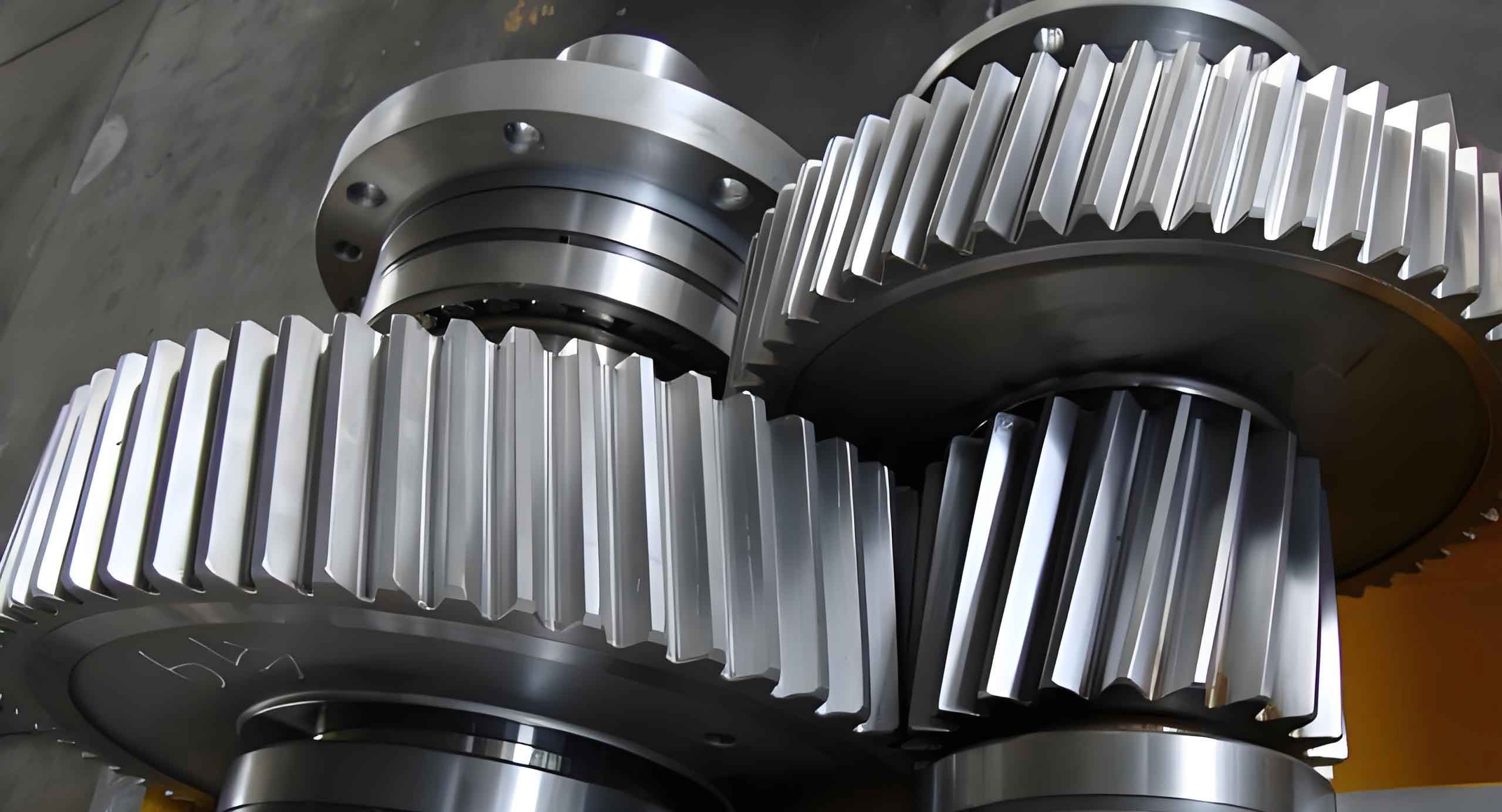
However, the theoretical performance of a helical gear pair is predicated on the assumption of ideal, perfectly manufactured tooth profiles. In reality, the manufacturing process introduces inevitable deviations from this ideal geometry. Among these manufacturing errors, tooth profile deviations are particularly critical as they directly dictate the conditions of contact between mating teeth during operation. These deviations alter the conjugate action, leading to a cascade of detrimental effects including non-uniform load distribution, elevated contact and bending stresses, increased transmission error, and consequently, higher vibration and noise levels. Therefore, a profound understanding of how specific types of profile errors influence the static and dynamic contact characteristics is essential for reliable gear design, manufacturing tolerance specification, and performance prediction.
Traditional methods for contact stress calculation, such as the Hertzian theory, often incorporate empirical factors like application, dynamic load, and load distribution coefficients to account for manufacturing imperfections. While practical, these coefficients are generalized and cannot accurately capture the localized and phased influence of specific error types and magnitudes on the meshing process. Experimental studies, though valuable, face challenges in precisely controlling and replicating specific error profiles on test specimens. The advent of advanced computational techniques, particularly the Finite Element Method (FEM), has provided a powerful tool to bridge this gap. FEM allows for the creation of highly accurate digital twins of gear pairs, enabling the parametric investigation of geometric errors on mechanical response with precision and repeatability.
This analysis delves deeply into the influence of two primary types of profile errors—profile form deviation and profile slope deviation—on the meshing performance of a helical gear pair. The focus is on establishing a rigorous mathematical framework for modeling these errors, constructing a high-fidelity finite element model, and systematically evaluating their impact on key performance metrics: maximum contact stress, root bending stress, and load distribution along the path of contact.
1. Mathematical Modeling of Helical Gears with Profile Deviations
The foundation of any accurate computational analysis is a precise geometric model. For a helical gear manufactured by a generation process (e.g., hobbing), the tooth surface can be defined as the envelope of the cutting tool surface. To model profile errors, we start by defining the deviated profile on the generating rack cutter.
1.1. Rack Cutter Model with Profile Error
Consider the normal section of a rack cutter. The theoretical straight-line profile is modified by a deliberate error function \( f(t) \), where \( t \) is the parameter along the profile direction from the start of the active profile. For the purpose of this study, the profile form deviation is assumed to follow a sinusoidal variation, a common simplification to model periodic errors arising from machine tool imperfections:
$$ f(t) = A \sin(\omega t + \phi) $$
Here, \( A \) is the amplitude of the form error (directly related to the total profile form deviation, \( TFE \)), \( \omega \) is the frequency (related to the number of undulations along the profile), and \( \phi \) is a phase angle. The profile slope deviation (\( TSE \)) is modeled effectively by a constant pressure angle error \( \Delta\alpha_n \), which tilts the entire effective profile line.
The position vector of a point on the deviated rack surface in the rack coordinate system \( S_p(x_p, y_p, z_p) \) can be derived. For the left-side profile, accounting for tool tip rounding \( \rho \), it is given by:
$$
\begin{align*}
x_p &= t \cos\alpha_n – f(t) \sin\alpha_n – h \\
y_p &= [t \sin\alpha_n + f(t) \cos\alpha_n + \rho \cos\alpha_n] \cos\beta + u \sin\beta \\
z_p &= -[t \sin\alpha_n + f(t) \cos\alpha_n + \rho \cos\alpha_n] \sin\beta + u \cos\beta
\end{align*}
$$
where:
\( \alpha_n \) is the normal pressure angle (including \( \Delta\alpha_n \) for slope error),
\( \beta \) is the helix angle,
\( u \) is the parameter along the tooth length,
\( h \) is a constant defining the rack’s datum line.
1.2. Generation of the Helical Gear Tooth Surface
The generated tooth surface of the helical gear is the family of rack cutter surfaces enveloped under the coordinated motion of the gear and the tool. The meshing condition, derived from the fact that the relative velocity at the contact point is perpendicular to the common surface normal, yields the equation of meshing:
$$
F(t, \phi, u) = \mathbf{n}_p \cdot \mathbf{v}_p^{(pg)} = 0
$$
In the case of the rack and gear generation, this simplifies to a specific functional relationship. The coordinates of the gear tooth surface in the gear coordinate system \( S_1(x_1, y_1, z_1) \) are obtained by applying the coordinate transformation matrix \( \mathbf{M}_{1p}(\phi) \) to \( \mathbf{R}_p(u, t) \), simultaneously satisfying the equation of meshing \( F(t, \phi, u)=0 \).
$$
\mathbf{R}_1(t, \phi, u) = \mathbf{M}_{1p}(\phi) \cdot \mathbf{R}_p(u, t), \quad \text{subject to} \quad F(t, \phi, u)=0
$$
For finite element modeling, an explicit representation of the transverse tooth profile is often more practical. By setting \( z_1 = 0 \) in the generated surface equations (or an equivalent projection), we obtain the profile of the cut tooth in the transverse plane as a function of the generation parameter \( t \) and the gear rotation angle \( \phi \). This profile inherently contains the defined profile deviations \( f(t) \) or \( \Delta\alpha_n \).
1.3. Gear Pair Parameters
The analysis is performed on a specific helical gear pair. The parameters for this case study are summarized in the table below. These parameters are used to generate all subsequent models.
| Basic Parameter | Pinion (Driver) | Gear (Driven) |
|---|---|---|
| Normal Module, \( m_n \) (mm) | 2.5 | 2.5 |
| Normal Pressure Angle, \( \alpha_n \) (°) | 20 | 20 |
| Helix Angle, \( \beta \) (°) | 25 (Right Hand) | 25 (Left Hand) |
| Number of Teeth, \( z \) | 19 | 29 |
| Face Width, \( b \) (mm) | 16 | 16 |
| Addendum Coefficient, \( h_a^* \) | 1.0 | 1.0 |
| Dedendum Coefficient, \( c^* \) | 0.25 | 0.25 |
| Profile Shift Coefficient, \( x \) | 0 | 0 |
| Young’s Modulus, \( E \) (GPa) | 206 | 206 |
| Poisson’s Ratio, \( \nu \) | 0.3 | 0.3 |
2. Finite Element Modeling and Analysis Methodology
The three-dimensional finite element model is constructed to simulate the quasi-static loading of the helical gear pair through several meshing positions. The driven gear is assumed to contain the profile deviations, while the driving pinion is modeled with an ideal profile.
2.1. Model Construction and Meshing
The geometric solid models are created based on the mathematical equations described in Section 1. These models are then imported into a finite element preprocessor. The gears are positioned at the center distance corresponding to tight mesh. A multi-tooth segment model (typically 4-5 teeth per gear) is sufficient to capture load sharing between adjacent tooth pairs, as the stiffness and deformation of farther teeth have negligible influence. To ensure high-quality hexahedral meshing, the gear volumes are partitioned into several sub-volumes. A fine, structured mesh is applied, with significant refinement in the potential contact zones near the tooth flanks and at the fillet regions where stress concentrations occur. A typical high-fidelity model may consist of several hundred thousand 3D solid elements (e.g., SOLID185 in ANSYS).
2.2. Contact Definition and Boundary Conditions
Surface-to-surface contact elements are used to model the interaction between the pinion and gear teeth. The gear tooth surface is typically defined as the target surface, and the pinion tooth surface as the contact surface, using an augmented Lagrangian contact algorithm. The boundary conditions are applied as follows:
- The inner bore surface of the driven gear is fully constrained (all degrees of freedom fixed).
- For the driving pinion, radial and axial displacements at the inner bore are constrained, while the rotation about its axis is permitted. A reference node at the center is coupled to all nodes on the inner bore surface.
- A static torque \( T \) is applied to the reference node of the pinion, simulating the input driving torque. For the presented case, \( T = 90,000 \text{ N·mm} \).
The analysis is performed for several discrete rotational positions of the pinion to simulate the complete meshing cycle of a chosen tooth pair from initial contact to final recess.
3. Results and Discussion: Influence of Profile Deviations
The results focus on the behavior of one specific tooth pair (tooth #3 on the pinion) as it goes through the meshing cycle. The transverse contact ratio for this gear pair is calculated to be greater than 1, and the overlap ratio from the helix angle results in a total contact ratio of approximately 2.5, implying that 2 or 3 tooth pairs are in contact simultaneously at any given time under ideal conditions.
3.1. Impact on Contact Stress
Contact stress is the primary indicator of surface durability (pitting resistance). The maximum contact (Hertzian) stress on the pinion tooth flank is extracted for each meshing position.
3.1.1. Profile Form Deviation (TFE)
The sinusoidal form error causes a waviness on the tooth flank. This disrupts the ideal line contact of the helical gear, reducing the effective contact area to smaller, localized patches. Consequently, the contact pressure in these patches increases significantly.
| TFE (µm) | Avg. Max Contact Stress in Mid-Mesh (MPa) | Peak Contact Stress in Mesh Cycle (MPa) | Increase over Ideal Peak (%) |
|---|---|---|---|
| 0 (Ideal) | ~420 | ~804 | 0% |
| 5 | ~480 | ~950 | 18% |
| 10 | ~550 | ~1150 | 43% |
| 15 | ~640 | ~1380 | 72% |
| 20 | ~730 | ~1600 | 99% |
The table clearly shows a near-linear relationship between the magnitude of the form error and the peak contact stress. The localized “hills” and “valleys” on the tooth surface mean that load is carried only by the protruding areas, leading to severe stress concentration. A form error of 20 µm nearly doubles the peak contact stress, drastically reducing the surface fatigue life according to standards like ISO 6336, where permissible stress is proportional to \( 1/\sqrt{\text{stress}} \).
3.1.2. Profile Slope Deviation (TSE)
Slope deviation, effectively a pressure angle error, causes the entire active profile to be tilted. This alters the contact pattern along the face width and shifts the location of peak stress within the meshing cycle.
Negative TSE (Pressure angle smaller than ideal): The tooth is thinner at the tip and thicker at the root. This causes initial contact to occur near the tooth root during the approach action. The peak contact stress therefore occurs during the initial phase of mesh engagement.
Positive TSE (Pressure angle larger than ideal): The tooth is thicker at the tip. Contact is shifted towards the tip, and the most severe contact stress occurs during the recess action, just before the teeth lose contact.
The relationship can be summarized as:
$$ \sigma_{H, max} \propto |TSE| $$
$$ \text{Location of } \sigma_{H, max} = \begin{cases} \text{Start of Single Pair Contact (Approach)} & \text{if } TSE < 0 \\ \text{End of Single Pair Contact (Recess)} & \text{if } TSE > 0 \end{cases} $$
This shift in the critical loading position is crucial for design, as it identifies where micro-pitting or spalling is most likely to initiate.
3.2. Impact on Bending (Root Fillet) Stress
Root bending stress is the key metric for tooth breakage (bending fatigue) risk. Profile errors affect bending stress by altering the point of application and direction of the resultant contact force.
3.2.1. Profile Form Deviation (TFE)
The waviness alters the load distribution along the face width. While the maximum bending stress typically occurs at the mid-face width under ideal conditions, form error can create localized peaks. The overall trend is an increase in the maximum principal stress at the tensile-side root fillet with increasing TFE. The increase, however, is less dramatic than for contact stress because bending stress is more influenced by the overall load magnitude on the tooth rather than the extreme localization of contact.
| TFE (µm) | Max Bending Stress in Mesh Cycle (MPa) | Increase over Ideal (%) |
|---|---|---|
| 0 (Ideal) | ~160 | 0% |
| 5 | ~172 | 7.5% |
| 10 | ~182 | 13.8% |
| 15 | ~193 | 20.6% |
| 20 | ~206 | 28.8% |
3.2.2. Profile Slope Deviation (TSE)
The effect of slope deviation on bending stress is pronounced and asymmetric. A positive TSE increases the bending moment arm during the recess action (where it carries high load alone), leading to significantly higher root stress. A negative TSE, while potentially increasing stress during approach, often results in a lower overall peak because the load sharing is less favorable during the high-load recess phase for that tooth. The stress distribution also shifts along the face width.
| TSE (°) | Max Bending Stress (MPa) | Phase of Peak Stress |
|---|---|---|
| -0.50 | ~141 | Recess |
| -0.25 | ~152 | Recess |
| 0 (Ideal) | ~160 | Mid-Mesh / Recess |
| +0.25 | ~210 | Recess |
| +0.50 | ~275 | Recess |
The formula for the bending stress at the critical section can be conceptually extended from the Lewis equation to include an error-induced load concentration factor \( K_{error} \):
$$ \sigma_F \approx \frac{F_t}{b m_n} \cdot K_{error}(TSE) \cdot Y_F \cdot Y_\beta $$
where \( F_t \) is the tangential load, \( Y_F \) is the form factor, and \( Y_\beta \) is the helix angle factor. \( K_{error} \) is >1 for positive TSE and can be <1 for negative TSE in the recess phase due to load shedding.
3.3. Impact on Load Distribution
Perhaps the most system-critical effect of profile errors is on how the total transmitted load is shared among the simultaneously contacting tooth pairs of the helical gear. Ideal load sharing is governed by the mesh stiffness and the theoretical contact ratio.
3.3.1. Load Sharing Between Tooth Pairs (Temporal Distribution)
Both types of errors degrade the ideal load-sharing pattern. Errors create a mismatch in the “perfect” conjugate action, meaning that one tooth pair comes into contact earlier or carries more load than intended.
- For TFE > 5 µm: The sinusoidal error acts as a local ramp. If a “peak” on one tooth contacts early, it begins to carry load before the neighboring tooth pair’s theoretical contact point is reached. This can prematurely unload the preceding tooth pair and delay the loading of the following pair. In extreme cases (TFE=20µm), the analysis shows that the load on the observed tooth pair can reach over 90% of the total load at certain positions, effectively reducing a double-pair contact zone to a de facto single-pair contact.
- For |TSE| ≈ 0.5°: The constant slope has a similar but more uniform effect. A positive TSE causes the tooth to engage later and disengage later, bearing a disproportionate share of the load during the recess phase. This disrupts the smooth transition of load from one pair to the next.
The effective number of tooth pairs sharing the load can be expressed as a function of the error:
$$ N_{eff} \approx \varepsilon_{\gamma} – \Delta \varepsilon (TFE, TSE) $$
where \( \varepsilon_{\gamma} \) is the total contact ratio and \( \Delta \varepsilon \) is the reduction due to errors.
3.4.2. Load Distribution Along the Face Width (Spatial Distribution)
In an ideal helical gear, load is distributed uniformly along the contact lines. Profile errors cause severe edge loading or localized high-pressure bands.
- Form Deviation (TFE): Creates a “spotty” contact pattern. Load is concentrated at the crests of the sinusoidal error wave along the profile, which also translates to specific locations along the face width depending on the helix angle and the error’s spatial frequency.
- Slope Deviation (TSE): Causes a linear variation in load across the face width. A negative TSE typically leads to higher loading at one end of the tooth (e.g., the “enter” side), while a positive TSE loads the opposite end (the “exit” side) more heavily. This is a classic cause of tooth edge breakdown.
The load per unit length \( q(x) \) along the face width coordinate \( x \) can be modeled as deviating from the nominal \( q_0 \):
$$ q(x) = q_0 \cdot \left[ 1 + C_1 \cdot (TFE) \cdot \sin(\omega_x x + \psi) + C_2 \cdot (TSE) \cdot \left(\frac{2x}{b} – 1\right) \right] $$
where \( C_1, C_2 \) are influence coefficients, and \( \omega_x \) relates to the error frequency along the tooth.
4. Synthesis and Design Implications
The comprehensive analysis of the helical gear pair under the influence of profile deviations leads to several critical conclusions and practical guidelines for engineers:
- Non-Linear Degradation of Performance: The impact of both profile form and slope deviation on contact stress is severe and more than proportional. Small errors, often within standard tolerance grades (e.g., ISO 1328), can lead to stress increases of 20-40%, significantly shortening the calculated pitting life.
- Shift in Critical Failure Location: Profile slope deviation not only increases stress magnitudes but also predictably shifts the most critically loaded zone within the mesh cycle and along the tooth flank. This must be considered in prototype testing and inspection focus areas.
- Loss of Load-Sharing Benefit: A key advantage of the helical gear—smooth load transfer via multiple tooth contact—is compromised by profile errors. For errors exceeding practical thresholds (TFE > 5-10 µm, |TSE| > 0.25°), the gear mesh can behave as if it has a lower effective contact ratio, leading to higher dynamic loads, noise, and vibration.
- Asymmetry in Bending Stress Response: The effect on bending stress is highly asymmetric with respect to the sign of the slope error. Positive slope errors (increased pressure angle) are far more detrimental to tooth bending strength than negative errors of the same magnitude for the tooth in recess. This insight can inform manufacturing process control targets.
- Importance of High-Fidelity Modeling: The study underscores the limitation of traditional analytical methods that use lumped factors. Finite Element Analysis incorporating realistic geometric errors provides a much more accurate prediction of true stress states and load distribution, enabling robust design and informed tolerance specification.
In summary, the performance, durability, and noise behavior of a helical gear transmission are exquisitely sensitive to tooth profile accuracy. The derived mathematical models and the demonstrated finite element methodology provide a framework for quantitatively assessing this sensitivity, allowing designers to make informed trade-offs between manufacturing cost (tolerances) and operational performance and life.