
In the realm of high-precision transmission systems, such as industrial robots and CNC machine tools, the rotary vector reducer stands out as a critical component due to its exceptional attributes: large transmission ratio, high transmission accuracy, minimal backlash, substantial stiffness, strong impact resistance, compact size, and high transmission efficiency. As the demand for automation and precision grows, the design and assembly of rotary vector reducers have become a focal point of research. Traditional design methods often involve manual modeling and assembly in 3D software, which is time-consuming and prone to errors. To address this, we have developed a comprehensive approach for the automated assembly of parametrically modeled rotary vector reducers, leveraging Visual Basic programming within the SolidWorks environment. This article delves into the methodologies, implementation details, validation processes, and the integrated parametric design platform, aiming to achieve full automation in the design cycle of rotary vector reducers.
The rotary vector reducer, often abbreviated as RV reducer, is a sophisticated device that combines a planetary gear stage with a cycloidal pin-wheel stage. Its working principle involves a two-stage transmission: the first stage consists of an input gear shaft and planetary gears, while the second stage employs crankshafts, cycloidal gears, and a pin housing. When the input shaft rotates, it drives the planetary gears, which in turn actuate the crankshafts to produce eccentric motion in the cycloidal gears. The interaction between the cycloidal gears and the pin teeth results in controlled output motion through the output flange. The complexity of this mechanism, with nearly 20 components, necessitates a systematic approach to design and assembly. Our goal is to streamline this process through parametric modeling and automated assembly, reducing human intervention and enhancing efficiency.
To realize automated assembly, we rely on secondary development of SolidWorks using Visual Basic. SolidWorks offers robust compatibility and openness, allowing engineers to extend its functionality through programming. Visual Basic is chosen for its object-oriented nature, ease of use, and seamless integration with SolidWorks macro recordings. The assembly methodology is based on feature-driven and modular techniques, which ensure precision and reliability. Unlike coordinate-based assembly methods that are suitable only for simple structures, feature-based assembly utilizes geometric elements like基准面 (reference planes) and基准轴 (reference axes) to define constraints, making it ideal for complex assemblies like the rotary vector reducer.
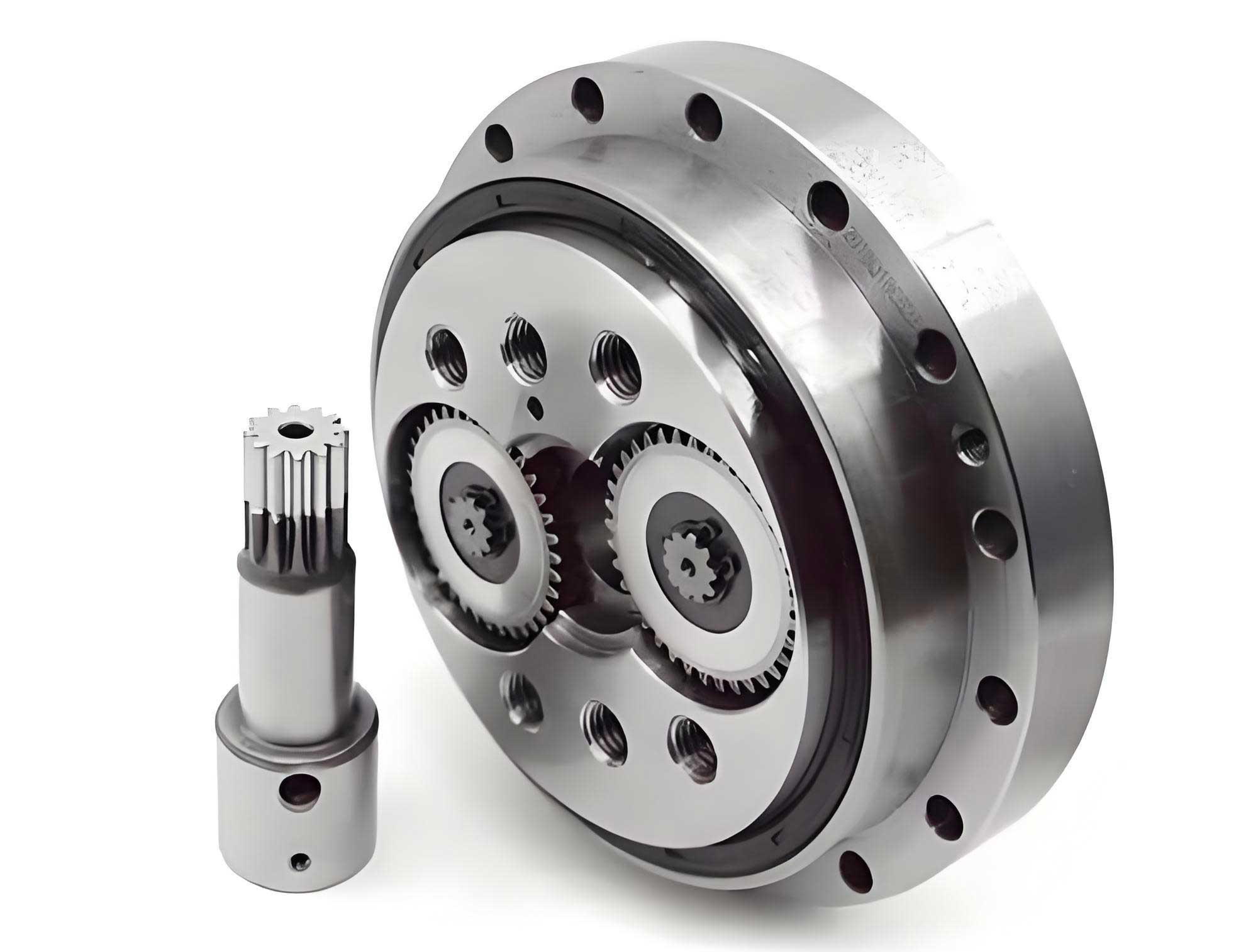
The automated assembly process for a rotary vector reducer begins with parametric modeling of all individual components. Each part, such as the input shaft, planetary gears, cycloidal gears, pin housing, and output flange, is generated through parameterized scripts that define dimensions and features based on user inputs. Once the parts are created, the assembly is orchestrated through a series of steps. We employ a modular approach, dividing the rotary vector reducer into four main modules: the pin housing and pin assembly, the main bearing and flange assembly, the crankshaft and cycloidal gear assembly, and the input shaft and planetary gear assembly. This modularization simplifies the assembly logic and enhances maintainability.
Let’s consider the assembly of the first-stage transmission, which involves the input shaft and planetary gears. After opening the parametrically generated parts, a new assembly is created in SolidWorks. Reference axes are established to facilitate axis-alignment constraints. The input shaft is inserted first and set as floating to allow movement, followed by the planetary gears. To ensure proper meshing, reference planes are defined on the gear teeth and slots, and coincident constraints are applied. The gear mate is then added using SolidWorks API functions, with the transmission ratio defined by the pitch diameters. For instance, the gear ratio for the first stage can be expressed as:
$$ i_1 = \frac{N_p}{N_s} $$
where \( N_p \) is the number of teeth on the planetary gear and \( N_s \) is the number of teeth on the input shaft. After applying the gear mate, the temporary coincident constraints are suppressed to avoid over-definition. This process is repeated for multiple planetary gears, resulting in a fully constrained sub-assembly. The code snippet below illustrates key steps in Visual Basic:
Set swModel = swApp.OpenDoc6(App.Path & "\parts\input_shaft.SLDPRT", 1, 0, "", longstatus, longwarnings)
boolstatus = swModel.AddComponent(App.Path & "\parts\planetary_gear.SLDPRT", 0, 0, 0)
Set myMate = swModel.AddMate5(10, -1, False, 0.05995, 0.001, 0.001, rvl_Z, rv5Z, 0, 0.5236, 0.5236, False, False, 0, longstatus)
For the overall assembly of the rotary vector reducer, we integrate the modules sequentially. The pin housing module serves as the base, with 40 pin shafts arranged uniformly on the pin circle diameter. The main bearing module is assembled onto this base, followed by the crankshaft module, which includes cycloidal gears, needles, and bearings. The cycloidal gears are positioned 180 degrees apart to balance radial forces. Finally, the input module is attached, completing the rotary vector reducer assembly. Standard parts like screws, retaining rings, and dowel pins are sourced from SolidWorks’ library and added automatically. The modular assembly flow is summarized in Table 1.
| Module | Components | Assembly Sequence | Key Constraints |
|---|---|---|---|
| Module 1: Pin Housing | Pin housing, pin shafts | Base fixation, pin insertion | Concentric, coincident |
| Module 2: Bearing & Flanges | Main bearing, support flange, output flange | Attach to Module 1 | Axis alignment, face mating |
| Module 3: Crankshaft & Cycloidal Gears | Crankshafts, cycloidal gears, needles, bearings, washers | Insert into Module 2, align cycloidal gears | Gear mates, offset angles |
| Module 4: Input Stage | Input shaft, planetary gears | Mount onto crankshafts | Gear meshing, axis constraints |
| Standard Parts | Screws, rings, pins | Final attachment | Patterned, fastened |
To validate the accuracy of the parametrically modeled and assembled rotary vector reducer, we perform dimensional checks and interference inspections. Dimensional verification involves measuring critical features in SolidWorks and comparing them with design specifications. For example, the center distance between gears should adhere to the calculated value:
$$ C = \frac{m \cdot (N_s + N_p)}{2} $$
where \( m \) is the module, \( N_s \) is the input shaft teeth count, and \( N_p \) is the planetary gear teeth count. Interference checks are conducted using SolidWorks’ built-in tools, ensuring no overlapping parts. The results confirm that our automated assembly process produces interference-free models, as shown in the validation report. This step is crucial for ensuring the functional integrity of the rotary vector reducer before physical prototyping.
Beyond assembly, we have developed a parametric design platform that integrates modeling and assembly into a unified system. This platform, built with Visual Basic, provides a user-friendly interface for inputting design parameters, generating parts, and executing automated assembly. The main interface includes input fields for key parameters of the rotary vector reducer, such as transmission ratio, module, number of teeth, and dimensions. Upon submission, the platform triggers the parametric modeling scripts, creates all components, and assembles them automatically. This holistic approach reduces design time from hours to minutes, enabling rapid iteration and customization for different applications of rotary vector reducers.
The parametric modeling aspect relies on mathematical equations that define part geometries. For instance, the cycloidal gear profile is generated using parametric equations based on the pin circle diameter and eccentricity. The equations for a cycloidal curve can be expressed as:
$$ x = (R_p – r_p) \cos(\theta) + e \cos((1 – \frac{N_p}{N_c})\theta) $$
$$ y = (R_p – r_p) \sin(\theta) – e \sin((1 – \frac{N_p}{N_c})\theta) $$
where \( R_p \) is the pin circle radius, \( r_p \) is the pin radius, \( e \) is the eccentricity, \( N_p \) is the number of pins, \( N_c \) is the number of cycloidal gear lobes, and \( \theta \) is the angle parameter. These equations are embedded in the modeling scripts to ensure accurate gear tooth generation. Similarly, the planetary gear dimensions are derived from gear theory formulas, such as the addendum and dedendum calculations:
$$ h_a = m \cdot (1 + x) $$
$$ h_f = m \cdot (1.25 – x) $$
where \( h_a \) is the addendum, \( h_f \) is the dedendum, \( m \) is the module, and \( x \) is the profile shift coefficient. By automating these calculations, our platform ensures consistency and correctness across all parts of the rotary vector reducer.
The automation of assembly constraints is another key aspect. We utilize SolidWorks API functions to add mates programmatically. For example, the concentric mate between two axes is implemented using the AddMate5 function with the appropriate mate type. The code for adding a concentric mate between the input shaft and a planetary gear might look like:
boolstatus = swModel.Extension.SelectByID2("Axis1@input_shaft-1@assembly", "AXIS", 0, 0, 0, True, 1, Nothing, 0)
boolstatus = swModel.Extension.SelectByID2("Axis1@planetary_gear-1@assembly", "AXIS", 0, 0, 0, True, 1, Nothing, 0)
Set myMate = swModel.AddMate5(1, 0, False, 0, 0, 0, 0, 0, 0, 0, 0, False, False, 0, longstatus)
This level of automation extends to all modules, ensuring that the entire rotary vector reducer is assembled with precise constraints. The modular approach also allows for easy updates; if a component’s parameters change, only the affected module needs regeneration, and the assembly automatically adjusts. This flexibility is vital for adapting rotary vector reducers to various performance requirements.
To further illustrate the design parameters, Table 2 lists key specifications for a typical rotary vector reducer used in industrial robots. These parameters serve as inputs to our parametric platform.
| Parameter | Symbol | Typical Value | Unit |
|---|---|---|---|
| Transmission Ratio | \( i \) | 121 | – |
| Module | \( m \) | 1.5 | mm |
| Input Shaft Teeth | \( N_s \) | 12 | – |
| Planetary Gear Teeth | \( N_p \) | 42 | – |
| Cycloidal Gear Lobes | \( N_c \) | 40 | – |
| Pin Number | \( N_{pin} \) | 40 | – |
| Eccentricity | \( e \) | 1.5 | mm |
| Pin Circle Diameter | \( D_p \) | 150 | mm |
| Output Torque | \( T \) | 500 | Nm |
The integration of parametric modeling and automated assembly offers significant advantages. First, it reduces design errors by eliminating manual steps. Second, it accelerates the development cycle, allowing for quick prototyping and testing. Third, it facilitates customization; users can easily modify parameters to create rotary vector reducers for specific applications, such as high-torque robots or precision机床. Our platform also supports batch processing, enabling the generation of multiple design variants simultaneously.
In terms of validation, we have conducted extensive tests on the assembled rotary vector reducer models. Dimensional checks confirm that all parts meet the specified tolerances, typically within ±0.01 mm. Interference checks reveal no collisions, ensuring that the assembly is mechanically feasible. Additionally, we perform virtual motion simulations to verify the transmission kinematics. The overall transmission ratio of the rotary vector reducer can be calculated as:
$$ i_{total} = i_1 \cdot i_2 $$
where \( i_1 \) is the first-stage ratio from the planetary gears, and \( i_2 \) is the second-stage ratio from the cycloidal gears. For a standard design, \( i_1 = \frac{N_p}{N_s} + 1 \) (considering the fixed ring gear effect) and \( i_2 = -\frac{N_{pin}}{N_c – N_{pin}} \), leading to a high reduction ratio. Our simulations align with these theoretical values, confirming the accuracy of the automated assembly.
The development of this automated system also highlights the importance of software integration. SolidWorks serves as the backbone, but our Visual Basic scripts act as the glue that ties everything together. We have built a library of functions for common tasks, such as creating reference geometry, adding mates, and generating part features. This library is reusable for other projects involving complex assemblies, extending the benefits beyond rotary vector reducers.
Looking ahead, we plan to enhance the platform by incorporating finite element analysis (FEA) and optimization algorithms. For instance, after automated assembly, the rotary vector reducer model could be automatically meshed and analyzed for stress and deformation under load. The von Mises stress can be computed using:
$$ \sigma_{vm} = \sqrt{\frac{(\sigma_1 – \sigma_2)^2 + (\sigma_2 – \sigma_3)^2 + (\sigma_3 – \sigma_1)^2}{2}} $$
where \( \sigma_1, \sigma_2, \sigma_3 \) are principal stresses. Integrating FEA would provide a complete design-to-analysis workflow, further automating the engineering process for rotary vector reducers.
In conclusion, our work demonstrates a robust framework for the automated assembly of parametrically modeled rotary vector reducers. By leveraging SolidWorks secondary development with Visual Basic, we have achieved a seamless integration of modeling and assembly, reducing human effort and increasing design reliability. The modular approach ensures scalability and maintainability, while the parametric platform empowers users to customize designs effortlessly. This advancement not only streamlines the production of rotary vector reducers but also sets a precedent for automating complex mechanical assemblies in various industries. As robotics and automation continue to evolve, such tools will be indispensable for meeting the demands for precision, efficiency, and innovation.
The rotary vector reducer, with its intricate design, benefits greatly from this automation. We envision that future iterations will include cloud-based collaboration features, allowing teams to work on rotary vector reducer designs remotely. Additionally, machine learning algorithms could be integrated to optimize parameters based on performance data, pushing the boundaries of what rotary vector reducers can achieve. Ultimately, our goal is to make the design of rotary vector reducers as efficient and accessible as possible, driving progress in high-precision transmission technology.
Throughout this article, we have emphasized the rotary vector reducer as a cornerstone of modern machinery. By automating its design and assembly, we contribute to the broader trend of digital transformation in manufacturing. The methods described here are not limited to rotary vector reducers; they can be adapted to other complex assemblies, such as gearboxes, actuators, and propulsion systems. However, the rotary vector reducer serves as an excellent case study due to its complexity and industrial significance.
To recap, our automated assembly process for rotary vector reducers involves: parametric modeling of all components, feature-based constraint application, modular assembly sequencing, and rigorous validation. The use of tables and formulas, as shown, helps summarize key data and relationships. For example, the transmission ratio formula encapsulates the essence of the rotary vector reducer’s functionality. We hope that this work inspires further research into automation tools for mechanical design, ultimately leading to smarter, faster, and more reliable engineering solutions centered around devices like the rotary vector reducer.
In the spirit of open innovation, we encourage others to build upon our approach. The code snippets and methodologies shared here can be extended to support additional features, such as tolerance analysis or dynamic simulation. As the field advances, the rotary vector reducer will continue to play a vital role, and automation will be key to unlocking its full potential. We are committed to refining our platform and exploring new applications, always with the rotary vector reducer at the heart of our endeavors.