
In the field of high-precision transmission systems, the rotary vector reducer plays a crucial role due to its compact size, high transmission ratio, excellent load capacity, and superior torsional stiffness. As a key component in robotics, aerospace, and industrial automation, ensuring its transmission accuracy and operational stability is paramount. One of the most effective methods to enhance these characteristics is through tooth profile modification of the cycloidal gear, which directly influences meshing performance, load distribution, and dynamic behavior. In this study, I explore various modification strategies for the cycloidal gear in a rotary vector reducer, leveraging neural networks and genetic algorithms to optimize modification parameters. By establishing dynamic models under load, simulating transmission behavior, and employing machine learning techniques, I aim to identify optimal modification methods that balance transmission accuracy, smoothness, and load-bearing capacity. The integration of these advanced computational tools provides a robust framework for improving the design and performance of rotary vector reducers, offering insights that bridge theoretical analysis with practical engineering applications.
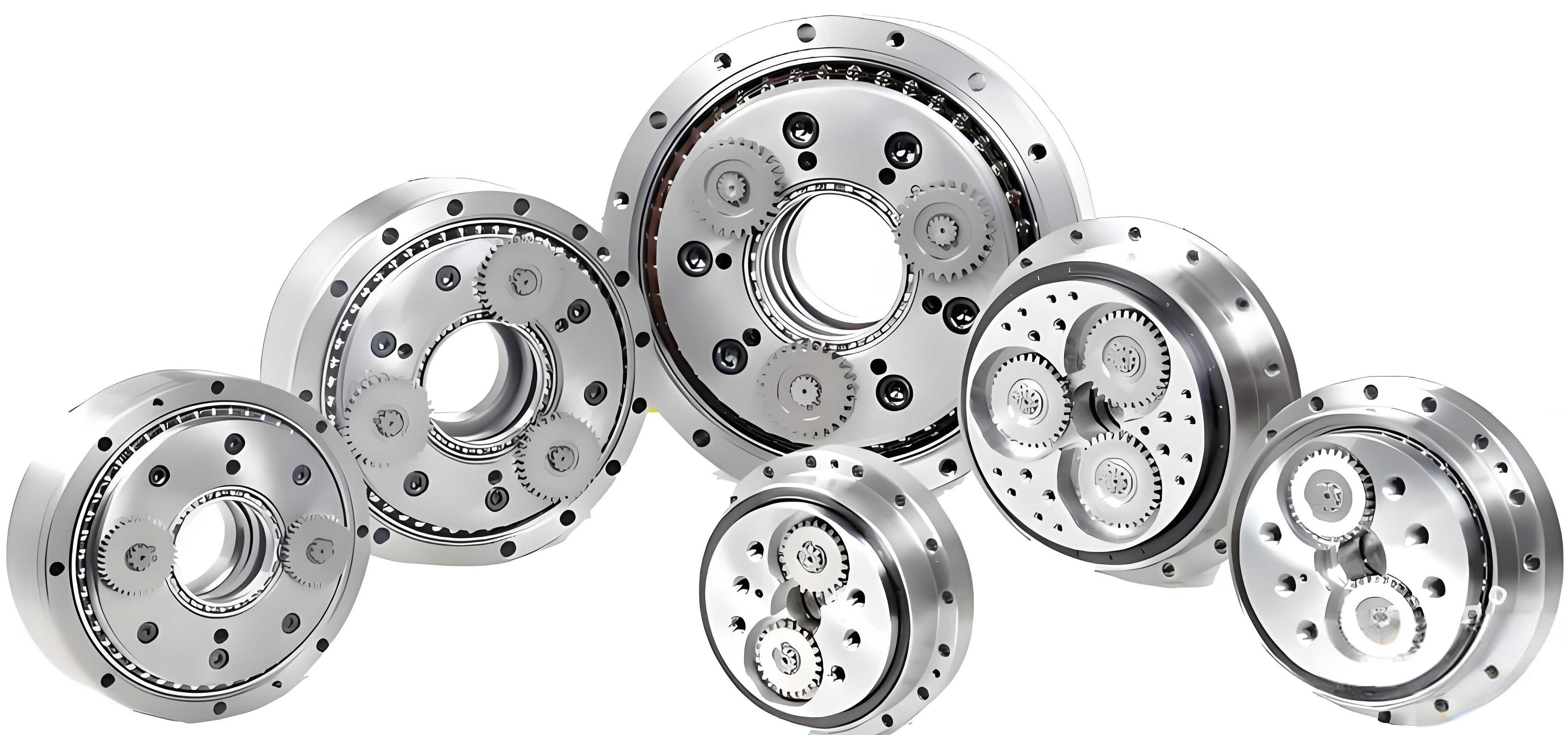
The rotary vector reducer operates on a two-stage transmission principle, combining a planetary gear stage with a cycloidal-pinwheel stage. The latter is particularly critical, as the cycloidal gear’s tooth profile determines the reducer’s overall efficiency and durability. Without proper modification, factors such as manufacturing errors, assembly tolerances, and dynamic loads can lead to increased backlash, vibration, and wear, ultimately compromising performance. Traditional modification approaches, such as equidistant and shift-distance modifications, have been widely studied, but their optimization often relies on static models that neglect dynamic interactions. In this work, I address this gap by incorporating dynamic simulations into the optimization process, allowing for a more realistic assessment of transmission characteristics under operational conditions. This approach not only enhances accuracy but also ensures that the rotary vector reducer meets the stringent demands of modern high-precision applications.
Tooth profile modification in a rotary vector reducer typically involves adjusting the cycloidal gear’s geometry to create controlled clearance and improve meshing conditions. The two primary methods are equidistant modification and shift-distance modification. Equidistant modification alters the grinding wheel radius during machining, effectively changing the tooth profile’s curvature, while shift-distance modification adjusts the theoretical pinwheel center circle radius, influencing the gear’s overall size and engagement pattern. These modifications can be applied in combination—positive or negative—to achieve specific performance goals. For instance, a positive shift-distance combined with a negative equidistant modification might enhance smoothness but reduce load capacity, whereas a negative shift-distance with positive equidistant modification could improve load distribution at the expense of transmission accuracy. The mathematical representation of the modified cycloidal gear tooth profile is essential for analysis. Based on the standard equations, the modified tooth profile coordinates can be expressed as follows:
$$ x’_{c} = \left[ r_{p} – \Delta r_{p} – (r_{rp} + \Delta r_{rp}) S^{-\frac{1}{2}} \right] \sin((1 – i_{H}) \phi) + \frac{a}{r_{p} – \Delta r_{p}} \left[ r_{p} – \Delta r_{p} – z_{p} (r_{rp} + \Delta r_{rp}) S^{-\frac{1}{2}} \right] \sin(i_{H} \phi) $$
$$ y’_{c} = \left[ r_{p} – \Delta r_{p} – (r_{rp} + \Delta r_{rp}) S^{-\frac{1}{2}} \right] \cos((1 – i_{H}) \phi) – \frac{a}{r_{p} – \Delta r_{p}} \left[ r_{p} – \Delta r_{p} – z_{p} (r_{rp} + \Delta r_{rp}) S^{-\frac{1}{2}} \right] \cos(i_{H} \phi) $$
where \( r_{p} \) is the pinwheel center circle radius, \( r_{rp} \) is the pin radius, \( \Delta r_{rp} \) is the equidistant modification amount (positive for increase, negative for decrease), \( \Delta r_{p} \) is the shift-distance modification amount (positive for decrease, negative for increase), \( i_{H} \) is the transmission ratio between the cycloidal gear and pinwheel, \( z_{p} \) is the number of pin teeth, \( a \) is the eccentricity, \( \phi \) is the position angle, and \( S = 1 + k’^{2}_{1} – 2k’_{1} \cos \phi \) with \( k’_{1} = a z_{p} / (r_{p} – \Delta r_{p}) \). By varying \( \Delta r_{p} \) and \( \Delta r_{rp} \), different tooth profiles can be generated, each impacting the rotary vector reducer’s performance in unique ways. This formulation serves as the foundation for subsequent dynamic modeling and optimization.
In this study, I developed a dynamic model of the rotary vector reducer using multibody simulation software to account for real-world operational conditions. The model includes key components such as the cycloidal gears, pinwheels, crankshafts, and output flange, with appropriate joints and contacts defined to replicate actual motion and forces. The contact forces between meshing teeth are modeled using a nonlinear impact formulation, which considers stiffness, damping, and penetration depth. The contact force \( F \) is given by:
$$ F = \begin{cases}
K \delta^{e} + \text{step}(\delta, 0, 0, d_{\text{max}}, C_{\text{max}}) \frac{d\delta}{dt} & \delta \geq 0 \\
0 & \delta < 0
\end{cases} $$
where \( K \) is the contact stiffness coefficient, \( \delta \) is the penetration depth, \( e \) is the force exponent (typically 1.5), \( d_{\text{max}} \) is the maximum allowable penetration, and \( C_{\text{max}} \) is the maximum damping at \( d_{\text{max}} \). This model captures the transient effects during meshing, such as impact and separation, which are critical for assessing vibration and noise. For simulation, I applied a driven rotational speed of 7200°/s to the input shaft and a load torque of 784 Nm to the output flange, with a gradual ramp-up to mimic startup conditions. The simulation time was set to 1 second, and data on output rotation angle and speed were extracted for analysis. From these, transmission error and operational smoothness were calculated. Transmission error \( \xi \) is defined as the deviation between the actual and theoretical output angles, scaled by the reduction ratio:
$$ \xi = (\theta_{i} – \theta) \cdot 60 $$
where \( \theta_{i} \) is the measured output angle and \( \theta \) is the theoretical output angle. Transmission accuracy \( E \) is then the range of transmission error over a stable operating period:
$$ E = \xi_{\text{max}} – \xi_{\text{min}} $$
Operational smoothness is quantified using the variance \( \delta^{2} \) of the output speed after stabilization:
$$ \delta^{2} = \frac{\sum_{i=1}^{n} (\omega_{i} – \bar{\omega})^{2}}{n} $$
where \( \omega_{i} \) are the speed values, \( \bar{\omega} \) is the mean speed, and \( n \) is the number of samples. A lower variance indicates smoother operation, which is desirable for minimizing vibration in the rotary vector reducer. I simulated 37 different modification combinations, covering various values of \( \Delta r_{p} \) and \( \Delta r_{rp} \), to generate a dataset linking modification parameters to performance metrics. The results showed that transmission accuracy and smoothness do not always correlate linearly, highlighting the need for a multi-objective optimization approach.
To establish a predictive relationship between modification parameters and performance outcomes, I employed a backpropagation neural network. This type of neural network is well-suited for approximating nonlinear functions, making it ideal for mapping the complex interactions in a rotary vector reducer. The network architecture consists of three layers: an input layer with two neurons (representing \( \Delta r_{p} \) and \( \Delta r_{rp} \)), a hidden layer with five neurons (determined by the heuristic \( m = 2l + 1 \), where \( l \) is the number of inputs), and an output layer with two neurons (representing transmission accuracy \( E \) and smoothness variance \( \delta^{2} \)). The hidden layer uses a sigmoid activation function for nonlinear mapping, while the output layer uses a linear function. The training process involved normalizing the input and output data to the range \([-1, 1]\) to improve convergence, using the Levenberg-Marquardt algorithm for weight updates. The neural network was trained on the simulation dataset, with 100 iterations to minimize prediction error. After training, the network demonstrated high accuracy in predicting performance metrics, as shown by the close alignment between predicted and actual values. This trained network serves as a surrogate model, enabling rapid evaluation of modification combinations without costly simulations, which is crucial for optimization in the context of rotary vector reducer design.
With the neural network providing a fast and reliable performance predictor, I applied a genetic algorithm to find optimal modification parameters. Genetic algorithms are evolutionary optimization techniques inspired by natural selection, making them effective for solving multi-objective problems with complex constraints. In this case, the goal is to minimize a fitness function that combines transmission accuracy and operational smoothness, weighted according to their relative importance. For a rotary vector reducer, transmission accuracy is often prioritized, so I assigned a weight of 0.7 to accuracy and 0.3 to smoothness. The fitness function \( F_{\text{fit}} \) is defined as:
$$ F_{\text{fit}} = 0.7 \cdot |E| + 0.3 \cdot \delta^{2} $$
The genetic algorithm was configured with a population size of 20, 100 generations, crossover probability of 0.4, and mutation probability of 0.2. Each individual in the population represents a pair of modification parameters \( (\Delta r_{p}, \Delta r_{rp}) \), and the fitness is evaluated by querying the trained neural network. Constraints were imposed based on the modification type to ensure practical feasibility and meet backlash requirements. For example, for a positive shift-distance with positive equidistant modification, the constraints are \( \Delta r_{p} > 0 \), \( \Delta r_{rp} > 0 \), and backlash \( D \leq 1.5 \) arcminutes. Other common combinations include positive shift-distance with negative equidistant, and negative shift-distance with positive equidistant, each with specific constraints on the modification amounts and backlash. The algorithm iteratively selects, crosses, and mutates individuals to converge on solutions with minimal fitness. The optimization results for three primary modification strategies are summarized in the table below, showcasing how different approaches affect the performance of the rotary vector reducer.
| Modification Type | Shift-Distance \( \Delta r_{p} \) (mm) | Equidistant \( \Delta r_{rp} \) (mm) | Fitness \( F_{\text{fit}} \) | Transmission Accuracy \( E \) (arcmin) | Smoothness Variance \( \delta^{2} \) |
|---|---|---|---|---|---|
| Positive Shift with Positive Equidistant | 0.0039 | 0 | 0.4441 | 0.3004 | 0.7795 |
| Negative Shift with Positive Equidistant | -0.0171 | 0.0206 | 0.4641 | 0.4631 | 0.4665 |
| Positive Shift with Negative Equidistant | 0.0569 | -0.0126 | 0.4093 | 0.3406 | 0.5696 |
The table reveals that the positive shift-distance with negative equidistant modification yields the lowest fitness value, indicating a good balance between accuracy and smoothness for the rotary vector reducer. However, this modification strategy may impact load-bearing capacity, necessitating further analysis. In contrast, the negative shift-distance with positive equidistant modification results in higher fitness but potentially better load distribution. To fully assess these trade-offs, I conducted a load distribution analysis, calculating the maximum meshing force and number of simultaneously engaged teeth for each optimal modification set. This step is vital because a rotary vector reducer must not only transmit motion precisely but also withstand operational loads without excessive stress or wear.
Load distribution in a rotary vector reducer depends on the initial clearance between the cycloidal gear and pinwheel teeth, which is influenced by modification amounts. The initial normal clearance \( \Delta \phi_{i} \) for a modified tooth profile can be computed as:
$$ \Delta \phi_{i} = \frac{\Delta r_{p} (1 – k_{1} \cos \phi_{i} – \sqrt{1 – k_{1}^{2}} \sin \phi_{i})}{\sqrt{1 + k_{1}^{2} – 2k_{1} \cos \phi_{i}}} + \Delta r_{rp} \left(1 – \frac{\sin \phi_{i}}{\sqrt{1 + k_{1}^{2} – 2k_{1} \cos \phi_{i}}}\right) $$
where \( k_{1} = a z_{p} / r_{p} \). Under load, the total deformation at the meshing point includes contact deformation and pin bending, which determines the force distribution. The maximum meshing force \( F_{\text{max}} \) is given by:
$$ F_{\text{max}} = \frac{0.55 M_{v}}{\sum_{i=m}^{n} \frac{l_{i}}{r’_{c}} – \frac{\Delta(\phi_{i})}{\delta_{\text{max}}} l_{i}} $$
where \( M_{v} \) is the load torque, \( r’_{c} \) is the pitch circle radius of the cycloidal gear, \( l_{i} \) is the distance from the gear center to the contact normal, \( \Delta(\phi_{i}) \) is the initial clearance, and \( \delta_{\text{max}} \) is the maximum total deformation at the point of highest load. This deformation comprises contact deformation \( W_{\text{max}} \) and pin bending deformation \( f_{\text{max}} \), expressed as:
$$ W_{\text{max}} = \frac{2(1 – \mu^{2})}{E} \cdot \frac{F_{\text{max}}}{\pi b} \left( \frac{2}{3} + \ln \frac{16 r_{rp} \rho_{c}}{C^{2}} \right) $$
$$ f_{\text{max}} = \frac{F_{\text{max}} L^{3} B}{48 E J} $$
Here, \( \mu \) is Poisson’s ratio, \( E \) is Young’s modulus, \( b \) is the gear width, \( \rho_{c} \) is the combined curvature radius, \( L \) is the pin span, \( J \) is the pin’s moment of inertia, and \( B \) is a support factor. Using these equations, I calculated the load characteristics for the three optimal modification sets, with results presented in the following table. This analysis provides insight into how modification choices affect the structural integrity and durability of the rotary vector reducer.
| Modification Type | Shift-Distance \( \Delta r_{p} \) (mm) | Equidistant \( \Delta r_{rp} \) (mm) | Maximum Meshing Force \( F_{\text{max}} \) (N) | Number of Simultaneously Engaged Teeth |
|---|---|---|---|---|
| Positive Shift with Positive Equidistant | 0.0039 | 0 | 729.26 | 17 |
| Negative Shift with Positive Equidistant | -0.0171 | 0.0206 | 574.21 | 18 |
| Positive Shift with Negative Equidistant | 0.0569 | -0.0126 | 1304.07 | 9 |
The data indicates that the negative shift-distance with positive equidistant modification achieves the lowest maximum meshing force and the highest number of engaged teeth, suggesting superior load distribution and higher load-bearing capacity for the rotary vector reducer. Conversely, the positive shift-distance with negative equidistant modification, while optimal for transmission accuracy and smoothness, results in a higher meshing force and fewer engaged teeth, potentially limiting its use in high-load applications. This trade-off underscores the importance of a holistic design approach, where modification parameters are selected based on specific performance requirements—whether prioritizing precision, smoothness, or strength. For instance, in applications where the rotary vector reducer must handle heavy loads with minimal wear, the negative shift-distance with positive equidistant modification might be preferred, even if it slightly compromises accuracy. On the other hand, for precision positioning systems where vibration control is critical, the positive shift-distance with negative equidistant modification could be more suitable.
In conclusion, this study demonstrates the effectiveness of combining neural networks and genetic algorithms to optimize tooth profile modification in a rotary vector reducer. By integrating dynamic simulations, machine learning, and evolutionary optimization, I have established a comprehensive methodology for balancing multiple performance criteria. The results show that no single modification strategy excels in all aspects; instead, the choice depends on the application’s specific demands. The positive shift-distance with negative equidistant modification minimizes the combined fitness function, offering excellent transmission accuracy and smoothness, but it may reduce load capacity. In contrast, the negative shift-distance with positive equidistant modification enhances load distribution and engagement, making it ideal for high-stress environments. These insights provide a valuable foundation for engineers designing rotary vector reducers, enabling data-driven decisions that enhance reliability and efficiency. Future work could expand this approach by incorporating additional factors such as thermal effects, material properties, or long-term wear, further refining the optimization process. Ultimately, the integration of advanced computational techniques with traditional mechanical design holds great promise for advancing the performance of rotary vector reducers in increasingly demanding industrial applications.
The methodology presented here is not limited to rotary vector reducers; it can be adapted to other precision gear systems where tooth profile modification is critical. By leveraging neural networks for prediction and genetic algorithms for optimization, designers can efficiently explore vast parameter spaces and identify optimal solutions without extensive physical prototyping. This approach reduces development time and cost while improving performance, contributing to the ongoing evolution of high-precision transmission technology. As industries continue to demand greater accuracy, durability, and efficiency from mechanical systems, such integrated computational tools will become indispensable in the design and optimization of components like the rotary vector reducer. Through continued research and application, we can push the boundaries of what is achievable in mechanical engineering, driving innovation and excellence across various sectors.