
In recent years, with the rapid development of robotics and industrial automation, the demand for high-precision rotary vector reducers has significantly increased. As a key component in industrial robots, the performance and reliability of rotary vector reducers directly impact the overall operational accuracy and efficiency of robotic systems. However, achieving high precision in rotary vector reducers is challenging due to the complex assembly process and the inherent errors in manufactured parts. Traditional manual selective assembly methods often lead to inconsistencies, low assembly success rates, and increased costs. To address these issues, we propose an improved genetic algorithm-based approach for the selective assembly of rotary vector reducers, aiming to maximize the number of successfully assembled units while ensuring optimal transmission accuracy.
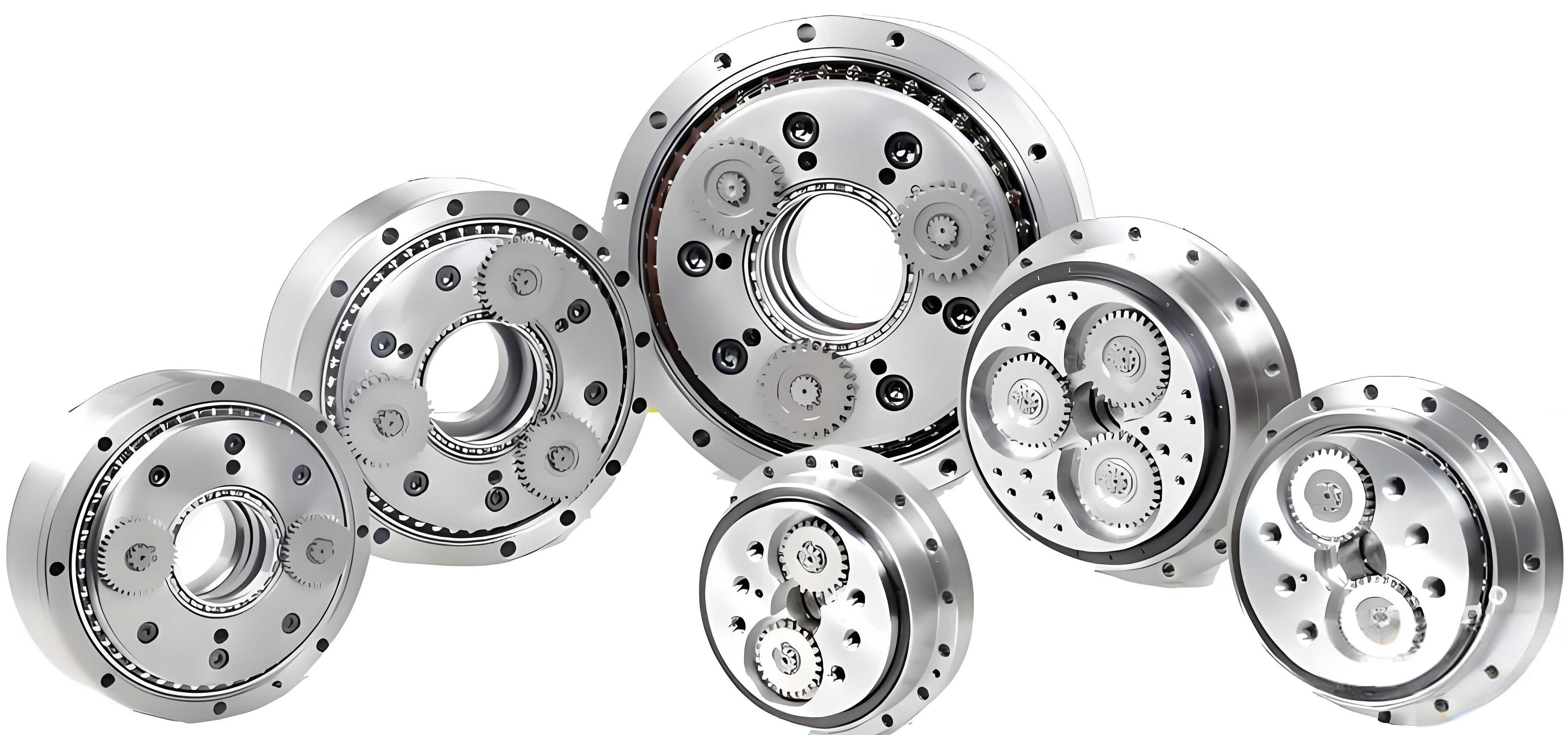
The rotary vector reducer, often referred to as an RV reducer, is a complex transmission device consisting of numerous precision parts, including a cycloid gear, pin housing, crankshaft, and pins. The transmission error of the rotary vector reducer is influenced by various factors, such as machining tolerances and assembly deviations. Specifically, errors in the pin housing center circle diameter, pin housing base diameter, pin housing pin hole position, pin diameter, cycloid gear base diameter, cycloid gear cumulative pitch error, cycloid gear circumferential runout, cycloid gear crankshaft hole diameter, and crankshaft shaft diameter all contribute to the overall transmission error. Therefore, the selective assembly process must carefully match these parts to minimize errors and meet stringent precision requirements.
In this study, we focus on the RV-20E type rotary vector reducer as a case study. The selective assembly problem involves selecting one pin housing, two cycloid gears, two crankshafts, and one set of pins from available parts to form a complete rotary vector reducer unit. The goal is to assemble as many units as possible while ensuring that the transmission error of each unit falls within acceptable limits. This problem is essentially a combinatorial optimization problem in discrete space, where traditional methods like exhaustive search are impractical due to the large solution space. For instance, with n sets of parts, the total number of possible combinations is approximately $$2n^3(n-1)^2$$, which grows exponentially with n. Thus, intelligent optimization algorithms are necessary to find near-optimal solutions efficiently.
We begin by formulating a mathematical model for the selective assembly of rotary vector reducers. Let H represent the error set for pin housings, defined as:
$$H = \{(h_{1,1}, h_{2,1}, h_{3,1}), (h_{1,2}, h_{2,2}, h_{3,2}), \ldots, (h_{1,n}, h_{2,n}, h_{3,n})\} \quad (1 \leq i \leq n, i \in \mathbb{Z})$$
where $$h_{1,i}$$ is the center circle diameter error, $$h_{2,i}$$ is the base diameter error, and $$h_{3,i}$$ is the pin hole position error for the i-th pin housing. Similarly, the error set for cycloid gears C is given by:
$$C = \{(c_{1,1}, c_{2,1}, c_{3,1}, c_{4,1}, c_{5,1}), (c_{1,2}, c_{2,2}, c_{3,2}, c_{4,2}, c_{5,2}), \ldots, (c_{1,2n}, c_{2,2n}, c_{3,2n}, c_{4,2n}, c_{5,2n})\} \quad (1 \leq i \leq 2n, i \in \mathbb{Z})$$
where $$c_{1,i}$$ and $$c_{2,i}$$ are the crankshaft hole diameter errors, $$c_{3,i}$$ is the base diameter error, $$c_{4,i}$$ is the cumulative pitch error, and $$c_{5,i}$$ is the circumferential runout error for the i-th cycloid gear. The error set for crankshafts B is:
$$B = \{(b_{1,1}, b_{2,1}), (b_{1,2}, b_{2,2}), \ldots, (b_{1,2n}, b_{2,2n})\} \quad (1 \leq i \leq 2n, i \in \mathbb{Z})$$
where $$b_{1,i}$$ and $$b_{2,i}$$ are the shaft diameter errors for the i-th crankshaft. Additionally, the pin diameter errors are classified into two categories, denoted as $$p_1$$ and $$p_2$$. For the RV-20E rotary vector reducer, the allowable ranges for these error parameters are summarized in Table 1.
| Error Symbol | Range (μm) |
|---|---|
| $$h_{1,i}$$ | [-5, 5] |
| $$h_{2,i}$$ | [-6, 6] |
| $$h_{3,i}$$ | [0, 4] |
| $$c_{1,i}, c_{2,i}$$ | [-17, -7] |
| $$c_{3,i}$$ | [-3, 7] |
| $$c_{4,i}$$ | [0, 8] |
| $$c_{5,i}$$ | [0, 7] |
| $$b_{1,i}, b_{2,i}$$ | [-17, -7] |
| $$p_1$$ | -1 |
| $$p_2$$ | -2 |
In the selective assembly process, a pre-assembly scheme S consists of n potential rotary vector reducer units, denoted as $$s_x$$ for $$x = 1, 2, \ldots, n$$. Each unit $$s_x$$ is formed by selecting specific parts: a pin housing indexed by g, cycloid gears indexed by i and j, crankshafts indexed by m and n, and pins of category l. The transmission error $$\delta_x$$ for unit $$s_x$$ is composed of two components, $$\delta_{1,x}$$ and $$\delta_{2,x}$$, calculated based on the error interactions between parts. The constraints for $$\delta_x$$ are defined as follows:
$$\text{s.t. } \delta_{1,x} = 0.001 \cdot \left\{ \alpha_1 \cdot h_{1,k} + \alpha_2 \cdot \min[(c_{1,i} – b_{1,m}), (c_{2,i} – b_{1,n})] + \alpha_3 \cdot (h_{2,k} – c_{3,i} – p_l) + \alpha_4 \cdot (2h_{3,k} – c_{4,i}) + \alpha_5 \cdot c_{5,i} \right\}$$
$$\delta_{2,x} = 0.001 \cdot \left\{ \alpha_1 \cdot h_{1,k} + \alpha_2 \cdot \min[(c_{2,j} – b_{2,m}), (c_{1,j} – b_{2,n})] + \alpha_3 \cdot (h_{2,k} – c_{3,j} – p_l) + \alpha_4 \cdot (2h_{3,k} – c_{4,j}) + \alpha_5 \cdot c_{5,j} \right\}$$
$$\Delta_{\text{min}} \leq \delta_{1,x} \leq \Delta_{\text{max}}, \quad \Delta_{\text{min}} \leq \delta_{2,x} \leq \Delta_{\text{max}}$$
$$CB_{\text{min}} \leq c_{1,i} – b_{1,m} \leq CB_{\text{max}}, \quad CB_{\text{min}} \leq c_{2,i} – b_{1,n} \leq CB_{\text{max}}$$
$$CB_{\text{min}} \leq c_{2,j} – b_{2,m} \leq CB_{\text{max}}, \quad CB_{\text{min}} \leq c_{1,j} – b_{2,n} \leq CB_{\text{max}}$$
$$HCP_{\text{min}} \leq h_{2,k} – c_{3,i} – p_l \leq HCP_{\text{max}}, \quad HCP_{\text{min}} \leq h_{2,k} – c_{3,j} – p_l \leq HCP_{\text{max}}$$
$$HC_{\text{min}} \leq 2h_{3,k} – c_{4,i} \leq HC_{\text{max}}, \quad HC_{\text{min}} \leq 2h_{3,k} – c_{4,j} \leq HC_{\text{max}}$$
Here, $$\Delta_{\text{max}}$$ and $$\Delta_{\text{min}}$$ are the upper and lower limits for transmission error, while $$CB_{\text{max}}$$, $$CB_{\text{min}}$$, $$HCP_{\text{max}}$$, $$HCP_{\text{min}}$$, $$HC_{\text{max}}$$, and $$HC_{\text{min}}$$ are the bounds for the differences between related error terms. The coefficients $$\alpha_1, \alpha_2, \alpha_3, \alpha_4, \alpha_5$$ are transmission coefficients derived from the geometry of the rotary vector reducer, defined as:
$$\alpha_1 = \frac{1 – k_c^2}{e_b n_c} \cdot \frac{180 \times 60}{\pi}, \quad \alpha_2 = \frac{180 \times 60}{\pi d_c}, \quad \alpha_3 = \frac{180 \times 60}{\pi e_b n_c}, \quad \alpha_4 = k_c \cdot \frac{180 \times 60}{\pi e_b n_c}, \quad \alpha_5 = \frac{180 \times 60}{2\pi e_b n_c}, \quad k_c = \frac{e_b n_c}{r_h}$$
where $$e_b$$ is the crankshaft eccentricity, $$n_c$$ is the number of teeth on the cycloid gear, $$d_c$$ is the pitch circle diameter of the cycloid gear crankshaft holes, $$k_c$$ is the cycloid gear’s shortening coefficient, and $$r_h$$ is the radius of the pin housing center circle. For the RV-20E rotary vector reducer, typical values are $$e_b = 0.9 \, \text{mm}$$, $$n_c = 39$$, $$d_c = 27.5 \, \text{mm}$$, and $$r_h = 52 \, \text{mm}$$. The limits for error differences and transmission error are provided in Table 2.
| Parameter | CB (μm) | HCP (μm) | HC (μm) | Δ (°) |
|---|---|---|---|---|
| Upper Limit (max) | 5 | 5 | 5 | 1/60 |
| Lower Limit (min) | 0 | 1 | 0 | 0 |
The evaluation function for a unit $$s_x$$ is defined as:
$$f(s_x) =
\begin{cases}
1 & \text{if } \Delta_{\text{min}} \leq \delta_{1,x}, \delta_{2,x} \leq \Delta_{\text{max}} \\
0 & \text{otherwise}
\end{cases}$$
Thus, the objective function for the entire pre-assembly scheme S is to maximize the number of successfully assembled rotary vector reducers:
$$F(S) = \max \sum_{x=1}^{n} f(s_x)$$
This model encapsulates the selective assembly problem for rotary vector reducers as a combinatorial optimization problem with constraints. To solve it efficiently, we propose an improved genetic algorithm (IGA) that incorporates several enhancements over traditional genetic algorithms.
Genetic algorithms are population-based optimization techniques inspired by natural selection. However, standard genetic algorithms often suffer from premature convergence and slow convergence speed when applied to complex problems like rotary vector reducer selective assembly. Our improved genetic algorithm addresses these issues through integer encoding, modified crossover and mutation operations, integration of simulated annealing, and adaptive adjustment strategies.
First, we use integer encoding for chromosomes. Each chromosome represents a potential solution (i.e., a pre-assembly scheme S) and consists of n gene segments, each corresponding to a rotary vector reducer unit. A gene segment includes six gene points: the first point stores the pin housing part index, the second point stores the pin category, the third and fourth points store cycloid gear part indices, and the fifth and sixth points store crankshaft part indices. All part indices start from 1, and this encoding ensures that each part is used exactly once in the assembly scheme, adhering to the combinatorial nature of the problem.
The fitness function for a chromosome S is directly derived from the objective function:
$$\text{Fit}(S) = \sum_{x=1}^{n} f(s_x)$$
This means that the fitness value equals the number of units in S that meet the transmission error constraints. Higher fitness indicates a better solution.
For selection, we employ a tournament selection mechanism enhanced with simulated annealing. In each tournament, two individuals are randomly selected from the population, and their fitness values are compared. The individual with higher fitness is selected with probability 1; however, if the other individual has lower fitness, it is still selected with a probability based on the simulated annealing criterion. This probability is given by:
$$p_s =
\begin{cases}
1 & \text{if } \text{Fit}(1) \geq \text{Fit}(2) \\
\exp\left(\frac{\text{Fit}(1) – \text{Fit}(2)}{T}\right) & \text{if } \text{Fit}(1) < \text{Fit}(2)
\end{cases}$$
where T is the current temperature in the simulated annealing process, initialized as $$T_0 = 3000$$ and decreased by a cooling factor $$q = 0.9$$ after each generation: $$T = T_0 \cdot q^{\text{generation}}$$. This approach helps maintain population diversity and avoids premature convergence by occasionally accepting worse solutions early in the search.
Crossover and mutation operations are modified to suit the integer encoding and constraints of the rotary vector reducer selective assembly problem. For crossover, we randomly select two parent chromosomes and a gene segment as the crossover region. Instead of simply swapping gene points, we perform a guided swap: for each gene point in the crossover region, we identify the corresponding part indices in the other parent, then swap these indices within the same part type across the chromosomes to ensure that no part index is duplicated or missing. This preserves the feasibility of the offspring chromosomes. For mutation, we randomly select two gene segments (representing two different rotary vector reducer units) and swap the part indices at a randomly chosen gene point between them. This allows for exploration of new part combinations without violating constraints.
Furthermore, we introduce an adaptive adjustment strategy for crossover and mutation probabilities. The crossover probability $$p_c$$ and mutation probability $$p_m$$ are adjusted based on the population’s diversity, measured by the standard deviation of fitness values. The formulas are:
$$p_c =
\begin{cases}
p_{cl} & \text{if } p_{cl} \geq p_{cm} \cdot \frac{\sigma_i}{\sigma_0} \\
p_{cm} \cdot \frac{\sigma_i}{\sigma_0} & \text{if } p_{cl} < p_{cm} \cdot \frac{\sigma_i}{\sigma_0} < p_{cr} \\
p_{cr} & \text{if } p_{cr} \leq p_{cm} \cdot \frac{\sigma_i}{\sigma_0}
\end{cases}$$
$$p_m =
\begin{cases}
p_{ml} & \text{if } p_{ml} \geq p_{mm} \cdot \frac{\sigma_0}{\sigma_i} \\
p_{mm} \cdot \frac{\sigma_0}{\sigma_i} & \text{if } p_{ml} < p_{mm} \cdot \frac{\sigma_0}{\sigma_i} < p_{mr} \\
p_{mr} & \text{if } p_{mr} \leq p_{mm} \cdot \frac{\sigma_0}{\sigma_i}
\end{cases}$$
where $$\sigma_i$$ is the standard deviation of fitness values in the i-th generation, $$\sigma_0$$ is the standard deviation in the initial population, and $$p_{cm}, p_{cr}, p_{cl}$$ and $$p_{mm}, p_{mr}, p_{ml}$$ are the initial, upper, and lower bounds for crossover and mutation probabilities, respectively. This adaptive strategy allows the algorithm to balance exploration and exploitation: early on, higher mutation and lower crossover rates promote diversity, while later, lower mutation and higher crossover rates refine solutions. We also implement an elitism strategy, preserving the best individual from each generation to ensure that high-quality solutions are not lost.
To validate our improved genetic algorithm, we conducted experiments with different scales of rotary vector reducer parts: 10, 20, and 50 sets. For each scale, we generated synthetic error data based on the ranges in Table 1, ensuring that an ideal matching exists (i.e., 100% success rate is possible). The data was then shuffled to simulate real-world variability. We compared our algorithm, denoted as SAGA (Simulated Annealing and Adaptive Genetic Algorithm), against two baseline algorithms: a standard genetic algorithm (GA) and a genetic algorithm with simulated annealing only (SGA). All algorithms used the same parameter settings, as summarized in Table 3.
| Parameter | Symbol | Value |
|---|---|---|
| Population Size | N | 20 |
| Maximum Generations | M | 1.0 × 10⁷ |
| Initial Crossover Probability | $$p_{cm}$$ | 0.9 |
| Crossover Probability Upper Bound | $$p_{cr}$$ | 0.5 |
| Crossover Probability Lower Bound | $$p_{cl}$$ | 0.75 |
| Initial Mutation Probability | $$p_{mm}$$ | 0.05 |
| Mutation Probability Upper Bound | $$p_{mr}$$ | 0.1 |
| Mutation Probability Lower Bound | $$p_{ml}$$ | 0.01 |
| Simulated Annealing Initial Temperature | $$T_0$$ | 3000 |
| Simulated Annealing Cooling Factor | q | 0.9 |
Each experiment was repeated 50 times independently to ensure statistical reliability. The results, including average run time, best and average number of successfully assembled rotary vector reducers, and success rates, are presented in Table 4. For the 20-set case, a detailed matching result from one run of SAGA is shown in Table 5, demonstrating that all 20 rotary vector reducer units were assembled successfully with transmission errors within limits.
| Scale (Sets) | Solution Space Size | Algorithm | Average Run Time (s) | Best Match Count | Average Match Count | Best Success Rate (%) | Average Success Rate (%) |
|---|---|---|---|---|---|---|---|
| 10 | 1.62 × 10⁵ | GA | 6.03 | 8 | 7.71 | 80 | 77.12 |
| SGA | 6.15 | 9 | 8.65 | 90 | 86.53 | ||
| SAGA | 6.19 | 10 | 9.72 | 100 | 97.18 | ||
| 20 | 5.78 × 10⁶ | GA | 35.77 | 16 | 15.02 | 80 | 75.13 |
| SGA | 36.61 | 18 | 16.61 | 90 | 83.05 | ||
| SAGA | 37.08 | 20 | 18.95 | 100 | 94.75 | ||
| 50 | 6.0 × 10⁸ | GA | 313.65 | 41 | 36.12 | 82 | 72.24 |
| SGA | 325.28 | 44 | 40.54 | 88 | 81.08 | ||
| SAGA | 330.56 | 49 | 46.78 | 98 | 93.56 |
| Unit | Pin Housing | Cycloid Gear 1 | Cycloid Gear 2 | Crankshaft 1 | Crankshaft 2 | Pin Category | Qualified |
|---|---|---|---|---|---|---|---|
| 1 | 13 | 1 | 25 | 24 | 19 | 1 | Yes |
| 2 | 12 | 5 | 30 | 23 | 5 | 2 | Yes |
| 3 | 7 | 32 | 9 | 20 | 10 | 2 | Yes |
| 4 | 15 | 38 | 1 | 11 | 3 | 2 | Yes |
| 5 | 17 | 15 | 12 | 35 | 33 | 2 | Yes |
| 6 | 5 | 3 | 11 | 13 | 18 | 1 | Yes |
| 7 | 14 | 17 | 14 | 40 | 36 | 2 | Yes |
| 8 | 6 | 40 | 4 | 26 | 2 | 1 | Yes |
| 9 | 18 | 20 | 28 | 16 | 31 | 1 | Yes |
| 10 | 11 | 18 | 6 | 22 | 14 | 1 | Yes |
| 11 | 4 | 33 | 31 | 9 | 38 | 2 | Yes |
| 12 | 19 | 24 | 39 | 15 | 29 | 2 | Yes |
| 13 | 2 | 16 | 22 | 28 | 12 | 1 | Yes |
| 14 | 20 | 37 | 10 | 8 | 30 | 1 | Yes |
| 15 | 16 | 2 | 36 | 37 | 39 | 2 | Yes |
| 16 | 1 | 21 | 19 | 34 | 25 | 1 | Yes |
| 17 | 10 | 23 | 29 | 32 | 1 | 1 | Yes |
| 18 | 3 | 27 | 26 | 21 | 7 | 2 | Yes |
| 19 | 8 | 7 | 13 | 4 | 6 | 1 | Yes |
| 20 | 9 | 34 | 35 | 27 | 17 | 1 | Yes |
The results clearly demonstrate that SAGA outperforms both GA and SGA across all scales. For example, with 20 sets of parts, SAGA achieved a 100% success rate in the best case and an average success rate of 94.75%, compared to 80% and 75.13% for GA, and 90% and 83.05% for SGA. Moreover, SAGA showed faster convergence in terms of generations required to reach high fitness values, as illustrated by evolutionary curves plotted over generations for each algorithm. The adaptive adjustment of crossover and mutation probabilities, combined with simulated annealing, enabled SAGA to escape local optima and explore the solution space more effectively. Although SAGA had slightly longer average run times due to its additional computational steps, the difference was marginal (e.g., 37.08 seconds vs. 35.77 seconds for 20 sets), which is acceptable given the significant improvement in assembly success.
In conclusion, we have developed an improved genetic algorithm for the selective assembly of rotary vector reducers. By integrating integer encoding, modified crossover and mutation operations, simulated annealing, and adaptive strategies, our algorithm efficiently maximizes the number of successfully assembled rotary vector reducer units while ensuring optimal transmission accuracy. The experimental results confirm that SAGA achieves higher success rates and faster convergence compared to traditional genetic algorithms, making it a practical solution for high-precision rotary vector reducer manufacturing. This approach not only addresses the challenges of manual selective assembly but also has broad applicability in other complex mechanical assembly problems. Future work could focus on extending the model to multi-objective optimization, considering factors like cost and wear, or applying the algorithm to other types of rotary vector reducers and precision machinery.