
In the field of precision transmission systems, rotary vector reducers are critical components due to their high accuracy, low noise, and substantial output torque. However, these reducers are prone to faults, particularly in the cycloidal gear and pin gear engagement surfaces, which can lead to performance degradation and operational failures. Traditional fault diagnosis methods for rotary vector reducers often rely on manual feature extraction and shallow classifiers, which struggle to capture complex fault patterns and generalize across varying conditions. To address these limitations, I propose integrating attention mechanisms with deep learning models, specifically convolutional neural networks (CNNs) and long short-term memory networks (LSTMs), to enhance fault detection accuracy and robustness. This approach allows the model to adaptively focus on key features in vibration signals, improving diagnostic performance without extensive manual intervention.
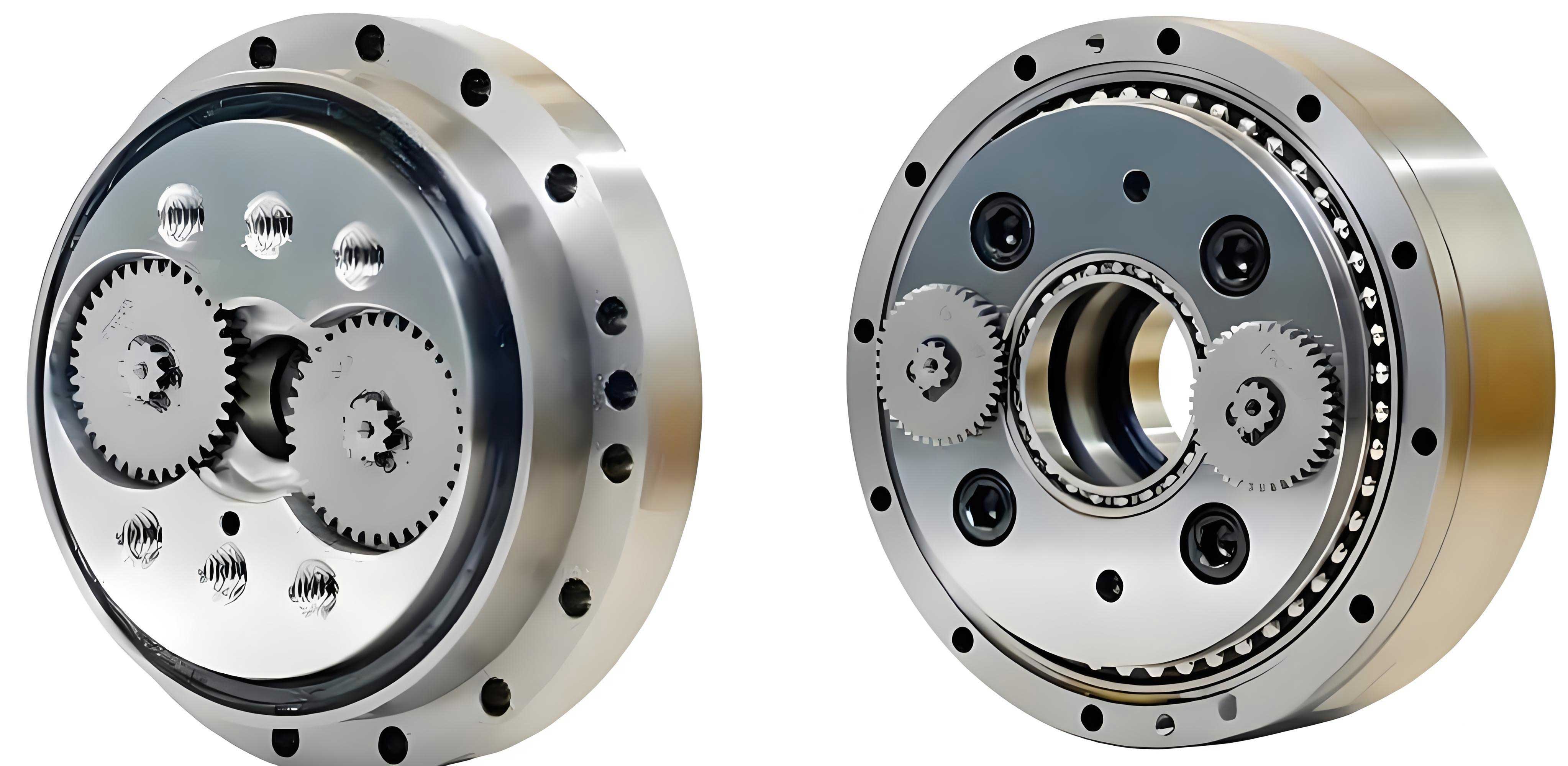
Rotary vector reducers operate through a cycloidal gear mechanism, where the input shaft drives the cycloidal gear, transmitting rotation to the output shaft while reducing speed and increasing torque. The intricate motion involves cycloidal gears meshing with pin teeth, making fault detection challenging due to non-linear vibration signatures. Common faults in rotary vector reducers include wear or damage on the cycloidal gear teeth, which manifest as anomalies in vibration signals. Early and accurate diagnosis is essential for preventing downtime and extending the lifespan of these systems. In this study, I focus on diagnosing faults in the cycloidal gear of rotary vector reducers using vibration signal analysis, leveraging attention mechanisms to highlight critical signal segments for improved classification.
Traditional fault diagnosis techniques for rotary vector reducers involve extracting handcrafted features such as statistical metrics, frequency-domain components, or time-frequency representations from vibration data. These features are then fed into classifiers like support vector machines or neural networks. However, this process is labor-intensive and may not capture subtle fault characteristics, especially under noisy conditions. Moreover, different fault types in rotary vector reducers require re-engineering features, limiting model adaptability. Deep learning offers a solution by automating feature learning, but standard models like CNNs and LSTMs may not prioritize relevant signal parts, leading to suboptimal performance. Attention mechanisms address this by dynamically weighting input elements, enabling the model to concentrate on informative regions. In this work, I design and evaluate attention-enhanced CNN and LSTM models for fault diagnosis in rotary vector reducers, demonstrating significant improvements over conventional approaches.
Principles of Attention Mechanism
The attention mechanism mimics human cognitive focus by assigning varying importance to different parts of input data. In the context of fault diagnosis for rotary vector reducers, it allows the model to emphasize key vibration signal features that indicate faults, while suppressing noise. The core idea involves computing similarity scores between a query vector and key vectors, then using these scores to weight value vectors. For a given query \(Q\) and key-value pairs \((K, V)\), the attention output is computed through three steps. First, the similarity score between \(Q\) and each key \(K_i\) is calculated, often using dot product attention:
$$ \text{score}(Q, K_i) = Q \cdot K_i $$
Next, these scores are normalized using the softmax function to obtain attention weights:
$$ a(Q, K_i) = \frac{\exp(\text{score}(Q, K_i))}{\sum_j \exp(\text{score}(Q, K_j))} $$
Finally, the weighted sum of value vectors \(V_i\) is computed to produce the attention output:
$$ \text{Attention}(Q, K, V) = \sum_i a(Q, K_i) V_i $$
This mechanism enables the model to adaptively focus on relevant signal components, which is particularly beneficial for rotary vector reducer fault diagnosis where faults may be localized in specific frequency bands or time intervals. By integrating attention into deep learning architectures, I enhance the model’s ability to extract discriminative features from complex vibration data.
Model Architectures for Fault Diagnosis
I construct two attention-based models for fault diagnosis in rotary vector reducers: an Attention-CNN and an Attention-LSTM. Both models process vibration signals from the cycloidal gear to classify normal and fault conditions. The input data consists of preprocessed vibration sequences, which are fed into the networks for feature extraction and classification.
Attention-Enhanced Convolutional Neural Network (Attention-CNN)
The Attention-CNN model combines convolutional layers for spatial feature extraction with an attention module for feature weighting. The architecture begins with a 1D convolutional layer that scans the input vibration signal to capture local patterns. Multiple convolutional and pooling layers are stacked to learn hierarchical representations. After feature extraction, an attention layer is inserted to compute attention weights for the convolutional outputs, emphasizing important features. The weighted features are then passed through fully connected layers for classification. The model parameters are summarized in the table below:
| Layer Number | Layer Type | Key Parameters | Output Size |
|---|---|---|---|
| 0 | Input Layer | / | 1 × 3000 × 1 |
| 1 | Conv1D | 32 filters, kernel size 4 | 1 × 2997 × 32 |
| 2 | MaxPooling | Pool size 2 | 1 × 1498 × 32 |
| 3 | Conv1D | 32 filters, kernel size 4 | 1 × 1495 × 32 |
| 4 | Conv1D | 32 filters, kernel size 4 | 1 × 1492 × 32 |
| 5 | Conv1D | 32 filters, kernel size 4 | 1 × 1489 × 32 |
| 6 | Dropout | Rate 0.2 | 1 × 1486 × 32 |
| 7 | Attention Layer | 32 units | 1 × 1486 × 64 |
| 8 | Softmax Output | / | 2 × 1 |
The attention mechanism in this model operates on the feature maps generated by the convolutional layers. It computes weights based on the relevance of each feature map to the fault diagnosis task, allowing the network to focus on critical signal characteristics. For example, in rotary vector reducers, faults like cycloidal gear wear may produce specific vibration patterns that the attention layer can highlight. The model is trained using binary cross-entropy loss and optimized via backpropagation over 100 epochs. The inclusion of dropout helps prevent overfitting, ensuring generalization to unseen data from rotary vector reducers.
Attention-Enhanced Long Short-Term Memory Network (Attention-LSTM)
The Attention-LSTM model leverages LSTM layers to capture temporal dependencies in vibration signals, coupled with an attention mechanism to weight important time steps. LSTMs are recurrent neural networks designed to handle sequential data, making them suitable for time-series analysis of rotary vector reducer vibrations. The model starts with an embedding layer to transform input sequences into dense representations. Then, multiple LSTM layers process the sequences, with hidden states capturing long-term dependencies. An attention layer is applied to the LSTM outputs to compute attention weights across time steps, focusing on periods where fault indicators are prominent. The weighted sequence is flattened and passed through a softmax layer for classification. The model parameters are detailed below:
| Layer Number | Layer Type | Key Parameters | Output Size |
|---|---|---|---|
| 0 | Input Layer | / | 1 × 3000 × 1 |
| 1 | Embedding | Output dim 128 | 1 × 3000 × 128 |
| 2 | LSTM | 128 units | 1 × 3000 × 128 |
| 3 | LSTM | 128 units | 1 × 3000 × 128 |
| 4 | LSTM | 128 units | 1 × 3000 × 1 |
| 5 | Attention Layer | 32 units | 1 × 3000 |
| 6 | Flatten | / | 1 × 3000 |
| 7 | RepeatVector | 128 | 1 × 128 × 3000 |
| 8 | Permute | / | 1 × 3000 × 128 |
In this architecture, the attention mechanism dynamically assigns higher weights to time steps that contain fault-related information, such as abnormal vibrations from a damaged cycloidal gear in the rotary vector reducer. This enhances the model’s sensitivity to fault signatures, improving diagnostic accuracy. The model is trained for 100 epochs with a batch size of 64, using binary cross-entropy loss. The attention weights can be visualized to interpret which parts of the vibration signal the model deems important, adding interpretability to the fault diagnosis process for rotary vector reducers.
Experimental Setup and Data Processing
To validate the proposed models, I collect vibration signals from a rotary vector reducer under both normal and fault conditions. The fault is simulated on the cycloidal gear by creating a hemispherical pit with a diameter of 0.8 mm and depth of 0.4 mm, representing common wear in rotary vector reducers. Data acquisition is performed using an acceleration sensor mounted on the reducer housing, with a sampling frequency of 16,384 Hz. Each sample consists of 32,768 data points, and 30 samples are collected for both normal and fault states, resulting in 60 raw samples. These samples are segmented into smaller sequences of 3,000 points each, yielding 6,000 samples in total (3,000 normal and 3,000 fault).
The raw vibration signals contain noise from environmental sources and sensor imperfections. To mitigate this, I apply wavelet denoising as a preprocessing step. Wavelet denoising effectively removes noise while preserving fault-related features, which is crucial for accurate diagnosis in rotary vector reducers. The denoised signals are then normalized to ensure consistent input scales for the neural networks. Unlike traditional methods, no manual feature extraction is performed; instead, the models learn features directly from the preprocessed signals, leveraging the attention mechanism to focus on relevant patterns.
The dataset is split into training and testing sets with an 8:2 ratio. The training set is used to optimize model parameters, while the testing set evaluates generalization performance. I compare the attention-based models with baseline models, including standard CNN, LSTM, BP neural network, and support vector machine (SVM), to assess the impact of attention on fault diagnosis for rotary vector reducers. Evaluation metrics include accuracy and loss, computed as follows:
Accuracy is defined as:
$$ \text{Accuracy} = \frac{TP + TN}{TP + TN + FP + FN} $$
where \(TP\) is true positive, \(TN\) is true negative, \(FP\) is false positive, and \(FN\) is false negative. Loss is measured using binary cross-entropy:
$$ L = -(y \log(p) + (1 – y) \log(1 – p)) $$
where \(y\) is the true label (0 or 1) and \(p\) is the predicted probability. These metrics provide a comprehensive view of model performance in diagnosing faults in rotary vector reducers.
Results and Analysis
The Attention-CNN and Attention-LSTM models are trained on the vibration data from the rotary vector reducer. After 100 epochs, the Attention-CNN achieves a training accuracy of 73.81% and a testing accuracy of 71.21%, with training and testing losses of 0.4962 and 0.6933, respectively. The Attention-LSTM outperforms, reaching a training accuracy of 95.63% and a testing accuracy of 95.00%, with losses of 0.0720 and 0.1148. The attention weights distribution over time steps shows that the models successfully highlight critical signal segments, such as those corresponding to fault-induced vibrations in the rotary vector reducer. For instance, in the Attention-LSTM model, attention weights increase during periods where fault features are prominent, demonstrating the mechanism’s efficacy.
To quantify the improvement from attention, I compare the models with and without attention mechanisms. The results are summarized in the table below:
| Model | Training Loss | Training Accuracy | Testing Loss | Testing Accuracy |
|---|---|---|---|---|
| BP Neural Network | 0.5071 | 0.6544 | 0.5353 | 0.6673 |
| SVM | 0.5798 | 0.6534 | 0.4590 | 0.6782 |
| CNN (without attention) | 0.4443 | 0.6645 | 0.5007 | 0.6457 |
| Attention-CNN | 0.4962 | 0.7381 | 0.6933 | 0.7121 |
| LSTM (without attention) | 0.2286 | 0.9167 | 0.2011 | 0.9192 |
| Attention-LSTM | 0.0720 | 0.9563 | 0.1148 | 0.9500 |
The Attention-LSTM model achieves the highest testing accuracy of 95.00%, indicating that the combination of LSTM’s temporal modeling and attention’s feature weighting is highly effective for fault diagnosis in rotary vector reducers. Both attention-based models show improved accuracy over their non-attention counterparts, validating the benefit of attention mechanisms. The attention weights visualization confirms that the models focus on signal regions associated with cycloidal gear faults, enhancing interpretability. These results demonstrate that attention mechanisms enable deep learning models to adaptively extract key features from vibration signals, leading to more reliable fault detection in rotary vector reducers.
Discussion and Implications
The integration of attention mechanisms with CNNs and LSTMs significantly advances fault diagnosis for rotary vector reducers. By dynamically weighting input features, attention helps models concentrate on fault-relevant information, such as abnormal vibration patterns from damaged cycloidal gears. This is particularly important in industrial settings where rotary vector reducers operate under varying loads and noise conditions. The attention mechanism’s ability to highlight critical signal segments reduces reliance on manual feature engineering, making the diagnosis process more automated and scalable. Moreover, the improved accuracy and generalization suggest that attention-enhanced models can be deployed for real-time monitoring of rotary vector reducers, enabling predictive maintenance and reducing downtime.
From a technical perspective, the attention mechanism operates by computing similarity scores between queries and keys, which can be extended to multi-head attention for capturing diverse feature aspects. For rotary vector reducers, this could involve analyzing multiple vibration sensor channels simultaneously, further boosting diagnostic performance. The formulas for attention can be adapted to different neural network architectures, offering flexibility in model design. For example, the dot product attention used in this study is computationally efficient and suitable for vibration signal analysis. The attention weights also provide insights into fault characteristics, aiding engineers in understanding failure modes in rotary vector reducers.
Limitations of this study include the relatively small dataset and simulated fault conditions. Future work should involve larger datasets from real-world rotary vector reducers under diverse operating conditions, such as varying speeds and loads. Additionally, exploring hybrid models that combine CNNs and LSTMs with attention could yield even better results. The attention mechanism itself can be optimized, for instance, by incorporating convolutional attention or self-attention variants. These advancements could further enhance fault diagnosis capabilities for rotary vector reducers, contributing to smarter industrial systems.
Conclusion
In this study, I propose attention-based deep learning models for fault diagnosis in rotary vector reducers, focusing on cycloidal gear faults. The Attention-CNN and Attention-LSTM models leverage attention mechanisms to weight important features in vibration signals, improving classification accuracy and generalization. Experimental results show that the Attention-LSTM model achieves up to 95.00% testing accuracy, outperforming traditional methods and non-attention models. The attention mechanism effectively highlights fault-related signal segments, providing interpretable insights into the diagnosis process. This approach reduces the need for manual feature extraction, making it suitable for automated fault detection in rotary vector reducers. Overall, the integration of attention mechanisms with deep learning offers a powerful tool for enhancing the reliability and safety of rotary vector reducers in industrial applications, paving the way for more intelligent maintenance strategies.
The success of this methodology underscores the value of attention mechanisms in handling complex vibration data from rotary vector reducers. By enabling models to focus on critical features, attention improves diagnostic precision and adaptability. Future research should explore real-time implementation and multi-sensor fusion to further advance fault diagnosis for rotary vector reducers. As industries increasingly adopt smart manufacturing, such AI-driven solutions will play a vital role in ensuring the efficient operation of critical components like rotary vector reducers.