
In my extensive research on precision gear systems for industrial robotics, I have focused on the critical component known as the RV reducer. The RV reducer, or rotary vector reducer, is renowned for its high load capacity, compact design, and exceptional torsional rigidity, making it indispensable in robotic joints. However, through statistical analysis and field observations, I identified that the turning arm bearings integrated into the crankshaft and cycloidal gears are often the weakest link. Their fatigue life directly dictates the overall service life of the RV reducer. Therefore, enhancing the fatigue life of these turning arm bearings became a paramount objective in my work to improve the reliability and longevity of RV reducers.
My approach involved developing an optimized design methodology for the turning arm bearings using a genetic algorithm. While standard rolling bearing optimization has been well-studied, the unique integrated structure of RV reducer bearings—where the crankshaft acts as the inner raceway and the cycloidal gear’s pin hole as the outer raceway—required a tailored solution. I aimed to maximize the basic dynamic load rating, which is the most crucial factor determining bearing fatigue life, thereby extending the operational lifespan of the entire RV reducer system.
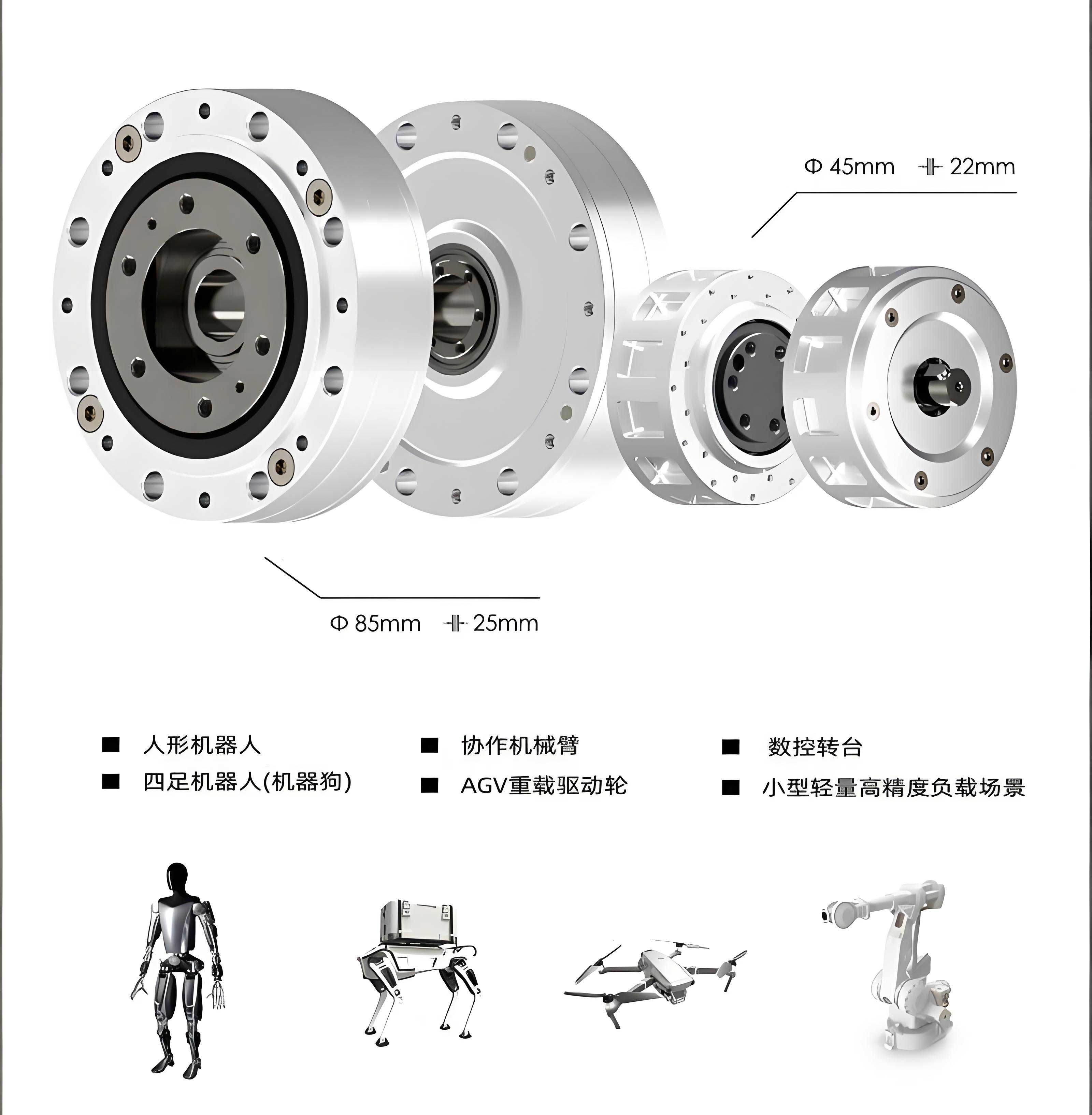
The turning arm bearing in an RV reducer typically consists of cylindrical rollers without separate inner and outer rings. This integrated design saves space but imposes unique constraints. In my optimization framework, I defined the basic dynamic load capacity, denoted as $$C_d$$, as the objective function to be maximized. For a single-row cylindrical roller bearing, this is expressed as:
$$C_d = b_m f_c l_e^{7/9} Z^{3/4} D_r^{29/27}$$
where $$b_m$$ is a geometrical accuracy improvement coefficient (taken as 1.1), $$f_c$$ is a factor dependent on bearing geometry and material, $$l_e$$ is the effective length of the roller, $$Z$$ is the number of rollers, and $$D_r$$ is the mean diameter of the roller. The factor $$f_c$$ is calculated using:
$$f_c = 208 \lambda_\nu \gamma^{2/9} (1-\gamma)^{29/27} (1+\gamma)^{1/4} \left\{1 + \left[1.04 \left(\frac{1-\gamma}{1+\gamma}\right)^{143/108}\right]^{9/2}\right\}^{-2/9}$$
and $$\gamma = D_r / D_m$$, with $$D_m$$ being the bearing pitch diameter. The correction factor $$\lambda_\nu$$ is 0.83 for standard conditions. The fatigue life $$L_{10}$$ at 90% reliability is given by:
$$L_{10} = \frac{10^6}{60n} \left( \frac{C_d}{p} \right)^\varepsilon$$
where $$n$$ is the rotational speed, $$p$$ is the equivalent radial load, and $$\varepsilon$$ is the life index (10/3 for cylindrical roller bearings). Thus, maximizing $$C_d$$ directly enhances the fatigue life of the RV reducer’s turning arm bearing.
I selected four independent geometric variables as the design vector:
$$\mathbf{X} = (D_m, D_r, Z, l_e)^T$$
These variables control the core geometry of the bearing. To ensure a feasible and high-performance design, I derived a comprehensive set of constraints from geometric, strength, lubrication, and friction considerations. The constraints narrow the search space for the genetic algorithm and ensure the resulting design is practical for RV reducer applications.
First, geometric constraints were established to define the boundaries of the design variables. The roller diameter must be sufficient to withstand contact stresses from operational loads but not so large as to cause interference. From Hertzian contact theory for line contact, the maximum contact stress $$\sigma_{lc_{max}}$$ is:
$$\sigma_{lc_{max}} = \frac{2 Q_{max}}{\pi l_e b}$$
$$b = 3.35 \times 10^{-3} \left( \frac{Q_{max}}{l_e \Sigma\rho} \right)^{1/2}$$
$$\Sigma\rho \approx \frac{2}{D_r} \quad \text{and} \quad Q_{max} = \frac{4.08 F_r}{Z}$$
where $$F_r$$ is the maximum radial load on the RV reducer bearing. Setting $$\sigma_{lc_{max}}$$ to a safe contact stress $$\sigma_{c_{safe}}$$ (2300 MPa for GCr15 bearing steel) and assuming $$l_e = D_r$$ for the lower bound gives:
$$D_{r,L} = 268.71 \frac{\sqrt{Q_{max}}}{\sigma_{c_{max}}}$$
The upper bound for roller diameter comes from avoiding roller collision and the maximum allowable outer raceway diameter $$D_{o_{max}}$$:
$$D_{r,U} = \frac{D_{o_{max}} \sin(\pi/5)}{1 + \sin(\pi/5)}$$
Thus, the constraints are $$g_1(\mathbf{X}) = D_r – D_{r,L} \ge 0$$ and $$g_2(\mathbf{X}) = D_{r,U} – D_r \ge 0$$. The number of rollers must be at least 5 and is limited by the geometry: $$g_3(\mathbf{X}) = Z – 5 \ge 0$$ and $$g_4(\mathbf{X}) = \pi / \arcsin\left( \frac{D_{r,L}}{D_{o_{max}} – D_{r,L}} \right) – Z \ge 0$$. The pitch diameter constraints are: $$g_5(\mathbf{X}) = D_m – (D_{o_{max}} – D_{r,U}) \ge 0$$ and $$g_6(\mathbf{X}) = (D_{o_{max}} – D_{r,L}) – D_m \ge 0$$. The effective length is bounded by a maximum $$l_{e_{max}}$$ and should not be less than the roller diameter: $$g_7(\mathbf{X}) = l_{e_{max}} – l_e \ge 0$$ and $$g_8(\mathbf{X}) = l_e – D_r \ge 0$$.
Second, design constraints ensure the bearing operates reliably under load. When the equivalent radial load equals the basic dynamic load rating, the contact stresses at the inner and outer raceways must remain safe. For the inner raceway contact:
$$g_9(\mathbf{X}) = \sigma_{c_{safe}} – \sigma_{lic_{max}} \ge 0$$
$$\sigma_{lic_{max}} = \frac{2 Q_{i_{max}}}{\pi l_e b_i}, \quad b_i = 3.35 \times 10^{-3} \left( \frac{Q_{i_{max}}}{l_e \Sigma\rho_i} \right)^{1/2}, \quad \Sigma\rho_i = \frac{2}{D_r} + \frac{2}{D_i}, \quad D_i = D_m – D_r$$
Similarly, for the outer raceway: $$g_{10}(\mathbf{X}) = \sigma_{c_{safe}} – \sigma_{loc_{max}} \ge 0$$ with $$\Sigma\rho_o = \frac{2}{D_r} – \frac{2}{D_o}$$ and $$D_o = D_m + D_r$$. To prevent roller collision, sufficient spacing is required: $$g_{11}(\mathbf{X}) = 2\pi – 2Z \arcsin\left( \frac{D_r}{D_m} \right) – Z \frac{\pi}{180} \ge 0$$. The outer raceway diameter must not exceed the RV reducer’s allowed maximum: $$g_{12}(\mathbf{X}) = D_{o_{max}} – (D_m + D_r) \ge 0$$. The effective length should not exceed 2.5 times the roller diameter for stability: $$g_{13}(\mathbf{X}) = 2.5 D_r – l_e \ge 0$$.
Third, lubrication constraints ensure adequate elastohydrodynamic (EHD) film formation to prevent wear. The minimum film parameter, the ratio of minimum oil film thickness $$h_{min}$$ to the composite surface roughness, should be at least 3: $$g_{14}(\mathbf{X}) = \frac{h_{min}}{(S_r^2 + S_{RE}^2)^{1/2}} – 3 \ge 0$$. Using empirical formulas for line contact, $$h_{min}$$ is:
$$h_{min} = 0.154 \alpha^{0.541} (\eta_0 n)^{0.7} D_r^{0.43} D_m^{0.7} \frac{(1-\gamma)^{1.13}(1+\gamma)^{0.7}}{E^{0.03} l_e^{0.13} Q_{max}^{0.13}}$$
where $$\alpha$$ is the pressure-viscosity coefficient, $$\eta_0$$ is the dynamic viscosity at atmospheric pressure, and $$E$$ is the elastic modulus of the bearing material.
Fourth, friction constraints limit the total friction moment to prevent excessive heat generation. The total moment $$M$$ includes load-dependent moment $$M_1$$, viscous moment $$M_v$$, and sliding moment $$M_f$$ (negligible for negligible axial load):
$$M = M_1 + M_v + M_f$$
$$M_1 = f_1 F_r D_m, \quad M_v =
\begin{cases}
10^{-7} f_0 (\nu_0 n)^{2/3} D_m^3 & \nu_0 n \ge 2000 \\
160 \times 10^{-7} f_0 D_m^3 & \nu_0 n < 2000
\end{cases}$$
where $$f_1$$ and $$f_0$$ are coefficients, and $$\nu_0$$ is the kinematic viscosity. The constraint is $$g_{15}(\mathbf{X}) = M_{LV} – M_{max} \ge 0$$, with $$M_{LV}$$ as a limiting value.
To solve this optimization problem, I employed a real-coded genetic algorithm (GA), which is efficient for continuous variables. The GA parameters were set as follows: population size of 200, crossover probability of 0.9, mutation probability of 0.2, and 300 generations. The algorithm starts by generating an initial population within the variable bounds, then iteratively applies selection, crossover, and mutation operators to evolve solutions toward higher fitness (i.e., higher $$C_d$$). Constraints are handled by penalizing infeasible solutions, ensuring the search focuses on feasible regions. The optimization process was implemented in MATLAB, with the objective function transformed to minimize $$-C_d$$ for convergence to a maximum.
I applied this methodology to a specific RV reducer model, the RV-110E, to demonstrate its effectiveness. The initial design parameters and input conditions are summarized in the table below:
| Parameter | Value |
|---|---|
| Initial Pitch Diameter, $$D_m$$ (mm) | 36.0 |
| Initial Roller Diameter, $$D_r$$ (mm) | 6.0 |
| Initial Number of Rollers, $$Z$$ | 13 |
| Initial Effective Length, $$l_e$$ (mm) | 10.0 |
| Maximum Radial Load, $$F_{r_{max}}$$ (N) | 6871.5 |
| Maximum Speed, $$n_{max}$$ (rpm) | 2000 |
| Maximum Outer Raceway Diameter, $$D_{o_{max}}$$ (mm) | 50.0 |
| Material (GCr15) Allowable Stress, $$\sigma_{c_{safe}}$$ (MPa) | 2300 |
| Lubricant Kinematic Viscosity, $$\nu_0$$ (m²/s) | 5 × 10⁻⁵ |
The bounds for design variables derived from geometric constraints are:
| Design Variable | Lower Bound | Upper Bound |
|---|---|---|
| $$D_m$$ (mm) | 26.5 | 36.6 |
| $$D_r$$ (mm) | 5.4 | 15.5 |
| $$Z$$ | 5 | 21 |
| $$l_e$$ (mm) | 5.4 | 10.0 |
The GA converged after approximately 88 generations, with the best fitness stabilizing at a basic dynamic load rating of 36,382.7 N. The optimized design variables are presented below, compared to the initial design:
| Parameter | Initial Design | Optimized Design |
|---|---|---|
| Pitch Diameter, $$D_m$$ (mm) | 36.0 | 33.6 |
| Roller Diameter, $$D_r$$ (mm) | 6.0 | 8.4 |
| Number of Rollers, $$Z$$ | 13 | 12 |
| Effective Length, $$l_e$$ (mm) | 10.0 | 10.0 |
| Basic Dynamic Load Rating, $$C_d$$ (N) | 27,445.7 | 36,382.7 |
The optimization increased the basic dynamic load rating by 32.53%, which translates to a significant improvement in fatigue life. Using the life ratio formula:
$$\lambda_l = \frac{L_{g}}{L_{o}} = \left( \frac{C_{d_g}}{C_{d_o}} \right)^{10/3}$$
where $$C_{d_g}$$ and $$C_{d_o}$$ are the optimized and original basic dynamic load ratings, respectively. For the RV-110E reducer, $$\lambda_l = (36382.7 / 27445.7)^{10/3} \approx 2.56$$. This means the fatigue life of the turning arm bearing, and consequently the RV reducer, is extended to about 2.56 times the original life. Similar optimizations were performed for other RV reducer models (e.g., RV-160E and RV-320E), yielding life improvement factors of 2.24 and 2.08, respectively, demonstrating the robustness of the method across different RV reducer sizes.
To assess the manufacturing tolerances’ impact, I conducted a sensitivity analysis on the optimized RV-110E design. Each design variable was varied by ±1% from its optimized value, and the change in the basic dynamic load rating was computed. The results are summarized in the table below. Note that some variations violate constraints (e.g., outer raceway diameter limit or roller spacing), which are marked as infeasible in practice, but the $$C_d$$ change is still calculated for insight.
| Case | Variation | Change in $$C_d$$ (%) | Notes |
|---|---|---|---|
| 1 | $$D_m$$ +1% | +0.144 | May violate constraint $$g_{12}$$ |
| 2 | $$D_r$$ +1% | +0.923 | May violate constraints $$g_{11}$$ and $$g_{12}$$ |
| 3 | $$l_e$$ +1% | +0.777 | May violate constraint $$g_7$$ |
| 4 | $$D_m$$, $$D_r$$ +1% | +1.075 | May violate constraints $$g_{11}$$ and $$g_{12}$$ |
| 5 | $$D_m$$, $$l_e$$ +1% | +0.922 | May violate constraints $$g_7$$ and $$g_{12}$$ |
| 6 | $$D_r$$, $$l_e$$ +1% | +1.707 | May violate constraints $$g_7$$ and $$g_{11}$$ |
| 7 | All +1% | +1.860 | Likely violates multiple constraints |
| 8 | $$D_m$$ -1% | -0.151 | May violate constraint $$g_{11}$$ |
| 9 | $$D_r$$ -1% | -0.925 | Feasible |
| 10 | $$l_e$$ -1% | -0.779 | Feasible |
| 11 | $$D_m$$, $$D_r$$ -1% | -1.074 | May violate constraint $$g_{11}$$ |
| 12 | $$D_m$$, $$l_e$$ -1% | -0.929 | May violate constraint $$g_{11}$$ |
| 13 | $$D_r$$, $$l_e$$ -1% | -1.701 | Feasible |
| 14 | All -1% | -1.844 | May violate constraint $$g_{11}$$ |
The sensitivity analysis reveals that the basic dynamic load rating is most sensitive to changes in roller diameter $$D_r$$ and effective length $$l_e$$, with approximately 0.92% and 0.78% change per 1% variation, respectively. The pitch diameter $$D_m$$ has a smaller influence (about 0.15% per 1%). This indicates that manufacturing precision for roller diameter and length is critical for maintaining the optimized performance of the RV reducer’s turning arm bearing. When both $$D_r$$ and $$l_e$$ decrease by 1%, the $$C_d$$ drops by about 1.7%, which is the largest decrease among feasible variations. Therefore, tight tolerances on these variables are recommended during the production of RV reducers to ensure the longevity benefits of the optimized design are fully realized.
In my optimization study, I also considered the operational context of the RV reducer. The turning arm bearing speed is related to the output speed and the number of pin teeth in the cycloidal drive. For an RV reducer with pin tooth count $$z_4$$ and output speed $$n_o$$, the bearing speed is $$n = z_4 n_o$$. This affects the lubrication film thickness and friction moment constraints. For the RV-110E, with $$z_4 = 40$$ and maximum output speed $$n_{o_{max}} = 50$$ rpm, the bearing speed reaches 2000 rpm, which is within the regime for viscous friction calculation. The radial load $$F_r$$ is derived from the RV reducer’s torque transmission mechanics, involving the tangential, radial, and axial forces on the crankshaft. Using established formulas for RV reducer force analysis, I computed the maximum radial load to ensure the constraints reflect real operating conditions.
The genetic algorithm proved effective in navigating the complex constraint space. The convergence plot showed that the best fitness improved steadily over generations, with jumps at certain points as the algorithm escaped local optima. The final optimized design not only satisfies all constraints but also maximizes the basic dynamic load rating within the geometric limits imposed by the RV reducer’s compact architecture. This optimization approach is generalizable to other RV reducer models by adjusting input parameters like maximum outer raceway diameter and radial load.
In conclusion, my research demonstrates that the fatigue life of an RV reducer can be substantially enhanced through optimized design of its turning arm bearings. By formulating the problem with the basic dynamic load rating as the objective function and incorporating comprehensive constraints from geometry, strength, lubrication, and friction, I developed a methodology using a real-coded genetic algorithm. The optimized design for the RV-110E reducer increased the basic dynamic load rating by 32.53%, translating to a fatigue life improvement factor of 2.56. Sensitivity analysis highlighted the importance of manufacturing precision for roller diameter and effective length. This work contributes to the reliability and durability of RV reducers, which are pivotal in industrial robotics, and provides a framework for future optimizations, including multi-objective considerations such as minimizing weight or friction moment. The integration of such optimized bearings into RV reducers will lead to longer service intervals and reduced maintenance costs, bolstering the efficiency of robotic systems worldwide.
Future work could explore dynamic load conditions, thermal effects, and the inclusion of roller crowning parameters in the optimization. Additionally, advanced metaheuristic algorithms or multi-disciplinary optimization could further refine the design for specific RV reducer applications. Nevertheless, the current methodology offers a robust and practical approach to extending the life of these critical components, ensuring that RV reducers continue to meet the demanding requirements of modern automation.