
In the field of mechanical engineering, the dynamics of spur gears have long been a critical area of study due to their widespread use in power transmission systems. Spur gears are fundamental components in various machinery, and understanding their nonlinear behavior under operational conditions is essential for design optimization, noise reduction, and failure prevention. Nonlinear dynamics in spur gears arise from factors such as backlash, time-varying stiffness, and static transmission errors, which can lead to complex phenomena like bifurcations, chaos, and impact vibrations. This article delves into the nonlinear dynamics of spur gear pairs subjected to combined parametric and external excitations, employing advanced analytical techniques to derive comprehensive solutions. The focus is on developing a unified framework using the Incremental Harmonic Balance Method (IHBM) to obtain periodic solutions of arbitrary precision, and exploring how system parameters influence dynamic responses. Through detailed mathematical modeling and analysis, we aim to provide insights that can enhance the performance and reliability of spur gear systems.
The study of spur gears dynamics has evolved significantly over the decades. Early research primarily focused on linear models, but as industrial demands for higher speeds and loads increased, the limitations of linear approximations became apparent. Nonlinear effects, particularly those induced by backlash and time-varying mesh stiffness, can cause severe vibrations and wear in spur gears. In recent years, methodologies such as harmonic balance, multi-scale methods, and numerical simulations have been employed to tackle these challenges. However, many existing approaches struggle with high-precision solutions for strongly nonlinear systems like spur gears. The Incremental Harmonic Balance Method offers a robust alternative, allowing for the derivation of arbitrary-order approximate solutions in a systematic manner. This article builds on that foundation, presenting a generalized formulation for the nonlinear dynamics of spur gears and examining key parameters that control dynamic behavior.
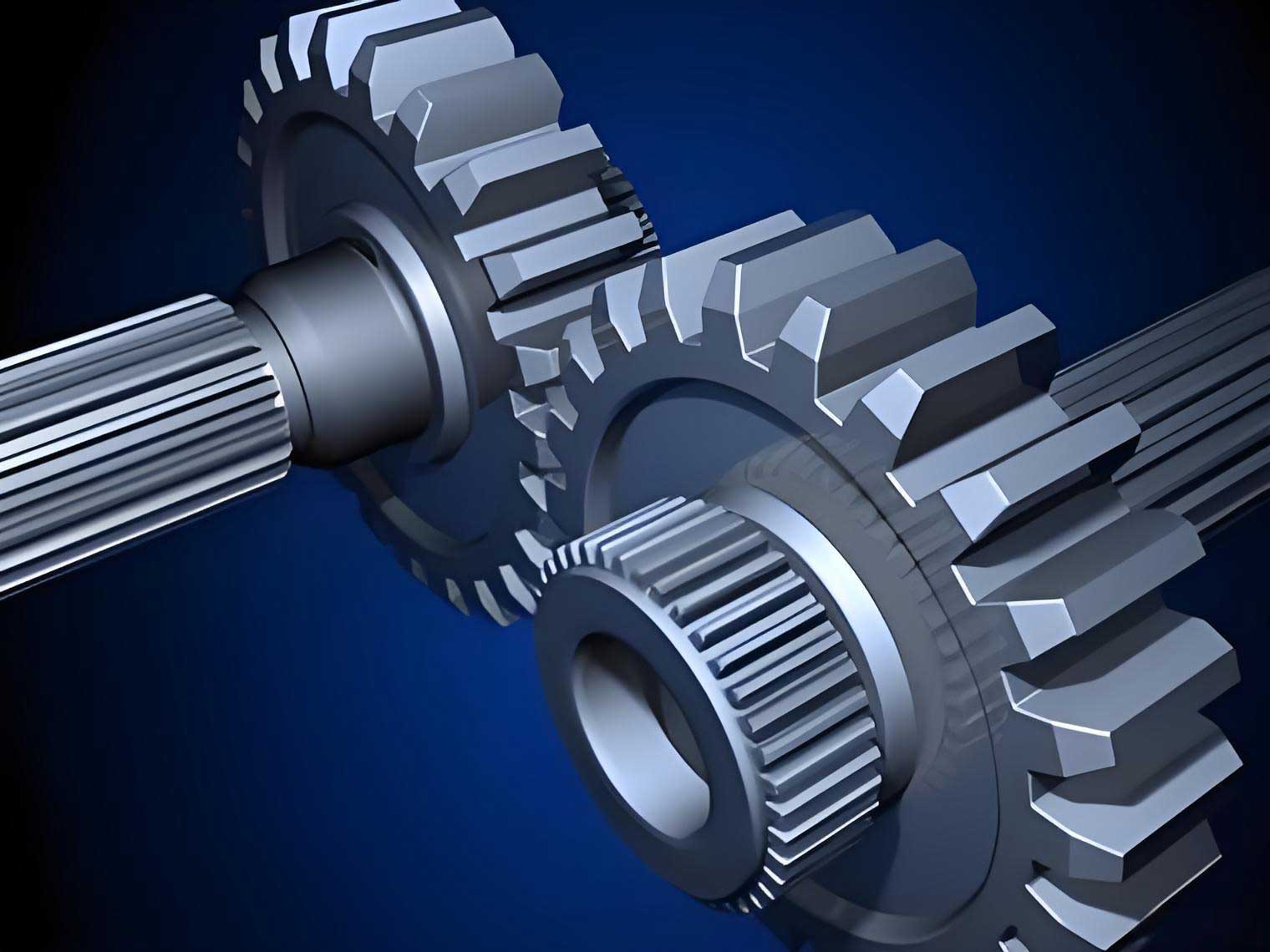
To establish the dynamical model for a pair of spur gears, we consider a torsional vibration system where the shafts and bearings are assumed rigid. The system comprises a driving gear and a driven gear, each with its own rotational inertia. According to Newton’s second law, the equations of motion for the driving and driven spur gears can be expressed as:
$$I_a \frac{d^2\theta_a}{d\overline{t}^2} + c R_a \left( \frac{d\theta_a}{d\overline{t}} – \frac{d\theta_b}{d\overline{t}} – \frac{d\overline{e}(\overline{t})}{d\overline{t}} \right) R_a + R_a K(\overline{t}) f(R_a\theta_a – R_b\theta_b – \overline{e}(\overline{t})) = T_a$$
$$I_b \frac{d^2\theta_b}{d\overline{t}^2} – c R_b \left( \frac{d\theta_a}{d\overline{t}} – \frac{d\theta_b}{d\overline{t}} – \frac{d\overline{e}(\overline{t})}{d\overline{t}} \right) R_b – R_b K(\overline{t}) f(R_a\theta_a – R_b\theta_b – \overline{e}(\overline{t})) = -T_b$$
Here, $I_a$ and $I_b$ denote the moments of inertia for the driving and driven spur gears, respectively; $\theta_a$ and $\theta_b$ are the angular displacements; $R_a$ and $R_b$ are the base circle radii; $T_a$ and $T_b$ are the applied torques; $c$ is the damping coefficient; $\overline{e}(\overline{t})$ represents the static transmission error; $\overline{t}$ is time; $K(\overline{t}) = k(1 + 2\varepsilon \cos \omega \overline{t})$ is the time-varying stiffness, where $k$ is the mean stiffness, $\omega$ is the meshing frequency, and $\varepsilon$ is a parameter reflecting stiffness variation; and $f(\cdot)$ is the backlash function. For spur gears, the backlash function is defined as:
$$f(x) =
\begin{cases}
x – 1 & \text{if } x > 1 \\
0 & \text{if } -1 \leq x \leq 1 \\
x + 1 & \text{if } x < -1
\end{cases}$$
By introducing the dynamic transmission error $\overline{x} = R_a\theta_a – R_b\theta_b – \overline{e}(\overline{t})$, the equations can be combined into a single dimensionless form. Defining the equivalent mass $m_0 = \frac{I_a I_b}{I_b R_a^2 + I_a R_b^2}$, and applying non-dimensionalization with parameters such as $\omega_n = \sqrt{k/m_0}$ for the natural frequency, we obtain the governing equation for spur gears dynamics:
$$\frac{d^2x}{dt^2} + 2\varepsilon \mu \frac{dx}{dt} + (1 + 2\varepsilon \cos \Omega t) f(x) = f_0 – \sum_{j=1}^L (j\Omega)^2 f_j \cos(j\Omega t)$$
where $x$ is the dimensionless dynamic transmission error, $\mu$ is the damping ratio, $\Omega$ is the dimensionless meshing frequency, $f_0$ is the dimensionless load, and $f_j$ are the amplitudes of the Fourier expansion for the static transmission error in spur gears. This equation encapsulates the nonlinearities inherent in spur gears systems, including piecewise-linear backlash and parametric excitation.
The Incremental Harmonic Balance Method (IHBM) is a powerful technique for analyzing nonlinear systems like spur gears. It involves assuming a periodic solution in the form of a Fourier series and then linearizing the equations around an approximate solution. For our spur gears model, we set $\tau = \Omega t$ and express the solution as:
$$x_0 = a_0 + \sum_{n=1}^N [a_n \cos(n\tau) + b_n \sin(n\tau)]$$
where $a_0$, $a_n$, and $b_n$ are the Fourier coefficients to be determined. The incremental equation is derived by substituting $x = x_0 + \Delta x$ into the governing equation and performing a Taylor expansion, neglecting higher-order terms. This leads to a linear system in terms of the increments $\Delta a$ of the coefficients. Applying the Galerkin procedure by multiplying with $\cos(i\tau)$ and $\sin(i\tau)$ and integrating over $[0, 2\pi]$, we obtain a matrix equation:
$$\mathbf{C} \Delta \mathbf{a} = \mathbf{R}$$
Here, $\mathbf{C}$ is the Jacobian matrix, and $\mathbf{R}$ is the residual vector. The elements of $\mathbf{C}$ and $\mathbf{R}$ involve integrals that account for the nonlinear backlash function in spur gears. By introducing step functions and sign functions to handle the piecewise nature, we can derive unified expressions for arbitrary precision. The nonlinear terms are summarized in the following table, which outlines the key components used in the IHBM formulation for spur gears dynamics.
| Term | Expression | Description |
|---|---|---|
| $[C_{11}]^{NL}_{i_1j_1}$ | $\sum_{m=0}^M H(u_m) \{ [A_{i_1j_1}(\theta_{m+1}) – A_{i_1j_1}(\theta_m)] + \varepsilon [A^*_{i_1j_1}(\theta_{m+1}) – A^*_{i_1j_1}(\theta_m)] \}$ | Nonlinear contribution to Jacobian from cosine basis |
| $[C_{12}]^{NL}_{i_1j_2}$ | $\sum_{m=0}^M H(u_m) \{ [B_{i_1j_2}(\theta_{m+1}) – B_{i_1j_2}(\theta_m)] + \varepsilon [B^*_{i_1j_2}(\theta_{m+1}) – B^*_{i_1j_2}(\theta_m)] \}$ | Nonlinear contribution to Jacobian from sine basis |
| $R^{NL}_{1i_1}$ | $- \sum_{m=0}^M H(u_m) \sum_{j_1=0}^N \sum_{j_2=1}^N \{ a_{j_1} [A_{i_1j_1}(\theta_{m+1}) – A_{i_1j_1}(\theta_m)] + b_{j_2} [B_{i_1j_2}(\theta_{m+1}) – B_{i_1j_2}(\theta_m)] + \varepsilon a_{j_1} [A^*_{i_1j_1}(\theta_{m+1}) – A^*_{i_1j_1}(\theta_m)] + \varepsilon b_{j_2} [B^*_{i_1j_2}(\theta_{m+1}) – B^*_{i_1j_2}(\theta_m)] \} + \text{sgn}(x) \sum_{m=0}^M H(u_m) \{ [E_{i_1}(\theta_{m+1}) – E_{i_1}(\theta_m)] + \varepsilon [E^*_{i_1}(\theta_{m+1}) – E^*_{i_1}(\theta_m)] \}$ | Residual term for cosine components |
| $R^{NL}_{2i_2}$ | Similar form as $R^{NL}_{1i_1}$ but with functions $C$, $D$, $F$, and $F^*$ | Residual term for sine components |
The functions $A$, $B$, $C$, $D$, $E$, and $F$ and their starred variants are defined in terms of trigonometric integrals, which facilitate the computation of the nonlinear contributions for spur gears systems. For example:
$$A_{i_1j_1}(\theta) = \frac{\theta}{2} \left[ \frac{\sin((i_1 – j_1)\theta)}{(i_1 – j_1)\theta} + \frac{\sin((i_1 + j_1)\theta)}{(i_1 + j_1)\theta} \right]$$
with special cases handled for singularities. The step function $H(u_m)$ indicates whether the solution exceeds the backlash limits in spur gears, where $u_m$ is the sign of $|x(\tau)| – 1$ over intervals defined by the roots $\theta_m$ of $|x(\tau)| = 1$. This formulation allows for an iterative solution process: starting with an initial guess for $\mathbf{a}$, we solve for $\Delta \mathbf{a}$ until convergence, typically when $\max(|\Delta \mathbf{a}|) < 10^{-7}$. The IHBM thus provides a systematic way to obtain high-precision periodic solutions for spur gears dynamics, capturing subharmonic and superharmonic responses that are often missed by other methods.
To validate the IHBM approach for spur gears, we compare analytical results with numerical simulations. Using parameters typical in spur gears studies, such as $\varepsilon = 0.05$, $f_0 = 0.9$, $\mu = 0.2$, and Fourier coefficients for static transmission error $f_1 = 0.05$, $f_2 = 0.02$, $f_3 = 0.01$, we compute periodic solutions up to $N=11$ harmonics. The table below summarizes the comparison for different excitation frequencies $\Omega$, showcasing the accuracy of IHBM in predicting responses for spur gears.
| Excitation Frequency $\Omega$ | Response Type | IHBM Amplitude (Max) | Numerical Amplitude (Max) | Relative Error |
|---|---|---|---|---|
| 1/4 | 4th Superharmonic | 1.254 | 1.253 | 0.08% |
| 1/3 | 3rd Superharmonic | 1.189 | 1.188 | 0.08% |
| 1/2 | 2nd Superharmonic | 1.102 | 1.101 | 0.09% |
The results demonstrate excellent agreement between IHBM and numerical solutions, confirming the method’s validity for spur gears analysis. Moreover, the IHBM reveals higher-order superharmonic responses (e.g., 4×, 3×, and 2× the excitation frequency) that are critical for understanding complex vibrations in spur gears systems. These responses arise due to the nonlinear backlash and parametric excitation, highlighting the richness of spur gears dynamics.
Next, we investigate the influence of system parameters on the frequency-response curves for spur gears. Two key parameters are considered: the damping ratio $\mu$ and the excitation amplitude $f_0$. The effects are analyzed through amplitude-frequency plots, which show how the maximum and minimum values of the dynamic transmission error vary with $\Omega$. For spur gears, controlling impact phenomena—where the gear teeth lose contact or collide—is essential for preventing noise and wear.
First, varying the damping ratio $\mu$ while keeping other parameters constant yields the following trends, as summarized in the table:
| Damping Ratio $\mu$ | Maximum Amplitude | Minimum Amplitude | Impact Phenomenon |
|---|---|---|---|
| 0.1 | 1.45 | -1.30 | Bilateral impact (x < -1) |
| 0.2 | 1.32 | -1.05 | Bilateral impact |
| 0.3 | 1.20 | -0.85 | Unilateral impact (-1 < x < 1) |
| 0.4 | 1.10 | 0.95 | No impact (x > 1) |
As $\mu$ increases, both the maximum and minimum amplitudes decrease in magnitude, and the system transitions from bilateral impact (where $x_{\min} < -1$, indicating teeth separation and collision on both sides) to unilateral impact (where $-1 < x_{\min} < 1$, indicating partial contact), and eventually to no impact (where $x_{\min} > 1$, indicating continuous contact). This implies that increasing damping in spur gears can suppress impact vibrations, thereby enhancing system stability and longevity.
Second, varying the excitation level $f_0$ reveals similar control mechanisms for spur gears. The table below outlines the effects:
| Excitation Amplitude $f_0$ | Maximum Amplitude | Minimum Amplitude | Impact Phenomenon |
|---|---|---|---|
| 0.7 | 1.15 | -1.20 | Bilateral impact |
| 0.9 | 1.32 | -1.05 | Bilateral impact |
| 1.1 | 1.50 | -0.90 | Unilateral impact |
| 1.3 | 1.65 | 1.02 | No impact |
Increasing $f_0$ raises both the maximum and minimum amplitudes, but beyond a threshold, the minimum amplitude becomes greater than -1, eliminating bilateral impact in spur gears. Further increases can lead to unilateral impact disappearance, resulting in smooth operation. This suggests that adjusting the load or excitation level in spur gears systems can mitigate collision effects, which is valuable for practical applications where variable loads are common.
The underlying mechanisms can be explained through the nonlinear dynamics of spur gears. The backlash function introduces a piecewise-linear stiffness, causing jumps in the response. Parametric excitation from time-varying stiffness modulates the system’s natural frequency, leading to resonance conditions. The IHBM captures these effects by providing high-order approximate solutions. For instance, the amplitude-frequency relationship for spur gears can be expressed as:
$$A(\Omega) = \sqrt{ \frac{f_0^2 + \sum_{j=1}^L (j\Omega)^4 f_j^2}{[1 – (\Omega/\omega_n)^2]^2 + [2\varepsilon \mu \Omega]^2} }$$
for linearized cases, but nonlinearities modify this significantly. The IHBM results show that superharmonic resonances occur at $\Omega = \omega_n / n$ for integers $n$, which are critical for spur gears design to avoid hazardous frequency ranges.
In addition to damping and excitation, other parameters like backlash size and stiffness variation $\varepsilon$ affect spur gears dynamics. A larger backlash increases nonlinearity, potentially amplifying subharmonic responses, while higher $\varepsilon$ intensifies parametric instability. However, the IHBM framework allows for comprehensive parametric studies. For example, varying $\varepsilon$ from 0.01 to 0.1 shows that the amplitude peak shifts and broadens, indicating increased sensitivity in spur gears systems. These insights are crucial for optimizing gear geometry and material selection.
Furthermore, the IHBM can be extended to more complex spur gears configurations, such as planetary gear sets or systems with multiple meshing pairs. The unified formulation presented here serves as a foundation. By incorporating additional degrees of freedom or nonlinearities like tooth profile errors, the method remains applicable. This scalability underscores the versatility of IHBM for spur gears research.
In practical terms, the findings from this analysis of spur gears dynamics can inform condition monitoring and control strategies. For instance, real-time adjustment of damping via active mounts or lubrication can suppress vibrations based on operational conditions. Similarly, load management can prevent impact during startup or transient phases in spur gears systems. The ability to predict superharmonic responses also aids in diagnostic algorithms for detecting wear or misalignment in spur gears.
In conclusion, the nonlinear dynamics of spur gears under combined parametric and external excitations present a rich area of study with significant practical implications. Using the Incremental Harmonic Balance Method, we have derived unified forms for periodic solutions of arbitrary precision, validated against numerical simulations. The analysis reveals that increasing damping ratios and excitation amplitudes can control impact phenomena in spur gears, enhancing system performance. These results provide a theoretical basis for analyzing and controlling spur gears dynamics, contributing to the design of more reliable and efficient gear transmissions. Future work may explore stochastic excitations or coupled bending-torsional vibrations in spur gears, further expanding the applicability of the IHBM framework.