
The pursuit of high-performance power transmission in intersecting-axis applications, such as aerospace propulsion systems, advanced automotive drivetrains, and precision industrial machinery, has consistently driven the development and refinement of spiral bevel gears. These components are prized for their ability to deliver smooth motion transfer, high load capacity, and reduced operational noise levels. The meshing quality of a spiral bevel gear pair is fundamentally governed by its transmission error (T.E.), which is defined as the deviation of the output shaft’s actual angular position from its theoretical position when the input shaft rotates precisely. Transmission error in spiral bevel gears acts as a primary internal excitation mechanism within the gearbox, directly inducing vibrations and contributing significantly to acoustic emissions. Therefore, precise measurement and analysis of T.E. are not merely quality control steps but are essential for diagnostic evaluation, performance optimization, and guiding design modifications or manufacturing corrections for spiral bevel gears.
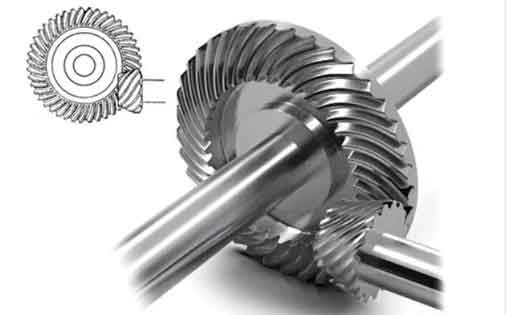
Conventional methods for measuring transmission error often face significant practical constraints. Phase comparison techniques, while conceptually straightforward, are susceptible to phase ambiguity and require stringent alignment conditions. Direct angular displacement measurement using rotary encoders, on the other hand, is inherently limited by the sensor’s native resolution. Employing high-line-count optical encoders or rotary gratings can overcome this resolution barrier, but it comes with a substantial increase in system cost. To address these challenges—specifically, to enhance measurement resolution while maintaining a cost-effective hardware setup—this article introduces and elaborates on a novel methodology based on fixed-frequency clock signal subdivision. This approach enables high-fidelity acquisition of transmission error data for spiral bevel gears, facilitating detailed time-domain and frequency-domain analysis that provides critical insights into the gear pair’s dynamic behavior.
1. Theoretical Foundation and Measurement Model for Spiral Bevel Gears
The kinematic definition of transmission error for a gear pair, including spiral bevel gears, establishes the framework for its measurement. For a pinion (gear 1) and gear (gear 2), the instantaneous transmission error, $\delta(t)$, expressed in angular units, is given by:
$$
\delta(t) = \left( \theta_2(t) – \theta_2(0) \right) – i \cdot \left( \theta_1(t) – \theta_1(0) \right)
$$
where $\theta_1(t)$ and $\theta_2(t)$ are the instantaneous angular positions of the pinion and gear, respectively, $\theta_1(0)$ and $\theta_2(0)$ are their initial angular positions at time $t=0$, and $i$ is the gear ratio, defined as $i = Z_1 / Z_2$ (with $Z_1$ and $Z_2$ being the number of teeth). Often, the equation is simplified by setting the initial angles to zero, yielding $\delta(t) = \theta_2(t) – i \cdot \theta_1(t)$.
In a digital measurement system, angular position is typically sensed by incremental rotary encoders mounted on the input and output shafts. Each encoder generates a pulse train where one complete revolution corresponds to a fixed number of pulses, $N_{enc}$. A simplistic discrete measurement model counts these pulses over a sampling interval. The $k$-th sampled transmission error, $\delta[k]$, would be:
$$
\delta[k] = \frac{2\pi}{N_{enc}} \left( C_2[k] – i \cdot C_1[k] \right)
$$
where $C_1[k]$ and $C_2[k]$ are the integer pulse counts from the pinion and gear encoders at the $k$-th sample. This model’s resolution is directly limited to the angular distance represented by one encoder pulse, $\frac{2\pi}{N_{enc}}$. For a 4500-line encoder, this is 0.08 degrees or 288 arcseconds, which is far too coarse to measure the typical T.E. amplitudes of spiral bevel gears, which range from 10 to 100 arcseconds.
The core innovation of the clock subdivision method is to interpolate *within* these encoder pulses using a high-frequency reference clock signal. A stable clock with frequency $f_c$ (e.g., 1 MHz) provides a fine time-scale “ruler.” The fundamental premise is that within a single encoder pulse interval, the shaft speed can be assumed constant. By precisely timestamping the arrival of each encoder pulse edge using the high-speed clock, we can estimate the fractional part of an encoder count.
Consider the timing diagram. The pulse trains from the pinion encoder ($P_1$) and gear encoder ($P_2$) are asynchronous. The clock signal ($T_c$) runs continuously. For any rising edge of $P_2$, we can identify the two most recent rising edges of $P_1$ that bracket it. Let $T_1$ be the period of the $P_1$ pulse immediately preceding the $P_2$ edge, and $T_2$ be the period of the following $P_1$ pulse. Let $\tau$ be the time interval from the $P_2$ edge to the next $P_1$ edge.
Using quadratic interpolation based on the three known points (the two $P_1$ edges and the $P_2$ edge), the fractional position of the $P_2$ edge relative to the $P_1$ cycle can be estimated with high accuracy. This fractional part, denoted $\Delta_1$, represents the portion of the current $P_1$ pulse that had not yet elapsed when the $P_2$ edge arrived. A similar fractional value $\Delta_2$ can be computed for the next $P_2$ edge. Since the sum of the fractional parts $\Delta_1’$ (complement of $\Delta_1$ from the previous calculation) and $\Delta_2$ equals one full $P_2$ period in terms of $P_1$ fractions, we have $\Delta_1′ = 1 – \Delta_2$.
Therefore, the refined measurement model incorporating clock subdivision becomes:
$$
\delta[k] = \frac{2\pi}{N_{enc}} \left[ C_2[k] – i \cdot \left( C_1[k] + \Delta_1[k] + \Delta_1′[k] \right) \right]
$$
where $\Delta_1[k] + \Delta_1′[k]$ effectively constitutes the fractional correction term for the pinion’s angular position at the instant corresponding to the gear’s pulse count $C_2[k]$. The theoretical resolution of this method is now determined by the clock period. With a 1 MHz clock and a nominal shaft speed, the time-equivalent angular resolution can easily reach the order of 1 arcsecond, representing an improvement of two to three orders of magnitude over the basic pulse-counting method for typical spiral bevel gear testing conditions.
| Measurement Method | Key Principle | Typical Resolution Limit | Major Limitation |
|---|---|---|---|
| Direct Pulse Counting | Integer count of encoder pulses. | ~288 arcseconds (for 4500-line encoder) | Far too coarse for spiral bevel gear T.E. |
| Phase Comparison | Measuring phase shift between pulse trains. | Dependent on circuitry, often ~10 arcseconds | Phase ambiguity, requires constant speed. |
| High-line Optical Encoder | Direct use of very high-resolution sensors. | < 1 arcsecond | Extremely high sensor and interface cost. |
| Clock Subdivision (Proposed) | Time-based interpolation of standard encoder pulses. | ~1 arcsecond (with 1 MHz clock) | Requires high-speed data acquisition and precise timing. |
2. Signal Reconstruction and Spectral Analysis for Spiral Bevel Gear Diagnostics
The transmission error signal acquired from spiral bevel gears is not merely a static geometric deviation; it is a dynamic response encapsulating the effects of tooth mesh stiffness variation, manufacturing imperfections (like pitch errors and profile deviations), and system deflections under load. Therefore, analyzing its frequency content is crucial for diagnosing the root causes of excessive vibration and noise. The raw data stream from the clock-subdivision-based acquisition system is an ordered sequence of tuples: $\{T_c^{(i)}, C_1^{(i)}, C_2^{(i)}\}$, where $i$ indexes each sampling event triggered typically by a chosen encoder edge. Applying the refined model yields a sequence of T.E. values paired with their corresponding high-resolution timestamps: $\{t^{(j)}, \delta^{(j)}\}$.
This sequence is inherently non-uniform in the time domain because the samples are triggered by angular events (encoder edges), which occur at non-constant time intervals if the shaft speed has any fluctuation. To perform meaningful spectral analysis via the Fast Fourier Transform (FFT), which requires uniformly spaced time-domain samples, a numerical resampling or reconstruction step is essential.
The goal is to create a new, uniformly time-sampled sequence $\delta[n]$ with a constant sampling period $T_s$. The sampling frequency $f_s = 1/T_s$ must satisfy the Nyquist criterion relative to the highest frequency component of interest ($f_h$) in the spiral bevel gear’s T.E. signal: $f_s > 2f_h$. The primary frequency of interest is the gear mesh frequency (GMF) and its harmonics. For a pinion rotating at $n$ RPM with $Z_1$ teeth, the GMF is:
$$
f_{mesh} = \frac{n \cdot Z_1}{60}
$$
If we intend to analyze up to the $M$-th harmonic, then $f_h = M \cdot f_{mesh}$. A practical choice is $f_s = K \cdot f_{mesh}$, where $K$ is an oversampling factor (e.g., 10 or more) to ensure adequate representation of the waveform and higher harmonics.
The resampling interval $T_s$ must also be longer than the time resolution of the native measurement to avoid aliasing of the interpolation process itself. This leads to the following constraint for selecting the integer decimation factor $N$ for creating the uniform sequence from the high-density original data:
$$
N \geq \max\left( \frac{60 \cdot f_c}{n \cdot N_{enc}}, \frac{60 \cdot f_c}{n \cdot i \cdot N_{enc}} \right)
$$
Once $f_s$ is chosen, a standard interpolation algorithm (e.g., cubic spline or sinc interpolation) is applied to the original non-uniform sequence $\{t^{(j)}, \delta^{(j)}\}$ to estimate the T.E. values at the desired uniform time grid $t[n] = n \cdot T_s$. The length $L$ of the final sequence $\delta[n]$ for FFT analysis determines the frequency resolution $\Delta f$ of the resulting spectrum:
$$
\Delta f = \frac{f_s}{L}
$$
To achieve a fine enough resolution to distinguish closely spaced sidebands (often related to shaft rotational frequencies), $L$ is chosen to be a power of two for computational efficiency, such as 4096 or 8192 points. The final spectral analysis is performed:
$$
D[m] = \text{FFT}\{\delta[n]\}
$$
where $|D[m]|$ represents the magnitude spectrum, revealing the amplitude of T.E. components at frequencies $f = m \cdot \Delta f$. The spectrum will typically exhibit a dominant peak at the gear mesh frequency $f_{mesh}$ for spiral bevel gears. Sidebands around this peak at offsets of $\pm f_{shaft}$ (the rotational frequency of the pinion or gear) indicate amplitude modulation, often caused by eccentricity, mounting errors, or load fluctuations. Harmonics of $f_{mesh}$ ($2f_{mesh}, 3f_{mesh}$, etc.) point to non-linearities or specific periodic errors in the tooth profile. The absence of these features or unusually high energy at other frequencies can indicate specific faults in the spiral bevel gear set.
| Frequency Component | Typical Source in Spiral Bevel Gears | Interpretation in Spectrum |
|---|---|---|
| Gear Mesh Frequency (GMF: $f_{mesh}$) | Fundamental cyclic error per tooth engagement. | Highest peak in the spectrum. Its amplitude is a direct measure of overall T.E. level. |
| GMF Harmonics ($2f_{mesh}, 3f_{mesh}$…) | Non-sinusoidal error waveform, often due to tooth profile or lead errors. | Peaks at integer multiples of GMF. Their relative amplitude indicates the shape of the T.E. waveform. |
| Sidebands ($f_{mesh} \pm k \cdot f_{shaft}$) | Amplitude modulation due to runout, eccentricity, or periodic load variation. | Symmetrical peaks spaced by shaft rotational frequency around GMF and its harmonics. |
| Shaft Rotational Frequency ($f_{shaft}$) | Unbalance, misalignment, or once-per-revolution errors on the shaft. | Peak at the respective shaft speed. May modulate GMF to create sidebands. |
| Sub-harmonics | Non-linear system behavior, loose components, or specific bearing defects. | Peaks at frequencies below GMF that are not integer fractions of shaft speed. |
3. Implementation of a High-Resolution Spiral Bevel Gear Test Platform
Validating the clock subdivision methodology requires a controlled environment capable of testing spiral bevel gears under realistic load and speed conditions. The architecture of such a measurement platform integrates mechanical drive and loading systems with high-precision data acquisition electronics.
The mechanical core typically consists of a closed-loop power circulation system or an open-loop system with a prime mover and a controlled brake. For spiral bevel gear testing, a configuration employing a drive motor, the test gearbox, a torque/speed sensor, and a programmable load unit (like a magnetic powder brake or an eddy current brake) is common. The test spiral bevel gear pair is installed in a rigid housing with precision bearings to minimize external error sources. The torque-speed sensor provides real-time feedback on operating conditions (e.g., 120 RPM, 200 Nm).
The heart of the measurement subsystem is the data acquisition hardware. Two key components are selected:
- Angular Sensors: Incremental rotary encoders with a sufficient line count (e.g., 4500 pulses per revolution) are mounted on both the input (pinion) and output (gear) shafts. Their output signals are typically in differential line-driver format (A, $\overline{A}$, B, $\overline{B}$, Z, $\overline{Z}$) for noise immunity.
- High-Speed Counter/Timer Card: A multi-channel counter card capable of high-frequency pulse counting and timestamping is installed in the control computer. Critical specifications include:
- Multiple independent 24-bit or 32-bit counters.
- Support for quadrature decoding of encoder signals.
- Direct input capability for a high-frequency clock signal (e.g., up to 10 MHz).
- Hardware triggering and buffered data transfer (e.g., using DMA) to handle high data rates without loss.
The signal flow is as follows: The A-channel signals from the pinion and gear encoders are fed into dedicated counters on the card, configured for simple pulse counting. Simultaneously, the high-frequency clock signal (from a stable onboard oscillator or an external function generator) is connected to another counter channel. The data acquisition software configures the card to perform a synchronized read operation. On a trigger event—which can be based on a specific encoder’s index (Z) pulse to define a rotational starting point, or a time-based trigger—the card captures and latches the current values of all counters (pinion count, gear count, and clock count) into its buffer. This process occurs at a very high rate, capturing millions of data points per second. This raw data stream of synchronized triples $\{C_{clock}, C_{pinion}, C_{gear}\}$ is then transferred to system memory for subsequent offline processing using the refined mathematical model and resampling algorithms.
4. Experimental Validation and Analysis for Spiral Bevel Gears
To demonstrate the efficacy of the proposed method, a spiral bevel gear pair with a tooth ratio of 11:41 was tested on the described platform. The gears were run under a steady load of approximately 200 Nm, with the input pinion rotating at an average speed of 120 RPM. The encoder resolution was 4500 PPR, and the subdivision clock frequency was set at 1 MHz. Data was acquired over several complete revolutions of the pinion.
Applying the clock subdivision algorithm and the reconstruction model yields the transmission error plotted against the pinion’s angular position. The raw T.E. signal for a single pinion revolution shows the characteristic periodic fluctuation corresponding to the meshing cycle of the spiral bevel gears. The waveform contains high-frequency components superimposed on the primary mesh-related error. After applying a digital low-pass filter to remove electrical noise and non-essential high frequencies, the fundamental T.E. waveform is clearly revealed. The plot typically shows a near-sinusoidal pattern with a period corresponding to one mesh cycle ($360^\circ / Z_1$). The peak-to-peak amplitude for the tested spiral bevel gears was found to be in the range of 40-60 arcseconds, which aligns with theoretical expectations for such gears under moderate load. The waveform’s shape—its symmetry, the presence of “kinks,” or its smoothness—provides direct visual feedback on the quality of tooth contact and the potential presence of localized contact pattern issues or design flaws in the spiral bevel gears.
The resampled, uniformly time-spaced T.E. signal was then subjected to FFT analysis. The resulting magnitude spectrum displayed a dominant peak precisely at the calculated gear mesh frequency, $f_{mesh} = (120 \times 11) / 60 = 22 \text{ Hz}$. This confirms that the primary dynamic excitation originates from the cyclic engagement of the gear teeth. Notably, the spectrum exhibited distinct sideband structures around this fundamental mesh frequency. The sidebands were spaced at an offset equal to the pinion’s rotational frequency, $f_{pinion} = 120 / 60 = 2 \text{ Hz}$. These sidebands ($20 \text{ Hz}$ and $24 \text{ Hz}$) indicate an amplitude modulation of the mesh vibration. For spiral bevel gears, this is often attributable to residual shaft eccentricity, slight mounting misalignment (akin to a changing “axis of rotation” error), or a very slight periodic variation in the applied load. The amplitude of these sidebands relative to the main GMF peak offers a quantitative measure of this modulation effect.
Further analysis of the spectrum showed a smaller but distinct peak at the first harmonic of the mesh frequency ($44 \text{ Hz}$). The presence and amplitude of this harmonic are directly related to the non-sinusoidal shape of the T.E. waveform. In spiral bevel gear design, a parabolic or pre-designed “crowned” T.E. curve is often targeted to reduce sensitivity to misalignment. The measured harmonic content provides a benchmark against which the achieved tooth contact and manufacturing quality can be assessed. The absence of significant energy at other non-harmonic frequencies suggests that the test spiral bevel gear pair was free from major isolated defects like a severely damaged tooth or bearing faults under the tested condition.
The table below summarizes the key spectral findings and their likely correlation with spiral bevel gear characteristics:
| Spectral Peak Frequency | Amplitude (Relative) | Probable Source in Spiral Bevel Gears | Design/Manufacturing Implication |
|---|---|---|---|
| 22 Hz (GMF) | Highest | Fundamental tooth meshing action, overall T.E. design level. | Core target for optimization. Amplitude should be minimized for low noise. |
| 20 Hz & 24 Hz (Sidebands) | Medium | Amplitude modulation due to pinion shaft rotational error (eccentricity/mounting). | Highlights need for precision in shaft/gear mounting and bearing preload. |
| 44 Hz (2x GMF) | Low | Second harmonic of mesh cycle, indicating waveform non-linearity. | Related to tooth profile modification (tip/root relief) and contact pattern shape. |
5. Discussion and Implications for Spiral Bevel Gear Technology
The successful implementation and results of the clock subdivision measurement technique affirm its significant value for the development and quality assurance of high-performance spiral bevel gears. The method effectively bridges the gap between low-cost, low-resolution systems and prohibitively expensive ultra-high-resolution metrology systems. By achieving arcsecond-level measurement capability with standard industrial encoders, it makes high-fidelity T.E. testing more accessible for gear manufacturers and researchers alike.
The primary advantage lies in the depth of diagnostic information obtained. Unlike simple composite error tests (e.g., single-flank roll testers that output only a simplified error trace), this method provides a continuous, high-resolution digital record of the transmission error. This allows for both geometric assessment (shape and amplitude of the T.E. curve over an angular domain) and dynamic assessment (frequency spectrum of the T.E. signal). For spiral bevel gears, which have complex, localized contact patterns, the angular T.E. plot can be correlated with specific regions of the tooth flank. A sudden discontinuity or an abnormally high peak in the T.E. curve at a particular pinion angle can pinpoint a contact problem, such as edge loading or insufficient flank relief, guiding targeted corrections in the gear cutting or lapping process.
The spectral analysis capability is particularly powerful for noise, vibration, and harshness (NVH) prediction and troubleshooting. Since T.E. is a direct forcing function, its spectral content can be used as input for gearbox vibration simulation models. The measured amplitudes at the mesh frequency and its harmonics, along with the sideband structure, allow engineers to predict the audible noise spectrum of the gearbox and identify which components are likely to be most prominent. This enables a proactive design approach where spiral bevel gear macro-geometry (pressure angle, spiral angle) and micro-geometry (modifications like profile crowning, bias relief, and length crowning) are optimized not just for stress and durability, but explicitly for minimizing the amplitude of key excitation frequencies.
Furthermore, this measurement approach is well-suited for condition monitoring of critical spiral bevel gear drives in service. By tracking changes in the T.E. spectrum over time—such as a gradual increase in sideband energy (indicating developing misalignment or bearing wear) or the emergence of new frequency components—impending failures can be detected early. The high resolution ensures that subtle changes are noticeable before they lead to catastrophic damage.
Future developments could integrate this measurement principle directly into smart gearboxes with embedded sensors and processing, enabling real-time T.E. monitoring and adaptive control. The methodology is also readily extensible to other gear types, such as hypoid gears, where the measurement challenges are similar. In conclusion, the clock subdivision method for transmission error measurement provides a robust, precise, and analytically rich toolset that significantly advances the capability to understand, control, and perfect the meshing behavior of spiral bevel gears, ultimately leading to quieter, more efficient, and more reliable power transmission systems.