
In modern automotive drivetrains, bevel gears are critical components, responsible for transmitting power and motion between intersecting axes, particularly in differential systems. The premature failure of these components, especially before entering service, represents a significant quality and reliability concern. This article presents a comprehensive failure investigation into a batch of automotive bevel gears that developed pronounced longitudinal cracks during final inspection and packaging. The analysis employs a multi-technique approach to uncover the root causes, focusing on material integrity, manufacturing-induced defects, and thermomechanical stress states. Understanding the interplay of these factors is paramount for improving the manufacturing process and ensuring the long-term durability of bevel gears in demanding applications.
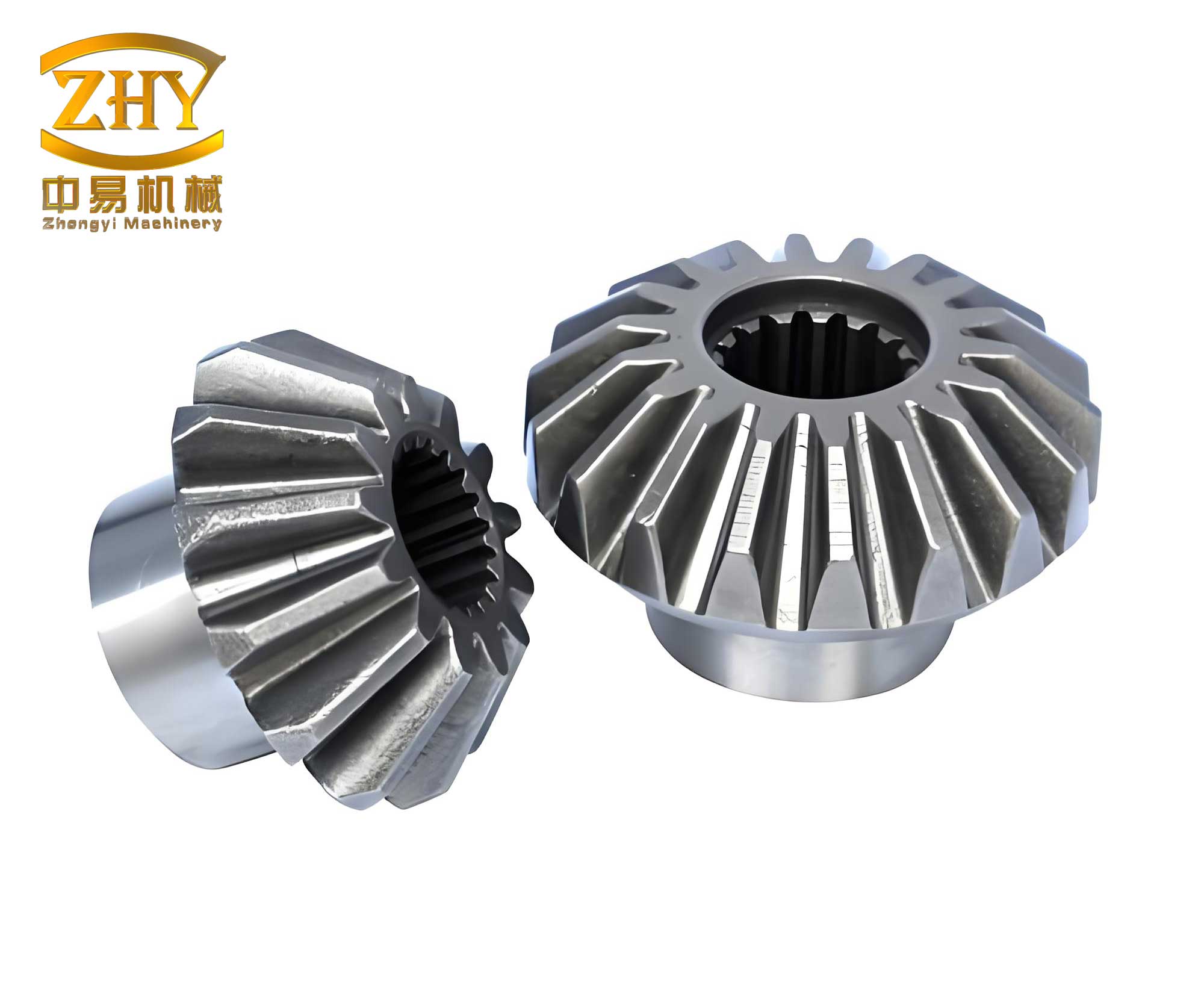
The subject components were active bevel gears, designated for a 7-ton truck rear axle assembly. The material specification was case-hardening steel 20CrMoH. The manufacturing route followed a standard sequence: cutting, forging, normalizing, rough machining, finish machining, gear hobbing, carburizing, quenching, finish grinding, and final inspection. Out of a batch of 320 finished bevel gears, 15 units were found with severe cracking during the final handling stage prior to shipment, indicating a processing-related failure rather than a service-induced one. The objective of this investigation is to systematically determine the origin and propagation mechanisms of these cracks.
Experimental Methodology
A detailed analytical protocol was established to examine the failed bevel gears. The investigation proceeded from macro- to micro-scale, utilizing the following techniques:
- Macrofractography: Visual and stereo-microscopic examination of the crack path and fracture surface to identify the crack initiation site and macroscopic features.
- Chemical Analysis: Bulk chemical composition was determined using a direct reading optical emission spectrometer to verify material conformity with the 20CrMoH specification.
- Metallography: Samples were sectioned from the cracked region, mounted, ground, polished, and etched with 4% nital. Microstructural evaluation of the case (carburized layer) and core was performed using optical microscopy according to standard metallographic practices.
- Scanning Electron Microscopy (SEM) & Energy Dispersive X-ray Spectroscopy (EDS): The fracture surface, specifically the suspected crack origin area, was examined using SEM to reveal micro-mechanisms. EDS point analysis and elemental mapping were conducted to identify chemical anomalies at the origin site.
- Band Structure Assessment: To reveal the severity of microsegregation (banding), a sample from the gear core along the axial direction was subjected to an isothermal annealing treatment (930°C for 60 minutes followed by 660°C for 120 minutes) to develop the ferrite-pearlite banded structure, which was then rated per relevant standards.
Results and Discussion
1. Macroscopic Fracture Analysis
The cracks were consistently longitudinal, originating in the spline region and propagating axially towards the bevel gear teeth. The cracks were long (approximately 161 mm), narrow (~0.3 mm wide), and relatively straight with minimal branching. The fracture surface exhibited a silver-gray appearance. A classic “chevron” or “herringbone” pattern was clearly visible on the fracture face. These patterns converge towards a specific subsurface region, unambiguously identifying it as the primary crack initiation site or fracture origin. Critically, this origin was located approximately 5 mm beneath the external contour surface of the gear, placing it well beyond the typical carburized case depth (measured to be about 2 mm). This subsurface origin is a key finding, shifting the focus from surface defects to internal material conditions.
2. Material Conformance: Chemistry and Microstructure
The bulk chemical composition of the failed bevel gear is presented in Table 1. The results confirm that the material meets the requirements for 20CrMoH steel, ruling out a gross material substitution error as the cause of failure.
| Element | Measured (wt.%) | 20CrMoH Specification (Typical) |
|---|---|---|
| C | 0.22 | 0.17-0.23 |
| Cr | 0.99 | 0.85-1.25 |
| Mn | 0.83 | 0.60-0.95 |
| Si | 0.34 | 0.17-0.37 |
| Mo | 0.22 | 0.15-0.25 |
| P | 0.013 | ≤ 0.035 |
| S | 0.009 | ≤ 0.035 |
The microstructure of the carburized case consisted of fine acicular martensite with retained austenite, rated as acceptable (Grade 3). The core microstructure consisted of low-carbon lath martensite with minor amounts of free ferrite, also rated as acceptable (Grade 3). Therefore, the final heat-treated microstructure was within specified limits for these bevel gears.
3. Microstructural Defects: Inclusions and Banding
While the bulk chemistry and general microstructure were acceptable, detailed analysis revealed two critical subsurface defects.
3.1 Oxide Inclusions at Crack Origin
SEM examination of the crack origin area revealed a distinct, bright white band on the fracture surface, measuring roughly 1.4 mm in length. EDS point analysis within this band detected significant peaks of oxygen (O), aluminum (Al), calcium (Ca), and magnesium (Mg), alongside iron (Fe). The quantitative results are summarized in Table 2.
| Element | Weight % at Origin |
|---|---|
| O | 13.21 |
| Al | 19.55 |
| Ca | 4.78 |
| Mg | 2.40 |
| Fe | 54.48 |
| C | 3.67 |
| Others (Cr, Mn, S, F) | < 2.0 |
Elemental mapping for Al and O confirmed their concentrated, band-like distribution precisely at the origin site. This combination of elements is characteristic of indigenous oxide-type inclusions, such as alumina (Al2O3) and calcium-aluminate complexes, commonly formed during steel deoxidation and refining. These hard, brittle, non-metallic inclusions act as stress raisers. Their thermal expansion coefficient differs significantly from the steel matrix, and they lack cohesive bonding. Under thermal (quenching) or residual stresses, they create localized triaxial stress fields. The stress concentration factor (Kt) around an elliptical inclusion can be approximated by:
$$ K_t = 1 + 2\sqrt{\frac{a}{\rho}} $$
where \(a\) is the major axis length and \(\rho\) is the radius of curvature at the tip of the inclusion. For sharp, elongated inclusions like these oxide bands, \(\rho\) is very small, leading to a very high Kt. When the local stress exceeds the fracture strength of the inclusion-matrix interface or the matrix itself, a microcrack initiates. This was the primary nucleation site for the failure in these bevel gears.
3.2 Severe Core Banding (Microsegregation)
The isothermally annealed sample revealed a pronounced banded ferrite-pearlite structure in the core of the bevel gear. This banding is a result of microsegregation of alloying elements (primarily Mn, Cr, Mo) and carbon during the solidification of the original ingot, which is not fully homogenized by subsequent forging and normalizing. The banding severity was rated as Grade 4, which exceeds the typically acceptable limit (Grade 1-3). This defect has several detrimental effects on the performance of bevel gears:
- Inhomogeneous Phase Transformation: Banded regions have different chemical compositions. The low-carbon ferrite bands have a higher Ac3 temperature, while the higher-carbon pearlitic (now martensitic) bands have a lower Ac3. During austenitizing for carburizing or quenching, this leads to variations in austenite grain size. According to the Hall-Petch relationship, yield strength (\(\sigma_y\)) is related to grain size (\(d\)):
$$ \sigma_y = \sigma_0 + k_y d^{-1/2} $$
where \(\sigma_0\) and \(k_y\) are material constants. Inhomogeneous grain size results in uneven mechanical properties, creating weak paths for crack propagation along the softer, coarser-grained bands. - Differential Martensite Start (Ms) Temperature: The Ms temperature is highly dependent on carbon content. The empirical relationship is often expressed as:
$$ M_s (^{\circ}C) \approx 539 – 423C – 30.4Mn – 17.7Ni – 12.1Cr – 7.5Mo $$
where element symbols represent weight percent. In the subsurface region (~5 mm deep) of the bevel gear, carbon content is lower than in the carburized case but varies locally due to banding. Low-carbon bands have a higher Ms than adjacent higher-carbon bands. During quenching, the low-carbon bands transform to martensite first, expanding volumetrically. The surrounding higher-carbon austenite, still stable, constrains this expansion, creating localized stress. When the high-carbon bands later transform at a lower temperature, the overall material plasticity is reduced, generating additional transformation stresses. This non-simultaneous transformation exacerbates internal (quenching) stresses. - Anisotropic Properties: Banding imparts directional mechanical properties. Ductility and impact toughness are significantly lower in the transverse direction (across the bands) compared to the longitudinal direction. Cracks can propagate more easily along the ferrite/pearlite (martensite) interfaces.
4. Stress Concentration at Geometric Transition
The crack origin was not only subsurface but also corresponded axially to a location on the gear shaft with a significant change in diameter—a stepped shoulder or similar geometric transition. Such changes in cross-section are potent stress concentrators. The theoretical stress concentration factor \(K_t\) for a shoulder fillet can be calculated based on geometry (D/d, r/d ratios). During quenching, the cooling rate varies drastically between the large and small diameters and at the root of the step. This non-uniform cooling induces steep thermal gradients and associated thermal stresses. The residual stress field from quenching is thus highly complex and intensified at this geometric discontinuity. When combined with the pre-existing stress concentration from the oxide inclusion band, the local stress can easily surpass the critical threshold for crack initiation, even in the absence of external load. This explains why the bevel gears failed during handling after all processing was complete; the internal residual stress state was sufficient to drive crack propagation from the pre-existing defect.
Synthesis of Failure Mechanism for Bevel Gears
The longitudinal cracking failure of these bevel gears is a classic example of a multi-factor, processing-induced failure. The mechanism can be synthesized into a chronological sequence:
- Material Processing Legacy: The steel used for the bevel gears contained excessive oxide inclusion stringers (Al, Ca, Mg oxides) and exhibited severe dendritic microsegregation that manifested as Grade 4 banding after annealing. These are inherent material quality issues stemming from steelmaking and primary rolling/forging.
- Defect Positioning: The cluster of brittle oxide inclusions was fortuitously located in a critically stressed region: (a) in the subsurface (~5 mm deep), and (b) at the axial position corresponding to a major geometric change (diameter transition) on the gear shaft.
- Heat Treatment Amplification: During the final carburizing and quenching process:
- The banded structure led to inhomogeneous austenitization and, crucially, a spread in Ms temperatures. The subsurface region, with its lower average carbon content, likely began its martensitic transformation before the higher-carbon surface layer.
- The volumetric expansion from this early transformation was constrained by the cooler, still-austenitic core and the not-yet-transformed surface layer.
- Simultaneously, the drastic geometry at the step caused severe non-uniform cooling, generating high thermal and transformation stresses concentrated at that very cross-section.
- Crack Initiation and Propagation: The synergistic combination of (a) the high stress concentration at the oxide inclusion band, (b) the embrittling effect of the severe banding, and (c) the intensified residual stress field at the geometric transition, created a local stress state exceeding the material’s fracture strength. A microcrack initiated at the oxide-matrix interface in the subsurface. The high residual tensile stresses, locked in from quenching and potentially relieved slightly during final grinding, then drove the crack longitudinally along the path of least resistance, which was likely aligned with the banded structure, resulting in the observed long, straight crack through the spline and towards the bevel gear teeth. The crack arrested when it reached a region of lower stress or more favorable microstructure.
The failure underscores that the performance of high-strength bevel gears is not solely determined by surface hardness and core toughness but is critically dependent on internal material cleanliness and homogeneity. Subsurface defects, invisible to final inspection, can become the Achilles’ heel under the complex thermomechanical loads imposed during manufacturing.
Conclusions and Recommendations for Bevel Gear Manufacturing
This detailed failure analysis leads to the following conclusions regarding the longitudinal cracking of the automotive bevel gears:
- The primary crack initiation site was a subsurface cluster of brittle oxide inclusions (rich in Al, Ca, Mg, O) located at a geometric stress concentrator.
- The core material of the bevel gears exhibited severe chemical banding (Grade 4), which degraded mechanical homogeneity, promoted non-uniform phase transformation, and increased susceptibility to quench cracking.
- The combination of the inclusion stress raiser, the embrittling effect of banding, and the high residual quenching stresses concentrated at a diameter transition led to subsurface crack initiation and subsequent propagation under residual stress alone.
To prevent recurrence and improve the quality of future bevel gear production, the following recommendations are proposed:
| Area | Recommendation | Rationale |
|---|---|---|
| Material Selection & Inspection | Implement stricter material procurement standards requiring cleaner steel with lower inclusion ratings (e.g., per ASTM E45) and a maximum banding severity of Grade 2-3. Use ultrasonic testing on forged blanks to detect subsurface inclusion clusters. | Eliminates or reduces the primary initiators and improves core homogeneity. |
| Forging & Homogenization | Optimize forging parameters and introduce a high-temperature diffusion annealing (homogenization) cycle after forging, prior to normalizing. For example, 1200-1250°C for several hours followed by controlled cooling. | Reduces microsegregation (banding) by promoting diffusion of alloying elements. |
| Design for Heat Treatment | Redesign geometric transitions (e.g., use larger fillet radii, smoother tapers) to minimize stress concentration factors. The design of bevel gears and their shafts must consider quench stress distribution. | Lowers the peak residual stress at critical locations. |
| Heat Treatment Process | Consider modified quenching practices for bevel gears, such as interrupted quenching, martempering, or high-pressure gas quenching, to reduce thermal gradients and transformation stresses. | Generates a more favorable residual stress profile and reduces the driving force for crack propagation. |
| Non-Destructive Testing (NDT) | Introduce a final NDT step (e.g., fluorescent magnetic particle inspection) after heat treatment and before final grinding to detect any service-induced or residual-stress-induced microcracks. | Provides a final quality gate to prevent defective bevel gears from entering assembly. |
In summary, the failure was not due to a single error but a confluence of material imperfections and process-induced stresses. A holistic approach focusing on material cleanliness, microstructural homogeneity, and stress management during manufacturing is essential for producing reliable, crack-free bevel gears for critical automotive applications. Continuous improvement in these areas will enhance the fatigue life and overall reliability of these essential power transmission components.